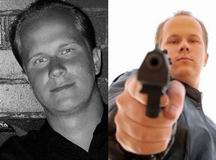
Matti Saari
Mass murderer Pekka-Eric Auvinen
Mass murderer · Finland · 2007
Pekka-Eric Auvinen was identified as the gunman in a shooting at Jokela High Sc…
8 victims
Pekka-Eric Auvinen
Mass murderer · Finland · 2007
Pekka-Eric Auvinen was identified as the gunman in a shooting at Jokela High Sc…
8 victims
 Petri Gerdt
Mass murderer · Finland · 2002
Petri Erkki Tapio Gerdt (born April 17, 1983; died October 11, 2002) died in th…
6 victims
Petri Gerdt
Mass murderer · Finland · 2002
Petri Erkki Tapio Gerdt (born April 17, 1983; died October 11, 2002) died in th…
6 victims
 Ibrahim Shkupolli
Mass murderer · Finland · 2009
31 December 2009 — The Sello mall shooting occurred in the morning shortly afte…
5 victims
Ibrahim Shkupolli
Mass murderer · Finland · 2009
31 December 2009 — The Sello mall shooting occurred in the morning shortly afte…
5 victims
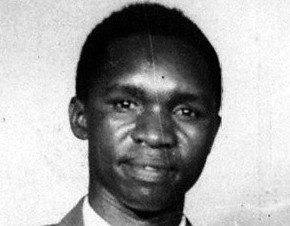 Joseph Kibweteere
Mass murderer · Uganda · 2000
Joseph Kibweteere led a breakaway sect known as the Movement for the Restoratio…
1000 victims
Joseph Kibweteere
Mass murderer · Uganda · 2000
Joseph Kibweteere led a breakaway sect known as the Movement for the Restoratio…
1000 victims
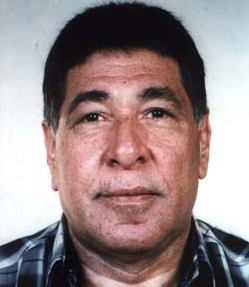 Gameel Al-Batouti
Mass murderer · USA · 1999
Gameel Al-Batouti (also rendered “Gamil ElBatouty” or “El Batouty” in U.S. offi…
216 victims
Gameel Al-Batouti
Mass murderer · USA · 1999
Gameel Al-Batouti (also rendered “Gamil ElBatouty” or “El Batouty” in U.S. offi…
216 victims
 Kim Dae-Han
Mass murderer · South Korea · 2003
Name: Kim Dae-Han · Age: 56 · Occupation/background: He was an unemployed forme…
198 victims
Kim Dae-Han
Mass murderer · South Korea · 2003
Name: Kim Dae-Han · Age: 56 · Occupation/background: He was an unemployed forme…
198 victims
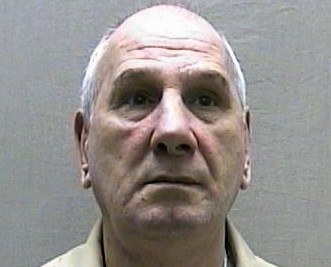 James Koedatich
Serial killer · USA · 1971
James Koedatich was born in 1948. Koedatich committed his first known murder in…
3 victims
James Koedatich
Serial killer · USA · 1971
James Koedatich was born in 1948. Koedatich committed his first known murder in…
3 victims
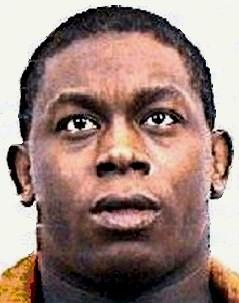 Corey Duane Hamilton
Mass murderer · USA · 1992
Corey Duane Hamilton was convicted by jury of Robbery with a Firearm (Count I)…
4 victims
Corey Duane Hamilton
Mass murderer · USA · 1992
Corey Duane Hamilton was convicted by jury of Robbery with a Firearm (Count I)…
4 victims
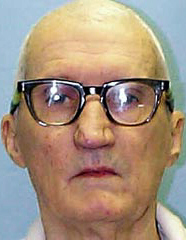 James Barney Hubbard
Murderer · USA · 1957
James Barney Hubbard was executed by lethal injection in Alabama on August 5, 2…
2 victims
James Barney Hubbard
Murderer · USA · 1957
James Barney Hubbard was executed by lethal injection in Alabama on August 5, 2…
2 victims
- Gender
- male
- Country
- Finland
- Location
- Kauhajoki, Western Finland, Southern Ostrobothnia, Finland
- Date of birth
- 1986
- Age at first offence
- 22
- Characteristics
- school shooting, arson
- Victim profile
- Eight female students, one male student, and one male member of staff
- Method of murder
- Shooting (.22 LR caliber Walther P22)
- Date(s) of murder
- September 23, 2008
- Years active
- 2008
- Date of arrest
- —
- Status
-
Died in custody
Committed suicide by shooting himself in the head on 23 September 2008; he died a few hours later in Tampere University Hospital
Case record: Matti Juhani Saari — Kauhajoki school shooting (23 September 2008)
Status
Matti Juhani Saari committed suicide by shooting himself in the head on 23 September 2008. He died a few hours later in Tampere University Hospital.
Background
Matti Juhani Saari was a 22-year-old culinary arts student and a second-year student in a Bachelor of Hospitality Management degree programme.
Saari was originally from Pohjois-Pohjanmaa and lived in Kauhajoki, where he was enrolled on his catering course at the college.
The Kauhajoki School of Hospitality was owned by the Seinäjoki Municipal Federation of Education. The facilities and campus were shared between the Seinäjoki University of Applied Sciences and the Seinäjoki Vocational Education Centre – Sedu. The shooting took place at the Kauhajoki School of Hospitality.
The incident was the second school shooting in less than a year in Finland, the other being the Jokela school shooting in November 2007. Before that, only one other school shooting had taken place in the country's history, in Rauma in 1989, leaving two people dead.
With ten people killed, the attack was the deadliest peacetime attack in Finnish history, surpassing the previous highest count of eight in the Jokela school shooting. It was the deadliest attack on a school campus since April 2007, when Seung-Hui Cho killed 32 people during the Virginia Tech massacre.
Saari entered through the school buildings via the basement.
The offence
Saari was armed with a .22 LR caliber Walther P22 Target semi-automatic firearm and home-made Molotov cocktails. He wore dark clothing and a balaclava (ski mask).
The shooting began at around 10:40 a.m. (UTC+3), when roughly 200 people were assembled inside the college.
The emergency services received their first call at 10:46 a.m.
Saari fired a total of nearly 200 shots, including towards the air. The highest number of shots inflicted to a single victim was twenty.
Saari initially opened fire on a group of students taking a business studies exam and entered at least one other classroom. Saari approached his victims individually before shooting them. It was also said that he was revelling in the situation and was acting very aggressively.
Saari encountered little resistance, and the massacre was concluded relatively quickly.
Saari then covered the classroom in a flammable liquid, believed to be petrol, and set the room alight. Fires were started at several other locations within the school buildings.
A student in an adjacent classroom, Sanna Orpana, said that her class had heard "shooting and a kind of a rumble like tables falling down." Orpana believed at the time that the noise may have been coming from a toy gun, and two other students went to investigate the noise. Saari shot at them, and the remaining students in Orpana's classroom hid under a table before running upstairs.
At some point between 10:45-11:00 a.m., Saari ran down a corridor and threw a petrol bomb into a language laboratory. He then shot out all of the windows in the school's main corridor, that extended through the building. During this time, he also took aim at the school's caretaker, Jukka Forsberg.
A police van with two officers arrived a short time after the shootings began, at around 11:00 a.m. They entered the yard of the college where they were shot at by Saari, and forced to retreat.
From around 11:45 a.m. to 12:00 a.m., further police units, bolstered by a number of armoured vehicles, began to arrive on the scene. They attempted to enter the building through the main corridor, but this assault was aborted due to the black smoke emanating from within the building.
Having escaped the buildings in a variety of ways (including through doors and out of windows), some students found themselves impeded by a river that adjoined the school. However, some were able to use rowing boats as a means of escape.
Saari was at large for some time in the school grounds after they had been evacuated.
Saari remained in the school after the evacuation and was later found with gunshot wounds to the head.
Victims and injuries
Saari fatally injured ten people with a semi-automatic pistol before shooting himself in the head.
Nine of the victims were found in the exam room, and one in a nearby corridor. It was later ascertained that this student had fled the burning classroom and then died in the corridor.
Eight of the victims were female students, and one was a male student. One a male member of staff was also killed. All the students killed were in their 20s, and the teacher was in his 50s.
A 21-year-old woman was shot in the head but was reported as being in a satisfactory condition after sustaining her injury and having two operations in the days after.
A further ten students were treated for minor injuries including sprains and cuts from broken glass.
All the victims were classmates of Saari's.
The names of the other victims were withheld by police.
Saari's actions caused fire and smoke effects, and some bodies were damaged so badly that they had to be identified from DNA and dental records.
Investigation
Firefighters extinguished the fires without any major damage to the school.
The school's caretaker, Jukka Forsberg, had several shots directed at him but survived. He said "[The gunman] was very well prepared. He walked calmly."
In the days following the shooting, police received a sizeable number of tip-offs alerting them to suspicious photographs, videos, and comments on chat rooms.
Finnish media reported that several bomb threats and other threatening messages were circulating among students nationwide in the few days after the shootings.
Arrest / discovery
After the shootings, Saari remained on the school grounds. Police found him with gunshot wounds to the head in a corridor.
He was taken to Tampere University Hospital, where he was treated for his gunshot wound, and died a short time later.
Forensics and identification
A special forensics team was called to begin the process of identifying the bodies of the victims.
The fire in the exam room damaged some of the bodies so badly that they had to be identified from DNA and dental records.
Timeline
- 10:40 a.m. (UTC+3) — The shooting began at the Kauhajoki School of Hospitality as Saari entered through the school buildings via the basement.
- 10:45–11:00 a.m. — Saari ran down a corridor and threw a petrol bomb into a language laboratory; he shot out all the windows in the main corridor and took aim at caretaker Jukka Forsberg.
- 10:46 a.m. — The emergency response centre received the first call about a shooting incident at the school.
- 11:00 a.m. — The first police van with two officers arrived in the yard; Saari shot at the van and the officers forced to retreat.
- 11:45 a.m.–12:00 a.m. — Further police units arrived with armoured vehicles; an assault on the main corridor was aborted because of black smoke.
- 12:30 a.m. — Saari was found alive by police with gunshot wounds to the head and was taken to Tampere University Hospital.
- 14:00 — Police reported that nine people had died in the shooting and several had been wounded or injured in trying to make their escape.
- 15:30 — Police confirmed that the suspected gunman was 22-year-old Matti Juhani Saari; police surrounded and cordoned off his student apartment in Kauhajoki.
- 16:46 — Saari died in Tampere University Hospital.
- 17:00 — A police crime scene unit began work at the school; a special forensics team was called to identify the bodies of the victims.
- 18:00 — It was confirmed that eleven people, including the gunman, had been killed in the incident.
Motive and notes
Saari left behind two handwritten notes in his school dormitory stating that his motive for the shooting was: "I hate the human race." He also wrote: "The solution is Walther 22".
The notes revealed that he had been planning the massacre for six years.
A police spokesperson commented: "Saari left notes saying he had a hatred for mankind, for the whole of the human race, and that he had been thinking about what he was going to do for years. The notes show he was very troubled and he hated everything."
Weapons and ammunition
Saari used a .22 LR caliber Walther P22 Target semi-automatic firearm.
Police later found a note connected with the actions of the morning and a large number of empty boxes of bullets for his pistol in his student apartment.
In August 2008, Saari obtained a licence for a .22-calibre (5.6 mm) pistol.
Fire-setting details
Saari threw petrol-filled Molotov cocktails during the attack. He covered an exam classroom in flammable liquid believed to be petrol and set it alight. He threw a petrol bomb into a language laboratory. Firefighters later extinguished the fires.
Witness statements and quoted remarks
The caretaker Jukka Forsberg said: "[The gunman] was very well prepared. He walked calmly."
Sanna Orpana said: "shooting and a kind of a rumble like tables falling down."
Other people mentioned
- Tapio Varmola — the principal of the Kauhajoki Vocational College, who began an info session for first-year business and catering students in an auditorium on the top floor of the building.
- Paula Risikko — made aware of the ongoing situation; she was identified as the Minister for Health and Services and the Deputy Principal of the Seinäjoki University of Applied Sciences.
- Matti Vanhanen — the Prime Minister who described the day as a "tragic day" and appealed for unity in the hope "that events like these will not happen again."
- Anne Holmlund — the Interior Minister who announced that the actions of the police would be investigated.
- Mikko Paatero — the Police Commissioner who said Finnish police would increase their monitoring of YouTube and other social networking sites and replied: "I badly fear it's possible."
- Jari Neulaniemi — the detective leading the Kauhajoki investigation; he said it was "very likely" that the two men had been in contact at some point.
- Rauno — Saari's friend who told 7 päivää that at 11:53 a.m. he received a call from Saari in which he confessed to having killed ten people; Rauno said Saari wanted to say goodbye and spoke calmly.
- Susanna Keronen — a former classmate who said: "He was happy, a social guy –– there was nothing exceptional – and he got along with people well and he was not lonely. He had friends."
- Jukka Forsberg — the school's caretaker who survived and said the gunman was prepared and walked calmly.
- Seung-Hui Cho — referenced in context of the Virginia Tech massacre.
Investigation and online materials
In the weeks leading up to the incident, Saari posted several videos on YouTube under the username of "Wumpscut86", showing him firing a handgun at a local shooting range. The YouTube user channel was accompanied by the quote "Whole life is war and whole life is pain. And you will fight alone in your personal war". The quote was described as lyrics from the song "War" by the German industrial project :wumpscut:.
Among the user's YouTube account favourites was footage of the Columbine High School massacre.
Saari listed his interests on YouTube as "horror movies, guns, sex, beer and computers."
YouTube suspended the account, on which he called himself "Mr. Saari", as soon as news reports linking him to the shooting emerged.
A spokesperson for YouTube commented that the site operated a zero tolerance policy towards threats and incitement to violence.
Finnish police had been informed about the YouTube videos in an anonymous tip-off on the Friday before the shooting.
Police talked to Saari and searched his home on the day before the incident, Monday 22 September. They found no reason to arrest him as he held a temporary weapons permit.
Police said that Saari's videos were shot by someone else, and they were trying to identify who this person was.
Saari also posted another video on a Finnish social networking site, in which he pointed a gun at the camera and said in English "You will die next", followed by firing four shots in the direction of the camera. This video was not available to the police when Saari was questioned.
A police spokesperson commented: "The only video we saw was where he was shooting at the range. It was only afterwards that much more information came out."
Police said that Saari would have been detained if they had known about this video at the time of the questioning.
Police suspected the cameraman may have been the friend of Saari's who was murdered. Saari's account on IRC-Galleria, which contained similar gun-wielding photos, was also suspended.
Police said after their preliminary investigation (March 2009) that they were unable to determine the underlying motives of Saari and added that he committed his crimes alone. The investigation involved 200 people interviewed, none of whom said they knew of Saari's plans. Contact with Auvinen was also ruled out.
Both Saari and Pekka-Eric Auvinen were described as having bought their guns from the same store. Both gunmen had taken photographs of themselves in similar poses. Jari Neulaniemi said it was "very likely" that the two men had been in contact at some point.
Both had been part of a group of people centred around YouTube and IRC-Galleria who were interested in school shootings; this community included members from Finland, Germany, and the United States, and exchanged videos related to school shootings.
Police said that although most victims were female, the motive did not seem to be a hatred of women.
Rauno stated in his interview that Saari had opted for a catering course in order to be surrounded by female students.
Saari told Rauno that he had been the victim of bullying in secondary school and later upper secondary, and that he had had to drop out for this reason.
Rauno said that Saari's behaviour had begun to worry him over two years before the shootings, when Saari began expressing a fondness for guns and an admiration of the school shootings in the United States.
Rauno said that around 18 months previously Saari sent him a message saying that he would carry out a school shooting the next day, and Saari reportedly denied being serious about carrying out his threat.
A friend of Saari reported that he had been seeing a psychologist in the months before the shooting and that he had been obsessed with guns.
Prior history and related issues
Saari had a history of violence: he had been thrown out of the Finnish Army in 2006, after being a member for only a month, for opening fire in a woodland exercise against orders.
Police were investigating whether a copycat element was involved after it emerged that both Saari and Pekka-Eric Auvinen had bought their guns from the same store.
The police said that although most victims were female, the motive did not seem to be hatred of women.
Saari reportedly denied being serious about carrying out his threat communicated to Rauno around 18 months previously.
Response and official reactions
On the day of the incident, a crisis meeting was held with government ministers, chairs of the parliamentary groups, and police officials in attendance.
The Prime Minister Matti Vanhanen described it as a "tragic day" and appealed for unity in the hope "that events like these will not happen again."
A national day of mourning was declared for the following day, and Vanhanen travelled to Kauhajoki to meet with students.
Within days of the shooting, police said they had received a sizeable number of tip-offs alerting them to suspicious photographs, videos, and comments on chat rooms.
Within days of the shooting, Finnish media reported that several bomb threats and other threatening messages were circulating among students nationwide in the few days after the shootings.
Aftermath
Police confirmed later that eight of the victims were female students and that one male member of staff was among those killed. Police said the victims died as a consequence of being shot and from the effects of the fire and smoke. Presumably post mortem examinations would determine the actual cause of death in each case.
The badly-burned bodies were still being identified overnight.
On Wednesday morning, it was reported that the majority of those killed were women. Initial police accounts suggested that two of the dead were male (not including the gunman himself) and the remainder female.
Saari had a friend who was killed; his death was referenced in speculation about who filmed Saari’s videos.
Police surrounded and cordoned off Saari’s student apartment in a small block in the centre of Kauhajoki after confirmation on 23 September 2008, and the apartment revealed a note connected with the actions of the morning and a large number of empty boxes of bullets for his pistol.
Spotted an error, or have more information about this case?