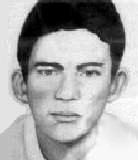
Domingo Salazar
Mass murderer Ronald Baquiran Bae
Mass murderer · Philippines · 2013
Ronald Baquiran Bae was born on November 9, 1971. He was a former member of the…
8 victims
Ronald Baquiran Bae
Mass murderer · Philippines · 2013
Ronald Baquiran Bae was born on November 9, 1971. He was a former member of the…
8 victims
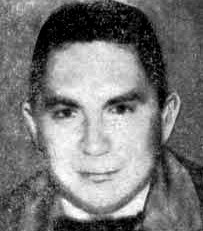 Francisco Paula Gonzales
Mass murderer · USA · 1964
Francisco Paula Gonzales was a passenger on Pacific Air Lines Flight 773. Gonza…
44 victims
Francisco Paula Gonzales
Mass murderer · USA · 1964
Francisco Paula Gonzales was a passenger on Pacific Air Lines Flight 773. Gonza…
44 victims
 John Gilbert Graham
Mass murderer · USA · 1955
John “Jack” Gilbert Graham was born on January 23, 1932, at Denver, Colorado. H…
44 victims
John Gilbert Graham
Mass murderer · USA · 1955
John “Jack” Gilbert Graham was born on January 23, 1932, at Denver, Colorado. H…
44 victims
 Thomas Doty
Mass murderer · USA · 1962
Thomas G. Doty was a passenger on Continental Airlines Flight 11. He was a marr…
44 victims
Thomas Doty
Mass murderer · USA · 1962
Thomas G. Doty was a passenger on Continental Airlines Flight 11. He was a marr…
44 victims
 Julian Andrew Frank
Mass murderer · USA · 1960
6 January 1960 — National Airlines Flight 2511 exploded and crashed 1-1/2 miles…
33 victims
Julian Andrew Frank
Mass murderer · USA · 1960
6 January 1960 — National Airlines Flight 2511 exploded and crashed 1-1/2 miles…
33 victims
 Sylvia Seegrist
Murderer · USA · 1985
Sylvia Wynanda Seegrist (born July 31, 1960) was an American woman diagnosed wi…
3 victims
Sylvia Seegrist
Murderer · USA · 1985
Sylvia Wynanda Seegrist (born July 31, 1960) was an American woman diagnosed wi…
3 victims
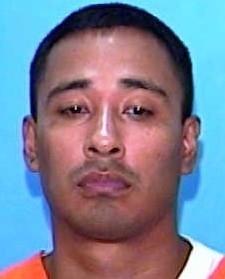 Joel Diaz
Murderer · USA · 1997
Name: Joel Diaz · Date of birth: 06/13/73 · Case citation / opinion: Supreme Co…
1 victim
Joel Diaz
Murderer · USA · 1997
Name: Joel Diaz · Date of birth: 06/13/73 · Case citation / opinion: Supreme Co…
1 victim
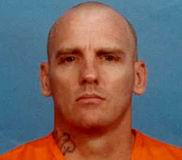 Phillup Partin
Murderer · USA · 1987
Phillup Alan Partin was sentenced to death by a 9-3 vote on December 1, 2008 fo…
2 victims
Phillup Partin
Murderer · USA · 1987
Phillup Alan Partin was sentenced to death by a 9-3 vote on December 1, 2008 fo…
2 victims
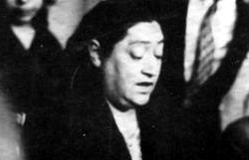 Felicitas Sanchez Aguillon
Serial killer · Mexico · 1930
Felícitas Sánchez Aguillón or Sánchez Neyra (1890 - June 16, 1941) was a Mexica…
50 victims
Felicitas Sanchez Aguillon
Serial killer · Mexico · 1930
Felícitas Sánchez Aguillón or Sánchez Neyra (1890 - June 16, 1941) was a Mexica…
50 victims
- Gender
- male
- Country
- Philippines
- Location
- San Nicolas, Roxas, Palawan, Philippines
- Date of birth
- 1914
- Age at first offence
- 42
- Characteristics
- jealousy
- Victim profile
- Urbana Abique, 50 / Felisa Adion, 37 / Felomina Baaco, 48 / Salome Baaco, 23 / Leonila Llavan, 25 / Manuela Llavan, 39 / Fortunato Nares Jr., 5 (son of Romana Pacho) / Henry Pacaldo, 5 / Baudelio Pacho, 18 / Maxima Pacho, 37 (Salazar's common-law wife) / Romana Pacho, 34 (Maxima Pacho's sister) / Aurelia Paz, 7 / Herminia Paz, 6 months / Lilia Paz, 5 / Nenita Sausa, 5 / Lolita Yayen, 17
- Method of murder
- Stabbing with a spear and a bolo knife
- Date(s) of murder
- October 11, 1956
- Years active
- 1956
- Date of arrest
- Same day
- Status
-
Sentenced to death
Resentenced to reclusion perpetua on June 30, 1959 (following a death sentence in 1956)
Case record: Domingo Salazar alias Darquez
Status
Domingo Salazar was resentenced to reclusion perpetua on June 30, 1959, after having been sentenced to death in 1956.
Timeline
- October 11, 1956 — Domingo Salazar carried out a killing rampage in barangay San Nicolas, Roxas, Palawan, resulting in sixteen deaths and other wounded victims.
- October 24, 1956 — Domingo Salazar underwent a physical and mental examination by the Chief of the Puerto Princesa Hospital, who found him to be normal and sane.
- June 30, 1959 — The Supreme Court issued its ruling in G.R. No. L-11601, overall confirming the sentence but changing the murder convictions for Maxima Pacho, Romana Pacho, and Fortunato Nares to reclusion perpetua.
Background
Domingo Salazar alias Darquez was a moro native of Zamboanga.
For many years before October 11, 1956, he went to barrio San Nicolas, Roxas, Palawan, where he established his home with his common-law wife, Maxima Pacho.
The offence
Charges and information
A complaint for multiple murder, frustrated murder, and attempted murder was filed against Domingo Salazar before the Justice of the Peace court of Roxas, Palawan. After he waived his right to preliminary investigation, the case was forwarded to the Court of First Instance of the province where an information for the same crime was filed.
The information alleged that on or about October 11, 1956, in the municipality of Roxas, province of Palawan, Philippines, and within the jurisdiction of the court, Domingo Salazar, with deliberate intent, evident premeditation, treachery, and with the use of deadly weapon, to wit: a spear and big bolo, attacked, assaulted, and wounded the following persons in one continuous act in and around their dwelling houses, resulting in the victims dying instantly:
- Maxima Pacho, 37 years old and pregnant
- Romana Pacho, 34 years old and pregnant
- Fortunato Nares Jr., 5 years old
- Aurelia Paz, 7 years old
- Lilia Paz, 5 years old
- Herminia Paz, 6 months old
- Nenita Sausa, 5 years old
- Henry Pacaldo, 5 years old
- Felomina Baaco, 48 years old
- Salome Baaco, 23 years old
- Baudelio Pacho, 18 years old
- Leonila Llavan, 25 years old
- Urbana Abique, 50 years old
- Felisa Adion, 37 years old
- Lolita Yayen, 17 years old
- Manuela Llavan, 39 years old
The information further alleged that, in furtherance of his criminal and heinous act, he assaulted, attacked, and wounded one Manuel Adion with the same spear, causing a spear wound at the back hitting the left lower lobe of the lung, which ordinarily would cause his death. The information stated that the acts of execution that should have produced the crime of Murder did not produce it by reason of causes of independent of his will, namely the timely and able medical attendance that prevented Manuel Adion’s death.
Finally, the information alleged that, not satisfied with his acts and to show further his criminal propensity, he assaulted, with deliberate intent to kill Pablo Paz and Severino Adion, by overt acts, but fortunately missed Pablo Paz and Severino Adion.
The information alleged aggravating circumstances including evident premeditation, taking advantage of superior strength, alevosia, the crime being committed in the dwelling of the victims, and that the wrong done in commission of the crime was deliberately augmented by causing other wrong not necessary for its commission.
Conduct described as a killing rampage
In the morning of October 11, 1956, Domingo Salazar invited his wife to go with him to gather nipa for the repair of their house.
Romana arrived and invited Maxima to accompany her to her house to get palay, but Maxima refused to join Salazar and Romana.
The Supreme Court described that, at the time, Domingo Salazar already entertained the suspicion that his wife was having illicit relations with Fortunato Nares, Romana Pacho’s husband, and that the child Maxima was bearing was the result of such illicit relation. The Supreme Court described the killing rampage as leaving sixteen dead and some wounded.
The Supreme Court reproduced the trial court’s narrative of the killings: "He started by killing his own sister-in-law. Then he turned to kill his own wife and his nephew. He then walked for about 800 meters to another house where he killed and massacred all the inmates he found therein. He went to three other houses and repeated the same performance leaving behind him several household filled with tragedy and bloody deaths, the like of which have never been seen or known in this province. Then he went into the school premises of that sitio and attacked one man from behind who was able to run away and is the lone survivor of this bloody incident. After that he chased and actually did throw his spear to two other men but whom he did not hit. And then he went to the school house and tried to force open the door, also with dark criminal intention. Fortunately due to the presence of mind of the lady teacher the door and windows were locked and barricaded while the accused went around trying to force upon the entrance and the windows of the school house. The imagination of this Court shudders of the thought of what might have happened if this accused succeeded in going into the school room filled with young school children. And the accused went up to the bell tower of the Chapel, sounded the alarm calling for everybody to come. He asked that he be killed but no one dared to come and obey his request. Finally, when two armed guards arrived accompanied by a barrio officer, the accused was persuaded to surrender but on condition that he be shot and killed immediately. The guards and barrio officer cleverly made a ruse by asking the accused to go with them to the wharf where he will be shot, and by asking him to sign a piece of paper to serve as their protection for the killing the accused which would be presented to the authorities later on. The accused in the meantime had put down his arms and as he was about to affix his thumbmark on the piece of paper he was suddenly grabbed and was subdued and put under custody."
School premises and the attack on Manuel Adion
At the school compound, Salazar stabbed Manuel Adion in the back with his spear. The attack left Manuel Adion severely wounded, and the Supreme Court described that he was able to escape.
Pursuit of other men
Salazar then chased two other men, Pablo Paz and Severino Adion, and threw his spear against them, hitting neither of them.
Attempt to enter the school house
Salazar tried to force entry into the school house. The teacher had already locked and barricaded the door and windows, so he was unable to force his entrance.
Bell tower, surrender attempt, and arrest
Salazar went to the chapel bell tower and tolled the bell to call for everyone to come. He asked to be killed, but no one obeyed his request.
Eventually, two armed guards arrived with a barrio officer. They managed to persuade Salazar to surrender on the condition that he would be shot and killed at the wharf. The guards and the barrio officer asked him to sign a piece of paper to protect them from repercussions by the authorities. When Salazar lay down his arms and was about to affix his thumbmark on the paper, he was subdued and arrested.
Investigation and examination
On October 24, 1956, the physical and mental state of Domingo Salazar was examined by the Chief of the Puerto Princesa Hospital, who found him to be normal and sane.
The Supreme Court noted that Salazar narrated how he killed his common-law wife and his other victims.
The Provincial Commander of Puerto Princesa testified that he propounded questions to Salazar in Tagalog, the dialect known to him. Justice of the Peace Oscar Siat testified that he read the document and translated it into Tagalog for the benefit of the accused, and when he asked if he was coerced into making the statement, Salazar acknowledged that it was voluntarily given. The Supreme Court stated that his statement was embodied in Exhibit "C".
Arrest
Armed guards and a barrio officer subdued Domingo Salazar after he signed a piece of paper, and arrested him after he was prevented from affixing his thumbmark and was put under custody.
Trial
Counsel and plea
Two local lawyers were appointed counsel de oficio to defend Salazar.
Upon arraignment, interpreted in the local dialect, Salazar pleaded guilty.
Despite the plea of guilty, considering the gravity of the offense charged, the court asked Salazar to take the witness stand and narrate the circumstances surrounding the commission of the acts. Salazar refused, stating that he had already made a confession.
Evidence presented
The prosecution presented among its exhibits:
- the murder weapon
- the confession of the accused
- the sketches of the scene of the crime
- the sixteen certificates of death
- the affidavits of some witnesses
- the ante mortem declaration of Manuel Adion
Trial court finding and sentencing
The lower court rendered judgment finding Domingo Salazar, alias Darquez, guilty of the crime of Multiple Murder with Frustrated Murder as charged. It sentenced him as follows:
- sixteen (16) death penalties corresponding to the murder of each of the sixteen (16) victims
- indemnification to the heirs of the deceased in the amount of P3,000.00 each
- imprisonment for the crime of Frustrated Murder with minimum not less than EIGHT (8) years and ONE (1) DAY of prision mayor and maximum not less than SEVENTEEN (17) YEARS, FOUR (4) MONTHS and ONE (1) DAY of reclusion temporal
- imprisonment for each crime of Attempted Murder with minimum not less than TWO (2) YEARS, Four (4) MONTHS and ONE (1) DAY of prision correccional and maximum not more than EIGHT (8) YEARS and ONE (1) DAY of prision mayor
- to pay the costs
Sentencing and penalties on appeal
Arguments for mitigation
Counsel for the accused advanced three arguments to mitigate his liability:
- That Salazar’s plea of guilty did not extend to admission of the correctness of the qualification of his acts as expressed by the prosecution in its information, particularly the allegation that the acts were committed with evident premeditation and with treachery.
- That running amuck, or becoming a "juramentado", was a cult among the Moros that formed part of their religion, was age-old and deeply rooted in their psychology, and that Moros did not discourage its observance. Counsel argued that they did not view the observance as a heinous crime and that they took the calculated risk when a Moro became "juramentado", staying alert to kill a "juramentado" before victims multiplied.
- That because the acts committed by Salazar were parts and parcel of his observance of the Moro cult of being a "juramentado", he should only be considered as having committed crimes of homicide, or something lesser than murder.
Supreme Court ruling on guilt and aggravating/mitigating circumstances
The Supreme Court held there was no merit in the first argument.
The Supreme Court reasoned that, although the accused pleaded guilty, the court asked him to take the witness stand and narrate the circumstances. The Supreme Court noted that Salazar refused, stating he had already made a confession, and that when arraigned he was assisted by two lawyers appointed to defend him. The Supreme Court described that the information was interpreted into a dialect known to him and when asked for his answer he pleaded guilty. It held that Salazar could not complain of the consequences.
The Supreme Court stated legal principles that a plea of guilty admitted all material facts alleged in the information, and that the plea could sustain conviction without introduction of further evidence on the theory that the defendant supplied necessary proof.
The Supreme Court stated that despite the plea of guilty, the prosecution offered evidence, and it found the evidence substantially supported the material allegations of the information. It stated that by the plea, Salazar was deemed to have admitted not only commission of the offense charged but also circumstances surrounding commission, such as evident premeditation, taking advantage of superior strength, alevosia, and dwelling.
The Supreme Court ruled that the mitigating circumstance of obfuscation arising from jealousy could not be invoked because the relationship with his common-law wife was illegitimate.
The Supreme Court also stated that many days had passed from the discovery of the alleged infidelity before the crime in vindication of honor was committed, and that Salazar admitted having planned his vengeance long before the opportune moment.
The Supreme Court addressed the argument about running amuck as a cult among the Moros and stated that penal laws enumerate the circumstances that mitigate criminal liability, and that running amuck was not one of them. It held that applicable circumstances must be applied alike to all criminals. It further stated that Salazar had settled for many years before in a Christian community and lived there with a Christian common-law wife and relatives, and that he should have known running amuck was abhorred in society and punished by law.
The Supreme Court stated that Salazar could not invoke Section 106 of the Administrative Code of Mindanao and Sulu in his favor. It explained that Section 106 accords the court discretion to determine the penalty considering circumstances including the degree of instruction, and that the court could impose the penalty that would best serve the interest of justice. It described the case as one where the degree of perversity warranted enforcement of the law to its full extent.
The Supreme Court held that Salazar was guilty beyond reasonable doubt of the crimes of multiple murder, frustrated murder, and attempted murder, all qualified by evident premeditation as charged in the information.
Specific aggravating circumstances for particular killings
The Supreme Court found that the murder of:
- Filomena Baaco
- Baudilla, Pacho
- Salome Baaco
- Leonila Llavan
- Urbana Abique
- Lilia Paz
- Aurelia Paz
- Herminia Paz
- Lolita Yayen
- Felisa Adion
- Nenita Sausa
- Henry Pacaldo
- Manuela Llavan
was attended by the aggravating circumstances of treachery and dwelling.
The Supreme Court found that the murder of Maxima Pacho, Romana Pacho, and Fortunato Nares, and the frustrated murder of Manuel Adion and attempted murders of Pablo Paz and Severino Adion, were committed with the aggravating circumstance of treachery.
The Supreme Court stated that treachery was offset by the mitigating circumstance of plea guilty with respect to the sixteen murders, one frustrated murder, and two attempted murders.
The Supreme Court held that the penalty should be imposed in its medium period with respect to Maxima Pacho, Romana Pacho, and Fortunato Nares, and with respect to the frustrated murder of Manuel Adion and the attempted murder of Pablo Paz and Severino Adion.
Penalties ordered by the Supreme Court
The Supreme Court changed the murder convictions for Maxima Pacho, Romana Pacho, and Fortunato Nares to reclusion perpetua because it found the confession and admission of guilt mitigating.
It confirmed the decision appealed from in all other respects.
The Supreme Court specified the penalties as follows:
- For the murder of Maxima Pacho, Romana Pacho, and Fortunato Nares: reclusion perpetua
- For the frustrated murder of Manuel Adion: an indeterminate penalty with minimum of 4 years, 2 months and 1 day of prision correccional and maximum of 12 years and 1 day of reclusion temporal
- For each of the two crimes of attempted murder: an indeterminate penalty with minimum of 4 months and 1 day of arresto mayor and maximum of 6 years and 1 day of prision mayor
It stated that the indemnity to the heirs of each of the deceased should be P6,000.
Supreme Court disposition
"Wherefore, modified as above indicated, the decision appealed from is hereby affirmed in all other respects, with costs."
The Supreme Court noted that Paras, C.J., and Bengzon, Padilla, Montemayor, Bautista Angelo, Labrador, Concepcion, Endencia and Barrera, JJ. concurred.
Appeals
The Supreme Court’s June 30, 1959 ruling was issued during the appeal hearing.
It overall confirmed the sentence imposed, while changing the murder convictions for Maxima and Romana Pacho, as well as Fortunato Nares, from the death penalty outcomes to reclusion perpetua.
Victims
The information and Supreme Court described sixteen victims who died instantly and additional victims who were wounded but survived.
Deceased victims (sixteen)
- Maxima Pacho, 37 years old (pregnant)
- Romana Pacho, 34 years old (pregnant)
- Aurelia Paz, 7 years old
- Lilia Paz, 5 years old
- Herminia Paz, 6 months old
- Nenita Sausa, 5 years old
- Henry Pacaldo, 5 years old
- Felomina Baaco, 48 years old
- Salome Baaco, 23 years old
- Baudelio Pacho, 18 years old
- Leonila Llavan, 25 years old
- Urbana Abique, 50 years old
- Felisa Adion, 37 years old
- Lolita Yayen, 17 years old
- Manuela Llavan, 39 years old
Additional victims (wounded or attacked)
- Manuel Adion — wounded by a spear thrust at the back hitting the left lower lobe of the lung; medical attendance prevented death; the Supreme Court described him as the lone survivor of the school compound incident.
- Pablo Paz — attacked with overt acts by spear throwing; the information alleged that Salazar missed him.
- Severino Adion — attacked with overt acts by spear throwing; the information alleged that Salazar missed him.
Other details
Physical and mental state
The Chief of the Puerto Princesa Hospital found Salazar to be normal and sane on October 24, 1956.
Relationship and motive as described in the ruling
The Supreme Court described Salazar’s suspicion that his wife had illicit relations with Fortunato Nares and that the child she was pregnant with was not his own. It described that he planned to vindicate his honor by taking vengeance on them.
Financial indemnity adjustments
- The lower court ordered indemnification to heirs of P3,000.00 each.
- The Supreme Court increased the indemnity to heirs of each deceased victim to P6,000.
Spotted an error, or have more information about this case?