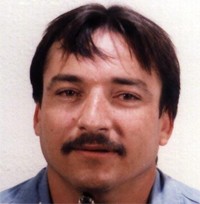
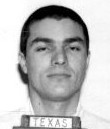
Ramon Salcido
Spree killer Mark Barton
Spree killer · USA · 1999
Mark Orrin Barton (1955 – July 29, 1999) committed a spree killing in Stockbrid…
12 victims
Mark Barton
Spree killer · USA · 1999
Mark Orrin Barton (1955 – July 29, 1999) committed a spree killing in Stockbrid…
12 victims
 Manuel Pardo
Spree killer · USA · 1986
Manuel Pardo, Jr. was a former police officer who was convicted of nine counts…
9 victims
Manuel Pardo
Spree killer · USA · 1986
Manuel Pardo, Jr. was a former police officer who was convicted of nine counts…
9 victims
 Michael Alan Silka
Spree killer · USA · 1984
Michael Alan Silka was killed during a shoot-out with the police on May 19, 198…
9 victims
Michael Alan Silka
Spree killer · USA · 1984
Michael Alan Silka was killed during a shoot-out with the police on May 19, 198…
9 victims
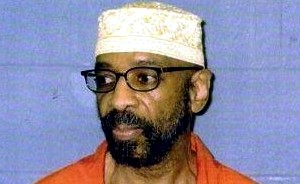 Russell Shoatz
Murderer · USA · 1970
Russell "Maroon" Shoatz (1943 - ) was a former Black Panther and Black Liberati…
1 victim
Russell Shoatz
Murderer · USA · 1970
Russell "Maroon" Shoatz (1943 - ) was a former Black Panther and Black Liberati…
1 victim
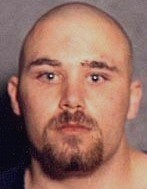 Zane Michael Floyd
Mass murderer · USA · 1999
Zane Michael Floyd (born 1976) had attended high school, enlisted in the United…
4 victims
Zane Michael Floyd
Mass murderer · USA · 1999
Zane Michael Floyd (born 1976) had attended high school, enlisted in the United…
4 victims
 Claude Lastennet
Serial killer · France · 1993
Claude Lastennet (born January 19, 1971 at Brest, France) was a French serial k…
5 victims
Claude Lastennet
Serial killer · France · 1993
Claude Lastennet (born January 19, 1971 at Brest, France) was a French serial k…
5 victims
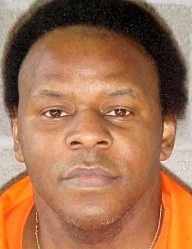 Clinton Lee Spencer
Murderer · USA · 1989
Clinton Lee Spencer was sentenced to death on December 27, 1990. About 9:00 p.m…
1 victim
Clinton Lee Spencer
Murderer · USA · 1989
Clinton Lee Spencer was sentenced to death on December 27, 1990. About 9:00 p.m…
1 victim
 David Gilroy
Murderer · United Kingdom · 2010
David Gilroy was charged with the murder of Suzanne Pilley and with attempting…
1 victim
David Gilroy
Murderer · United Kingdom · 2010
David Gilroy was charged with the murder of Suzanne Pilley and with attempting…
1 victim
- Gender
- male
- Country
- USA
- Location
- Sonoma County, California, USA
- Date of birth
- March 6, 1961
- Age at first offence
- 28
- Characteristics
- parricide, revenge, rape
- Victim profile
- His wife, two of his three daughters, his mother in-law, and her other two daughters, and a fellow worker (his supervisor)
- Method of murder
- St abbing with knife - Shooting
- Date(s) of murder
- April 14, 1989
- Years active
- 1989
- Date of arrest
- 6 days after (in Mexico)
- Status
-
Sentenced to death
Sentenced to death on December 17, 1990
Case details
Defendant: Ramón Bojorquez Salcido Name used in appellate materials: Ramon Bojorquez SALCIDO Prison / identification: San Quentin State Prison; Ramon Salcido E-79901 Jurisdiction at trial: San Mateo County Superior Court (trial moved there because of extensive pretrial publicity) Automatic appeal: Appeal was automatic (Pen. Code, § 1239, subd. (b))
Timeline
- April 13, 1989 — While in the events leading up to the murders, defendant was refused a hotel room.
- April 14, 1989 (early morning hours) — Defendant drove his three young daughters (Sofia, Carmina, and Theresa) to an isolated gulch used as a dumping site, cut their throats, and left them; Sofia and Theresa died.
- April 14, 1989 (early morning hours) — Defendant drove to the residence of his mother-in-law, Marion Louise Richards, stabbed Marion to death, and stabbed to death Marion’s daughters Ruth Bernadette Richards and Marie Ann Richards.
- April 14, 1989 (early morning hours) — Defendant returned home, where he shot to death his wife, Angela.
- April 14, 1989 (early morning hours) — Defendant proceeded to Grand Cru Vineyard, where he shot to death his supervisor, Tracey Toovey.
- April 14, 1989 (early morning hours) — Defendant drove to the residence of Kenneth Butti, who defendant shot and injured; the crimes occurred within a period of approximately three hours.
- April 15, 1989 (approximately noon on Saturday, April 15, 1989) — Defendant’s three young daughters were found at the bottom of a 15-foot embankment in tall grass at Stagegulch Quarry, a dumpsite; Carmina survived.
- April 18, 1989 — Sonoma County Sheriff’s Detective David Edmonds was apprised that defendant was in Mexico.
- April 19, 1989 — Defendant was arrested on April 19, 1989, at a train station outside Los Molchis, Sinaloa, Mexico; during the flight returning to the United States defendant stated: “I was going to turn myself in. I made a mistake. I'm guilty.”
- June 30, 2008 — California Supreme Court upheld the death penalty (People v. Salcido, No. S018814).
- October 30, 1990 — The jury returned verdicts finding defendant guilty on the charged offenses as later described; the jury found true a multiple-murder special-circumstance allegation.
- November 5, 1990 — Penalty phase commenced.
- November 13, 1990 — Parties concluded the presentation of evidence in the penalty phase.
- November 16, 1990 — After three days of deliberations, the jury returned a verdict of death.
- December 17, 1990 — The trial court declined to modify the verdict and imposed a sentence of death.
- 2009 — Carmina Salcido wrote a book, Not Lost Forever, about her experiences.
- 2011 — Defendant was on death row in California’s San Quentin State Prison.
Background
Defendant lived in Mexico prior to arriving in the United States. Prior to 1980, while living in his native Mexico, at 18 years of age, he married a young woman who became pregnant by another man. After giving birth, the woman abandoned him for the child’s father. After his arrival in the United States that year, he moved to Kern County and married a second time, to Debra, who bore him a child. When their relationship ended, he moved away, and the couple did not obtain a divorce. In the mid-1980’s, defendant married a third wife, Angela Richards, who had had a strict Catholic upbringing. They had three daughters: Sofia, Carmina, and Theresa, whom defendant appeared to love very much, and Carmina was defendant’s favorite.
In early 1987, defendant obtained a job at Grand Cru Vineyard in Sonoma County. His responsibilities included operating the “bottling line.” Tracey Toovey was the assistant wine maker and defendant’s supervisor. Kenneth Butti was hired several months after defendant’s employment began and became defendant’s primary supervisor. Butti believed defendant was a poor employee, and Toovey told defendant he needed to improve his job performance.
At the time of the murders in April 1989, defendant and his family resided in a small one-bedroom rental home that was part of a duplex at 201 Baines Street in Boyes Hot Springs. Their home was several blocks from the Sonoma Mission Inn and approximately seven miles from Grand Cru Vineyard. Angela’s parents, Robert and Marion Louise Richards, resided together with their two younger daughters in a rented home at 8393 Lakewood Avenue in Cotati. Defendant was known by acquaintances as a frequent consumer of alcoholic beverages and enjoyed “fancy” automobiles. He purchased a Pontiac Trans Am but transferred it to a friend in January 1989 after it proved difficult to make payments. He also drove a 1981 Buick Skylark and, one month prior to the murders, traded the Buick for a Ford LTD.
On Tuesday, April 11, 1989, while at work, defendant was served for a second time with documents related to Debra’s efforts to obtain child support, and he informed Butti of that occurrence. On the following day, Angela told her neighbor, Connie Breazeale, that defendant previously had been married. Angela laughed about obtaining an annulment of her marriage to defendant.
On the evening of Thursday, April 13, 1989, Breazeale observed defendant load several boxes the size of wine cases into the trunk of his vehicle and drive away. After 9:00 that evening, Mark Ondrasek met defendant at McNeilly’s Bar in El Verano and defendant sold him two cases of sparkling wine in his vehicle. Michael Caratti also was at McNeilly’s Bar. At about 11:30 p.m., Caratti and defendant went to the vehicle, and defendant sold Caratti nine bottles of sparkling wine in the trunk. Each man had cocaine in his possession and snorted a “line” (less than one-quarter gram). At defendant’s suggestion, they drove to defendant’s home, where they ingested additional cocaine with Angela. After about 20 minutes, defendant drove Caratti back to the bar, where defendant attempted to obtain additional cocaine. The two men ingested the remaining cocaine they possessed, with Caratti estimating they consumed approximately one gram of cocaine.
Defendant invited Caratti to meet him at the Sonoma Mission Inn to socialize with several women. Prior to 2:00 a.m. on Friday, April 14, 1989, defendant’s friend Mario Mata and his wife were asleep in the bedroom of their residence when defendant appeared. Defendant smelled of alcohol but did not appear extremely intoxicated, persuaded Mata to attend a party with him, and told Mata that he was leaving the area the next day and that Mata’s brother could move into defendant’s house. Defendant asked Mata for $50 to purchase drugs, and Mata refused. Defendant drove to McNeilly’s Bar but Mata shortly had defendant drive him home. When defendant returned to the bar at 2:15 a.m., he was rejoined by Caratti and Larry Mateo, who in a separate vehicle followed defendant to the Sonoma Mission Inn.
At approximately 2:50 a.m., Lela Brooks, the receptionist, conversed with defendant, who spoke very softly and had trouble speaking English. Defendant inquired about a reservation and referred to “Grande.” Brooks did not find a reservation listed for Grand Cru Vineyard or Salcido. A security guard signaled to Brooks “no.” Brooks suggested defendant may have confused the hotel with the Sonoma Valley Inn and telephoned that hotel for him. Defendant spoke for several minutes with someone at the other hotel. Defendant spoke with the guard, who detected a slight smell of alcohol. Defendant asked the nightly rate to rent a room and indicated it was “too much.” Defendant drove away, and after short conversations he and the other two men drove off separately.
The offence
Killings at the dumping site (Sofia and Theresa) and the presence of Carmina
The evidence established that in the early morning hours of April 14, 1989, defendant drove his three young daughters, Sofia, Carmina, and Theresa, to an isolated gulch used as a dumping site. He cut their throats and left them, resulting in deaths of Sofia and Theresa. The evidence described deaths of Sofia and Theresa due to loss of blood from cut wounds to their throats, and described Carmina’s survival for more than 30 hours after being found with a large lateral cut across her throat.
Sofia was confirmed by postmortem genetic testing not to be defendant’s biological daughter. The jury later convicted defendant of murdering Sofia and Theresa and related counts as described in the verdict section.
Killings at the mother-in-law’s residence (Marion Louise Richards and daughters Ruth and Marie)
The evidence established that defendant drove to the residence of his mother-in-law Marion Louise Richards, where he stabbed to death Marion and her daughters Ruth Bernadette Richards and Marie Ann Richards. The evidence included the medical examiner’s determinations that Marion, Marie, and Ruth each died from blood loss due to cut wounds to their throats.
Shooting and killing of Angela Salcido
Defendant returned home, where he shot to death his wife Angela. The medical examiner determined Angela had suffered three bullet wounds, two to her head and one to her shoulder, and a .22-caliber bullet was removed from her head. At the scene, an ATM receipt, an advertisement for childcare, and $200 in cash were found in her clothing.
Killings and attempted murder at work and at the other supervisor’s residence
Defendant proceeded to his workplace at Grand Cru Vineyard, where he shot to death his supervisor Tracey Toovey. The evidence also established that defendant shot and injured Kenneth Butti at his residence. Toovey’s body was discovered inside his vehicle on the gravel driveway to the vineyard. Butti walked up to defendant’s vehicle, and defendant backed his vehicle within 10 feet of Butti and said “Hi, how ya doin.' ” Butti asked “What's going on, Ramon?” and noticed blood on defendant’s forearms. Defendant turned away briefly and when he turned back was holding a gun resting on the open window ledge of the car door. Butti heard intermittent pops and clicks from the gun, and fell to the ground when a bullet hit his shoulder. Butti’s wife Terri saw the gun pointed at her and heard a click.
Investigation
Early morning scene and evidence at the Richards home
The Richards home on Lakewood Avenue had family members found deceased in the hallway and kitchen. Marion and Marie’s bodies were discovered in the hallway; Marie’s nightgown was pulled above her waist, her underpants were wrapped around one ankle, and her legs were spread apart. Ruth’s body was found lying facedown in the kitchen; Ruth wore a nightgown pulled above her waist, her panties had blood and were wrapped around one foot, and her legs were apart. The hallway included a bloody knife near Marion’s feet, boxes of Federal Brand .22-caliber bullets, and a box of bandages with blood on it. Another box of Federal Brand .22-caliber long rifle bullets was found in the bedroom with a fingerprint and blood proving it was from defendant.
A phone call placed to defendant’s home telephone number lasted 30.7 seconds at 7:14 that morning (as determined from telephone records). Another telephone call made from defendant’s residence lasted one minute and 40 seconds at 8:26 that morning to Los Molchis, Sinaloa, Mexico, where defendant’s mother resided.
Evidence and evidence-processing at the dump quarry
On April 15, 1989 (approximately noon on Saturday), defendant’s three daughters were found in tall grass at the bottom of a 15-foot embankment in a field next to the parking lot at Stagegulch Quarry, which also was used as a dumpsite. Two quarry employees observed the bodies of Sofia and Theresa and Carmina sitting up facing her sisters. The evidence described the postmortem injuries, survival duration, dehydration, and that Carmina consumed some small pebbles due to hunger during the time she was not found. While being transferred from bed to bed at a hospital emergency room in critical condition, Carmina said, “Daddy cut me.”
The knife and the handgun recovered from defendant’s automobile were tested. The knife could have inflicted the wounds suffered by defendant’s daughters. Ballistics analysis revealed that bullets recovered from the various victims were fired from the same Sturm Ruger pistol found in defendant’s automobile. The criminalist reported that the magazine had a “feeding problem” that caused the first round to “hang up,” and this could be dealt with by hitting the bolt or by ejecting the first round. Several unfired rounds were discovered at the crime scenes.
Evidence at defendant’s car and notes
Later that day, police found defendant’s Ford LTD automobile in a parking lot across the street from the department store in San Rafael. A bag and a credit card receipt bearing defendant’s name were found inside. The vehicle contained three notes written in Spanish. One note expressed the hope that “Arturo and Richard” would be arrested because they sold cocaine. The second note stated, “Your father loves you very much. We will see each other in God's other world.” The third note said, “Forgive me God, but this law made me do it. My children and I could live better but I was pushed into doing it.”
Under the front passenger seat, the police found a .22-caliber semi-automatic handgun with one round in the chamber, and a knife with a small amount of blood on it. Near the knife were articles of children’s clothing with blood on them and a blanket. Other ammunition and a half-filled bottle of sparkling wine were recovered.
Arrest
Defendant was arrested on April 19, 1989, at a train station outside Los Molchis, Sinaloa, Mexico. Several minutes after boarding a private airplane for his return to the United States, defendant stated, “I was going to turn myself in. I made a mistake. I'm guilty.”
Confession / statements
During the flight to Sonoma County, defendant made a full statement in English confessing to shooting and stabbing the victims. Detective David Edmonds inquired as to when defendant first considered committing the murders. Defendant believed he first did so on Thursday, April 13, 1989. Defendant described being served with child support documents at his workplace, returning home and arguing with his current wife, then going to a bar and ingesting cocaine and consuming champagne. When asked whether he was drunk, defendant said he felt like someone else because he was so out of his mind.
Defendant stated that after returning home and finding his wife had departed leaving him with the children, he felt he wanted to kill her, and after ingesting cocaine he drove with his children at about 5:00 a.m. to look for his wife. After about an hour, he decided to kill himself and his children, and at about 6:00 a.m. drove to the quarry near the county dump. Defendant stated he took each daughter separately to a spot near his parked vehicle, cut each daughter’s throat from behind, and threw each body into the creek.
Defendant stated he drove to his in-laws’ residence 30 minutes away to look for his wife, observed Mr. Richards drive away, intended to kill his mother-in-law Marion because she and her sisters-in-law knew his eldest daughter was not his biological child, and after requesting a screwdriver he hit Marion’s head once or twice with an automobile jack stand. Defendant then encountered Ruth, obtained a knife, grabbed Ruth from behind, and cut her throat. Defendant said Ruth was not wearing panties and he observed her buttocks. Defendant stated that Marie appeared and asked where her mother was; he cut her throat. Defendant explained that he was concerned Marion might telephone the police, and he cut Marion’s throat. After cutting his finger, defendant removed Marie’s panties to stop bleeding and observed her buttocks.
Defendant related that he next proceeded to a room containing Mr. Richards’s firearm collection and took a .22-caliber Ruger automatic pistol, obtained ammunition, and loaded the weapon, accidentally discharging a bullet into the floor. Defendant stated he departed with the weapon intending to kill himself and his wife, and after his wife said she would summon the police defendant shot her twice in the head, shot her once in the temple as she raised her hands, hit her on the head with the gun, and shot her again in the head.
Defendant stated his plans then included killing Tracey Toovey and Kenneth Butti, drove to work, flashed headlights so Toovey pulled alongside, approached Toovey and told him he was going to kill him, fired but did not recall how many times, and then drove to Butti’s residence where he accused Butti of attempting to take defendant’s job. Defendant stated he shot at Butti who began running, and he decided to “forget it” and started to drive home. Defendant stated he did not attempt to shoot Butti’s wife. Defendant stated he telephoned his mother in Los Molchis and reported what he had done and that he intended to kill himself.
Trial
Guilt-phase verdicts and special circumstances
The jury found defendant guilty of six counts of first degree murder, one count of second degree murder (as described in the appellate discussion), and two counts of willful, deliberate, and premeditated attempted murder. The jury also found true a multiple-murder special-circumstance allegation.
The text included a quotation of the verdict form language:
“We the jury find the defendant Ramon Salcido guilty of murder in the first degree of Angela Salcido in violation of penal code section 187.”
The jury’s ultimate findings described included that defendant was found guilty of second degree murder of Marie Ann Richards and was acquitted of attempted murder of Mrs. Butti.
Arrest-related testimony and guilt-phase witness testimony
The guilty verdicts were welcomed by Deputy Sheriff David Edmond, the officer who took defendant’s confession in April 1989. Edmond testified:
“Anybody who that's had to deal with the case is affected by it, and I'm human just as everybody else, and I've been affected by it. I don't, it's hard pressed to find justice with 7 dead people no matter what.”
The prosecution and the defense made comments about the jury decision. Prosecutor Peter Brummits was pleased:
“Well I feel as if the system of justice has been vindicated again. I think it's a fine verdict, the jury worked very hard at it”.
Defendant’s attorney Martine Miller said:
“The best we could hope for 127 years in prison and that's the way we argued the case, we have to be realistic about this thing.”
Defendant’s post-arrest story excerpt
Defendant also presented narrative in his own words under “My Story,” including the following quoted passages:
“After the police flew me back from Mexico to jail in Santa Rosa, a crowd gathered at the jail shouting "Kill him! Kill him!" It was a terrible tragedy and the whole world was shocked. I felt that all I wanted to do was die as I had lost all that I had ever loved. Then a man put a Bible in my cell. I read it and accepted Christ as my Saviour. Then my heart was flooded with warm waves of forgiveness and true joy. I felt my prayers were heard and answered.”
“The Bible is a wonderful book containing God's word telling us of His great love and His plan for our lives. We know positively that we can have a glorious life with Jesus (here) and for all eternity an assurance of Heaven.”
“My heart cried out, "Where is someone to love me; someone to help me and show me the way!" My heart heard a gentle voice whisper, "I love you. I accept you just the way you are. Open your heart to me. I am the way, the truth and the life you're looking for."”
“Jesus came into my heart! My heart was flooded with warm waves of forgiveness and true joy. My heart was washed clean; soothing peace of mind calmed all my fears.”
The narrative included additional quoted scripture:
“As many as received him, to them he gave the right to become the children of God, even to those who believe in His name.”
“For all have sinned and come short of the glory of God.”
“If we confess our sins. He is faithful and just to forgive us and cleanse us from all unrighteousness.”
“Proverbs 28:13 says, " He who conceals his sins does not prosper, but whoever confesses and renounces them finds mercy". ”
“Dear Father, I know that I am a sinner and need forgiveness. I believe that Christ died for my sins. I am willing to turn from those sins. I now invite Jesus Christ to come into my heart and life as my personal Savior. I am willing, by God's grace, to follow and obey Christ as the Lord of My life.”
“John 3:16”
Sexual molestation related evidence in trial proceedings
Evidence established that at the penalty phase, foundational testimony established that the position of the body of Marie Ann Richards indicated she had been sexually molested. Marie was found lying on her back with her nightgown pulled above her waist, her knees and lower legs spread wide apart, and her underpants wrapped around one ankle, and there were blood smears near the pelvis.
Defendant challenged admission of evidence suggesting sexual molestation; the California Supreme Court addressed those issues within its discussion, and it concluded the trial court did not err as to admissibility in the addressed parts of the appeal.
Sentencing
After the jury determined punishment should be death, the trial court imposed a sentence of death and also imposed sentence on noncapital offenses.
The penalty phase evidence included:
- A photograph depicting the body of Marie Ann Richards, with foundational testimony that the position indicated sexual molestation.
- Defense mitigation testimony included defendant’s mother Valentina Armendariz, describing defendant’s youth and family life. The record stated defendant was 29 years of age at the time of trial and one of seven children. The record described that defendant suffered severe pneumonia at one month of age, left school after his father died in 1975 with nine years of education, worked at various jobs, and at times contributed financially. His mother testified he had a temper, including incidents where he destroyed a sister’s bed and hit his brother in the face when asked to calm down.
Mitigation evidence also included:
- Sonoma County Sheriff’s detectives traveling to Mexico to investigate background and interview those who had known him there; they found defendant did not have a criminal record in that country. Former employers provided letters of recommendation.
- Before 8:30 a.m. on April 14, 1989, defendant made a telephone call to his mother telling her a tragedy occurred and he had killed his wife, and he was going to be killed or was going to kill himself, and that he had left his children with a friend.
- Three days later defendant appeared at his mother’s house crying and anguished.
- Defendant asked to see his grandmother and sister before surrendering.
- Defendant sent his mother a letter accepting responsibility, expressing doubt that his first daughter was his own, and commenting that nothing had worked out with his first and second wives.
The record also included:
- Correctional officer testimony that defendant was a good inmate.
- A former prison warden testifying that defendant’s record indicated he would not be a danger if sentenced to life in prison without the possibility of parole.
- A postal employee testifying defendant was pleasant, cheerful, very religious, and had nice things to say about everyone.
- The defense displayed 10 samples of defendant’s drawings during the penalty phase.
The penalty phase commenced on November 5, 1990 and ended with evidence presentation on November 13, 1990. After deliberations lasting three days, the jury returned a verdict of death on November 16, 1990. The trial court imposed the sentence of death on December 17, 1990.
Appeals
California Supreme Court review (People v. Salcido, No. S018814)
Defendant appealed from a judgment of the San Mateo County Superior Court imposing a sentence of death following conviction of:
- six counts of first degree murder,
- one count of second degree murder (Pen. Code, §§ 187, subd. (a), 189),
- two counts of willful, deliberate, and premeditated attempted murder (Pen. Code, §§ 664, 187, subd. (a), 189), and the jury found true a multiple-murder special-circumstance allegation (Pen. Code, § 190.2, subd. (a)(3)).
The California Supreme Court affirmed the judgment in its entirety. It stated: “We affirm the judgment in its entirety.”
Appellate issues discussed
The decision discussed numerous claims, including:
- effect on California jurisdiction of defendant’s seizure in Mexico, addressing treaty and international law arguments;
- effect of the seizure on imposition of the death penalty;
- alleged inadequacy of Miranda warnings during the return flight and voluntariness of confession;
- denial of commissions to examine Mexican officials;
- prosecution’s challenges for cause of prospective jurors T.C. and F.P.;
- Batson/Wheeler claims regarding excusal of “minority” prospective jurors;
- claims about peremptory challenges of “death penalty skeptics”;
- Pitchess discovery issues relating to DEA agent and officers;
- evidentiary claims concerning sexual molestation evidence, including admission of photographs and testimony;
- claims about victim-impact evidence at the guilt phase;
- claims of prosecutorial misconduct in voir dire and closing arguments;
- instructional claims including CALJIC No. 2.02 and penalty instructions including CALJIC No. 8.88;
- multiple-murder special circumstance narrowing;
- constitutional challenges to California’s death penalty scheme;
- delays in execution;
- ineffective assistance of counsel claims, and related prejudice analysis.
The California Supreme Court concluded no reversible error occurred in the addressed claims and affirmed the judgment.
Outcome
The California Supreme Court upheld the death penalty and affirmed the judgment in its entirety. Defendant’s appeal was considered automatic, and the judgment was affirmed in its entirety.
Other details
Victims and victim details (as described)
The record described seven murder victims:
- Angela Salcido, age 24, wife of Ramon Salcido
- Sofia Salcido, age 4, daughter of Ramon Salcido
- Teresa Salcido, age 1, daughter of Ramon Salcido
- Marion Louise Richards, age 47, mother of Angela Salcido
- Ruth Richards, age 12, daughter of Marion Richards
- Maria Richards, age 8, daughter of Marion Richards
- Tracey Toovey, age 35, winemaster at Grand Cru wine
The California Supreme Court discussion also described Marie Ann Richards and Ruth Bernadette Richards with their names as above.
The record also described:
- Carmina Salcido, age 3, daughter, who survived and later was adopted by a family in Missouri.
- Defendant’s third wife Angela Richards and mother-in-law Marion Louise Richards.
- Kenneth Butti’s wife Terri (Mrs. Butti) as the attempted murder count related to the jury acquittal.
Additional remarks included in the decision narrative
The decision included discussion that:
- Defendant’s trial evidence included the statement that Detective David Edmonds carefully advised defendant of Miranda rights and in followup asked whether defendant had been beaten or mistreated and whether he felt coerced.
- The decision addressed a denial of commission requests and described defense counsel’s several trips to Mexico and complaints of being “stonewalled” by officials there.
- Jury selection included prospective jurors by initials, including T.C., F.P., and other prospective jurors identified by initials and described in the discussion.
Deportation/extradition and custody background as described
The Supreme Court decision included extensive discussion of:
- the extradition treaty framework between the United States and Mexico,
- Article 8 and Article 9 provisions,
- the trial court’s findings that only a party government may assert treaty violations and that defendant lacked standing,
- and the application of United States v. Alvarez-Machain (1992) and related precedents to the jurisdictional question.
Confession-related quotes and victim survivor quote
The flight-related confession included defendant’s spontaneous statement:
“I was going to turn myself in. I made a mistake. I'm guilty.”
Carmina’s statement at the hospital included:
“Daddy cut me.”
Notes found in defendant’s vehicle
One Spanish note expressed:
“Arturo and Richard”
would be arrested because they sold cocaine.
Another Spanish note stated:
“Your father loves you very much. We will see each other in God's other world.”
Another Spanish note stated:
“Forgive me God, but this law made me do it. My children and I could live better but I was pushed into doing it.”
Spotted an error, or have more information about this case?