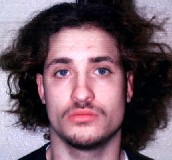
Eduardo Santiago
Murderer Russell Ellwood
Murderer · USA · 1991
Russell Ellwood was a former taxi driver. Authorities suspected him of killing…
20 victims
Russell Ellwood
Murderer · USA · 1991
Russell Ellwood was a former taxi driver. Authorities suspected him of killing…
20 victims
 Robert Martines Perez
Murderer · USA · 1994
Name: Robert Martines Perez · Other name used in proceedings: Robert Martinez P…
15 victims
Robert Martines Perez
Murderer · USA · 1994
Name: Robert Martines Perez · Other name used in proceedings: Robert Martinez P…
15 victims
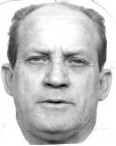 Billy Frank Vickers
Murderer · USA · 1993
Billy Frank Vickers Vickers was executed by lethal injection in Texas on Januar…
14 victims
Billy Frank Vickers
Murderer · USA · 1993
Billy Frank Vickers Vickers was executed by lethal injection in Texas on Januar…
14 victims
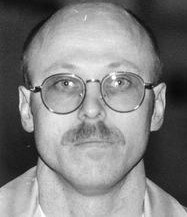 Carey Moore
Murderer · USA · 1979
Carey Moore was sentenced to death in 1980. In August 1979, Carey Dean Moore pu…
2 victims
Carey Moore
Murderer · USA · 1979
Carey Moore was sentenced to death in 1980. In August 1979, Carey Dean Moore pu…
2 victims
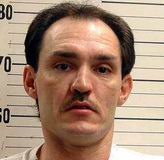 Hubert Glenn Sexton
Murderer · USA · 2000
Hubert Glenn Sexton was convicted in Tennessee for first degree murder of Stanl…
2 victims
Hubert Glenn Sexton
Murderer · USA · 2000
Hubert Glenn Sexton was convicted in Tennessee for first degree murder of Stanl…
2 victims
 Orville Majors
Serial killer · USA · 1994
Orville Lynn Majors (born 24 April 1961) was a former licensed practical nurse…
6 victims
Orville Majors
Serial killer · USA · 1994
Orville Lynn Majors (born 24 April 1961) was a former licensed practical nurse…
6 victims
 Vincent Tabak
Murderer · United Kingdom · 2010
Vincent Tabak was a Dutch engineer who lived and worked in the United Kingdom s…
1 victim
Vincent Tabak
Murderer · United Kingdom · 2010
Vincent Tabak was a Dutch engineer who lived and worked in the United Kingdom s…
1 victim
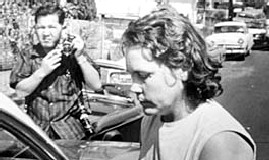 Maggie Young
Homicide · USA · 1965
Maggie Young was a despondent, mentally ill mother who had been treated for a m…
5 victims
Maggie Young
Homicide · USA · 1965
Maggie Young was a despondent, mentally ill mother who had been treated for a m…
5 victims
 Lillie Stanton
Murderer · USA · 2012
Lillie Stanton was 49 and lived at a house on Vaught Road in Winchester, where…
2 victims
Lillie Stanton
Murderer · USA · 2012
Lillie Stanton was 49 and lived at a house on Vaught Road in Winchester, where…
2 victims
- Gender
- male
- Country
- USA
- Location
- West Hartford, Connecticut, USA
- Date of birth
- September 12, 1979
- Age at first offence
- 21
- Characteristics
- murder for hire, abuse, sexual abuse, history of mental illness, domestic violence
- Victim profile
- Joseph Niwinski, 45
- Method of murder
- Shooting
- Date(s) of murder
- December 14, 2000
- Years active
- 2000
- Date of arrest
- 12 days after
- Status
-
Sentenced to death
Sentenced to death on January 31, 2005
Overview
Eduardo Santiago was sentenced to death on January 31, 2005 after a jury convicted him of capital felony and murder charges connected to the shooting of Joseph Niwinski.
The offence
Joseph Niwinski was shot in the left temple while he slept in his West Hartford apartment on December 14, 2000. Santiago was convicted in connection with the killing. Prosecutors said Santiago carried out a murder-for-hire scheme in which he agreed to kill Niwinski in exchange for a broken snowmobile and his credit card debt being paid off.
A lawyer described Santiago’s case as lacking “clear evidence” that Santiago was the one who pulled the rifle trigger. Joseph Niwinski was 45.
Investigation
Prosecutors argued that Niwinski was killed in a murder-for-hire plot, and that this supported an aggravating factor for the death penalty.
Trial
A jury convicted Santiago of capital felony and murder charges relating to the December 14, 2000 shooting.
Santiago was described as a “former Torrington resident” during the death penalty appeal hearing. During the appeal hearing, Santiago’s lawyer, Assistant Public Defender Mark Rademacher, said there was no way a reasonable jury could have condemned Santiago, and also stated that “This is really the least aggravating case that has ever come before this court,” adding: “The victim in this case did not suffer one iota of pain.”
Rademacher said the defense presented 25 mitigating factors for jurors to consider against the death penalty, including “Santiago’s troubled childhood.”
Sentencing
Santiago was sentenced to death by lethal injection in 2005.
In Connecticut, the sentencing framework described was that juries that convict defendants of capital felony must then consider whether to recommend the death penalty or life in prison without the possibility of release by deciding whether proven aggravating factors outweigh proven mitigating factors.
The state based its argument for execution on one aggravating factor: that Niwinski was killed in a murder-for-hire plot. The appeal hearing discussion also included that, while state lawmakers were debating the death penalty law in 1973, they considered murder for hire to be “the most heinous capital crime.”
Appeals
Death penalty appeal hearing
A lawyer told the state Supreme Court that Santiago’s death penalty case was “the weakest one ever to go before the high court,” alleging that the jury was biased and that key evidence was improperly withheld from the trial.
The hearing included allegations that a juror acknowledged the panel was disappointed that prosecutors had only one aggravating factor and that jurors improperly considered other aggravating factors not listed in state law.
The justices questioned the lawyers about whether criminal defendants’ rights trumped the privacy rights of others. The issue was raised in part by Santiago’s appeal accusing the trial judge of wrongly refusing to release an entire state Department of Children and Families file on Santiago and his family. The judge released portions dealing with Santiago but declined to disclose other parts dealing with his relatives because of privacy concerns.
Rademacher said releasing the rest of the DCF file could have given the jury more mitigating evidence and a fuller picture of Santiago’s troubled past. Rademacher described Santiago’s childhood as “grim,” saying it included beatings by his mother and stepfather, sexual molestation, and “his nine-year journey through foster care, psychiatric hospitals, orphanages, and shelters.”
Rademacher said: “This is really the least aggravating case that has ever come before this court.” He also said: “The victim in this case did not suffer one iota of pain.”
Marjorie Allen Dauster, senior assistant state's attorney, told the court that prosecutors proved the murder-for-hire aggravating factor listed in state law and that the jury was right to condemn Santiago. Dauster also pointed out the legislative discussion from 1973: “the most heinous capital crime.”
Justices were described as expected to take several months to issue a ruling.
Other details
Two other men were serving life prison sentences for the killing of Joseph Niwinski. The appeal hearing description stated that Niwinski was shot in the head while sleeping in his home.
Spotted an error, or have more information about this case?