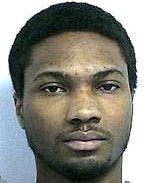
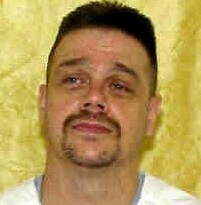
Marc Sappington
Spree killer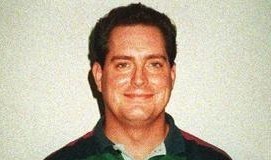 Mark Barton
Spree killer · USA · 1999
Mark Orrin Barton (1955 – July 29, 1999) committed a spree killing in Stockbrid…
12 victims
Mark Barton
Spree killer · USA · 1999
Mark Orrin Barton (1955 – July 29, 1999) committed a spree killing in Stockbrid…
12 victims
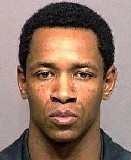 John Allen Muhammad
Spree killer · USA · 2002
John Allen Muhammad carried out the 2002 D.C. sniper attacks with his 17-year-o…
10 victims
John Allen Muhammad
Spree killer · USA · 2002
John Allen Muhammad carried out the 2002 D.C. sniper attacks with his 17-year-o…
10 victims
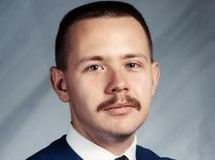 Michael McLendon
Spree killer · USA · 2009
Michael McLendon died of self-inflicted gunshot wound after shootout with autho…
10 victims
Michael McLendon
Spree killer · USA · 2009
Michael McLendon died of self-inflicted gunshot wound after shootout with autho…
10 victims
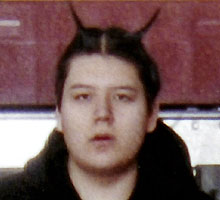 Jeffrey Weise
Spree killer · USA · 2005
Jeffrey Weise, a 16-year-old student at Red Lake High School in Red Lake, an un…
9 victims
Jeffrey Weise
Spree killer · USA · 2005
Jeffrey Weise, a 16-year-old student at Red Lake High School in Red Lake, an un…
9 victims
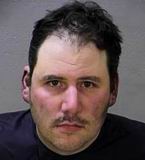 Christopher Speight
Spree killer · USA · 2010
Christopher Speight was the suspect in the Appomattox shootings, a spree shooti…
8 victims
Christopher Speight
Spree killer · USA · 2010
Christopher Speight was the suspect in the Appomattox shootings, a spree shooti…
8 victims
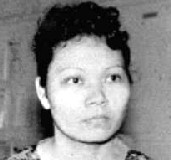 Flor Contemplacion
Murderer · Singapore · 1991
Flor R. Contemplacion (January 1953 - March 17, 1995) was a Filipina domestic w…
2 victims
Flor Contemplacion
Murderer · Singapore · 1991
Flor R. Contemplacion (January 1953 - March 17, 1995) was a Filipina domestic w…
2 victims
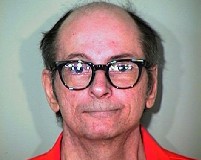 Richard Michael Rossi
Murderer · USA · 1983
Richard Michael Rossi was convicted in Superior Court (Maricopa) of first-degre…
1 victim
Richard Michael Rossi
Murderer · USA · 1983
Richard Michael Rossi was convicted in Superior Court (Maricopa) of first-degre…
1 victim
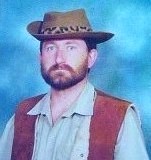 Barend Strydom
Spree killer · South Africa · 1988
Barend Hendrik Strydom was a former policeman who was described as a right-wing…
8 victims
Barend Strydom
Spree killer · South Africa · 1988
Barend Hendrik Strydom was a former policeman who was described as a right-wing…
8 victims
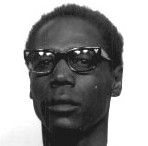 Samuel Christopher Hawkins
Murderer · USA · 1976
Samuel Christopher Hawkins Hawkins was executed by lethal injection in Texas on…
2 victims
Samuel Christopher Hawkins
Murderer · USA · 1976
Samuel Christopher Hawkins Hawkins was executed by lethal injection in Texas on…
2 victims
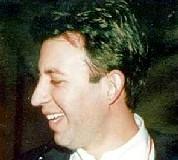 David Afuta
Murderer · Israel · 1997
David Afuta killed his ex-girlfriend, Israeli fashion model and actress Anat El…
1 victim
David Afuta
Murderer · Israel · 1997
David Afuta killed his ex-girlfriend, Israeli fashion model and actress Anat El…
1 victim
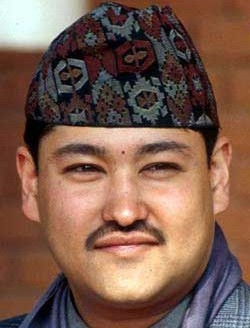 Dipendra Bir Bikram Shah
Mass murderer · Nepal · 2001
Name: Dipendra Bir Bikram Shah · Lifespan: 27 June 1971 – 4 June 2001 · Role: M…
9 victims
Dipendra Bir Bikram Shah
Mass murderer · Nepal · 2001
Name: Dipendra Bir Bikram Shah · Lifespan: 27 June 1971 – 4 June 2001 · Role: M…
9 victims
- Gender
- male
- Country
- USA
- Location
- Kansas City, Wyandotte County, Kansas, USA
- Date of birth
- February 9, 1978
- Age at first offence
- 23
- Characteristics
- drugs, cannibalism
- Victim profile
- David Mashak / Terry T. Green, 25 / Michael Weaver Jr., 22 / Alton "Fred" Brown Jr., 16
- Method of murder
- Shooting - St abbing with knife
- Date(s) of murder
- March-April 2001
- Years active
- 2001
- Date of arrest
- April 12, 2001
- Status
-
Life imprisonment
Sentenced to consecutive sentences of three life terms for three first-degree murders, 79 months for kidnapping, and 32 months for aggravated burglary in July 2004; sentenced to life imprisonment without parole eligibility for 20 years for first-degree felony murder plus a consecutive term of 130 months' imprisonment for attempted aggravated robbery in September 2004
Case record: Marc Vincent Sappington
Background
Marc Vincent Sappington was born February 9, 1978.
Sappington had a history of schizophrenia and admitted using PCP (phencyclidine) during April 2001. He heard voices telling him to "eat flesh and drink blood" or he would die. Sappington also claimed that during that time he suffered from other aural and visual hallucinations.
In his defense, Sappington relied on the "not guilty by reason of mental disease or defect" defense, claiming that his schizophrenia rendered him incapable of possessing the required criminal intent to commit the charged offenses. The case involved alternating periods of Sappington's competency/incompetency and was continued several times over 3 years.
Sappington was evaluated primarily by Dr. William S. Logan, a psychiatrist, who met with Sappington 13 times over that entire period.
Sappington was ultimately deemed competent to stand trial in July 2004.
The offence
Triple murders, kidnapping, and aggravated burglary (April 2001)
Between April 7 and April 10, 2001, three young men in a Kansas City, Kansas, neighborhood were murdered and a woman was kidnapped.
Sappington confessed to the crimes, and many of the following facts were described in his confession.
Terry Green
Early in the morning of April 7, 2001, Sappington killed Terry Green by stabbing him at least four times in Sappington's back yard. Sappington was afraid that someone had seen what he did, so he covered the body with a blue tarp and placed it in the back of Green's car. Sappington then parked the car in an antiques mall parking lot in Kansas City, Missouri.
Green's body was discovered in the afternoon of April 10, 2001.
Michael Weaver
On the morning of April 10, 2001, Michael Weaver's body was found slumped in the front seat of a car parked in an alley near his house.
Sappington knocked on the front door of the Fennix residence about 10 minutes before he left the house for Weaver, saying he needed a screwdriver. While he watched television with Alice Wilson for awhile, then went upstairs to get a jacket. About 10 minutes later he ran down the stairs and out the back door. After Sappington left Fennix's house, he stayed in the back yard for several minutes as voices in his head told him to eat flesh. Weaver arrived in the yard a few minutes later.
Using a knife Sappington had grabbed while in Fennix's kitchen, he stabbed Weaver. The wound went from Weaver's back completely through his chest. Weaver tried to get in his car and drive away, but crashed into a light pole. A neighbor was awakened by the crash and called the police. Within moments, Sappington heard sirens, so he attempted to move the car away from the accident scene. He abandoned it in a nearby alley before the police arrived.
Sappington later confessed that he cooked and ate a small amount of Brown's flesh, and that he left Brown's body in trash bags in the basement.
Fred Alton Brown
Sappington claimed that he had not satisfied the commanding voices in his head, so he killed Fred Alton Brown on April 10 as well.
Just hours after killing Weaver, Sappington invited Brown to come to his house and smoke some "wet." The two went to Sappington's basement, where Sappington shot Brown in the back with a shotgun. Sappington cut off a piece of Brown's leg and tried to eat it. It made him sick, so he went upstairs and fried it. He ate the cooked flesh and drank some of Brown's blood. Sappington then used a maul and knife to dismember the body.
Another account described that the body was found in four trash bags in the basement of Sappington's home. Only Brown's body was mutilated.
Anita Washington (kidnapping)
Around 9:30 p.m. on April 10, Anita Washington returned home from the grocery store. While she was parked in her driveway, Sappington knocked on her car window and pointed a gun at her. He got in the back seat and told her to drive to Kansas City, Missouri. Sappington kept saying that he was a "dead man." At some point, he told Washington to pull over so he could drive. After doing so, she exited the car and ran to the nearest house, where she called the police.
Sappington was apprehended on April 12, 2001.
Attempted aggravated robbery and felony murder episode (March 2001)
David Mashak owned and operated Phase One Auto Sales, a detail and auto sales shop located in Kansas City, Kansas.
On March 5, 2001, Mashak sold a 1984 Chevy Impala to A.G. for $750. Mashak's wife, Valerie Mashak, testified that when Mashak sold the car to A.G., Mashak told A.G. to park the car because the "tags weren't right."
Two days after the sale Police Officer Jason Allen stopped the Impala being driven by A.G. because the 30-day tag was altered, and due to the altered tag, Allen had the car towed to the impound lot. Valerie testified that on approximately March 10 A.G. called Mashak at home, complaining about his car being towed and asking Mashak to get it out of the impound lot.
On March 16, 2001, Mashak and Johnny Sublett, Mashak's employee and best friend, were eating lunch in the business' office around 2 p.m. when an African-American male entered the business. Mashak and Sublett were the only individuals in the shop at the time. Sublett did not know this individual; he was later identified as A.G.
Sublett testified that A.G. was angry and spoke to Mashak about getting the vehicle that Mashak had sold to A.G. out of the impound lot. Mashak did not pay attention to A.G.; he continued eating his lunch. A.G. then walked out of the shop.
As soon as A.G. walked out, a different man wearing a black mask and a black Carhart or Dickie coat with a hood entered the shop. Sublett did not recognize this individual either. The man, later identified as Sappington, was carrying what Sublett described as a black AK assault rifle. As soon as Sappington entered, he started shooting.
Sublett ran into the garage portion of the business and dived under a vehicle. From there, he could hear Mashak getting shot in the office and fleeing to the garage. After approximately 10 minutes, Sublett crawled out and called an ambulance. Mashak was lying on the garage floor, conscious, but dying.
Richard Turner, a customer at Loud and Clear Car Audio across the street, heard the gunshots and then saw one African-American male running out of Mashak's shop and another African-American male shooting into it. Turner and Donald Martin, the owner of Loud and Clear Car Audio, then saw two men speed away in a brown vehicle. According to Martin, a "hooded person" was driving the vehicle.
Police found Mashak and eight shell casings inside the shop. Officer Kim J. Crockett testified that AK-47 assault rifles and SKS assault rifles fire the caliber of ammunition found in the building. Seven of the shell casings were found in the office and one on the garage floor. Officers also found several bullet holes in the interior walls of the shop and in some of the vehicles parked in the garage.
Dr. Donald Pojman testified that Mashak suffered five gunshot wounds—two to the left shoulder, one to the right elbow, and two to the right side of the chest. Dr. Pojman opined that Mashak died from multiple gunshot wounds, most importantly the gunshot wound to the chest, with loss of blood the ultimate cause of death.
Sappington confessed to his participation in the crime. Sappington stated that A.G. approached him about helping recover money from Phase One Auto Sales because the guys there had sold A.G. a car that had been towed because the "tags weren't right." Sappington characterized himself and A.G. as "associates" prior to this incident. Sappington stated that A.G. said he would go into the shop first and talk to the owner and then Sappington was supposed to enter 6 seconds later as an "enforcer." Sappington stated that his role was to hold a gun on the individuals to make sure they cooperated; there was no plan to shoot them.
Sappington stated that with a black scarf covering his face, he entered the shop and pointed the SKS rifle at the two men sitting behind the counter. Because they "quickly moved" and Sappington thought they were reaching for a gun, he shot them. He then ran out of the shop, and he and A.G. fled in a brown vehicle.
A pager registered to A.G.'s father was found at the scene, which led officers to investigate A.G. as a suspect.
From a photo lineup, Sublett identified A.G. as the person who entered the shop on the day of the shooting, and Valerie Mashak identified him as the person who bought the car from her husband and who had called about getting it out of the impound lot. A.G. eventually confessed and implicated Sappington as the shooter.
At trial, Sappington and A.G. recanted their confessions. Sappington testified that he had nothing to do with the shooting, that he was never at the shop and that he did not know A.G. or Mashak. He claimed that he agreed to confess because Detective Greg Lawson promised he would help Sappington avoid the death penalty in a different homicide case if he confessed to shooting Mashak. He testified that he based his confession strictly upon information Lawson gave him.
A.G.'s trial testimony included that he stated, "I can't do this. I can't lie like this, man. This ain't right." He testified that he did not know Sappington in March 2001 and did not know who did the shooting.
A.G. testified that he had previously implicated Sappington only because Detective Lawson said that would mean that A.G. would remain in juvenile court for his own charges. A.G. also testified that when Lawson walked him from the juvenile center to the police station, Lawson told him details on what to confess.
As defense witness, A.G. testified that while he was talking to Mashak about getting his car out of the tow lot, a masked man entered the body shop and just started shooting. A.G. testified that he then ran out "scared for his life." A.G. also testified that after the shooting, his father picked him up and that his father would testify that the father did not pick up anyone other than A.G.
The jury convicted Sappington of one count of first-degree felony murder and one count of attempted aggravated robbery.
Investigation and arrest
Police began investigating Sappington after an anonymous tip the next month after March 2001. Sappington eventually confessed to his participation.
Sappington was taken into custody April 12, 2001. He was taken to the police station, Mirandized, and confessed to all three homicides as well as the kidnapping. The confession was videotaped.
After confessing, Sappington took detectives to where he had dumped a piece of Weaver's t-shirt, the keys to Weaver's car, and another location where he had dumped the keys to Green's car.
Trial
Triple murder case (July 2004)
In July 2004, a jury found Sappington guilty of all charges.
The Kansas Supreme Court addressed Sappington's direct appeal. Sappington directly appealed his convictions of three counts of first-degree murder, one count of kidnapping, and one count of aggravated burglary against four different victims.
The Kansas Supreme Court determined that it was necessary to review issues including instructions, substitution of counsel, evidentiary rulings concerning Sappington's mother's schizophrenia, and a mistrial requested after the State played the wrong videotape of a confession.
Issue 1: voluntary intoxication instruction
The Kansas Supreme Court held that the district court did not err in failing to instruct the jury on the defense of voluntary intoxication.
Sappington admitted he relied solely upon the defense of mental disease or defect under K.S.A. 22-3220. He argued that the district court erred in failing to independently instruct on voluntary intoxication because there was evidence indicating PCP-induced psychosis. The court concluded that Sappington's failure to request the voluntary intoxication instruction was fatal to his argument and that the district court instructed only the theory he requested.
The court also addressed prosecutorial closing argument related to PCP use and found the omission fatal to the claim because the voluntary intoxication instruction had not been requested or objected to at trial.
Issue 2: denial of new counsel
The Kansas Supreme Court held that the district court did not err in refusing to grant Sappington's request for new counsel.
The court described multiple competency/incompetency determinations and multiple pro se motions. It described Sappington's March 25, 2002 pro se motion alleging conflict of interest with attorney Patricia Kalb, later withdrawn in hopes of working through problems. It also described how in January 2003 Sappington was found incompetent because he was unable to consult with counsel in preparing his defense, including testimony that voices were telling him not to talk to his attorney.
The Kansas Supreme Court described the July 28, 2003 hearing on Sappington's motion, the court's denial, and subsequent delays caused by stopping medications and findings of incompetency. It described Sappington's July 2004 oral motion to dismiss counsel made the morning of trial, the court's denial, and the court's observations that Sappington brought the motion on the day of trial. It also described Sappington renewing the motion at the close of evidence and asking for a mistrial because counsel did not ask all requested questions; the court overruled the motion.
The Kansas Supreme Court affirmed the district court's refusal to appoint new counsel.
Issue 3: exclusion of evidence about Sappington’s mother’s schizophrenia
The Kansas Supreme Court held that the district court did not err in refusing to allow the defense to put on certain evidence about Sappington's mother's schizophrenia.
Sappington sought to link his behavior to his mother's schizophrenia as part of his defense theory. The district court excluded two pieces of evidence: medications Mary was taking and her behavioral symptoms.
The Kansas Supreme Court described that the State objected to admission of three prescriptions attempted to be introduced by Dr. Logan because Dr. Logan did not know for whom or what they had been prescribed. The Kansas Supreme Court agreed the district court did not abuse its discretion in refusing that evidence and noted it was cumulative because Sappington had already established Mary was schizophrenic through the testimony of her brother, Rufus White.
The Kansas Supreme Court also addressed why evidence of Mary's behavior was limited, including that both White and Dr. Logan testified Mary also suffered from bipolar disorder and that PCP effects and schizophrenia symptoms were described as identical by Dr. Logan. The court also reasoned that even if both Mary and Sappington clearly suffered only from schizophrenia, Sappington failed to present testimony that family members with schizophrenia usually exhibit the same symptoms.
Issue 4: mistrial after wrong confession videotape
The Kansas Supreme Court held that the district court did not err in refusing to declare a mistrial after the State began to play the videotape of the wrong confession in open court.
Sappington requested an order in limine prohibiting any mention of allegations in the Mashak case during the triple murder trial, and the trial judge granted it.
During the State's case-in-chief, Detective Greg Lawson testified about the details of Sappington's confession. The prosecutor asked the detective to play the videotaped confession. During that time, the prosecutor told the court it looked like the wrong videotaped confession was starting to play and that the wrong tape was from the Mashak homicide. The videotape played for a short period of time; the jury heard only a detective begin to Mirandize Sappington, and no questions were asked and no information about the instant case was revealed.
Sappington moved for a mistrial. Defense counsel Kalb explained that the Mashak tape showed Sappington wearing an orange jail suit, while in the correct confession tape he was wearing street clothes, and argued that the jury would "know something was up" and it would be "obvious it's a different time about a different matter." The judge offered to give a curative instruction, but she declined and said "any explanation would make it worse."
The Kansas Supreme Court affirmed the denial of a mistrial, concluding Sappington did not show substantial prejudice.
The Kansas Supreme Court concluded: "Accordingly, we affirm the district court and convictions."
Sappington's convictions in this case were affirmed by the Kansas Supreme Court on November 2, 2007.
Sentencing
July 2004 sentencing (triple murder case)
In July 2004, Sappington received consecutive sentences of three life terms for the first-degree murders, 79 months for the kidnapping, and 32 months for the aggravated burglary.
September 2004 sentencing (Mashak case)
Sappington was convicted of first-degree felony murder and attempted aggravated robbery in a separate episode.
In September 2004, the court sentenced Sappington to life imprisonment without parole eligibility for 20 years for first-degree felony murder, plus a consecutive term of 130 months' imprisonment for attempted aggravated robbery. The sentences were to run consecutive to the sentences imposed in the triple murder case: consecutive sentences of three life terms for the first-degree murders, 79 months for kidnapping, and 32 months for aggravated burglary.
Appeals
Kansas Supreme Court (November 2, 2007)
The Kansas Supreme Court issued an opinion in Case No. 94,415, "STATE of KANSAS, Appellee, v. MARC VINCENT SAPPINGTON, Appellant." The opinion was delivered by NUSS, J., and listed the holdings on issues including jury instructions, counsel substitution, exclusion of evidence about Sappington's mother's schizophrenia, and denial of a mistrial after playing the wrong confession videotape. The court affirmed.
Sappington's appeal from those convictions was affirmed by the Kansas Supreme Court on November 2, 2007.
Other details
Confession content and details about cannibalism
Sappington confessed in an April 2001 videotape to stabbing Weaver to death, leaving Green's body in a car, and shooting Brown, before dismembering his body and eating a small piece of his leg.
Detectives testified that in his statement to police, Sappington said he cooked and ate a small amount of Brown's flesh.
There were also descriptions that Sappington said he cooked and ate a small amount of Brown's flesh and planned to freeze the remainder to eat later.
Relationship and identifiers in the triple murder case
Michael Weaver and Eric Fennix were described as step-brothers. Alice Wilson was Fennix's mother. Myah was identified as Fennix's fiancé. Eric Fennix was described as Sappington's best friend.
Terry T. Green was described as 25. Michael Weaver Jr. was described as 22. Alton "Fred" Brown Jr. was described as 16.
Victim of kidnapping
Anita Washington was kidnapped and was in the same neighborhood as the homicides.
Trial participants and case handling
The Kansas Supreme Court described the jury trial as occurring in July 2004 for the triple murders. It also described that the trial court had been J. DEXTER BURDETTE, judge.
Sarah Ellen Johnson, of Kansas Appellate Defender Office, argued the cause and was on the brief for appellant. Jerome A. Gorman, district attorney, argued the cause, and Paul J. Morrison, attorney general, was with him on the brief for appellee.
The court stated: "Affirmed."
Mashak case witnesses and evidence details
Valerie Mashak testified about the sale and the "tags weren't right" issue.
Johnny Sublett testified about A.G.'s anger over the impound lot and about Sappington being the masked shooter carrying what was described as a black AK assault rifle. Sublett testified that he called an ambulance and that Mashak was conscious but dying.
Richard Turner and Donald Martin testified about seeing two men speed away in a brown vehicle. Detective testimony included Officer Kim J. Crockett on shell casings and gun type, and Dr. Donald Pojman on five gunshot wounds and cause of death.
A.K. assault rifles and SKS assault rifles were testified to in relation to shell casing caliber.
Additional procedural note about attorney representation
Sappington's motions for relief of court appointed counsel and requests for new counsel were considered by the district court during competency and incompetency periods, and the Kansas Supreme Court addressed the standard for substitution of counsel and justifiable dissatisfaction, including complete breakdown in communications, as well as timeliness concerns for requests made on the first day of trial.
Verbatim quotation included in the Kansas Supreme Court opinion (closing argument)
During the Kansas Supreme Court's discussion of Issue 1 (voluntary intoxication instruction), the prosecutor's closing argument contained verbatim material including:
"So what Mr. Sappington was trying to tell you is, well, I took some drugs and I voluntarily took these drugs and when I killed somebody because I took drugs, you ought to just find me not guilty. You ought to just say that I'm not guilty because of mental disease or defect because I went out and chose to use drugs voluntarily. "Ladies and gentlemen, that's not a defense. That's not a defense at all. . . . . "Even if you think these voices that you heard because you took the drugs wants you to drink his blood and eat his flesh, not an excuse at all. The only way it would be an excuse is if he had this legitimate mental disease or defect. . . . It was the drugs that caused him to hear the voices. . . . . "[W]e have evidence through his own statement that he was using drugs and it was the drugs that caused it . . . ." (Emphasis added.)
Verbatim quotation included in the opinion relating to A.G. at trial
At trial in the Mashak case, A.G. stated, "I can't do this. I can't lie like this, man. This ain't right."
Verbatim quotation included in the mistrial discussion (curative instruction)
In the triple murder case mistrial discussion, defense counsel Kalb said:
"any explanation would make it worse."
Kalb also argued that the jury would "know something was up" and it would be "obvious it's a different time about a different matter."

Spotted an error, or have more information about this case?