
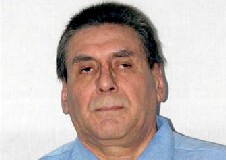
David Afuta
Murderer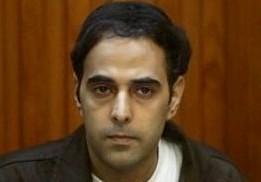 Yigal Amir
Murderer · Israel · 1995
Yigal Amir (born May 23, 1970) was the Israeli assassin of the Prime Minister o…
1 victim
Yigal Amir
Murderer · Israel · 1995
Yigal Amir (born May 23, 1970) was the Israeli assassin of the Prime Minister o…
1 victim
 Dr. Wouter Basson
Murderer · 1992
Wouter Basson (born July 6, 1950) was a South African cardiologist and the form…
230 victims
Dr. Wouter Basson
Murderer · 1992
Wouter Basson (born July 6, 1950) was a South African cardiologist and the form…
230 victims
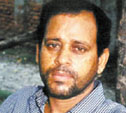 Ershad Sikder
Murderer · Bangladesh · 1990
Ershad Sikder was an influential political figure in the south-western city of…
30 victims
Ershad Sikder
Murderer · Bangladesh · 1990
Ershad Sikder was an influential political figure in the south-western city of…
30 victims
 Russell Ellwood
Murderer · USA · 1991
Russell Ellwood was a former taxi driver. Authorities suspected him of killing…
20 victims
Russell Ellwood
Murderer · USA · 1991
Russell Ellwood was a former taxi driver. Authorities suspected him of killing…
20 victims
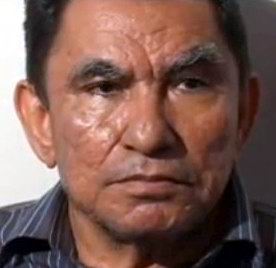 Anisio Ferreira de Sousa
Murderer · Brazil · 1989
September 4, 2003 — Anísio Ferreira de Sousa was sentenced to 77 years in priso…
19 victims
Anisio Ferreira de Sousa
Murderer · Brazil · 1989
September 4, 2003 — Anísio Ferreira de Sousa was sentenced to 77 years in priso…
19 victims
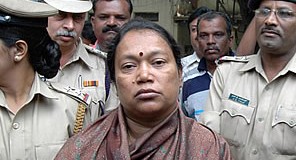 Mallika
Serial killer · India · 1999
Mallika, also known by several aliases including Lakshmi, Jayamma, Savithramma,…
6 victims
Mallika
Serial killer · India · 1999
Mallika, also known by several aliases including Lakshmi, Jayamma, Savithramma,…
6 victims
 Mark Arlo Sheppard
Murderer · USA · 1993
November 28, 1993 — Mark Arlo Sheppard and his companion Andre Graham shot and…
2 victims
Mark Arlo Sheppard
Murderer · USA · 1993
November 28, 1993 — Mark Arlo Sheppard and his companion Andre Graham shot and…
2 victims
 Anthony Leroy Pierce
Murderer · USA · 1977
Anthony Leroy Pierce (also known as Yatombi Ikei), TDCJ-ID Polunsky Unit 3872,…
2 victims
Anthony Leroy Pierce
Murderer · USA · 1977
Anthony Leroy Pierce (also known as Yatombi Ikei), TDCJ-ID Polunsky Unit 3872,…
2 victims
 Kang Ho-sun
Serial killer · South Korea · 2006
Kang Ho-sun was a Korean serial killer who was sentenced to death on April 22,…
10 victims
Kang Ho-sun
Serial killer · South Korea · 2006
Kang Ho-sun was a Korean serial killer who was sentenced to death on April 22,…
10 victims
 Jerry Terrell Jackson
Murderer · USA · 2001
Jerry Terrell Jackson was a Black male. He grew up in James City County. He was…
1 victim
Jerry Terrell Jackson
Murderer · USA · 2001
Jerry Terrell Jackson was a Black male. He grew up in James City County. He was…
1 victim
- Gender
- male
- Country
- Israel
- Location
- Jerusalem, Israel
- Date of birth
- 1965
- Age at first offence
- 32
- Characteristics
- murder-suicide, abuse, domestic violence
- Victim profile
- F ashion model Anat Elimelech, 23 (his exgirlfriend)
- Method of murder
- Shooting
- Date(s) of murder
- December 2, 1997
- Years active
- 1997
- Date of arrest
- —
- Status
-
Died in custody
Committed suicide by shooting himself the same day
Case overview
David Afuta killed his ex-girlfriend, Israeli fashion model and actress Anat Elimelech, in 1997 and then committed suicide by shooting himself the same day. The Jerusalem Family Court later determined that Afuta shot Elimelech and then committed suicide, and that Afuta’s brother tampered with evidence to make it look like the opposite had occurred.
Timeline
- December 2, 1997 — Elimelech and Afuta were found dead in their Jerusalem apartment; Afuta was found on the living room floor with two bullet wounds in his chest, and Elimelech was found with a gunshot wound in her chest with the gun found close to her body.
- Three weeks into the investigation — Police determined that Afuta was the gunman and that someone else had moved the murder weapon.
- 1999 — An investigation into the identity of the person who tampered with the crime scene, removing the gun from Afuta’s hand, wiping it off to remove fingerprints, and placing it next to Elimelech, was closed.
- 2001 — Elimelech’s bones were moved away from the suicide plot of the Har HaMenuchot cemetery to the main burial plot of that cemetery.
- 2004 — Elimelech’s father and brother filed a lawsuit against David Afuta’s brother Joseph Afuta, demanding that the court formally determine that Afuta was the murderer and demanding compensation of 8.4 million NIS.
- March 1, 2011 — Justice Menachem Cohen ruled that the murder was committed by David Afuta and that he afterwards committed suicide, and he ruled that Joseph Afuta tampered with the evidence in the crime scene with the intention of incriminating Elimelech.
- 2005 — Elimelech’s family sued Afuta’s estate for 9.25 million NIS.
- In 2005 — Elimelech’s family requested that the court determine who had done the shooting, and the judge ruled that Afuta was indeed the killer; the sides were given 30 days to complete their compensation claims before issuing a final verdict.
The offence
On the morning of December 2, 1997, Anat Elimelech was found dead along with her boyfriend, David Afuta, in their home in the Ramat Beit HaKerem neighborhood in Jerusalem. Elimelech was shot once while Afuta was shot twice. Police found Afuta on the living room floor with two bullet wounds in his chest. Elimelech also had a gunshot wound in her chest, and the gun was found close to her body.
Early on, police suspected that Elimelech was the one who had done the shooting. Three weeks into the investigation, police determined that Afuta was the gunman and that someone else had moved the murder weapon. Shooting-trajectory analyses, and forensic and fingerprint tests confirmed that Afuta fired all three shots: one to Elimelech’s chest that killed her, one that caused a nonlethal wound to his shoulder, and then the fatal shot to his chest.
Police also investigated the identity of the person who tampered with the crime scene. The investigation described removing the gun from Afuta’s hand, wiping it off to remove fingerprints, and placing it next to Elimelech.
The motive for the shooting was determined to be anger and depression at being dumped by Elimelech two months prior to the incident.
Investigation
Early preliminary investigations suggested that Elimelech was the murderer based on their bodies being found when the gun was in her hand. Later, a renewed investigation took place after pressure from Elimelech’s family. It revealed negligence by the original team of investigators and concluded that Afuta shot Elimelech and then killed himself.
The renewed investigation also described that Afuta’s brother arrived first to the scene of the crime before the police and moved the gun away from Afuta’s hand to Elimelech’s hand in order to obscure the evidence. Laboratory tests verified this account. Despite this, the prosecution decided, with the support of the police, not to initiate legal proceedings against Afuta’s brother and he was released.
The renewed investigation reported that during the last years of her life Elimelech tried several times to leave Afuta, but Afuta did not let her go and threatened to commit suicide if she left, and as a result she always got back to him.
An investigation into the identity of the person who tampered with the crime scene, including removing the gun from Afuta’s hand, wiping it to remove fingerprints, and placing it next to Elimelech, was closed in 1999, despite police claiming solid evidence implicating Afuta’s brothers who had entered the apartment before the police.
Court proceedings
Elimelech’s family brought a civil case against Afuta’s estate seeking compensation and asking the court to determine who had done the shooting. The family sued Afuta’s estate for NIS 9.25 million. Elimelech’s father and brother later filed a lawsuit against David Afuta’s brother Joseph Afuta demanding a formal determination that Afuta was the murderer and demanding compensation of 8.4 million NIS.
In a ruling, the Jerusalem Family Court determined that it was David Afuta who shot his ex-girlfriend, Anat Elimelech, and then committed suicide, and that Afuta’s brother had tampered with evidence to make it look like the opposite had occurred. The ruling stated that Afuta’s heirs owed Elimelech’s family compensation for their loss and subsequent expenses, but the exact amount of compensation had yet to be determined at the time that was described. The sides were given 30 days to complete their compensation claims before issuing a final verdict.
Justice Menachem Cohen formally ruled on March 1, 2011 that the murder was committed by David Afuta who afterwards committed suicide, and he determined that his brother Joseph Afuta tampered with the evidence in the crime scene with the intention of incriminating Elimelech. The court ruled that Joseph would compensate Elimelech’s family with 300,000 NIS.
Aftermath
Anat Elimelech initially was buried in the suicide plot of the Jewish cemetery Har HaMenuchot in Jerusalem in accordance with Jewish burial customs because preliminary investigations found their bodies with the gun in her hand.
Elimelech’s bones were moved away from the suicide plot of the Har HaMenuchot cemetery to the main burial plot of that cemetery during 2001, four years after her death.
Victim
Anat Elimelech was an Israeli fashion model and actress who played in commercials and television shows for children. She was born on March 8, 1974 and died on December 2, 1997. She was described as having appeared in commercials and television shows for children and as having starred in TV commercials for the Israeli supermarket chain Hiperkol (היפרכל).
Spotted an error, or have more information about this case?