Heinz Schmidt
Mass murderer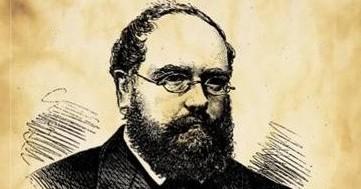 Alexander Keith
Mass murderer · Germany · 1875
Alexander “Sandy” Keith Jr. (1827–1875) was known by the assumed name of Willia…
88 victims
Alexander Keith
Mass murderer · Germany · 1875
Alexander “Sandy” Keith Jr. (1827–1875) was known by the assumed name of Willia…
88 victims
 Robert Steinhäuser
Mass murderer · Germany · 2002
Robert Steinhäuser committed suicide by shooting himself the same day. The Erfu…
16 victims
Robert Steinhäuser
Mass murderer · Germany · 2002
Robert Steinhäuser committed suicide by shooting himself the same day. The Erfu…
16 victims
 Gundolf Köhler
Mass murderer · Germany · 1980
Gundolf Köhler (August 27, 1959 – September 26, 1980) was a German right-wing e…
12 victims
Gundolf Köhler
Mass murderer · Germany · 1980
Gundolf Köhler (August 27, 1959 – September 26, 1980) was a German right-wing e…
12 victims
 Walter Seifert
Mass murderer · Germany · 1964
Committed suicide by poisoning himself with cyanide the same day; died next day…
10 victims
Walter Seifert
Mass murderer · Germany · 1964
Committed suicide by poisoning himself with cyanide the same day; died next day…
10 victims
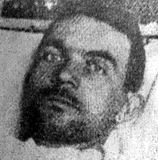 Fritz Angerstein
Mass murderer · Germany · 1924
Fritz Heinrich Angerstein was executed by decapitation with an axe in the court…
8 victims
Fritz Angerstein
Mass murderer · Germany · 1924
Fritz Heinrich Angerstein was executed by decapitation with an axe in the court…
8 victims
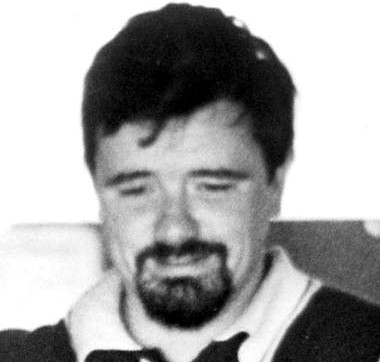 Erwin Mikolajczyk
Mass murderer · Germany · 1994
Erwin Mikolajczyk killed himself by detonating a homemade bomb the same day as…
6 victims
Erwin Mikolajczyk
Mass murderer · Germany · 1994
Erwin Mikolajczyk killed himself by detonating a homemade bomb the same day as…
6 victims
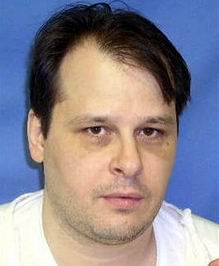 Kevin Scott Varga
Murderer · USA · 1998
Kevin Scott Varga was a white male executed in Texas on May 12, 2010, for the 1…
2 victims
Kevin Scott Varga
Murderer · USA · 1998
Kevin Scott Varga was a white male executed in Texas on May 12, 2010, for the 1…
2 victims
 Jose Manuel Torres Yake
Murderer · Japan · 2005
Jose Manuel Torres Yake was born in February 1972. He assumed the false name Ju…
1 victim
Jose Manuel Torres Yake
Murderer · Japan · 2005
Jose Manuel Torres Yake was born in February 1972. He assumed the false name Ju…
1 victim
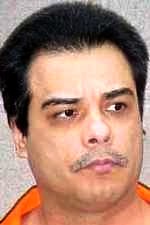 Ernest Valencia Gonzales
Murderer · USA · 1990
Ernest Valencia Gonzales was the defendant. · February 20, 1990 — The Wagner fa…
1 victim
Ernest Valencia Gonzales
Murderer · USA · 1990
Ernest Valencia Gonzales was the defendant. · February 20, 1990 — The Wagner fa…
1 victim
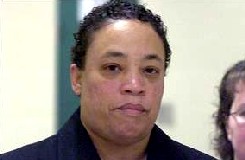 Daphne Wright
Murderer · USA · 2006
Daphne Wright was deaf and was described as lesbian. She lived with her girlfri…
1 victim
Daphne Wright
Murderer · USA · 2006
Daphne Wright was deaf and was described as lesbian. She lived with her girlfri…
1 victim
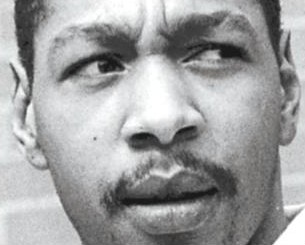 Timothy Wilson Spencer
Serial killer · USA · 1984
Name: Timothy Wilson Spencer · Alias(es) / monikers: “the Southside Slayer”; “t…
5 victims
Timothy Wilson Spencer
Serial killer · USA · 1984
Name: Timothy Wilson Spencer · Alias(es) / monikers: “the Southside Slayer”; “t…
5 victims
- Gender
- male
- Country
- Germany
- Location
- Bremen, Germany
- Date of birth
- September 24, 1883
- Age at first offence
- 30
- Characteristics
- school shooting
- Victim profile
- Anna Cubizka, 7 / Sophie Gornisiewicz (died by falling down the stairs) / Else Hermann, 7 / Maria Roblik, 8 / Unknown girl
- Method of murder
- Shooting
- Date(s) of murder
- June 20, 1913
- Years active
- 1913
- Date of arrest
- Same day
- Status
-
Died in custody
Found insane; no trial was conducted; he spent the rest of his life in a Bremen mental asylum and died in 1926
Timeline
- June 20, 1913 — Heinz Schmidt entered St. Mary’s Catholic School (St.-Marien-Schule) in Walle, a quarter of Bremen, Germany, and shot at students and teachers.
- June 20, 1913 — Police arrested Heinz Schmidt and subdued him after school staff tackled him and others attempted to stop him.
- mid-July — The last victim died some time in mid-July.
Background
Heinz Schmidt was born in Sülze on September 24, 1883. He worked as a teacher at a school in Stolp until May 1912, when he quit due to a mental breakdown. After a stay at a sanatorium and having to quit another job afterward, he went to Bremen in December of the same year. People later described him as an odd and shy person.
According to letters he had written, Schmidt felt strong resentments against the Jesuits, calling them a danger for the people and holding them responsible for the death of his father, a pastor, who had died the day before the shooting. Schmidt was examined at the St. Jürgen-asylum in Ellen, where he was found to be insane.
His mother had come to Bremen a few months prior to the shooting spree in an unsuccessful attempt to have her son admitted to a mental hospital. Schmidt had already had a stay in a sanatorium in May 1911, but he was released a short time later—allegedly cured. Schmidt refused to provide any testimony after his arrest. Details from his earlier life and possible motives were described afterward, including a claim written on a letter from his sister about their seriously ill father, a Protestant clergyman: “the Jesuits did this.”
Bremen detectives found out that Schmidt’s father had died the day before the massacre and that he had learned of the death from a telegram delivered that afternoon. He blamed his father’s death on the Jesuits in a later letter to a Bremen doctor.
At the time, Jesuit orders had been banned within the German Empire under the Jesuit Law of 1872, but conspiracy theories persisted. The account described Jesuits being treated as a central figure in crude theories of world supremacy that flourished in the German Kaiserreich, along with similar conspiracy frameworks involving Jews and freemasons.
The offence
The Bremen school shooting occurred on June 20, 1913 at St. Mary’s Catholic School (St.-Marien-Schule) in Walle, a quarter of Bremen, Germany.
Before the shooting, Schmidt entered the school armed with six to ten revolvers or Browning pistols (depending on sources) and about 1000 rounds of ammunition. He had bought the ammunition several weeks prior to the shooting. Because of the large number of rounds, the owner of the gun shop where Schmidt had bought his arsenal deemed it necessary to contact police, though the incident was not found to be important and thus not investigated any further.
At approximately 11:00 a.m., Schmidt entered the school. In the hallway on the first floor he encountered Marie Pohl, a teacher at the school, who was just stepping out of classroom 8b. Seeing his agitated appearance, she questioned him about his business at school. Without answer, Schmidt shot at her, barely missing her head. While Pohl fled into a nearby classroom, Schmidt entered room 8b, which was occupied by 65 girls, most of them 6 or 7 years old, and began firing at them.
After the girls hid under their tables, the gunman instantly killed two of them and wounded another 15. When the girls fled out of the classroom, Schmidt followed them, still shooting. While trying to escape, one of the girls fell down the stairs, broke her neck, and died. Schmidt then unsuccessfully tried to enter another classroom that had been locked by a teacher who had realized what was happening.
Schmidt shot at the school janitor, Butz. Butz attempted to apprehend him, and was hit in the face. Schmidt then went upstairs where he was tackled by teacher Hubert Möllmann. When Schmidt managed to break free from Möllmann’s grip, he shot the teacher twice, hitting him in the stomach and shoulder. Schmidt proceeded to shoot out of a window at children on the schoolyard, injuring five boys.
Some of the shots injured a roofer working nearby. People who were alarmed by the shooting rushed into the school building. When they arrived on the first floor, the gunman had already been subdued by janitor Butz and a teacher named Hartlage.
Investigation
In March and April of 1913, two Bremen weapons dealers had contacted the police because they thought the amount of weapons and munitions Schmidt had purchased seemed suspicious. The investigations did not lead anywhere.
Arrest and immediate events
After the school staff subdued him, police arrested Schmidt and took him to the nearest police station. Police reported having trouble protecting Schmidt from an angry lynch mob that gathered outside. Police raised their pistols and sabres to drive the masses, which included many parents whose children had attended the school.
When led away by police, Schmidt was met by an angry crowd outside. The crowd beat him up and attempted to lynch him until police officers managed to hold the mob at bay with their sabres.
The account also described that by the time of the interruption of the attack, the massacre ended after about 15 minutes. It said that a coachman who had arrived at the scene finally beat Schmidt down with a pitchfork, as the Bremen correspondent for the Berliner Lokal-Anzeiger newspaper reported at the time.
At the time of his arrest, Schmidt called out: “This may be the beginning, but the end is yet to come.”
Trial
Schmidt was declared to be insane and no trial was conducted.
Sentencing
No sentencing is recorded because no trial was conducted.
Outcome
Heinz Schmidt was found insane. He spent the rest of his life in a Bremen mental asylum. He died in 1926.
Aftermath
In total, Schmidt fired 35 rounds. Three girls died instantly, while two more later succumbed to their wounds; the last victim died some time in mid-July. The account listed injuries to 18 children and also injury to three other persons.
Victims named included:
- Anna Cubizka, 7
- Sophie Gornisiewicz, died by falling down the stairs
- Else Hermann, 7
- Maria Roblik, 8
- Unknown girl
More than 30,000 people attended the funeral procession when the girls were brought to the cemetery.
Four days after the killings, a memorial service was held in Bremen. Four small coffins were laid at the front of the Marienkirche church, and every row of seats was filled. The coffins were covered in wreaths and surrounded by a sea of candles. After the requiem, the teachers of the Marienschule carried the coffins to hearses parked out front. A long parade took shape carrying the girls to their graves under heavy rain clouds.
The original Marienschule had been destroyed during a World War II bombing run and rebuilt at another location. The graves of the five girls, where they were buried side by side, had long since been decommissioned.
Newspapers published special editions about the “school bloodbath,” and it said even the New York Times published an eyewitness report from Bremen. It also described that in the ensuing public debate, calls were made for tighter weapons laws in the German Empire.
Schmidt’s shooting was characterized as the first documented mass school shooting in history in the account. It also described that the similarities with later attacks were discussed, mentioning Erfurt, Winnenden, Littleton, and Newtown.

Spotted an error, or have more information about this case?