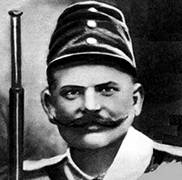
Bela Kiss
Serial killer Júlia Fazekas
Serial killer · Hungary · 1911
Júlia Fazekas was a midwife in Nagyrév, Hungary, who arrived in Nagyrév in 1911…
45 victims
Júlia Fazekas
Serial killer · Hungary · 1911
Júlia Fazekas was a midwife in Nagyrév, Hungary, who arrived in Nagyrév in 1911…
45 victims
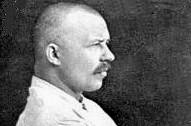 Billy Gohl
Serial killer · USA · 1903
Billy Gohl (? - 1928) was an American serial killer who, while working as a uni…
40 victims
Billy Gohl
Serial killer · USA · 1903
Billy Gohl (? - 1928) was an American serial killer who, while working as a uni…
40 victims
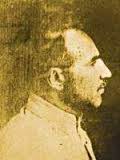 Ali Asghar Borujerdi
Serial killer · Iran · 1908
Ali Asghar Borujerdi (Persian: عَلی اَصغَر بروجردی) was known in Iran as اصغر ق…
33 victims
Ali Asghar Borujerdi
Serial killer · Iran · 1908
Ali Asghar Borujerdi (Persian: عَلی اَصغَر بروجردی) was known in Iran as اصغر ق…
33 victims
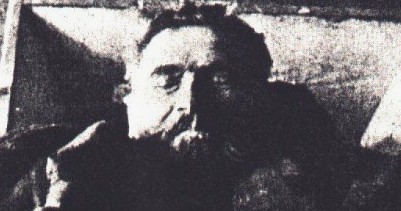 Karl Denke
Serial killer · Germany · 1909
Karl Denke (August 12, 1870 – December 20, 1924) was a serial killer from Germa…
30 victims
Karl Denke
Serial killer · Germany · 1909
Karl Denke (August 12, 1870 – December 20, 1924) was a serial killer from Germa…
30 victims
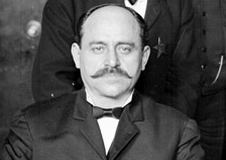 Johann Otto Hoch
Serial killer · USA · 1890
Johann Otto Hoch (1855 - 1906) was the most famous and last-used alias of a Ger…
15 victims
Johann Otto Hoch
Serial killer · USA · 1890
Johann Otto Hoch (1855 - 1906) was the most famous and last-used alias of a Ger…
15 victims
 Elmo Patrick Sonnier
Murderer · USA · 1977
Elmo Patrick Sonnier (February 21, 1951 - April 5, 1984) was executed by electr…
2 victims
Elmo Patrick Sonnier
Murderer · USA · 1977
Elmo Patrick Sonnier (February 21, 1951 - April 5, 1984) was executed by electr…
2 victims
 John Richard Blackwelder
Murderer · USA · 2000
John Richard Blackwelder was a white male inmate. He was born on December 10, 1…
1 victim
John Richard Blackwelder
Murderer · USA · 2000
John Richard Blackwelder was a white male inmate. He was born on December 10, 1…
1 victim
 Amanda Kaur
Murderer · USA · 2010
Amanda Kaur was 28 at sentencing and was a mother of two. Her husband, 26-year-…
1 victim
Amanda Kaur
Murderer · USA · 2010
Amanda Kaur was 28 at sentencing and was a mother of two. Her husband, 26-year-…
1 victim
 Timothy Alan Dunlap
Murderer · USA · 1991
Timothy Alan Dunlap was 35 and lived in Sellersburg, Indiana. He pleaded guilty…
2 victims
Timothy Alan Dunlap
Murderer · USA · 1991
Timothy Alan Dunlap was 35 and lived in Sellersburg, Indiana. He pleaded guilty…
2 victims
 Anders Eklund
Murderer · Sweden · 2000
Anders Eklund (born August 6, 1965) was a Swedish murderer and rapist. He was c…
2 victims
Anders Eklund
Murderer · Sweden · 2000
Anders Eklund (born August 6, 1965) was a Swedish murderer and rapist. He was c…
2 victims
 Cary Stayner
Murderer · USA · 1999
Cary A. Stayner (born August 13, 1961) was an American serial killer. Stayner w…
4 victims
Cary Stayner
Murderer · USA · 1999
Cary A. Stayner (born August 13, 1961) was an American serial killer. Stayner w…
4 victims
Overview
Béla Kiss (1877 – ?) was a Hungarian serial killer. He murdered at least 24 young women and attempted to preserve them in giant metal drums kept on his property. He was a tinsmith who lived in Cinkota (nowadays part of Budapest), Hungary since 1900. Neighbors considered him a pleasant man to live with. He was an amateur astrologer and was allegedly fond of other occult practices.
Background
Béla Kiss lived in Cinkota and had previously lived in Budapest. He earned his living as a tinsmith.
In February 1912, at forty years of age, Kiss moved to Cinkota with his wife Marie, about fifteen years his junior. Within a matter of weeks, Marie found herself a lover, Paul Bikari. In December 1912, Kiss told neighbors that the couple had run off together, leaving him alone. After Marie left, Kiss hired an elderly housekeeper, Mrs. John Jakubec.
Town gossips noted that over the years a steady stream of women from Budapest spent short periods of time at Kiss’s home in Cinkota, but no one in the town, including Mrs. Jakubec, was introduced to these women.
Kiss collected large metal drums. He told the town constable that they were filled with gasoline, expected to be scarce with the approach of war in Europe. Townsfolk noticed the drums, and he had told town police who questioned him that he filled them with gasoline in order to prepare for rationing of the oncoming war.
There were reports from Budapest authorities about the disappearance of two widows named Schmeidak and Varga. Both women had been last seen in the company of a man named Hoffmann, who had also disappeared. Cinkota’s constable remembered Kiss and his stockpile of gasoline, but saw no reason to connect Hoffmann with Kiss.
The offence
Kiss used an approach that relied on newspaper matrimonial advertisements under the name Hoffmann. He placed ads in marriage columns of several newspapers and selected mainly women who had no relatives living nearby and knew no one who would quickly notice their disappearance. He wooed women and convinced them to send him money. If he thought they were troublesome or might contact the police, he arranged to eliminate them.
Kiss’s correspondence included letters that showed he was defrauding women looking for marriage. The oldest letters were from 1903. Nagy found evidence that Kiss had received 174 marriage proposals; he offered marriage to 74 women and kept up correspondence with them.
Kiss’s victims were strangled and preserved in alcohol inside metal drums. During the discovery in July 1916, seven large metal drums were found, each containing the body of a woman. The bodies were preserved in alcohol and were identifiable from clothing details.
A total of 24 bodies were found after a search of Kiss’s house and grounds. One of the recovered victims was Paul Bikari (the only male among the twenty-four recovered victims, according to the account). A search of the surrounding countryside revealed another seventeen drums, each containing a pickled corpse inside.
Court proceedings were initiated by two women who had initiated court proceedings because he had taken money from them on the promise of marriage. The women were Julianne Paschak and Elizabeth Komeromi. Both women disappeared and the case had been dismissed.
Kiss was described as possibly having slain Marie Kiss and her clandestine lover Paul Bikari in a jealous rage, disposing of their bodies in a way that he thought would prevent later discovery. A later reconstruction described that in 1906 Kiss forced Margaret Toth to write a letter to her mother claiming she could not bear the shame of rejection and was going to look for a new love in America. Kiss then strangled Margaret, hid her body in a metal container, and mailed the letter to her mother.
Investigation
In July 1916, Budapest police received a call from a Cinkota landlord who had found seven large metal drums. A town constable had remembered Kiss’s stockpile of gasoline and led needy soldiers to the drums. Upon attempting to open them, a suspicious odor was noted. Detective Chief Charles Nagy took over the investigation and opened one of the drums against the protests of Mrs. Jakubec. Inside was the body of a strangled woman.
When the other drums were opened, similarly gruesome contents were found. Nagy informed the military that they should arrest Béla Kiss immediately, if he was still alive; there was also the possibility he was a prisoner of war. Nagy also arrested the housekeeper Jakubec and asked the postal service to hold any possible letters to Kiss, in case he had an accomplice that could warn him.
Secret room and correspondence
Mrs. Jakubec assured police that she knew absolutely nothing about the murders. She showed police a secret room Kiss had told her never to enter. The room was lined with bookcases and contained a desk with letters and correspondence. Nagy found Kiss’s correspondence with 74 women and a photo album. Many of the books were about poisons or strangulation. In the desk, Nagy also found a huge volume of correspondence and an album with photographs of more than a hundred ladies.
Kiss’s method was inferred from the letters and advertisements: he did not write incriminating letters to victims but placed carefully worded advertisements in newspaper matrimonial columns, requiring information about the woman’s financial resources. When a letter arrived from a woman, Kiss visited the prospective victim and lavished money and attention. He inquired about the women’s relatives and concentrated on women without close relatives nearby.
Nagy located embroidered initials “K.V.” on one piece of clothing and what he thought was “M.T.” on a handkerchief. Nagy traced the K.V. initials to Madame Katherine Varga, described as a good-looking, young Budapest widow with considerable means and a profitable dressmaking business.
Statements by Mrs. Jakubec
At one point, Mrs. Jakubec screamed at Nagy: “I'm just a simple old woman! Don't send me to prison!” She later said: “I know nothing of this terrible thing. I knew Bela Kiss only as a man who was kind to me and paid me well.”
When questioned, she described Kiss as “such a good-looking boy of twenty-three,” and said: “He was kind to everyone; he wouldn't hurt a living thing. Once a dog had broken its leg, he made splints and nursed the animal to recovery. I am sure it is a mistake — he did not kill those women! Someone else did it!”
She also said: “I am innocent!” and: “He leaves you a very substantial sum of money.” and “I knew nothing of it,” followed by crying.
Evidence from victims and locations
Authorities identified missing widows from the bodies found in drums. In the account based on the seven drums, all of the victims had been strangled and were preserved in alcohol. After the search of Kiss’s house and grounds, Nagy and detectives found even more bodies that had been buried.
Nagy contacted police departments in other places to follow up on women who corresponded with Kiss.
Arrest, escape, and unknown status
After the discovery, Nagy alerted the military and police to arrest Kiss immediately if he was still alive, but Kiss was not found.
October 4, 1916 letter and substituted body
On October 4, 1916, Nagy received a letter that stated that Kiss was recuperating in a Serbian hospital. Nagy traveled there, but arrived too late. The man in Kiss’s bed was dead and was not Kiss; Kiss had substituted the body of another soldier in Kiss’s bed after being warned.
Nagy made sure that “the Monster of Cinkota was still alive.” Tips poured in from many locations afterward.
Identity substitution and later rumors
Speculation arose that Kiss had faked his death by exchanging identities with a dead soldier during the war. The account described sightings in following years and rumors about his fate, including that he had been imprisoned for burglary in Romania or died of yellow fever in Turkey.
In the spring of 1919, Kiss was said to have been sighted walking on the Margaret Bridge in Budapest, “Herr Hoffmann's prewar stomping grounds.” Police investigation proved that Kiss had switched his papers with a battlefield fatality and assumed the dead man’s identity to escape.
A search continued but Kiss escaped again.
French Foreign Legion lead (Hoffman alias)
In 1920, a soldier in the French Foreign Legion reported on another legionnaire named Hoffman, stating that Hoffman had boasted about his proficiency with a garrote and that the person fit Kiss’s description. “Hoffman” deserted before police could reach him.
Later in 1924, a deserter from the French Foreign Legion told officers of the Surete about a fellow legionnaire who entertained the troops with tales of his proficiency with the garrote. The soldier’s name was Hofman, and he matched descriptions of Bela Kiss. By the time Hungarian police were informed, Legionnaire “Hofman” had deserted and vanished without a trace.
Romania and Turkey rumor
A Hungarian soldier claimed that Kiss was imprisoned in Romania for burglary. Another said he died of yellow fever in Turkey.
United States sightings
In 1932, homicide detective Henry Oswald was certain he had seen Kiss coming out of Times Square Subway in New York City. Oswald was nicknamed “Camera Eye” by colleagues due to his memory for faces. The enormous crowd at Times Square prevented Oswald from pursuing the suspect, and Oswald watched as Kiss disappeared.
There were rumors that Kiss was living in New York City and working as a janitor, but they could not be verified. In 1936, gossip stated that Kiss was working as a janitor in apartment buildings on Sixth Avenue; police went to interview the janitor, but the janitor had taken off and left no information behind.
Outcome of the investigation
The fate of Béla Kiss remained unknown, and he never was caught.
Timeline
- 1900 — Béla Kiss lived in Cinkota.
- February 1912 — Kiss moved to Cinkota with his wife Marie, at forty years of age.
- December 1912 — Kiss told neighbors that Marie and her lover Paul Bikari had run off together.
- 1903 — The oldest letters in Kiss’s correspondence were dated.
- 1914 — Kiss was drafted into military service.
- July 1916 — Budapest police received a call from a landlord about seven large metal drums; Detective Chief Charles Nagy began the investigation.
- October 4, 1916 — Nagy received a letter stating Kiss was recuperating in a Serbian hospital; Kiss had fled and substituted a dead body of another soldier in his bed.
- 1915 — A message from a Serbian hospital stated a soldier named Bela Kiss died of typhoid in 1915.
- 1919 — Kiss was sighted on the Margaret Bridge in Budapest.
- 1920 — A soldier in the French Foreign Legion reported on legionnaire “Hoffman,” who deserted before police could reach him.
- 1924 — A deserter told officers of the Surete about “Hofman” and his proficiency with the garrote; “Hofman” had deserted before Hungarian police acted.
- 1932 — Henry Oswald reported seeing Kiss coming out of the Times Square Subway.
- 1936 — Police followed a rumor that Kiss worked as a janitor on Sixth Avenue, but he had disappeared.
Aftermath and other details
A later account stated that “no other murders were ever attributed to him” despite the alleged globetrotting. The account also stated that it was not necessarily evidence that he stopped killing.
Record of victims and identifiable victims mentioned
The account explicitly identified Katherine Varga, Julianne Paschak, Elizabeth Komeromi, Margaret Toth, Paul Bikari, and Marie Kiss among the discussed victims. The widows Schmeidak and Varga were also named as missing women sought by Budapest authorities.
Possible appearance in popular culture
The case narrative was described as appearing in a B feature film “The Mad Doctor” (1940), where detective Henry Oswald’s 1932 event was described as having appeared with “one or two significant changes.” The plot described a middle European doctor played by Basil Rathbone who marries and murders wealthy women with assistance from his friend (perhaps lover) Martin Kosleck, and later a police detective in Europe becomes one in New York City.
There was also an account that a Swedish metal band was called Bela Kiss and another was called PUS that recorded songs about him. A silent movie scenario inspired by Kiss titled “Thirty-two” was described as appearing in Volume 3 of Antonin Artaud’s Collected Works, with the scenario featuring a medical professor and 32 large canisters.
An Unsolved Mysteries dramatization titled “Bela Kiss: Mystery Man of Europe” was described, including a disclaimer: “Out of deference to persons who may still be living, character names in some of these true Unsolved Mysteries have been changed.”
Jay Stephens wrote a comic book called The Land of Nod: Rockabye Book that included an evil character named Bela Kiss, and a reviewer for The Comics Journal praised Stephens’ work, writing: “If Hanna-Barbara dealt with existential angst and deconstructionalism, the end result would probably resemble The Land of Nod, the new comic from Jay Stephens.”
The comic described recruiting new members to their Jetcat Haters Society, and said one recruit calling himself Bela Kiss was included.

Spotted an error, or have more information about this case?