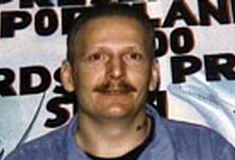
Robert Silveira
Serial killer Carl Eugene Watts
Serial killer · USA · 1974
Carl Eugene Watts (born November 7, 1953; died September 21, 2007), also known…
100 victims
Carl Eugene Watts
Serial killer · USA · 1974
Carl Eugene Watts (born November 7, 1953; died September 21, 2007), also known…
100 victims
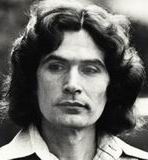 Rodney Alcala
Serial killer · USA · 1977
Rodney James Alcala (born August 23, 1943) was also known as Rodrigo Jacques Al…
100 victims
Rodney Alcala
Serial killer · USA · 1977
Rodney James Alcala (born August 23, 1943) was also known as Rodrigo Jacques Al…
100 victims
 Donald Leroy Evans
Serial killer · USA · 1975
Donald Leroy Evans (born July 5, 1957) was an American serial killer who murder…
60 victims
Donald Leroy Evans
Serial killer · USA · 1975
Donald Leroy Evans (born July 5, 1957) was an American serial killer who murder…
60 victims
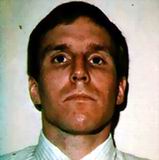 Michael Swango
Serial killer · USA · 1981
Michael Swango (Joseph Michael Swango) was a physician and American serial kill…
60 victims
Michael Swango
Serial killer · USA · 1981
Michael Swango (Joseph Michael Swango) was a physician and American serial kill…
60 victims
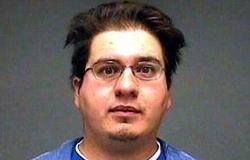 Efren Saldivar
Serial killer · USA · 1989
Efren Saldivar (born 30 September 1969) was an American serial killer who murde…
50 victims
Efren Saldivar
Serial killer · USA · 1989
Efren Saldivar (born 30 September 1969) was an American serial killer who murde…
50 victims
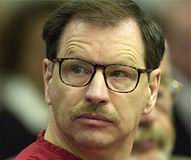 Gary Ridgway
Serial killer · USA · 1982
Gary Leon Ridgway Ridgway was born 18-February-1949 in Salt Lake City, UT. He w…
49 victims
Gary Ridgway
Serial killer · USA · 1982
Gary Leon Ridgway Ridgway was born 18-February-1949 in Salt Lake City, UT. He w…
49 victims
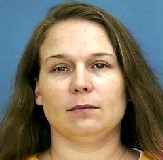 Amy Wilkerson
Murderer · USA · 2005
Amy Danielle Wilkerson was a Jackson County woman who pleaded guilty in circuit…
1 victim
Amy Wilkerson
Murderer · USA · 2005
Amy Danielle Wilkerson was a Jackson County woman who pleaded guilty in circuit…
1 victim
 Luther Casteel
Murderer · USA · 2001
Luther Casteel was described by acquaintances as a divorced construction worker…
2 victims
Luther Casteel
Murderer · USA · 2001
Luther Casteel was described by acquaintances as a divorced construction worker…
2 victims
 Juan Vallejo Corona
Serial killer · USA · 1960
Juan Vallejo Corona was a native of Mexico, born in 1934. He moved to Yuba City…
25 victims
Juan Vallejo Corona
Serial killer · USA · 1960
Juan Vallejo Corona was a native of Mexico, born in 1934. He moved to Yuba City…
25 victims
 Els Clottemans
Murderer · Belgium · 2006
Els “Babs” Clottemans was a Belgian elementary school teacher and amateur skydi…
1 victim
Els Clottemans
Murderer · Belgium · 2006
Els “Babs” Clottemans was a Belgian elementary school teacher and amateur skydi…
1 victim
- Gender
- male
- Country
- USA
- Location
- Several States, USA
- Date of birth
- March 3, 1959
- Age at first offence
- 22
- Characteristics
- drug addict, robbery, fugitive, gang
- Victim profile
- Male railroad-riders
- Method of murder
- St abbing with knife or bludgeoned to death
- Date(s) of murder
- 1981 - 1996
- Years active
- 1981–1996
- Date of arrest
- March 2, 1996
- Status
-
Life imprisonment
Sentenced to two consecutive life terms without parole in Oregon in 1998; serving a double life sentence in Oregon State Prison
Case record: Robert Silveira
People
- Robert Joseph Silveria Jr. (also known as “Sidetrack” and “Side Track”): described as a serial killer connected to the Freight Train Riders of America (FTRA) and linked to boxcar murders; also described as being known as the “Boxcar Serial Killer” and “Boxcar Killer” in media.
- James “J.C.” McLean: found stabbed to death and beaten about the head with a “goon stick”; his boots and wallet were gone.
- William Pettit: described as a transient; his body was found dead in a boxcar in Northern California.
- Michael Garfinkle: described as a college student who was murdered in a hobo jungle in the switching yard outside Emeryville, California; also described as the victim in the “Bum Blaster” context.
- Michael Garfinkle is also named as having been murdered outside Emeryville, Calif., in a hobo jungle.
- Martin Moore (also known as “Mississippi Bones”): identified as a fellow FTRA member associated with another transients’ killing described in the material.
- Joseph Perrigo: described as a 30-year-old train hopper; found in a boxcar on a Montana Rail line; he wore an FTRA tattoo.
- Bob Grandinetti: described in connection with documentation of FTRA and unsolved murders along rail lines.
- Bill Palmini: retired police officer and author of “Murder on the Rails”; he wrote a book and was co-written with freelance journalist and publicist Tanya Chalupa.
- Tanya Chalupa: freelance journalist and publicist; co-wrote “Murder on the Rails” with Bill Palmini.
- Detective Chief Inspector name not established: a quoted line exists in the material but no specific person is provided for the quote “The problem is the suspects and all the witnesses disappear.”
- “Sidetrack” / Robert Silveria: described as having confessed to murders and being featured on “America’s Most Wanted.”
- Robert “Bobbie”: the material says “Having betrayed his secret boxcar brotherhood by talking of the murders,” and elsewhere quotes Bill Palmini interview context; “Bobbie” appears as a reference to Silveria in custody.
- Roseville railroad police officer: the arresting officer is not named beyond being described by location and role.
- Attendant at a Vancouver, Wash., mental health agency: told Silveria “everyone has problems” and “take a number and sit down.”
Timeline
- 1981–1995 — The material says Silveria was linked to boxcar murders in Oregon, Utah, California, Arizona, Kansas and Washington spanning from 1981 to 1995.
- Late 1980s — The material says the FTRA began in the early 1980s in a Montana bar, started by homeless and disgruntled Viet Nam veterans.
- August 1994 — A rail rider named Michael Garfinkle was found with his skull bashed in along the railroad tracks in Emeryville.
- March 2, 1996 — Silveria was arrested without incident by a Roseville railroad police officer; he was carrying a gun stolen from a victim.
- March 1995 — The material says Silveria was arrested in March 1995, in a rail yard near Sacramento, California.
- July 25, 1995 — Albany police found James “J.C.” McLean stabbed to death and beaten about the head with a “goon stick,” with his boots and wallet gone.
- 1990s — The material says there were more than 300 unsolved murders along the rails during the 1990s.
- 1998 — Sentenced to two consecutive life terms without parole in Oregon.
Background
The material described a rail-related group called the Freight Train Riders of America (FTRA) as functioning like a gang and preying upon fellow rail-riding hobos. It also described law enforcement investigators and railroad officials saying the violent group was an urban myth, while also providing details about its membership, activities, and symbols.
The material stated that the FTRA used “multiple identifications,” including stolen identities sometimes taken from murder victims, to obtain food stamps, welfare, and supplemental security income at different locations. It described homeless camps along the tracks, including a camp in Albany. It described members as carrying weapons like clubs and canes, knives and pistols, and as potentially disappearing by “catching the next freight train out.”
The material stated that investigators believed the gang began in the early 1980s in a Montana bar, started by homeless and disgruntled Viet Nam veterans. It described the original members as loosely knit and mostly white men who rode the “High Line,” described as the Burlington Northern Santa Fe Pacific rail road line. The material described monikers including Pennsylvania Pollock, Desert Rat, Moose, Muskrat, Hotshit, Side Line, F-Troop, and women like Bubblehead.
The material also described ways different FTRA “corridors” identified themselves by colors of bandannas and use of silver rings:
- “Southern Corridor” riders were said to wear red bandannas with silver rings.
- “Midwest” FTRA were said to identify with blue bandannas and silver rings.
The material described migrating members during winter months to warmer states such as California and Arizona, and it described many false identification documents used for food stamps and welfare fraud. It also described criminal activities including petty theft, burglary, identity theft, and food stamp and welfare fraud.
The material claimed that FTRA members committed armed robberies near railroad tracks and immediately hopped a freight car out of town. It also described FTRA-related graffiti and symbols, including swastikas, lightning bolts, and letters such as FTRA, FTW (F--- the World), STP (Start the Party or Stone Tramp People), and ATAPAW (Any Time, Any Place, Anywhere).
The offence
The material described Silveria as a serial killer connected to rail-line murders. It stated that his victims were mostly drifters and described killing methods and robbery:
- It said victims were stabbed or bludgeoned to death and robbed of meager possessions.
- It also described victims being shot in the head at close range with a small caliber pistol while they slept in homeless encampments at night.
- It described victims as sometimes physically handicapped.
The Albany incident was described as follows: on July 25, 1995, Albany police found James “J.C.” McLean stabbed to death and beaten about the head with a “goon stick,” and his boots and wallet were gone.
The material said Silveria was suspected to be “Boxcar Murderer” and that he was known as “Sidetrack” and “Side Track.” It said he confessed to murders in dozens of states and was convicted in three, while also saying he was linked to boxcar murders spanning 1981 to 1995 across Oregon, Utah, California, Arizona, Kansas and Washington.
The material described how Silveria’s criminality was rooted in a violent childhood, drug and alcohol use, and an incident at a Vancouver, Wash., mental health agency. It said that the incident involved an attendant telling Silveria, “everyone has problems,” and telling him to “take a number and sit down.” The material stated that to summon the rage necessary to bludgeon and stab his victims, Silveria would repeat the words “take a number” over and over.
The material also described that many killings were classified as suicides or accidents and were often not registered outside the jurisdictions where they occurred. It claimed that hobos thrown off trains or “executed — with a machete, ax or sharp buck knife” were sometimes left on tracks at night to be run over by oncoming trains.
Investigation
Bill Palmini, a retired police officer, wrote “Murder on the Rails.” The material stated the book was co-written with freelance journalist and publicist Tanya Chalupa. It described Palmini as having been with the Albany Police Department for 26 years and now retired.
The material described that Palmini interviewed Silveria, who was known as the Boxcar Serial Killer. It described the FTRA as described in the book as “functions much as a gang.” It said Silveria was said to be part of a “death squad” that would collect debts and avenge perceived offenses. It described the use of multiple identifications and described “jungles” as homeless camps along the tracks.
The material described Bill Palmini’s account that group members, primarily Silveria, were responsible for as many as 100 murders along railroad tracks, including hobos thrown off trains or “executed — with a machete, ax or sharp buck knife” and left on tracks at night.
The material said Palmini was unaware at the time of how some killings connected; it referenced that in August 1994, a rail rider named Michael Garfinkle was found with his skull bashed in along the railroad tracks in Emeryville.
In the policing narrative section, the material described a surveillance team requested by the Sheriff’s Homicide to assist in staking out the turf of the gang known as the FTRA. It described that a serial killer was murdering hobos who rode the rails and camped in outdoor hobo jungle camps throughout the Southwest, and it described the victims being commonly shot in the head at close range with a small caliber pistol while they slept. It described the suspect as someone who knew the camps and was able to approach the victims for a point blank shot.
The material described documentation and denial of the FTRA’s existence:
- It described some railroad officials denying that the FTRA exists or describing it as an urban legend.
- It described law enforcement investigators as believing the gang began in the early 1980s in a Montana bar.
- It described that in the late 1980s the FTRA began systematically stealing high value merchandise from trains and doing multiple burglaries targeting firearms.
The material described documentation by Bob Grandinetti:
- It said Bob Grandinetti began documenting the FTRA gang early in the 1980s.
- It said he closely followed a series of reported dead bodies along the High Line between Spokane and Sandpoint, Idaho.
- It said the victims’ shirts and jackets were pulled up around their heads and their pants pulled down.
- It said Grandinetti did not accept railroad explanations of accidental deaths after a freight train derailed west of Spokane, which led to a determination that brake lines were deliberately cut and a suspect was killed in the resulting crash.
The material included a verbatim quote:
"The problem is the suspects and all the witnesses disappear." The material attributed this quote to Christopher Ketcham’s “Stuff” magazine article context and said Grandinetti is quoted as saying it.
Arrest
The material said Silveria was arrested without incident on March 2, 1996 by a Roseville railroad police officer. It stated Silveria was carrying a gun he had stolen from a victim, and he briefly thought of killing the officer, but something stopped him.
"'It was God,' Silveria would later tell me.'"
The material stated Palmini interviewed Silveria at the Placer County jail in Auburn, and it said Silveria readily confessed in great detail to killing McLean.
Trial
The material stated that Silveria was convicted in three, and it connected the Albany killing to broader patterns of killings along rail lines. It did not provide separate trial dates or trial court names for the Albany matter within the provided text.
Sentencing
The material stated that Silveria received two consecutive life terms without parole in Oregon in 1998. It also described him as serving a double life sentence in Oregon State Prison.
Appeals
No appeal information was included in the provided material.
Outcome
The material described Silveria as confessing to killing McLean and confessing to murders in dozens of states. It also said he confessed to six murders in California and had never gone to trial there, as stated by Palmini.
It described him as having been featured on “America’s Most Wanted,” and it said he confessed to:
- a five-year nationwide murder spree ranging from Florida to California; and
- 14 of the unsolved murders referenced in the narrative.
It also described that one of his victims was college student Michael Garfinkle, murdered in a hobo jungle in the switching yard outside Emeryville, Calif., and it said he mostly preyed on the helpless homeless, killing them for their clothing and social security cards.
The material stated:
- Silveria was linked to 13 other boxcar murders in Oregon, Utah, California, Arizona, Kansas and Washington state spanning from 1981 to 1995.
- Victims were mostly drifters; killings were stabbed or bludgeoned to death; and victims were robbed of meager possessions.
- Silveria was described as a “heroin addict” and having a tattoo of the word freedom on his throat.
Aftermath
The material described Palmini’s portrayal of Silveria’s intent in custody. It stated:
- “He wanted to clear the slate with God for the old Robert Silveria.”
- “He wanted to make peace with God and peace with himself.”
Both statements were presented in quoted form. It was also stated that after betraying his secret boxcar brotherhood by talking of the murders, Silveria believed he would soon be executed by fellow rail-riding gangster.
The material also described that the railroad murders in the area stopped after his arrest and alleged identification of a suspect.
Other details
- The material described the suspect as known as the Boxcar Serial Killer and “Bum Blaster,” with media dubbing him the “Boxcar Killer.”
- The material described a rail rider named Joseph Perrigo (30-year-old train hopper) found in a boxcar on a Montana Rail line, shot in the head five times, wearing an FTRA tattoo.
- The material described that Martin Moore, also known as Mississippi Bones, killed Perrigo, described as payback for F-Troop stabbing him more than a year before.
- The material described that FTRA members were described as robbers, burglars, and hijackers with colorful names, and that crossing a member could lead to getting hurt.
- The material described nationwide estimates of 30,000 homeless freight train hoppers annually “catch-out” somewhere on the 30,000 miles of railroad track.
- The material stated that this activity was illegal and considered insulting to most train hoppers and offensive to members of the FTRA.
- The material described that each year nearly one hundred deaths occur along the railroad lines, including those from natural causes and those presumed accidental when no eye witnesses are present, and it also described those clearly victims of foul play.
- The material stated that the Union Pacific Railroad right-of-way in Albany was about 1,000 feet south of the Buchanan Street overpass, and it described a nearby recently opened Target store and the Interstate 80 noise.
Verbatim quotations
- “everyone has problems”
- “take a number”
- “He wanted to clear the slate with God for the old Robert Silveria,” Palmini said.
- “He wanted to make peace with God and peace with himself.” Palmini said.

Spotted an error, or have more information about this case?