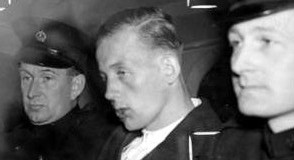
John Thomas Straffen
Serial killer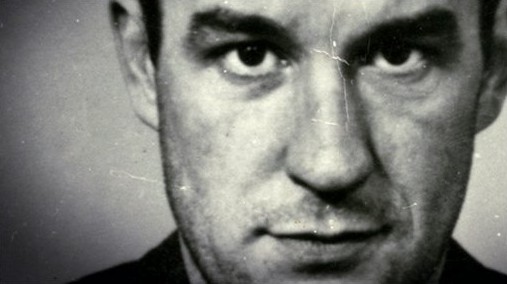 Peter Manuel
Serial killer · United Kingdom · 1956
Peter Manuel (born in the United States; died July 11, 1958) committed crimes i…
12 victims
Peter Manuel
Serial killer · United Kingdom · 1956
Peter Manuel (born in the United States; died July 11, 1958) committed crimes i…
12 victims
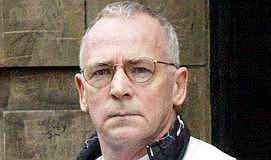 Angus Sinclair
Serial killer · United Kingdom · 1961
Angus Sinclair was sentenced to life in prison for the murders of Helen Scott a…
8 victims
Angus Sinclair
Serial killer · United Kingdom · 1961
Angus Sinclair was sentenced to life in prison for the murders of Helen Scott a…
8 victims
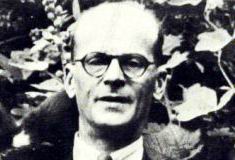 John Reginald Christie
Serial killer · United Kingdom · 1943
John Reginald Halliday Christie (April 8, 1899–July 15, 1953) was an English se…
8 victims
John Reginald Christie
Serial killer · United Kingdom · 1943
John Reginald Halliday Christie (April 8, 1899–July 15, 1953) was an English se…
8 victims
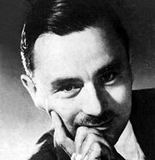 John George Haigh
Serial killer · United Kingdom · 1944
John George Haigh was an English serial killer during the 1940s. He was commonl…
6 victims
John George Haigh
Serial killer · United Kingdom · 1944
John George Haigh was an English serial killer during the 1940s. He was commonl…
6 victims
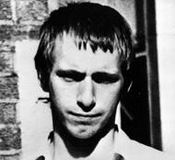 Bruce Lee
Serial killer · United Kingdom · 1973
Bruce Lee was born Peter George Dinsdale in 1960. He later changed his name to…
26 victims
Bruce Lee
Serial killer · United Kingdom · 1973
Bruce Lee was born Peter George Dinsdale in 1960. He later changed his name to…
26 victims
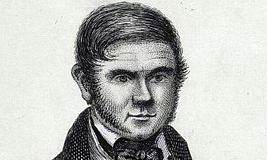 William Burke
Serial killer · United Kingdom · 1827
William Burke (1792 – 28 January 1829) was born in Urney, near Strabane, in the…
17 victims
William Burke
Serial killer · United Kingdom · 1827
William Burke (1792 – 28 January 1829) was born in Urney, near Strabane, in the…
17 victims
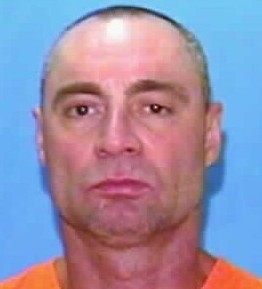 Dennis Sochor
Murderer · USA · 1982
Dennis Sochor was convicted and sentenced to death for the murder of Patricia G…
1 victim
Dennis Sochor
Murderer · USA · 1982
Dennis Sochor was convicted and sentenced to death for the murder of Patricia G…
1 victim
 Willie Crain
Murderer · USA · 1998
Willie Crain was tried in the Thirteenth Judicial Circuit, Hillsborough County,…
1 victim
Willie Crain
Murderer · USA · 1998
Willie Crain was tried in the Thirteenth Judicial Circuit, Hillsborough County,…
1 victim
 Salvatore Perrone
Serial killer · USA · 2012
Salvatore Perrone was sentenced to 75 years to life in prison on March 4, 2016.…
3 victims
Salvatore Perrone
Serial killer · USA · 2012
Salvatore Perrone was sentenced to 75 years to life in prison on March 4, 2016.…
3 victims
 Joe Elton Nixon
Murderer · USA · 1984
Joe Elton Nixon (born August 23, 1961) was an American convicted murderer on De…
1 victim
Joe Elton Nixon
Murderer · USA · 1984
Joe Elton Nixon (born August 23, 1961) was an American convicted murderer on De…
1 victim
 John Eleuthère DuPont
Homicide · USA · 1996
John Eleuthère duPont (November 22, 1938 – December 9, 2010) was an American bi…
1 victim
John Eleuthère DuPont
Homicide · USA · 1996
John Eleuthère duPont (November 22, 1938 – December 9, 2010) was an American bi…
1 victim
 Nicholas Wiley
Serial killer · USA · 2004
Nicholas Wiley was a high-risk Level 3 sex offender and worked as a handyman in…
3 victims
Nicholas Wiley
Serial killer · USA · 2004
Nicholas Wiley was a high-risk Level 3 sex offender and worked as a handyman in…
3 victims
- Gender
- male
- Country
- United Kingdom
- Location
- Somerset / Berkshire, England, United Kingdom
- Date of birth
- February 26, 1930
- Age at first offence
- 21
- Characteristics
- child killer, rape, convicted rapist
- Victim profile
- Brenda Goddard, 6 / Cicely Batstone, 9 / Linda Bowyer, 5
- Method of murder
- Strangulation
- Date(s) of murder
- 1951 - 1952
- Years active
- 1951–1952
- Date of arrest
- August 9, 1951
- Status
-
Died in custody
Sentenced to death on July 25, 1952; Home Secretary Sir David Maxwell-Fyfe commuted the sentence to life imprisonment on August 29, 1952 because Straffen was “feeble-minded”; died in prison on November 20, 2007
Case record: John Thomas Straffen
Outcome
John Thomas Straffen was sentenced to death on July 25, 1952. Home Secretary Sir David Maxwell-Fyfe commuted the sentence to life imprisonment on August 29, 1952 because Straffen was “feeble-minded”. Straffen died in prison on November 20, 2007.
Timeline
- July 15, 1951 — Christine Butcher’s sibling reference and the first named murder in Bath (Christine Butcher, seven years old, was described as the first victim in July) and Brenda Goddard was reported missing.
- July 15, 1951 — Brenda Goddard’s strangled corpse was recovered three hours later.
- July 25, 1952 — Straffen was sentenced to death.
- August 29, 1952 — The death sentence was commuted to life imprisonment by Home Secretary Sir David Maxwell-Fyfe because Straffen was “feeble-minded”.
- November 20, 2007 — Straffen died in prison.
The victims
Straffen killed multiple children in the summer months of 1951 in Bath near Bristol, England.
Christine Butcher
Christine Butcher was described as the first victim, seven years old, kidnapped and killed in July.
Brenda Goddard
Brenda Goddard was six years old. She was reported missing on July 15, 1951, and her strangled corpse was recovered three hours later.
Cecily Batstone (Cicely Batstone)
Cecily Batstone was nine years old. On August 8, she went off to the movies and never returned. Her body was found next morning after an all-night search. Straffen was arrested in connection with the murder of nine-year-old Cicely Batstone on the morning of 9 August 1951. A statement by Straffen also admitted he killed her.
Linda Bowyer
Linda Bowyer was five years old. After Straffen escaped from Broadmoor on April 29, 1952, he killed Linda Bowyer within the time he was at large. Her body was found at dawn the next day.
Investigation
Police initially resisted drawing any common link between murders, including checking allegations of attacks on other local girls to no avail. They had no clues, no suspect. By August 9, police had John Straffen, 21 years old, under lock and key on unrelated charges. While idling in his cell, Straffen called for detectives and confessed to the Batstone murder. Straffen explained:
“I sat behind her,” he explained. “It only took a couple of minutes and she was dead. She was taken by surprise.”
Additional charges were filed in the case of Brenda Goddard on August 30, 1951.
After Straffen was arrested for Batstone, he made a statement admitting he had killed Cicely Batstone and also confessed to the murder of Brenda Goddard:
“The other girl, I did her the same”.
After Straffen escaped from Broadmoor, he killed Linda Bowyer. Police interviewed Straffen at 8 a.m. after the body was found at dawn. When asked what he had done when he was free, Straffen replied:
“I did not kill her”.
The police inspector told Straffen that no-one had suggested anyone had been killed, and Straffen said:
“I know what you policemen are, I know I killed two little children but I did not kill the little girl.”
The inspector confirmed that a girl had been killed near where Straffen was recaptured, and Straffen said:
“I did not kill the little girl on the bicycle.”
Straffen then made a long statement, which the police checked.
When Straffen was being driven back to Broadmoor after the recapture following the Bowyer murder, Straffen said:
“I have finished with crime”.
A recurring quoted denial appeared as:
Arrest and confinement prior to trial
By August 9, 1951, Straffen was under lock and key on unrelated charges. The summer of 1951 brought “creeping terror” to the town of Bath near Bristol, England as the murders occurred.
On 27 July 1947, a 13-year-old girl reported that a boy called John assaulted her by putting his hand over her mouth and saying:
“What would you do if I killed you? I have done it before.”
Straffen was later arrested for other matters and was remanded in custody, and a Medical Officer examined him and certified that he was mentally retarded.
Court proceedings and mental fitness
Trial for the Bath murders (unfit to plead)
On October 17, 1951, Straffen was found insane and unfit to plead, with the magistrate declaring:
“You might as well try a baby in arms.”
At Taunton Assize Court, on 17 October 1951, Straffen stood trial for murder before Mr Justice Oliver. Only Dr. Peter Parkes, medical officer at Horfield Prison, testified about Straffen’s medical history and his conclusion that Straffen was unfit to plead.
Mr Justice Oliver commented:
“In this country we do not try people who are insane. You might as well try a baby in arms. If a man cannot understand what is going on, he cannot be tried.”
The jury returned a verdict that Straffen was insane and unfit to plead.
Straffen was ordered detained “until his Majesty's pleasure be known,” which functioned as a life term of confinement in a British mental institution.
The sentence for the Linda Bowyer murder
Murder trial
Straffen’s murder trial for Linda Bowyer opened on 21 July (year consistent with the death sentence on July 25, 1952). He pleaded not guilty. The defence opted to leave the question of his sanity as an issue to be determined by the jury.
After the prosecution opened and called witnesses establishing the facts about the murder of Linda Bowyer, the prosecution applied to call additional evidence about the two Bath murders. The application was resisted by Straffen’s defence as prejudicial, but the judge ruled the evidence admissible.
On the second day, the judge was late into court and explained that “owing to the alleged conduct of one of your members” he was compelled to discharge them and start again with a new jury. One of the first set of jurors had gone to a political club in Southsea in the evening and told those present that he was on the jury for the Straffen case, that Straffen was not guilty, and that one of the prosecution witnesses had murdered Linda Bowyer. The judge required the errant juror, William Gladwin, to remain in court throughout the trial and to apologise for his “wicked discharge of your duties as a citizen”. The first day’s proceedings were repeated before the second jury, followed by evidence of events in Bath.
Straffen’s defence called several witnesses who had seen him earlier and gave evidence of his mental condition. The prosecution then called prison medical officers and psychiatrists in rebuttal. Dr. Thomas Munro testified that Straffen had said that to murder was wrong because “it was breaking the law” and because “it is one of the commandments”. When Munro asked Straffen to name the other commandments, Straffen could only remember four.
Verdict and sentencing
After a retirement of just under an hour, the jury returned with a verdict of guilty, implicitly declaring Straffen sane. Mr Justice Cassels sentenced Straffen to death.
Straffen appealed on grounds that evidence about the Bath murders was wrongly admitted and that his statements on the morning after the murder of Linda Bowyer were wrongly admitted because they had been made before he was cautioned. Both grounds of the appeal were dismissed, and Straffen was refused leave to appeal to the House of Lords.
Reprieve and commutation
On 29 August 1952, it was announced that the Home Secretary David Maxwell Fyfe had recommended to Queen Elizabeth II that Straffen be reprieved. The death sentence was commuted to life imprisonment on August 29, 1952 because Straffen was “feeble-minded”.
Broadmoor escape and murder of Linda Bowyer
Straffen was removed to Broadmoor Institution in Berkshire after the earlier finding of insanity and unfitness to plead.
Broadmoor was described as a criminal lunatic asylum that had been transferred to the Ministry of Health under the Criminal Justice Act 1948 and where committed persons were renamed patients.
Inside Broadmoor, Straffen was given a job as a cleaner. On 29 April 1952, Straffen was with an attendant and another patient cleaning outbuildings close by a 10ft tall external wall. In the yard adjacent to the wall there was a low shed with a sloping roof 8½ft high at its highest point, and empty disinfectant tins were in the yard. Straffen asked his supervisor if he could shake his duster and, with permission, went into the yard. Once the other patient had gone back in, Straffen climbed on to the roof and jumped over the wall. He had already made sure his civilian clothes were under his work clothes.
After recapture and police interview
Straffen approached Mrs Doris Spencer in her garden at Crowthorne and asked for a drink of water, which she gave him. He discussed the proximity of Broadmoor and the likelihood of escapes. After ten minutes he left.
An hour and a half later, at Farley Hill, around five o’clock, Straffen encountered five-year-old Linda Bowyer riding her bicycle around the village. Within half an hour Linda Bowyer was dead.
Straffen begged a cup of tea from another householder, Mrs Kenyon. Mrs Kenyon agreed to drive him to the bus stop. As they were drawing up to the stop, Straffen saw men in uniform and asked whether they were police; after learning they were, he ran away. Kenyon told the men—who were actually Broadmoor nurses—of Straffen’s suspicious behavior. Straffen was recaptured a few minutes later.
The body of Linda Bowyer was found at dawn the next day. The police went to Broadmoor at 8 a.m., arriving before news of the disappearance and murder of a local child had reached the hospital. Police woke Straffen and asked what he had done when he was free.
Imprisonment after sentencing
After the reprieve, Straffen was moved to Wandsworth Prison. In November 1952, the Home Office denied a rumour that he was about to be moved to Rampton mental institution.
In 1956 Straffen was moved to Horfield Prison in Bristol after officers discovered an escape attempt by Wandsworth prisoners who intended to take Straffen with them as a diversion. A petition demanding his removal was organized by a local councillor and was signed by 12,000 people within weeks.
In August 1958, Straffen was moved to Cardiff Prison when the regime at Horfield Prison changed to a more liberal one. He was reported as transferred back in June 1960.
A new 28-cell high security wing at Parkhurst Prison was built and was ready for opening early in 1966. The Home Office did not deny rumours that Straffen had been secretly transferred there on 31 January 1966. He was the first to arrive, followed by six of the Great Train robbers.
In May 1968, Straffen was moved to Durham Prison and placed on the top security E wing, where he was joined by fellow child killer Ian Brady.
In January 1984, Kenneth Barlow was released after serving 26 years for murder, at which point he became the longest-serving British prisoner.
Campaigns, petitions, and attempts to reopen his case
In 2001, Straffen’s solicitors called for his case to be reopened, claiming he had not been fit to stand trial. Investigative journalist Bob Woffinden uncovered that Straffen was reprieved after a majority of doctors who examined him found that he was “insane”.
Woffinden also doubted Straffen’s guilt of the murder of Linda Bowyer, including claims that Straffen had no fingernails with which to cause injuries seen on Linda Bowyer’s body, and that some local witnesses placed the time of the murder after his recapture.
Straffen’s application to the Criminal Cases Review Commission was turned down in December 2002.
In May 2002, the European Court of Human Rights decided a case challenging the authority of the Home Secretary to refuse to release a life sentence prisoner after the Parole Board recommended release. The Court decided that politicians should not interfere in life sentences and therefore current practice was unlawful. It was noted that the decision could offer an opportunity for release for Straffen, who had been in Long Lartin Prison since 2000.
Death
Straffen died at Frankland Prison in County Durham on 19 November 2007. He was described as 77 years old and as having been in prison for 55 years.
The Ministry of Justice said 77-year-old John Straffen died in the healthcare unit at Frankland Prison in County Durham “this morning following an illness”. It also stated that Straffen had been “then aged 22” when convicted and that he was convicted of murdering a schoolgirl by a jury at Winchester on July 25 1952 and sentenced to death, which was commuted to life imprisonment on the grounds that he was a “feeble-minded person”.
Other details
Family background
Straffen’s father, John Senior, was a soldier in the army. Straffen was the third child in the family. His older sister was described as a “high grade mental defective” who died in 1952. Straffen was born at Bordon Camp in Hampshire, where his father was then based. At the age of two, his father was posted abroad and the family spent six years in India. Returning to Britain in March 1938, his father took a discharge from the Army and the family settled in Bath, Somerset.
Early life, schooling, and mental deficiency certification
In October 1938, Straffen was referred to a Child Guidance Clinic for stealing and truancy. In June 1939, he first came before a Juvenile Court for stealing a purse from a girl and received two years’ probation. A probation officer found Straffen did not understand the difference between right and wrong or the meaning of probation, and arranged for him to see a psychiatrist. As a result, Straffen was certified as a mental defective under the Mental Deficiency Act 1927.
A report was compiled in 1940 stating an intelligence quotient of 58 and placing his mental age at six. From June 1940, the local authority sent him to a residential school for mentally defective children, St Joseph's School in Sambourne.
Two years later, Straffen moved to Besford Court, a senior school. He was noted as solitary and taking correction very badly. At age 14, he was strongly suspected of strangling two prize geese owned by one of the officers of the school, though no proof was found and it was not noted on his records. At age 16, a review found his I.Q. was 64 and his mental age 9 years 6 months and recommended discharge.
Straffen returned home to Bath in March 1946. The Medical Officer of Health examined him and found he still warranted certification under the Mental Deficiency Act. After several short term jobs, he found a place as a machinist in a clothing factory.
Animal cruelty and theft
Early in 1947, Straffen began going into unoccupied homes and stealing small items to hide them. He never brought the items home or gave them to others. He had no friends and began stealing without being enticed by others.
Assault in 1947 and commitment
At the age of ten, Straffen was sent to a school for retarded children. In 1947 he assaulted a child and was committed to an institution. He was released in February 1951.
Burglary investigation and prison certification
Six weeks after the July 27, 1947 incident, Straffen was found to have strangled five chickens belonging to the father of a girl with whom he had quarrelled. When arrested, Straffen was also under suspicion for burglary and cheerfully confessed to it and many other incidents to which he had not been connected. He was remanded in custody and the Medical Officer of Horfield prison examined him, certifying that he was mentally retarded. On 10 October, Straffen was committed to Hortham Colony in Bristol under the Mental Deficiency Act of 1913.
Hortham Colony
Hortham was an “open” colony specializing in training mentally retarded offenders for resettlement. Straffen’s certificate stated he was “not of violent or dangerous propensities”. He was well-behaved at Hortham and kept away from other inmates. In July 1949, he was transferred to a lower-security agricultural hostel in Winchester. He initially did well but fell back into old ways when he stole a bag of walnuts, and was sent back to Hortham in February 1950. In August 1950, he got in trouble when he went home without leave and resisted police when they tried to recapture him.
Medical examination in 1951
In 1951, Straffen was examined at a Bristol hospital. Electroencephalograph readings showed he had suffered “wide and severe damage to the cerebral cortex, probably from an attack of encephalitis in India before the age of six”. By then, Straffen was considered sufficiently rehabilitated to be allowed a period of unescorted home leave. He used the time to get a job at a market garden that he was allowed to keep. Hortham licensed him to care for his mother because the family home was less overcrowded.
When Straffen’s 21st birthday came, under the Mental Deficiency Act he had to be reassessed by Hortham for further five years, and the family disputed the assessment and appealed. The Medical Officer of Health for Bath examined Straffen again on 10 July 1951 and found improvement in mental age to 10; he recommended Straffen’s certificate be renewed only for six months with a view to discharge at the end.
Additional material referenced about motives and resentment
Letitia Fairfield’s introduction to the “Notable British Trials series” volume described Straffen as having a “smouldering hatred” and an “intense resentment” of the police, and blaming them for his troubles from the age of eight. Fairfield speculated that Straffen saw press coverage after Christine Butcher’s murder and made a connection between strangling young girls and the maximum trouble for the police.
Straffen was also described as asserting he did the murders “to annoy the police”, and as stating that he wanted to annoy the police because he hated them for shadowing him.
Instruments and methods described
The murders were described as strangling the children, with additional description for Brenda Goddard that her head was bashed against a stone after strangling in Straffen’s later statement. The record also described the general method as “Deranged child killer; bludgeoned/stabbed girls age five to nine .”
Sentence administration and release restrictions
For most of the time in prison, the Home Secretary had to agree to release of any life sentence prisoner, and no Home Office occupant was willing to let Straffen out. In 1994, Michael Howard decided to set up a select list of about 20 prisoners serving life sentences who must never be released, and Straffen’s name was said to be on the list. The whole list was published by the News of the World in December 1997 and confirmed Straffen would spend the rest of his life in prison. The Sun profiled Straffen’s prison life in March 2006, quoting an unnamed inmate that Straffen worked as a cleaner in the craft shop and made tea for the officers, and that other inmates left him alone, and that he was instantly recognisable.
Spotted an error, or have more information about this case?