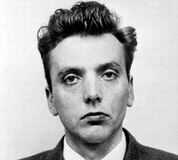
Ian Brady
Serial killer Bruce Lee
Serial killer · United Kingdom · 1973
Bruce Lee was born Peter George Dinsdale in 1960. He later changed his name to…
26 victims
Bruce Lee
Serial killer · United Kingdom · 1973
Bruce Lee was born Peter George Dinsdale in 1960. He later changed his name to…
26 victims
 Frederick West
Serial killer · United Kingdom · 1967
Frederick West (29 September 1941 – 1 January 1995) was an English serial kille…
13 victims
Frederick West
Serial killer · United Kingdom · 1967
Frederick West (29 September 1941 – 1 January 1995) was an English serial kille…
13 victims
 Peter Manuel
Serial killer · United Kingdom · 1956
Peter Manuel (born in the United States; died July 11, 1958) committed crimes i…
12 victims
Peter Manuel
Serial killer · United Kingdom · 1956
Peter Manuel (born in the United States; died July 11, 1958) committed crimes i…
12 victims
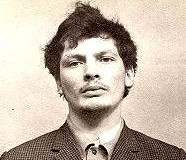 Patrick David Mackay
Serial killer · United Kingdom · 1973
Patrick David Mackay was born on September 25, 1952, in England. He was the son…
11 victims
Patrick David Mackay
Serial killer · United Kingdom · 1973
Patrick David Mackay was born on September 25, 1952, in England. He was the son…
11 victims
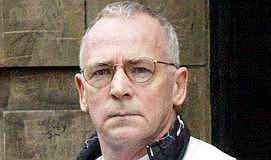 Angus Sinclair
Serial killer · United Kingdom · 1961
Angus Sinclair was sentenced to life in prison for the murders of Helen Scott a…
8 victims
Angus Sinclair
Serial killer · United Kingdom · 1961
Angus Sinclair was sentenced to life in prison for the murders of Helen Scott a…
8 victims
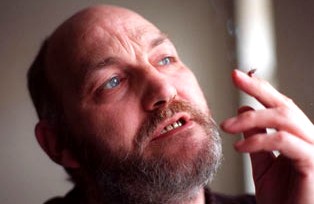 Robert Black
Serial killer · United Kingdom · 1969
Robert Black was sentenced to life in prison (minimum 35 years) on May 19, 1994…
4 victims
Robert Black
Serial killer · United Kingdom · 1969
Robert Black was sentenced to life in prison (minimum 35 years) on May 19, 1994…
4 victims
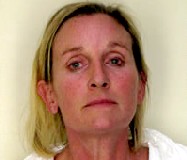 Julie Schenecker
Murderer · USA · 2011
Julie Powers Schenecker was born January 13, 1961, in Muscatine, Iowa. She live…
2 victims
Julie Schenecker
Murderer · USA · 2011
Julie Powers Schenecker was born January 13, 1961, in Muscatine, Iowa. She live…
2 victims
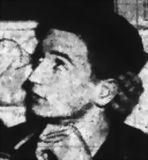 Clifford Fortner
Homicide · USA · 1959
Clifford Fortner was a 15-year-old boy from the neighborhood. Lorna Lax was a 1…
1 victim
Clifford Fortner
Homicide · USA · 1959
Clifford Fortner was a 15-year-old boy from the neighborhood. Lorna Lax was a 1…
1 victim
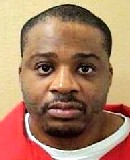 Mario Phillips
Murderer · USA · 2003
Mario Lynn Phillips was convicted of first-degree murder, kidnapping, assault,…
4 victims
Mario Phillips
Murderer · USA · 2003
Mario Lynn Phillips was convicted of first-degree murder, kidnapping, assault,…
4 victims
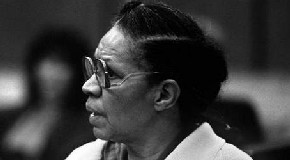 Priscilla Ford
Mass murderer · USA · 1980
Priscilla Ford was sentenced to death for killing six people and injuring 23 mo…
6 victims
Priscilla Ford
Mass murderer · USA · 1980
Priscilla Ford was sentenced to death for killing six people and injuring 23 mo…
6 victims
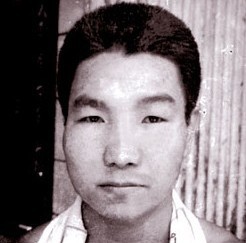 Iwao Hakamada
Mass murderer · Japan · 1966
Iwao Hakamada (袴田巖) was a Japanese professional boxer. Hakamada was born on Mar…
4 victims
Iwao Hakamada
Mass murderer · Japan · 1966
Iwao Hakamada (袴田巖) was a Japanese professional boxer. Hakamada was born on Mar…
4 victims
 James Ronald Meanes
Murderer · USA · 1981
James Ronald Meanes (African-American) was executed for his involvement in a mi…
1 victim
James Ronald Meanes
Murderer · USA · 1981
James Ronald Meanes (African-American) was executed for his involvement in a mi…
1 victim
- Gender
- male
- Country
- United Kingdom
- Location
- Greater Manchester, England, United Kingdom
- Date of birth
- January 2, 1938
- Age at first offence
- 25
- Characteristics
- rape
- Victim profile
- Pauline Reade, 16 / John Kilbride, 12 / Keith Bennett, 12 / Lesley Ann Downey, 10 / Edward Evans, 17
- Method of murder
- Cutting the throat / Strangulation with a piece of string
- Date(s) of murder
- July 1963 - October 1965
- Years active
- 1963–1965
- Date of arrest
- October 7, 1965
- Status
-
Life imprisonment
Sentenced to three terms of life imprisonment on May 6, 1966
Case record
People
- Ian Brady — Scottish serial killer.
Background
Ian Brady was born Ian Duncan Stewart on January 2, 1938 in the Gorbals, Glasgow, Scotland. He was adopted into the Sloane family and raised as “Ian Sloane.” His mother was Margaret (“Peggy”) Stewart, a tea-room waitress. His father was never identified; Peggy Stewart claimed that he was a journalist who died a few months before Brady was born.
Brady was brought up in the tough slum neighbourhood of the Gorbals. He developed troubling signs of dysfunctional behaviour and moodiness, including violent tantrums that sometimes ended with him banging his head against the wall. Peggy Stewart occasionally came to visit him and indulged him with gifts. Brady later figured out who Peggy Stewart really was and deduced that the Sloanes were not his real family. Brady became unpopular with local children and developed a sullen, unsociable personality.
At school, Brady was described as a bright student and handsome and well-dressed, but not well-liked. At the age of eleven, he passed entrance exams to Shawlands Academy but did not realise his potential because he was lazy, would not apply himself, and misbehaved. He started smoking and virtually gave up schoolwork. He developed a fascination with Nazi Germany, Nazi pageantry, and Nazi symbolism, and often asked other boys for souvenirs brought back from the war, insisting on being “the German” during rough-house war games.
During that period, he developed perverse and sadistic tendencies, including bullying smaller children and torturing animals in grotesque ways. By the time he was a teenager, he was brought before the juvenile courts for incidents of burglary and housebreaking. On the first two occasions he was given probation; on the third he was deemed incorrigible, and the court ordered him to leave Glasgow and live with his mother. She had moved to Manchester and married an Irish labourer named Patrick Brady.
In November 1954, two months before his 17th birthday, Brady left the Sloane household and traveled to join his mother and her new husband. Although he did not get along with Mr Brady, Brady took his stepfather’s name and used it for his own.
Brady spent hours in his room reading and listening to music. He developed an interest in writings of the Marquis de Sade and Friedrich Nietzsche, focusing on Nietzsche’s theories of Übermensch and The Will to Power. He avidly collected books about torture and sadomasochism and other paraphilias relating to domination and servitude. He began drinking heavily, frequently visited the cinema, and gambled on horse races.
Brady was sentenced to two years training at a Borstal school and also had a spell at Strangeways Prison after being convicted several more times, with an incident of public drunkenness. While incarcerated, he learned illegal techniques for acquiring money and entertained fantasies of becoming a big-time criminal and pulling off lucrative bank heists. He studied bookkeeping. After release he had prolonged unemployment, then worked as a labourer for Boddington's Brewery between April and October 1958, and later as a stock clerk at Millwards Merchandising in February 1959.
In January 1961, Brady met Myra Hindley, who had been hired at Millwards as a shorthand typist. Their relationship developed alongside Brady’s identification with Nazi-era atrocities and his sadomasochistic sexual appetite. Brady and Hindley planned a series of bank robberies, which they never carried out.
Brady became fascinated with rape and murder for sexual gratification. Hindley actively participated in procuring child victims, as well as sexually abusing, torturing, and murdering them. Brady and Hindley used a time-delay camera and devised darkroom methods to take photographs of themselves acting out sadomasochistic fantasies. They also took pictures of each other standing or kneeling at the moorland burial sites of their victims.
Hindley later claimed Brady had taken compromising pictures of her while she was unconscious and used them to blackmail her into participating in the murders. Brady denied this and claimed Hindley was a willing and enthusiastic participant in both the photographs and the murders. Police investigators who examined the photographs concluded Hindley appeared fully complicit and was enjoying herself.
Brady and Hindley attempted to sell obscene photographs of their sexual antics to crack the illicit amateur pornography market, but the enterprise failed for whatever reason.
The offence
Moors murders (five child murders)
Brady was responsible for the murders of five children during the 1960s, committed with Myra Hindley as accomplice. These became known as the Moors murders, with victims buried along Saddleworth Moor near Oldham in Lancashire.
First victim — Pauline Reade On July 12, 1963, Brady and Hindley claimed their first victim. 16-year-old Pauline Reade was enticed into Hindley’s minivan while Brady followed behind on his motorcycle. They drove up to Saddleworth Moor where Hindley asked Pauline to help look for a lost glove. While they were busy searching the moors, Brady pounced upon Pauline and raped her. He smashed her skull in with a shovel and slashed her throat so violently she was almost decapitated. Brady buried Pauline’s body on the moor, where it remained for over 20 years.
Second victim — John Kilbride On November 23, 1963, 12-year-old John Kilbride was lured into Hindley’s car from a marketplace in Ashton-under-Lyne and driven to Saddleworth Moor. Brady was waiting there and ordered Hindley to wait for him in a nearby village in their hired Ford Anglia. While Hindley waited in the car, Brady attempted to stab the boy with a knife, but the weapon was too blunt. Brady lost his temper and strangled him to death with a string before burying his body in a shallow grave.
Third victim — Keith Bennett On June 16, 1964, their third victim was 12-year-old Keith Bennett. They enticed him from a street in Chorlton and drove him to Saddleworth Moor. Hindley stood and watched from the top of an embankment while Brady sexually assaulted Keith in a ravine, then strangled him to death with a piece of string and buried his body. It had never been found.
Fourth victim — Lesley Ann Downey The fourth victim was 10-year-old Lesley Ann Downey, who was lured from a fairground in Ancoats. Brady took nine obscene photographs of her showing her naked, bound, and gagged, which were later found in a suitcase in a left luggage locker. Hindley recorded the scene of the child’s rape and torture by Brady on audio tape. The tape recorded voices of Brady, Hindley, and the child, with the child heard to scream and protest and ask to be allowed to go home and plead for her life. It was believed she was killed by Brady. Brady and Hindley drove Downey’s body to Saddleworth Moor the following morning and buried it in a shallow grave.
Fifth victim — Edward Evans On October 6, 1965, they claimed their fifth and final victim, 17-year-old Edward Evans. They enticed him from Manchester Central Railway Station to their house in Hattersley, where Hindley’s 18-year-old brother-in-law David Smith was visiting. Brady crept up on Edward in the kitchen and smashed his head in with an axe. Brady ordered Smith to help carry the corpse to an upstairs bedroom and tie it up ready for disposal. Smith ran home and contacted the police. Smith later explained that, while apparently giving assistance to cleaning up, his sole concern was to escape the house alive.
Investigation
Key evidence used to investigate
Police investigations included tape recordings, photographs, and other physical evidence. The tape recording of Downey’s rape and torture, including voices of Brady, Hindley, and the child, was played in court during the trial. Police also found a notebook naming John Kilbride, and a photograph of Hindley standing on top of the shallow grave where Kilbride was buried.
During the search for additional bodies, 150 officers were drafted to search Saddleworth Moor, and the search used photographs taken by Brady and Hindley to identify burial sites.
Brady’s alleged further killings (not proven)
In August 1987, Brady claimed he had carried out another five killings and said where he had buried the bodies, but police were never able to prove whether the claims were true.
Arrest
Arrest for Edward Evans murder
On the morning of October 7, following a call from David Smith to police, Superintendent Bob Talbot of the Cheshire Police arrived at the back door of 16 Wardle Brook Avenue, wearing a borrowed baker’s overall to cover his uniform. Talbot identified himself to Hindley as a police officer and told her he wanted to speak to her boyfriend. Hindley led him into the living room, where Brady was writing a note to his employer explaining he would not be able to get into work due to an ankle injury.
Talbot explained he was investigating “an act of violence involving guns” reported to have taken place the previous evening. Hindley denied any violence and allowed police to look around the house. Police found the door locked upstairs where Evans’ body was stored, asked for the key, and after police offered to drive Hindley to retrieve the key, Brady told her to hand the key over. When they returned to the living room, police told Brady they had discovered a trussed up body and Brady was being arrested on suspicion of murder.
As Brady was getting dressed, he said: “Eddie and I had a row and the situation got out of hand.”
Hindley was not arrested at that time but demanded to go with Brady to the police station with her dog Puppet. Police questioned Hindley about the events surrounding Evans’ death, and she refused to make any statement beyond claiming it had been an accident. Police allowed her to go home on condition that she return for further questioning.
Hindley was at liberty for four days following Brady’s arrest. During that period she went to her employer’s premises and asked to be dismissed to be eligible for unemployment benefits. She found papers belonging to Brady in an envelope that she claimed she did not open and burned them in an ashtray, believing they were plans for bank robberies.
On November 11, 1984? (not supported as stated) — no. No further unverified date is included.
On 11 October, Hindley was charged as an accessory to the murder of Edward Evans and was remanded at Risley.
Trial
Trial details and charges
The trial began on 19 April 1966 and lasted 14 days, before Mr Justice Fenton Atkinson at Chester Assizes. The courtroom had security screens due to public interest.
Both Brady and Hindley were charged with murders including those of Evans, Downey, and Kilbride, with evidence considered sufficient to implicate Hindley in Kilbride’s death. The prosecution was led by the Attorney General, Frederick Elwyn Jones. Brady was defended by the Liberal Member of Parliament Emlyn Hooson. Hindley was defended by Godfrey Heilpern, recorder of Salford from 1964.
Pleadings and testimony Both Brady and Hindley pleaded not guilty and gave evidence: Brady for over eight hours and Hindley for six. Brady admitted hitting Evans with an axe but did not admit killing him, stating that the pathologist in his report had stated that death was “accelerated by strangulation”. Under cross-examination, Brady said: “I hit Evans with the axe. If he died from axe blows, I killed him.”
Hindley denied knowledge that the Saddleworth Moor photographs were taken near the graves of their victims. The tape recording of Downey was played in open court. Hindley admitted her attitude toward the child was “brusque and cruel” and claimed this was because she was afraid someone might hear Downey screaming. Hindley claimed that when Downey was being undressed she herself was “downstairs”; when the pornographic photographs were taken she was “looking out the window”; and when the child was being strangled she “was running a bath.”
Trial judge’s remarks
In closing remarks, Mr Justice Atkinson described the murders as a “truly horrible case” and condemned the accused as “two sadistic killers of the utmost depravity.” He recommended Brady and Hindley spend “a very long time” in prison before being considered for parole but did not stipulate a tariff. He stated Brady was “wicked beyond belief” and that he saw no reasonable possibility of reform. He did not consider the same necessarily true of Hindley “once she is removed from [Brady’s] influence”.
Verdict and sentencing date
On 6 May 1966, after deliberating for a little over two hours, the jury found Brady guilty of all three murders (Evans, Downey, and Kilbride) and found Hindley guilty of the murders of Downey and Evans.
Sentencing
On 6 May 1966, Brady was sentenced to three terms of life imprisonment. The death penalty had been abolished by that time, so the judge passed life imprisonment as the only sentence allowed by law.
Hindley was sentenced to two life sentences, plus a concurrent seven-year sentence for harbouring Brady in connection with the murder of John Kilbride.
Brady and Hindley were taken to prison: Brady to Durham Prison, Hindley to Holloway Prison.
Appeals
- Hindley lodged an unsuccessful appeal against her conviction (no date specified).
Outcome
Brady was imprisoned following his conviction and continued to be held in high-security psychiatric care after being declared mentally disordered.
Brady spent 19 years in a mainstream prison before being declared mentally disordered in 1985 and sent to a mental hospital. The trial judge had expressed doubt about Brady’s capacity to reform, describing him as “wicked beyond belief.” Successive Home Secretaries agreed, and Lord Lane set a 40-year-minimum term in 1982. In 1990, Home Secretary David Waddington told Brady that he and Hindley should never be freed. In 1994, Michael Howard agreed and told Brady so.
Brady went on hunger strike in September 1999, after the High Court refused him the right to starve himself to death, and he was force-fed. He was still alive and was being held at Ashworth Hospital in Liverpool at the time described.
If Brady were released, it was stated he would almost certainly be immediately arrested, tried, and convicted for the murders of Pauline Reade and Keith Bennett, murders he was never charged with.
Aftermath and additional proceedings
Brady’s later conduct and prison-related events
- In 2001, Brady published a book called The Gates of Janus, published by the underground American publishing firm Feral House.
- In early 2006, it was reported that Brady was hospitalised and did not have much longer to live.
- In early 2006, prison authorities intercepted a package containing 50 paracetamol tablets to Brady at the prison hospital, hidden in two sweets tubes inside a hollowed out crime novel.
- Winnie Johnson, the mother of undiscovered victim Keith Bennett, received a letter from Brady at the end of 2005 claiming he could take police to within 20 yards of her son’s body, but authorities would not allow it.
- Brady had asked that his autobiography may only be published after his death.
- In 1999, Brady went on hunger strike, and in March 2000 he asked for a judicial review of the decision to force-feed him, but permission was refused.
- His later requests for the right not to be force-fed and related legal actions were described, including that the High Court refused his appeal for the legal right to starve himself to death in March 2000 (and his further appeals were pursued afterward).
Investigation into Keith Bennett’s body
- The case was reopened in 1985 after police investigators suspected additional confessions by Brady.
- A police search effort continued, with Hindley’s involvement in later moor searches described in relation to other victims.
- Keith Bennett’s body remained undiscovered “as of 2011,” with his family continuing to search the moor more than 40 years after his disappearance.
- In 2003, police launched Operation Maida and again searched for Keith Bennett’s body. In 2009, Greater Manchester Police were reported as having officially given up the search for Keith Bennett, saying only a major scientific breakthrough or fresh evidence would see the hunt restart.
- Donations funded volunteer searches beginning in March 2010.
Other details
Trial participants and witness-related details
- During the trial, it was revealed that David Smith had entered into an agreement with a newspaper guaranteeing him £1,000 for syndication rights to his story if Brady and Hindley were convicted. The trial judge described this as a “gross interference with the course of justice.” Smith later admitted the newspaper was the News of the World and that it had paid for a holiday in France for him and his wife, paid a regular income of £20 per week, and accommodated him in a five-star hotel for the duration of the trial.
Quotes recorded in the proceedings
- Brady, during arrest: “Eddie and I had a row and the situation got out of hand.”
- Brady, under cross-examination: “I hit Evans with the axe.
- Hindley, in trial evidence: Hindley admitted her attitude toward the child was “brusque and cruel.”
- Hindley, claimed location during photographs: “looking out the window”.
- Hindley, claimed location during strangling: “was running a bath”.
References and bibliography (as listed)
- The Moors Murders: The Trial of Myra Hindley and Ian Brady — Jonathan Goodman — David & Charles — 1986 — ISBN 0-7153-9064-3
- Brady and Hindley: The Genesis of the Moors Murders — Fred Harrison — 1986 — Grafton — ISBN 0-906798-70-1
- Myra Hindley: Inside the Mind of a Murderess — Jean Ritchie — Paladin — 1991 — paperback — ISBN 0-586-21563-8
- On Iniquity — Pamela Hansford Johnson — 1967 — Macmillan
- The Monsters Of The Moors — John Deane Potter — Ballantine Books — 1967
- Beyond Belief: A Chronicle of Murder and its Detection — Emlyn Williams — Pan — 1992 — ISBN 0-330-02088-9
- Serial Killers and Mass Murderers: 100 Tales of Infamy, Barbarism and Horrible Crime — Joyce Robins
- The World's Most Infamous Murders — ISBN 0-425-10887-2
- “Behind the Painted Smile” — Gary Cartwright — 2004 — ISBN 1-4120-2647-4
- Further reading listed includes: The World's Most Infamous Murders; The Moors Murders: The Trial of Myra Hindley and Ian Brady; On Iniquity; Brady and Hindley: The Genesis of the Moors Murders; Beyond Belief; etc.
Spotted an error, or have more information about this case?