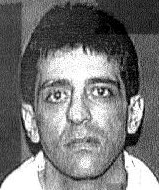
Henry Skinner
Murderer Brian Kevin Rosenfeld
Murderer · USA · 1985
Brian Kevin Rosenfeld Brian Kevin Rosenfeld was sentenced to three concurrent l…
23 victims
Brian Kevin Rosenfeld
Murderer · USA · 1985
Brian Kevin Rosenfeld Brian Kevin Rosenfeld was sentenced to three concurrent l…
23 victims
 Russell Ellwood
Murderer · USA · 1991
Russell Ellwood was a former taxi driver. Authorities suspected him of killing…
20 victims
Russell Ellwood
Murderer · USA · 1991
Russell Ellwood was a former taxi driver. Authorities suspected him of killing…
20 victims
 Robert Martines Perez
Murderer · USA · 1994
Name: Robert Martines Perez · Other name used in proceedings: Robert Martinez P…
15 victims
Robert Martines Perez
Murderer · USA · 1994
Name: Robert Martines Perez · Other name used in proceedings: Robert Martinez P…
15 victims
 Billy Frank Vickers
Murderer · USA · 1993
Billy Frank Vickers Vickers was executed by lethal injection in Texas on Januar…
14 victims
Billy Frank Vickers
Murderer · USA · 1993
Billy Frank Vickers Vickers was executed by lethal injection in Texas on Januar…
14 victims
 John Spenkelink
Murderer · USA · 1973
John Spenkelink was executed by electrocution in Florida on May 25, 1979. · Feb…
1 victim
John Spenkelink
Murderer · USA · 1973
John Spenkelink was executed by electrocution in Florida on May 25, 1979. · Feb…
1 victim
 Harry Maione
Murderer · USA · 1937
Harry “Happy” Maione (1908 – February 19, 1942) was a New York mobster who serv…
12 victims
Harry Maione
Murderer · USA · 1937
Harry “Happy” Maione (1908 – February 19, 1942) was a New York mobster who serv…
12 victims
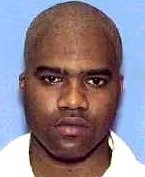 Roderick Newton
Murderer · USA · 1999
Name: Roderick Newton · TDCJ Number: 999348 · Date of Birth: 12/07/1977 · Gende…
1 victim
Roderick Newton
Murderer · USA · 1999
Name: Roderick Newton · TDCJ Number: 999348 · Date of Birth: 12/07/1977 · Gende…
1 victim
 Kenneth Granviel
Mass murderer · USA · 1974
Kenneth Granviel was executed by lethal injection in Texas on February 27, 1996…
7 victims
Kenneth Granviel
Mass murderer · USA · 1974
Kenneth Granviel was executed by lethal injection in Texas on February 27, 1996…
7 victims
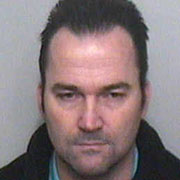 Stuart Campbell
Murderer · United Kingdom · 2001
Stuart Campbell (born 1958) was a builder who was convicted in December 2002 of…
1 victim
Stuart Campbell
Murderer · United Kingdom · 2001
Stuart Campbell (born 1958) was a builder who was convicted in December 2002 of…
1 victim
- Gender
- male
- Country
- USA
- Location
- Gray County, Texas, USA
- Date of birth
- April 4, 1962
- Age at first offence
- 31
- Characteristics
- alcohol, argument
- Victim profile
- His live-in girlfriend, Twila Busby, and her two mentally impaired sons, Randy Busby and Elwin Caler
- Method of murder
- Beating with a club / St abbing with knife
- Date(s) of murder
- December 31, 1993
- Years active
- 1993
- Date of arrest
- —
- Status
-
Sentenced to death
Sentenced to death on March 31, 1995
Case identification
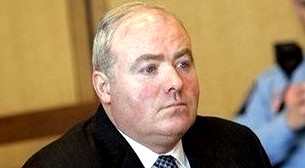
Henry Watkins "Hank" Skinner (born April 4, 1962) was the appellant in proceedings that were before the Court of Criminal Appeals of Texas in case number No. AP-75,812: Henry Watkisn Skinner, Appellant v. The State of Texas. The appeal was from the denial of a motion for post-conviction DNA testing from Cause No. 5216 in the 31st District Court Gray County. Keller, P.J., delivered the opinion of the Court in which Meyers, Price, Johnson, Keasler, Hervey, Holcomb, and Cochran, JJ., joined; Womack, J., concurred.
Timeline
- December 31, 1993 — Murders occurred at 801 East Campbell Avenue in Pampa, Texas. Between 10:15 and 10:30 p.m., Howard Mitchell came to the residence to take appellant and Twila to a New Year's Eve party; appellant was found asleep on the couch and unable to be woken. At around midnight, Elwin showed up on a neighbor's porch with stab wounds and subsequently died. Twila was found dead on the living room floor of her home, and Randy's dead body was found lying face down on the top bunk bed in the sons' bedroom. Appellant was found by police at Andrea Reed's house around 3:00 a.m.
- March 18, 1994 — Skinner was convicted of the murders.
- March 23, 1995 — Skinner was sentenced to death.
- July of 2000 — The Gray County District Attorney's Office requested that certain additional items be subjected to DNA testing by GeneScreen; many items were subjected to traditional genomic DNA testing and/or mitochondrial DNA testing.
- July 14, 2009 — The United States Court of Appeals for the Fifth Circuit denied a federal habeas corpus petition.
- August 10, 2009 — Skinner's Defense team introduced a new petition for a rehearing en banc with the 5th Circuit Court of Appeals.
- August 28, 2009 — The petition for rehearing en banc with the 5th Circuit Court of Appeals was rejected.
- September 23, 2009 — The Court of Criminal Appeals of Texas delivered the opinion affirming the trial court's decision to deny the motion for DNA testing.
- November 23, 2009 — Hank Skinner's attorneys filed a petition for writ of certiorari with the Supreme Court of the United States.
- November 27, 2009 — The defense team filed a complaint in federal court against Gray County DA, Lynn Switzer, for refusing to release the evidence to the defense for private DNA testing.
- January 15, 2010 — The magistrate in charge of the complaint recommended that it be dismissed.
- January 20, 2010 — The Federal district Judge confirmed the dismissal. This decision was being appealed at the Federal Court of Appeals.
- November 10, 2007 — Al Jazeera International aired a two-part program entitled "American Justice - Fatal Flaws," part 2 addressing wrongful convictions through Hank's case and Curtis McCarty's case.
Background
Skinner lived with Twila Busby and her two adult sons, Randy Busby and Elwin Caler. Both Randy Busby and Elwin Caler had mental retardation.
Between 10:15 and 10:30 p.m. on December 31, 1993, Howard Mitchell came to the residence to take appellant and Twila to a New Year's Eve party. Howard found appellant asleep on the couch and was unable to wake him. Appellant had apparently been drinking. Twila and Howard left for the party; Twila soon asked to be taken home because her uncle, Robert Donnell, was drunk and was following her around, making rude sexual advances, and generally agitating her. Howard drove Twila home between 11:00 and 11:15 p.m.
At around midnight, Elwin showed up on a neighbor's porch with stab wounds, from which he subsequently died.
Appellant was found by police at Andrea Reed's house, located three-and-a-half to four blocks away, at around 3:00 a.m. When the police found him, appellant was standing in a closet and wearing clothing that was heavily stained in blood on both the front and back.
Andrea testified at trial that appellant arrived at her house at around midnight and that they conversed for three hours. Andrea did not know how he entered her trailer. When she saw him, he took his shirt off and laid it on a chair. Andrea testified that appellant had a bleeding cut in his right hand; he heated up sewing needles and attempted to bend them to sew up his hand, and then asked her to sew it, and she agreed. Andrea testified that appellant went to the bathroom by himself. During their conversation, Andrea attempted to leave the room and call the police, but appellant stopped her and threatened to kill her.
At trial, appellant told Andrea multiple stories about what happened at his home, including: that a Mexican came to the door and pulled a knife; that Twila was in bed with her ex-husband with whom appellant got into a fist-fight; that appellant thought he had killed Twila by trying to kick her to death; that Ricky Palmer broke into the house; and that cocaine dealers were looking for Twila and wanted her really bad.
The offence
The medical examiner found that Twila had been strangled into unconsciousness and subsequently beaten at least fourteen times about the face and head with a club. Elwin died after showing up with stab wounds.
Randy's dead body was found lying face down on the top bunk bed in the sons' bedroom.
Investigation
DNA testing matched the blood on appellant's clothing to Twila and Elwin. Three bloody handprints matching appellant's were found in the house: one in the sons' bedroom and two on doorknobs leading out the back door.
A toxicological test of appellant's blood, conducted at 5:48 a.m., showed that appellant had 0.11 milligrams of codeine per liter of blood and a blood alcohol level of 0.11.
The Court's later discussion of DNA evidence referenced items and results from 2000 testing by GeneScreen, and evidence that some items remained untested because the District Attorney's office did not submit them or because GeneScreen did not test them.
In the course of 2000 DNA testing, genomic DNA testing revealed:
- Twila was included as a contributor to blood on the cover of a blue notebook, a hair found on her back, a hair found in her left hand, and a hair from an axe handle.
- Appellant was included as a contributor to DNA found on a cigarette butt.
- Twila and appellant were both included as contributors to a mixed profile from hair in Twila's right hand.
- Bloodstained gauze reflected the profile of an unknown male individual.
- A cassette tape with blood on it reflected a profile that was a mixture of two unknown individuals.
- No conclusion could be drawn about certain other items.
Mitochondrial DNA testing revealed:
- The mitochondrial profile of Twila, or any maternal relative of hers, was included in one of two hairs found in her right hand (the "first" hair) as well as some other hairs collected from the scene.
- Appellant was excluded as a contributor to these hairs.
- Results from the other hair found in Twila's right hand (the "second" hair) and a hair found in the living room were inconclusive.
Arrest
Appellant was found by police at Andrea Reed's house at around 3:00 a.m. Appellant was standing in a closet and was wearing clothing heavily stained in blood on both the front and back.
Trial
Defenses
Defense counsel presented three defenses at trial. First, defense counsel focused on the State's failure to test some of the DNA evidence to show that the State engaged in a sloppy investigation. Second, defense counsel painted Robert Donnell as an alternate suspect who could have committed the murders. Finally, defense counsel presented evidence that appellant was too incapacitated by his intoxication to have committed the murders.
Dr. William Lowry, the defense toxicologist, testified that most people at appellant's level of intoxication would be comatose or asleep, and in any event, between 12:00 and 3:30 a.m., appellant would have been in a stupor, with impaired consciousness, general apathy, and an inability to stand or walk. Dr. Lowry believed that appellant was too incapacitated to travel to different rooms to kill the victims. However, Dr. Lowry was surprised that appellant could locate Andrea's house at midnight and that he asked her to sew up his hand.
Verdict and sentence
Appellant was convicted of capital murder and sentenced to death.
Sentencing
The prosecution asserted Skinner’s criminal history at the sentencing hearing as reason to find him a "danger to society" justifying his execution; the defense did not object.
Skinner had been previously prosecuted for assault and car thief by the attorney in charge of his defense at trial, Harold Comer. Harold Lee Comer had been a former district attorney who had prosecuted Skinner in earlier cases, before losing his position and pleading guilty to criminal charges over the mishandling of cash seized in drug cases.
The Washington Post cited Comer's appointment as an apparent case of cronyism, where Comer was appointed to a highly-paid case by a friend in order to help him raise the funds needed to pay off his overdue federal income taxes.
Appeals
Direct appeal and affirmance of sentence/conviction
The Court's later opinion referenced that the Court of Criminal Appeals affirmed Skinner's conviction and sentence on direct appeal, citing Skinner v. State, 956 S.W.2d 532 (Tex. Crim. App. 1997). It further referenced Skinner v. State, 122 S.W.3d 808 (Tex. Crim. App. 2003).
Post-conviction DNA testing in Texas
Appellant filed a motion for DNA testing under Chapter 64. He wanted testing on two knives found at the scene, a rape kit from Twila, a blood-like substance on a cup towel found at the scene, blood from under Twila's fingernails, and hair and blood from a jacket found in the house. The trial court denied the motion, and the court affirmed the trial court's decision on appeal.
In the later DNA opinion, the Court described its prior fact recitation pointing to the "bloody palm prints" matching appellant and the fact that appellant's clothing "was covered in the blood of two of the victims." It also described that it had explained the mixture of appellant's and Twila's DNA in blood found on the hairs in Twila's right hand "demonstrates the intermingling of the victim's and appellant's DNA, probably during the time when she was struggling for her life."
The Court further quoted its prior conclusion:
"there is nothing about the other items found at the crime scene that, if linked to a third person, would cast doubt on the appellant's presence at the scene of [Twila's] death or the appellant's involvement in the offense. Given this evidence and the other evidence detailed above, the presence of a third party's DNA at the crime scene would not constitute affirmative evidence of innocence."
The Court also referenced that it upheld the trial court's decision to deny production of benchnotes created by the company during testing.
Federal habeas corpus proceedings
Appellant subsequently filed a habeas corpus petition in federal court. The federal district court found against him on all claims. While an appeal with the Fifth Circuit was pending, he filed a second motion for DNA testing in state district court.
A federal habeas corpus petition centering on inadequate performance by his trial attorney on issues involving the investigation of an alternative suspect and a blood spatter analysis was denied by the United States Court of Appeals for the Fifth Circuit on July 14, 2009.
Subsequent petitions
On August 10, 2009, Skinner's Defense team introduced a new petition for a rehearing en banc with the 5th Circuit Court of Appeals. The petition was rejected on August 28, 2009.
On November 23, 2009, Hank Skinner's attorneys filed a petition for writ of certiorari with the Supreme Court of the United States.
On November 27, 2009, the defense team filed a complaint in federal court against the Gray County DA, Lynn Switzer, for refusing to release the evidence to the defense for private DNA testing, which she can do without a court order. The magistrate recommended dismissal on January 15, 2010, and the Federal district Judge confirmed dismissal on January 20, 2010. The decision was being appealed at the Federal Court of Appeals.
Al Jazeera program
Al Jazeera International aired a two-part program entitled "American Justice - Fatal Flaws" on November 10, 2007; part 2 dealt with wrongful convictions through Hank's case and Curtis McCarty's case.
Other details
Third-party references and named individuals in the narrative
Howard Mitchell came to the residence on December 31, 1993 to take appellant and Twila to a New Year's Eve party. Twila asked to be taken home because her uncle, Robert Donnell, was drunk and was following her around, making rude sexual advances, and generally agitating her.
At around midnight, Elwin showed up on a neighbor's porch with stab wounds.
Appellant was later found at Andrea Reed's house. Andrea testified that she saw appellant enter the trailer and that he took his shirt off and laid it on a chair, that he had a bleeding cut in his right hand, and that he heated sewing needles to sew it. Andrea testified that appellant stopped her from calling the police and threatened to kill her.
Andrea testified that appellant told multiple stories, including that a Mexican came to the door and pulled a knife, that Twila was in bed with her ex-husband with whom appellant got into a fist-fight, that appellant thought he had killed Twila by trying to kick her to death, that Ricky Palmer broke into the house, and that cocaine dealers were looking for Twila and wanted her really bad.
Alternative suspect
The defense painted Robert Donnell as an alternate suspect who could have committed the murders. The later DNA discussion included appellant's reliance on mitochondrial results and his contention that it would suggest the involvement of an alternative suspect.
Evidence sought in the second DNA motion and trial court findings
Appellant filed a second motion for DNA testing in state district court requesting testing for the same items requested in the first motion. The trial court agreed with appellant that the evidence he sought to test still existed and was in a condition making DNA testing possible, that the chain of custody was sufficient and the integrity of the evidence had been maintained, and that identity was an issue. The trial court also found that the second motion was not made to unreasonably delay the execution of sentence or the administration of justice.
Despite these findings, the trial court denied the second motion for DNA testing for a number of reasons:
- law of the case,
- failure to show ineffective assistance of counsel with respect to the first DNA motion,
- failure to meet the "no-fault-of-the-convicted-person" requirement of article 64.01(b)(1)(B) because trial counsel declined to seek DNA testing as "a matter of sound trial strategy,"
- failure to meet the "no-fault-of-the-convicted-person" requirement because appellant failed to meet his burden of proof on the first DNA motion and had not alleged ineffective assistance of counsel on that motion, and
- failure to accompany the second DNA motion with an affidavit or the unsworn declaration of an inmate.
Appellate holding on DNA testing denial
The Court of Criminal Appeals affirmed the trial court's decision to deny the motion for DNA testing. It stated that it held that, in the usual case, the interests of justice do not require testing when defense counsel had already declined to request testing as a matter of reasonable trial strategy.
The Court engaged with statutory construction concerning unavailability and different outcome showings, including quoted statutory language:
- The Court quoted article 64.03(a)(2)(A) language requiring proof by a preponderance of the evidence that a person would not have been convicted if exculpatory results had been obtained through DNA testing.
- The Court discussed the alternative scenarios under article 64.01(b)(1)(B) for unavailability.
- The opinion referenced interpretive rules and rules of appellate procedure for unpublished opinions.
Recantation and additional evidence described during federal habeas proceedings
The Court's discussion referenced that, at the federal habeas hearing, Andrea testified that she lied when she indicated that appellant entered her house on his own, removed his shirt, heated needles, and used the bathroom; she claimed she had to assist him and that she heated the needles and removed his shirt because appellant was unable to perform even simple tasks on his own. Andrea testified she lied when she said appellant threatened her and that he merely asked her not to tell anyone. She also claimed she gave false statements because police threatened to arrest her for harboring appellant when she knew he had warrants against him.
The Court noted that the federal district court did not credit her recantation testimony and found it not credible or truthful, citing rebuttal evidence involving testimony from Gerry Douglas, Connie Neighbors, and Jessica Reed. The Court referenced that witness statements were made shortly after the incident and characterized Andrea as "hysterical" and "shaking and crying." It also referenced that law enforcement witnesses contradicted Andrea's claim that the police threatened her.
Trial counsel strategy explanation and discussion
The later opinion stated that trial counsel explained he did not ask for testing because he was afraid the DNA would turn out to be appellant's. It also stated the federal district court found that an incriminating DNA test result from some items would have been highly probative and incriminating for the prosecution, and that conducting own DNA testing would have deprived the defense of its primary argument at trial about the government conducting a shoddy investigation. It further stated that the court found defense counsel reasonably feared any testing could not be kept secret because the State would know what items were tested and could decide to test them as well, and that defense counsel was relieved when the deadline had passed and the State had done no further testing.
Codeine allergy and intoxication evidence described in the opinion
The later DNA decision referenced that appellant had informed defense counsel in a letter that he was allergic to codeine and that he had self-reported a codeine allergy in various hospital visits; trial counsel did not recall seeing the information and did not discuss it with Dr. Lowry. Dr. Lowry testified the information would have bolstered his testimony because a codeine allergy would have enhanced appellant's disability after taking codeine that night, or because appellant might have avoided it and thus not developed a tolerance to the drug.
The Court referenced that appellant did not appear to have an allergic reaction to the codeine in his system on the night of the offense. It referenced ex-wife testimony that appellant was not allergic to codeine but did not like to use it because it was not strong enough. It referenced Dr. Michael Chamales's testimony in October 1993 treating appellant, including that appellant self-reported having a codeine allergy, but appellant was also caught trying to steal syringes. Dr. Chamales further testified that drug seekers will report false allergies so doctors will prescribe more desirable medications. It referenced appellant's reported allergy for Toradol and that he had a prescription filled in June of 1993.
It referenced testimony from Lori Brim, a friend, who suggested she saw appellant have an allergic reaction to codeine many years ago, but that this was based on a telephone suggestion made by a nurse rather than diagnosis by a medical professional.
Blood spatter and capacity discussion
Appellant contended blood spatter evidence showed Elwin must have been in the room when Twila was killed and that, in appellant's intoxicated state, it was not likely he could have overcome both victims at the same time. Appellant argued Elwin was six feet six inches tall and weighed 225 pounds.
The opinion referenced that the medical examiner had testified Twila would have been unconscious from strangulation before she was beaten, so she could have been unconscious or dead before Elwin entered the room. It also referenced disabilities attributed to Elwin: he was described as "slow" and had muscular dystrophy and diabetes, and that these disabilities prevented him from working. The opinion stated that, given these conditions, Elwin might not have been able to mount an effective defense.
The opinion further stated that other facts indicated appellant possessed capacity, including that appellant walked three-and-a-half to four blocks from his home to Andrea's house, and that this was inconsistent with Dr. Lowry's view of intoxication capacity. It referenced that Dr. Lowry acknowledged possible codeine taken after the murders, possibly to soothe pain in the injured hand. It also referenced appellant's statement to authorities about what he could do "mind-wise" when drunk, including that he could read and do math, and that he had successfully defended himself in traffic court once, although he did not remember things afterwards.
It further referenced that appellant had a long history of alcohol and drug abuse suggesting he would be more drug tolerant than the average individual.
Specific physical and DNA evidence used in the capacity analysis
The opinion referenced incriminating physical evidence connecting appellant to the crime: DNA testing of blood stains on his clothing matching Twila and Elwin, the serious cut in appellant's right hand, matching handprints found in the house, and the mixed profile containing appellant's and Twila's DNA.
The opinion referenced that appellant linked himself in a statement to police in which he said he thought Twila gave him the cut on the hand that night and they may have gotten into a fight, while claiming he did not remember plainly. It also referenced Andrea's original story that appellant came into her house on his own power and used threats to prevent her from calling the police, as well as multiple stories about what happened that night and appellant's instructions to Andrea to stitch up his hand and not to call anyone.
2000 mitochondrial DNA results discussed in the opinion
Appellant contended mitochondrial testing of the first hair revealed it came from one of the victims or a maternal relative, which would include alternate suspect Robert Donnell, while mitochondrial testing of the second hair showed it did not come from the victims or appellant. Appellant argued the results "raise the very real possibility that Donnell or another outsider to the household was the real murderer."
The opinion discussed Dr. William Shields's testimony about mitochondrial DNA and maternal relatives and that mitochondrial testing was not useful for distinguishing maternal relatives under most circumstances. It referenced paternal leakage occurring in less than one in a million instances.
The opinion also discussed Dr. Shields's disagreement with the GeneScreen report's "inconclusive" determination for the second hair, including his conclusions that Twila and presumably her sons were absolutely excluded due to differences on many reference points and his conclusion that appellant was more likely than not excluded as a contributor, while also acknowledging understanding of possible inclusion depending on lab determination.
The opinion referenced that William Watson, a senior forensic scientist at GeneScreen, testified he gave an "inconclusive" result because he determined he was dealing with a mixed sample and that it would not have been appropriate to interpret a mixed sample.
The opinion referenced Dr. Shields's acknowledgment that mitochondrial DNA samples could be contaminated more easily than genomic DNA samples and his discussion of protocols urging caution when more than one peak occurs and interpretations regarding mixtures should be made very cautiously, if at all. It also referenced Watson's access to samples and presumably complete data.
Conclusion of the DNA denial appeal
The Court concluded that the record did not show unavailability of DNA testing under the "no fault . . . interests of justice" provision because defense counsel's decision to forgo testing was a reasonable trial strategy. It also concluded that the evidence presented did not require it to retrospectively second-guess a strategy reasonable at the time. The Court affirmed the trial court's denial of the motion for DNA testing.
Captured procedural citations within the opinion
The opinion included references to: Tex. Penal Code §19.03(a) and Tex. Code Crim. Proc. art. 37.071; Skinner v. State, 956 S.W.2d 532 (Tex. Crim. App. 1997); Skinner v. State, 122 S.W.3d 808 (Tex. Crim. App. 2003); and an unpublished plurality opinion, Raby v. State, No. AP-74,930 (Tex. Crim. App. June 29, 2005)(plurality op.)(not designated for publication). It also referenced Strickland v. Washington, 466 U.S. 668, 687 (1984), and Skinner v. Quarterman decisions and citations related to Fifth Circuit proceedings.
Spotted an error, or have more information about this case?