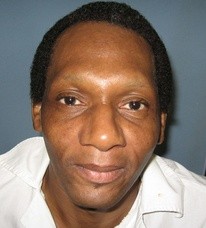
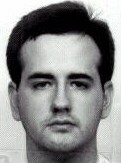
Jimmy Lee Dill
Murderer
1known / alleged victims
Similar offenders
LE
Leonard Laws
Murderer · USA · 1980
Leonard M. Laws was convicted in the State of Missouri v. Leonard M. Laws, 661…
24 victims
 Brian Kevin Rosenfeld
Murderer · USA · 1985
Brian Kevin Rosenfeld Brian Kevin Rosenfeld was sentenced to three concurrent l…
23 victims
Brian Kevin Rosenfeld
Murderer · USA · 1985
Brian Kevin Rosenfeld Brian Kevin Rosenfeld was sentenced to three concurrent l…
23 victims
 Yahweh ben Yahweh
Murderer · USA · 1980
Yahweh ben Yahweh was born and legally named Hulon Mitchell Jr. (October 27, 19…
23 victims
Yahweh ben Yahweh
Murderer · USA · 1980
Yahweh ben Yahweh was born and legally named Hulon Mitchell Jr. (October 27, 19…
23 victims
 Russell Ellwood
Murderer · USA · 1991
Russell Ellwood was a former taxi driver. Authorities suspected him of killing…
20 victims
Russell Ellwood
Murderer · USA · 1991
Russell Ellwood was a former taxi driver. Authorities suspected him of killing…
20 victims
JO
Joseph Dewey Akin
Murderer · USA · 1990
Joseph Dewey Akin was a hospital nurse who killed patients. Akin worked at Coop…
18 victims
 Robert Martines Perez
Murderer · USA · 1994
Name: Robert Martines Perez · Other name used in proceedings: Robert Martinez P…
15 victims
Robert Martines Perez
Murderer · USA · 1994
Name: Robert Martines Perez · Other name used in proceedings: Robert Martinez P…
15 victims
Random profiles
 Soghomon Tehlirian
Murderer · Germany · 1921
Soghomon Tehlirian (Armenian: Սողոմոն Թեհլերյան) was born on April 2, 1897, in…
1 victim
Soghomon Tehlirian
Murderer · Germany · 1921
Soghomon Tehlirian (Armenian: Սողոմոն Թեհլերյան) was born on April 2, 1897, in…
1 victim
 James Smith
Murderer · United Kingdom · 1962
James Smith (1936 - 28 November 1962) was the sixth-to-last criminal to be exec…
1 victim
James Smith
Murderer · United Kingdom · 1962
James Smith (1936 - 28 November 1962) was the sixth-to-last criminal to be exec…
1 victim
 Jesse Pomeroy
Homicide · USA · 1874
Jesse Pomeroy was sentenced to death on two counts in 1876. His sentence was co…
10 victims
Jesse Pomeroy
Homicide · USA · 1874
Jesse Pomeroy was sentenced to death on two counts in 1876. His sentence was co…
10 victims
 Loren Herzog
Murderer · USA · 1984
Loren Herzog — convicted multiple killer; pleaded guilty to voluntary manslaugh…
3 victims
Loren Herzog
Murderer · USA · 1984
Loren Herzog — convicted multiple killer; pleaded guilty to voluntary manslaugh…
3 victims
 Rodney Rachal
Murderer · USA · 1990
Rodney Charles Rachal was the petitioner-appellant in the United States Court o…
1 victim
Rodney Rachal
Murderer · USA · 1990
Rodney Charles Rachal was the petitioner-appellant in the United States Court o…
1 victim
 Shelby Shamblin
Homicide · USA · 1980
Shelby Glenn Shamblin was a Homeland man. He was convicted in June of first-deg…
1 victim
Shelby Shamblin
Homicide · USA · 1980
Shelby Glenn Shamblin was a Homeland man. He was convicted in June of first-deg…
1 victim
Case Facts
- Gender
- male
- Country
- USA
- Location
- Jefferson County, Alabama, USA
- Date of birth
- March 15, 1960
- Age at first offence
- 28
- Characteristics
- drugs, robbery
- Victim profile
- Leon Shaw, 33 ( drug dealer)
- Method of murder
- Shooting (.22-caliber handgun)
- Date(s) of murder
- February 8, 1988
- Years active
- 1988
- Date of arrest
- —
- Status
-
Executed
Executed by lethal injection on April 16, 2009 in Alabama
Case Summary
Parties and identities
- Jimmy Lee Dill was the defendant and death row inmate.
- Leon Shaw was the victim.
- Terry Dill was named as a participant in the events leading to Leon Shaw’s killing.
- Junatha Shaw was Leon Shaw’s wife.
- Leon Shaw Jr. was Leon Shaw’s son.
- Carl Michael Newman was a witness for the State during the penalty phase.
- Donald Blocker was a spiritual advisor.
- Brian Corbett was a Department of Corrections spokesman.
- Beth Jackson Hughes was an Assistant Attorney General.
- Michael W. McCormick was the trial judge.
- J. Louis Wilkinson and Virginia Vinson were identified as Dill’s attorneys at trial.
- J. Louis Wilkinson was also described as formerly a District Attorney for Jefferson County and as having handled several capital murder cases.
- Louis Wilkinson was appointed to represent Dill at arraignment.
- Vincent was also named as counsel at trial for petitioner (Virginia A. Vinson).
- Randy Lewis was a fellow Death Row inmate who received Dill’s 13-inch TV set.
- William Bush was an inmate who received assorted clothing and toiletries from Dill.
- Carolyn Dill was Dill’s sister-in-law and received a check for $1.26 left by Dill.
- Randy Lewis and William Bush were fellow Death Row inmates.
- Kimberly Allums and Linda Dill were nieces of Dill and were among those who witnessed the execution.
- Jeanette Carr was the victim’s advocate for Alabama Attorney General Troy King.
- Troy King was identified as the Alabama Attorney General.
- Brian Corbett, Donald Blocker, and Jeanette Carr were present at or associated with the execution account.
- Donald Blocker provided communion to Dill.
- Sergeant Duncan and Lieutenant Jordan were named in relation to post-arrest statement evidence.
- Forrest Duncan was named as an Officer who referred to the defendant’s parole officer during testimony.
- Officer Forrest Duncan testified in the direct examination portion referenced in the appellate discussion.
- Lieutenant Jordan was named in the quoted evidentiary exchange in connection with Dill’s post-arrest statements.
- Dr. Keith Langford, Dr. Robert Brissie, Dr. Shugerman, and Michael W. Gorham were named medical witnesses.
- Sergeant Duncan testified regarding Miranda rights and the voluntariness of Dill’s statement.
- Abby Dill was named as a witness related to hearsay testimony.
- Keith Langford, M.D., was the victim’s initial attending physician.
- Michael W. Gorham, M.D., was a surgery resident who treated Shaw.
- Robert Brissie, M.D., was Jefferson County coroner who performed an autopsy.
- Carl Michael Newman was a parole officer.
- Aaron Brown, Jacqueline Ball, and Freddie Carter were named in relation to events and witnesses.
- Druid Hills, Curb Market, Rose Boutique, University Hospital of Birmingham, Holman Correctional Facility, and Atmore were named.
STATUS and sentencing facts
- Dill was executed by lethal injection at Holman Correctional Facility in Alabama on April 16, 2009 at 6:16 p.m.
- Dill was the third Alabama inmate to die by lethal injection in 2009 and the 194th executed by the state since 1927.
- Dill had been on Death Row at Holman since Aug. 15, 1989.
- Dill was convicted in May 1989 of capital murder for shooting Leon Shaw in the back of the head and robbing him of cocaine and money in Birmingham on Feb. 8, 1988.
- The jury voted 11-1 for a death sentence, and the trial judge adopted the recommended penalty.
- The trial court’s sentencing order stated that “the court holds that the aggravating circumstances outweigh the mitigating circumstances and compel the court to affix punishment at death.”
Timeline
- April 16, 2009 — Jimmy Lee Dill was executed by lethal injection at Holman Correctional Facility.
- Aug. 15, 1989 — Dill was on Death Row at Holman.
- May 1989 — Dill was convicted of capital murder for the Leon Shaw shooting and robbery.
- July 14, 1989 — The court sentenced Dill to death.
- Nov. 22, 1988 — Leon Shaw died.
- Oct. 31, 1988 — Leon Shaw was readmitted to the hospital.
- April 26, 1988 — Leon Shaw was discharged from the hospital.
- Feb. 18 — Dill made a statement to police.
- Feb. 12 — Terry Dill spoke to Junatha Shaw and later that day contacted Birmingham police.
- Mar. 15, 1988 — Dill’s parole was revoked.
- Oct. 4, 1983 — Dill was convicted of theft of property in the first degree.
- Dec. 9, 1983 — Dill was sentenced to prison for ten years for theft of property in the first degree; on the same day Dill pled guilty to second degree robbery and was sentenced to a concurrent ten-year prison term.
- Dec. 9, 1988 — Dill was indicted for capital murder in Jefferson County.
- May 24, 1989 — The trial began and the appellate record described the trial as beginning.
- May 24, 1989 — Dill was convicted of capital murder for killing Leon Shaw.
- Feb. 8, 1988 — Events occurred leading to Leon Shaw’s shooting and the robbery of cocaine and money.
The offence
Capital murder during a robbery
- Dill was indicted for capital murder in violation of § 13A-5-40(a)(2), Code of Alabama 1975.
- The record described that Leon Shaw was shot in the back of the head by Dill with a .22-caliber handgun.
- The shooting occurred during events connected to a cocaine and money robbery.
- The State’s closing argument referenced aggravating circumstances that the jury found:
- The offense was committed by a person under a sentence of imprisonment.
- The defendant had been previously convicted of a felony involving the use or threat of violence to the person.
- At the time of the murder, the defendant was engaged in the commission of a robbery.
- The trial judge adopted the jury’s recommended penalty.
Victim’s background and events on the day of the shooting
- Leon Shaw drove to Terry Dill’s house on the afternoon of February 8, 1988.
- Leon Shaw was not supposed to be driving because he was serving time at the Federal Work Release Center for a drug violation; he was allowed to leave the center to go to work.
- Leon Shaw operated the Rose Boutique, which he owned with his wife, Junatha Shaw.
- Terry Dill left the house and got in the car with Leon Shaw.
- Dill was in the front seat with Leon Shaw.
- Leon Shaw told Terry Dill that Dill wanted to buy drugs from Leon Shaw.
- Testimony described Terry Dill as a former cocaine addict who had sold cocaine with Leon Shaw for four years and that Leon Shaw paid Terry Dill to bring customers.
- Shaw, Dill, and the appellant ran into Jacqueline Ball and Freddie Carter near a church on 85th Street.
- Shaw was still driving the car; Terry Dill sat in the backseat behind him; the appellant was in the front passenger seat.
- Shaw and the appellant got out of the car; Shaw talked to Jacqueline Ball; the appellant talked to Freddie Carter.
- Shaw carried a black pouch in which he normally kept cocaine and money, and Shaw had at least $200 in his hand.
- After Ball and Carter left, the appellant asked Shaw if he would give him some cocaine until he could get the money to pay for it; Shaw refused.
- They left for Druid Hills, where the work release center was located, because Shaw had to sign in at the center.
- When they got to Druid Hills, Shaw’s beeper went off; they all got out of the car, and Shaw made a telephone call.
- They went to the Curb Market and Shaw bought wine coolers.
- Shaw had a folded wad of money.
- When they left the store, Shaw had everyone in the car switch places so that people at the center would not see him driving.
- Terry Dill was driving and the appellant was in the backseat.
- Terry Dill drove to the center.
- The appellant again asked Shaw for cocaine; Shaw told him he would give the cocaine when the appellant got some money and showed the appellant a half ounce of cocaine.
- The appellant asked for cocaine again when they pulled up to the center.
- Shaw went to the building and pulled a big wad of money out of his pocket, stating he had just left the Rose Boutique and was going to make a deposit.
- While Shaw was inside the center, the appellant said to Terry Dill: “You don't believe I'll rob him or shoot him.” and continued to talk about killing Shaw.
- When Shaw got back into the car, the appellant said he would shoot Shaw if he did not give him some cocaine.
- After they drove off, there was a gunshot.
- Blood spurted onto Terry Dill.
- The appellant had a small automatic pistol, approximately .25 or .22 caliber.
- The appellant told Terry Dill to be quiet and keep driving.
- The appellant pulled the trigger as if he were going to shoot Shaw again.
- They eventually stopped in an alley.
- The appellant searched Shaw and took the money and cocaine.
- The appellant got a rag and started wiping fingerprints off of the car.
- Terry Dill ran away, and later called his girlfriend to pick him up; he went home later that evening.
- The appellant also ran away.
Shooting, medical treatment, and death
- Shaw was taken to the University Hospital of Birmingham for emergency brain surgery.
- The bullet entered the left, back side of Shaw’s brain.
- Shaw was unconscious and had abnormal movement in his extremities indicating the brain was functioning extremely abnormally.
- Both a feeding tube and a breathing tube were inserted.
- Shaw was discharged from the hospital on April 26, 1988, because there was nothing more the hospital could do for him.
- Shaw could not function independently and required round-the-clock care.
- Shaw eventually pulled the feeding tube out.
- Shaw’s doctor would not replace the tube because he could eat and drink by mouth.
- Shaw was readmitted to the hospital on October 31, 1988.
- Shaw never regained consciousness and died on November 22, 1988.
- Shaw’s doctors testified that he died of complications from a gunshot wound to the head.
- Forensic evidence revealed that the bullet removed from Shaw’s head was consistent with a .22 caliber projectile.
- The characteristics of the wound were consistent with a contact gunshot wound.
- In the habeas proceeding, the issue of feeding tube displacement was described as disputed in that proceeding.
- Dr. Alwyn A. Shugerman’s affidavit stated that “the immediate cause of [Shaw's] death was severe metabolic derangement and multiple organ failure associated with severe dehydration.”
Investigation and police interaction
Dill’s statement to police
- On February 18, police contacted Dill, who voluntarily went to the station house and made a statement.
- Dill stated that he and Terry Dill were with Shaw and that they drove to North Birmingham.
- Dill stated that Terry Dill was driving the car, Shaw was on the front passenger seat, and Dill was in the backseat behind Terry Dill.
- Dill stated that Shaw’s door opened and that he heard a shot from behind Shaw.
- Dill stated that Shaw was actually getting into the car when someone ran up to Shaw’s door.
- Dill stated that he heard a gunshot and that he and Terry Dill got out and ran.
- Dill stated that after hearing the shot, they drove off and a car followed them; they drove to an alley, jumped out, and ran away.
- Dill stated that Shaw had some cocaine in a black bag but he did not see any money.
Forensic and medical evidence
- The bullet recovered from Shaw’s head was described as consistent with a .22 caliber projectile.
- The wound characteristics were described as consistent with a contact gunshot wound.
- Emergency brain surgery was performed.
- Physicians testified regarding Shaw’s condition, tubes, discharge, readmission, and death.
Arrest
- The account described that on February 18, police contacted Dill, who voluntarily went to the station house and made the statement.
Trial
Procedure and verdict
- Dill was found “guilty as charged in the indictment.”
- The jury returned for the penalty phase after a brief recess.
- The jury deliberated for an hour and 35 minutes, from 2:05 to 3:40 p.m.
- In closing argument at the penalty phase, the State sought the death penalty based on three aggravating circumstances.
- Wilkinson urged the jury to recommend a life sentence.
Witnesses and evidence described
- The State presented parole officer Carl Michael Newman during the penalty phase.
- Newman testified that Dill had two Alabama felony convictions and was on parole at the time Leon Shaw was shot.
- Certified copies of the two convictions were introduced.
- The certified copies indicated:
- On October 4, 1983, Dill was convicted of theft of property in the first degree and on December 9, 1983 was sentenced to prison for ten years.
- On December 9, 1983, on the same day, Dill pled guilty to second degree robbery and was sentenced to a concurrent ten-year prison term.
- Dill was on parole on February 8, 1988, when the Leon Shaw shooting occurred.
- His parole was revoked on March 15, 1988.
- The defense presented one witness, Dill himself, whose testimony included:
- He had a thirteen-month-old child.
- He had a common-law wife.
- He worked a number of jobs.
- He attended nursing school while on parole.
Defense theory
- Dill’s defense at trial contended that someone else shot Shaw from outside Shaw’s car.
Quotes and verbatim material
- Officer Forrest Duncan’s testimony included the exchange:
- “Q: After Terry Dill made a statement, what, if anything, did you or Lieutenant Jordan do after that? ”
- “A: I attempted to locate Jimmy Dill. ”
- “Q: All right. How did you attempt to do that? ”
- “A: By several means. Through some of his relatives and through his parole officer. ”
- “Q: And did this start on the very day that Terry Dill made the statement, did your efforts start then?” (R. 619-620.)
- Dill’s statement to police (as summarized in the appellate/habeas accounts) included:
- “You don't believe I'll rob him or shoot him.” (R. 490.)
- Trial voir dire and argument excerpts included:
- The court’s question and counsel’s response:
- “THE COURT: All right. The State has rested. Anything for the defendant? ”
- “MR. WILKINSON: Judge, on behalf of the defendant I know of no further new evidence that we could present, and we rest, Your Honor.”
- Mitigating circumstances colloquy:
- “THE COURT: What about mitigating circumstances? ”
- “MR. WILKINSON: Which can be almost anything. ”
- “MS. VINSON: Yes. It can be almost anything. Not enumerated, but I think a separate statute says any circumstances of the offense can be considered mitigating circumstances. ”
- “MR. WILKINSON: Or I suppose you might have three, might have five, might have six. I don't know. Actually we were just blank on submitting it, you know, a statement to the jury. We're just submitting it to them. And if [petitioner] wanted to make a statement on his own behalf, he can. But that was all. We were blank on doing it.”
- Wilkinson’s opening statement theme:
- “Who killed [Shaw] and why, we could speculate on, we could conjecture about, maybe you all will conclude as to why. But we're only here about [petitioner] and whether or not he should face capital murder, the death penalty, for killing someone that he did not kill.”
- Wilkinson’s rebuttal explanation quoted in the habeas account:
- “[Petitioner] was consistent in one thing, that an unknown black male that Shaw had stopped to talk to shot Shaw. He said that [in his post-arrest statement to the police]. And that fits in very well with the facts, physical and otherwise, and just as well as anything Terry Dill said.”
- The court’s question and counsel’s response:
Sentencing
- Dill received a sentence of death.
- The trial court based the sentence on the three aggravating circumstances found by the jury and the absence of mitigating circumstances.
- The judgment affirmed referenced:
- The trial court found three aggravating circumstances:
- the murder was committed during a robbery in the first degree;
- the capital offense was committed by a person under sentence of imprisonment;
- the appellant had previously been convicted of a felony involving the use or threat of violence.
- The trial court found no mitigating circumstances.
- The trial court found three aggravating circumstances:
- Dill’s final meal was: fried chicken, fried okra, a biscuit and a root beer.
- Dill’s final words were: “I just hope God's will be done and everybody finds the peace they need. I'm good.”
Appeals
Direct appeal (affirmance)
- Dill v. State, 600 So.2d 343 (Ala.Cr.App. 1991) was the direct appeal.
- The Alabama Court of Criminal Appeals held that:
- No evidence would have supported the defendant's requested instructions on lesser-included offenses.
- Any prosecutorial misconduct during closing arguments did not rise to the level of plain error.
- Sufficient evidence supported that the victim’s death was caused by a gunshot wound to the head even though death occurred nine months later and after he pulled out his feeding tube and suffered dehydration.
- The jury was adequately instructed on aggravating and mitigating circumstances.
- Hearsay statements in the presentence report were admissible at sentencing.
- The sentence was not the product of passion or prejudice and it was not excessive.
- Judgment affirmed, Ala., 600 So.2d 372.
Post-conviction proceedings (PCR)
- Dill v. State, 767 So.2d 366 (Ala. Cr. App. 1999) involved postconviction relief.
- The Jefferson Circuit Court summarily denied the petition; the Court of Criminal Appeals remanded for an evidentiary hearing.
- On return to remand, the Court of Criminal Appeals held that petitioner was not denied effective assistance of counsel at trial.
- The Court of Criminal Appeals affirmed.
Habeas corpus
- Dill v. Allen, 488 F.3d 1344 (11th Cir. 2007) was a habeas proceeding.
- The United States District Court denied the petition.
- The district court’s denial of habeas corpus relief was affirmed by the United States Court of Appeals for the Eleventh Circuit.
- The certificate of appealability was granted and amended to include:
- whether trial counsel were constitutionally ineffective in failing to uncover and present mitigating evidence during the penalty phase; and
- whether counsel were constitutionally ineffective in failing to develop and present evidence that the shooting was not the cause of Shaw’s death.
- The court found no error in the district court’s response and affirmed the denial of habeas corpus relief.
Outcome
- Dill was executed by lethal injection on April 16, 2009 in Alabama.
- The execution account identified Dill as dying at 6:16 p.m.
- Dill’s final words were recorded as “I just hope God's will be done and everybody finds the peace they need. I'm good.”
Aftermath and execution details
Witnesses and remarks during execution
- Shaw’s wife Junatha Shaw and their son Leon Shaw Jr. witnessed the execution.
- Kimberly Allums and Linda Dill, Dill’s nieces, witnessed the execution.
- Dill turned to the victim’s family and apologized before losing consciousness.
- Dill mouthed words of comfort to his two nieces who were holding hands as one sobbed.
- Leon Shaw Jr. said: “I told him I forgave him. I see him a victim, a victim of his raising, a victim of the circumstances. I see my dad as a victim, too, and it's continuing.”
- A victim’s advocate, Jeanette Carr, said: “It's not very often that they get that,” in reference to Dill’s expression of remorse.
Corrections and last day details
- Dill spent the day in a holding cell near the execution chamber.
- Dill had 19 visitors, mostly family members.
- Dill received communion from his spiritual advisor Donald Blocker.
- Department of Corrections spokesman Brian Corbett said Dill had 19 visitors, mostly relatives.
- Dill was described as reading his Bible and making phone calls, writing letters, and watching some TV in the days leading to execution.
- Dill gave his 13-inch TV set to fellow Death Row inmate Randy Lewis.
- Dill gave assorted clothing and toiletries to another Death Row inmate, William Bush.
- Dill left a check for $1.26 to sister-in-law Carolyn Dill.
- Dill met with his two attorneys on the morning of the execution and then met with a spiritual adviser to receive Holy Communion.
Court attempts to stay execution
- Dill’s attorneys asked the Alabama Supreme Court to stay his execution.
- The Alabama Supreme Court denied the petition in an 8-0 vote.
- The U.S. Supreme Court followed suit by denying relief.
- In the appellate discussions of the stay, counsel argued Dill did not have effective legal representation during his murder trial.
- Assistant Attorney General Beth Jackson Hughes said Dill’s claims of ineffective defense were settled more than a decade earlier in his unsuccessful appeal and called the bid for a stay without merit.
Related execution context included in the account
- Alabama had 203 Death Row inmates, most of them in Holman.
- Two Alabama inmates already had been executed by lethal injection in 2009.
- The most recent was Danny Joe Bradley, executed on Feb. 12 for the murder of his stepdaughter.
- Rhonda Hardin was described as being 12, and as having been sexually assaulted and strangled in Piedmont on the night of Jan. 24, 1983.
- The next scheduled execution was May 14, for Willie McNair, for the robbery and murder of Ella Foy Riley of Henry County in 1990; McNair had been on Death Row 18 years.
Spotted an error, or have more information about this case?