
John Duty
Murderer Russell Ellwood
Murderer · USA · 1991
Russell Ellwood was a former taxi driver. Authorities suspected him of killing…
20 victims
Russell Ellwood
Murderer · USA · 1991
Russell Ellwood was a former taxi driver. Authorities suspected him of killing…
20 victims
 Robert Martines Perez
Murderer · USA · 1994
Name: Robert Martines Perez · Other name used in proceedings: Robert Martinez P…
15 victims
Robert Martines Perez
Murderer · USA · 1994
Name: Robert Martines Perez · Other name used in proceedings: Robert Martinez P…
15 victims
 Billy Frank Vickers
Murderer · USA · 1993
Billy Frank Vickers Vickers was executed by lethal injection in Texas on Januar…
14 victims
Billy Frank Vickers
Murderer · USA · 1993
Billy Frank Vickers Vickers was executed by lethal injection in Texas on Januar…
14 victims
 Carol Coronado
Murderer · USA · 2014
Carol Coronado, 30, lived in Torrance, California. She was the mother of Sophia…
3 victims
Carol Coronado
Murderer · USA · 2014
Carol Coronado, 30, lived in Torrance, California. She was the mother of Sophia…
3 victims
 Michael Iver Peterson
Murderer · USA · 1985
Michael Iver Peterson was born October 23, 1943, near Nashville, Tennessee, USA…
2 victims
Michael Iver Peterson
Murderer · USA · 1985
Michael Iver Peterson was born October 23, 1943, near Nashville, Tennessee, USA…
2 victims
 Joseph Trueblood
Murderer · USA · 1988
Joseph Trueblood was executed by lethal injection in Indiana on June 12, 2003.…
3 victims
Joseph Trueblood
Murderer · USA · 1988
Joseph Trueblood was executed by lethal injection in Indiana on June 12, 2003.…
3 victims
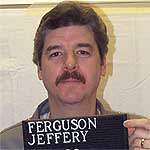 Jeffrey Ferguson
Murderer · USA · 1989
Jeffrey Ferguson was convicted of first-degree murder and sentenced to death fo…
1 victim
Jeffrey Ferguson
Murderer · USA · 1989
Jeffrey Ferguson was convicted of first-degree murder and sentenced to death fo…
1 victim
- Gender
- male
- Country
- USA
- Location
- Pittsburg County, Oklahoma, USA
- Date of birth
- April 25, 1952
- Age at first offence
- 49
- Characteristics
- —
- Victim profile
- Curtis J. Wise Jr., 22 (his cellmate)
- Method of murder
- Strangulation with bedsheet
- Date(s) of murder
- December 19, 2001
- Years active
- 2001
- Date of arrest
- Same day
- Status
-
Executed
Executed by lethal injection in Oklahoma on December 16, 2010
Case record (John Duty)
Overview
John Duty was convicted after a guilty plea in the District Court of Pittsburg County, Oklahoma, of first degree murder. He received a death sentence. The death sentence was affirmed on mandatory sentence review and later proceedings in federal court were resolved against him. Duty was executed in Oklahoma by lethal injection on December 16, 2010.
Duty’s stated position in the proceedings included that he wanted a death sentence rather than life without parole.
Timeline
- June 4, 2002 — John Duty was charged with First Degree Murder in violation of 21 O.S.2001, § 701.7, in Case No. CF-2002-243, in the District Court of Pittsburg County.
- August 16, 2002 — John Duty was examined by Dr. Kenneth Williams as part of competency evaluations.
- October 4, 2002 — Doctors Jeanne Russell and Paul Lanier evaluated John Duty as part of competency evaluations.
- October 28, 2002 — A competency hearing was held; the trial court concluded that Duty was competent on the issues raised by statute and case law, and proceeded with arraignment and sentencing after Duty’s guilty plea.
- December 19, 2001 — John Duty talked his cellmate, Curtis Wise, into acting as a hostage so Duty could be moved to Administrative Segregation; after being bound, Duty strangled Wise to death.
- December 16, 2010 — John Duty was executed by lethal injection in Oklahoma; he was pronounced dead at 6:18 p.m. local time, after a three-drug cocktail that included pentobarbital was administered.
- December 17, 2010 — Oklahoma execution reporting described the execution timing, the drug substitutions, and the appeals in progress involving other inmates’ challenges to pentobarbital.
- November 20, 2010 — A federal judge ruled pentobarbital could be used as a substitute lethal injection drug; U.S. District Judge Stephen Friot rejected a motion by death row inmates Jeffrey David Matthews and John David Duty.
- October 11, 2004 — The Oklahoma Court of Criminal Appeals denied John Duty’s application for post-conviction relief in an unpublished opinion, No. PCD-2003-823.
- January 13, 2005 — John Duty initiated a federal habeas action by filing a pro se motion to proceed in forma pauperis and a motion for appointment of counsel.
- April 4, 2005 — After counsel was appointed, Duty wrote a pro se letter asking to stop his appeals.
- April 25, 2005 — A hearing was held regarding the “stop the appeal” letter; the court ordered another competency evaluation.
- July 7, 2005 — The competency report was filed under seal.
- July 28, 2005 — Duty’s appointed counsel filed a petition for writ of habeas corpus.
- August 17, 2007 — The district court issued an order denying Duty’s habeas petition.
The offence
John Duty was sentenced to death after he pled guilty to the 2001 murder of his cellmate, Curtis Wise.
Duty was imprisoned in August 1978 after being convicted of armed robbery, kidnapping, first degree rape and shooting with intent to kill. In December 2001, prison officials placed twenty-two-year-old Wise in the same cell with Duty. On the evening of December 19, Wise allowed Duty to bind him from behind to fake an altercation so Duty would be moved to administrative segregation. After Wise was bound, Duty strangled him to death with a bed sheet.
During the guilty plea and later mandatory sentence review discussion, Duty admitted that Wise was conscious and struggled for his life and that it took a while for Wise to become incapacitated. The court found the especially heinous, atrocious or cruel aggravating circumstance was supported based on torture or serious physical abuse.
Investigation / pre-sentencing communications
After the killing, John Duty wrote a letter to Wise’s mother. The letter stated:
“Mary Wise, Well by the time you get this letter you will already know that your son is dead. I know now because I just killed him an hour ago. Gee you'd think I'd be feeling some remorse but I'm not. I've been planning since the day he moved in last Friday. Tonight I finally pulled it off. Would you like to know how I did it? Well I told him I wanted to use him as a hostage. Hell he went right for it, thinking he was gonna get some smokes out of the deal. Well I tied him up hands and feet, then I strangled him. It's not like the movies, it took awhile. But I really did him a favor as he was to [sic] stupid to live. I mean he didn't know me 5 days and he let me tie him up like that, Please! Besides he was young and dumb and would've just been in and out of prison his whole life. So I saved him all the torment. I've been in 24 years, wish someone would have done me the same favor back then. I guess you're thinking I'll be punished for this. Well not likely in this county. The DA's here are weak bitches and don't give a damn about deaths of inmates. We're all just scum to them. Besides I'm doing 2 life sentences so they can't hurt me. But you can call them and tell them about this letter, but it wouldn't do you any good. Well I'm gonna close for now and I'll tell police in the morning about Curtis. (R. Vol.6, Ex. 1.)”
The letter was confiscated before it left the prison.
At some point after the murder, Duty wrote a letter to the district attorney inquiring “whether you intend to file murder charges against me or not.” In that letter, Duty stated:
“Now I have a proposition for you. I'm willing to come over there right now and plead guilty to a Murder 1 charge. But that's only if you do it immediately. After that you can just spend the money for a jury trial. But here's my deal. I do it only for a death sentence. I'm never getting out of here with the time I'm doing. And with all my bad behavior in here I'm never going to make parole. So there's no time you can give me that would harm me in the least way. And because of my violent record you can't say I don't deserve the death penalty. I've killed another inmate, taken hostages 3 times, and assaulted a guard. Plus other various things to[o] numerous to mention. You may think me crazy for this, and yes I'm [sic] guess I am a bit crazy or I'd not have done [the] things I've done. But I'm totally sane and know what I'm doing, and am prepared to face my punishment which I rightfully deserve. Now if you don't do this you're only telling me it's ok for me to kill again [and] again because you're not gonna do anything to me. And if that's what it takes to get you to do something then I'll be more than happy to do it. Only next time it will be a guard or staff member, as I know you'll prosecute me then.... So the ball is in your corner, are you going to do your job or do you allow me to continue on doing mine. ( Id.)”
Investigator Tim Coppick interviewed Duty the morning after the murder. Duty told the investigator he wrote the letter and mailed it. The investigator alerted the warden and the letter was intercepted before it left the prison.
Arrest
No separate arrest facts were provided beyond Duty being imprisoned and later being charged in Case No. CF-2002-243.
Trial
Charge and bill of particulars
John Duty was charged with First Degree Murder in violation of 21 O.S.2001, § 701.7, in Case No. CF-2002-243, in the District Court of Pittsburg County, on June 4, 2002.
The State filed a Bill of Particulars alleging four aggravating circumstances:
- “the defendant was previously convicted of a felony involving the use or threat of violence to the person;”
- “the murder was especially heinous, atrocious or cruel;”
- “the murder was committed by a person while serving a sentence of imprisonment on conviction of a felony;”
- “the existence of a probability that the defendant would commit criminal acts of violence that would constitute a continuing threat to society.”
The bill of particulars referenced 21 O.S.2001, § 701.12(1), (4), (6), & (7).
Competency evaluations and hearing
Duty wished to enter a guilty plea to the crime and the Bill of Particulars; therefore, the trial court ordered a competency evaluation pursuant to Fluke v. State, 2000 OK CR 19, 14 P.3d 565, and Grasso v. State, 1993 OK CR 33, 857 P.2d 802.
A physician at the Carl Albert Community Mental Health Center conducted an initial competency examination. The evaluation concluded that Duty was competent. The evaluation found that Duty was able to appreciate the nature of the charges, able to consult with his lawyer and rationally assist in the preparation of his case, did not require treatment, and that if released, he would pose a significant threat to the life or safety of himself or others.
After receiving the initial evaluation, Duty’s counsel requested that physicians from Eastern State Hospital complete an additional independent competency evaluation. The trial court granted the request, ordering that the evaluation answer questions posed in 22 O.S.2001, § 1175.3 (E). After the evaluation, the physicians concluded Duty was competent.
The report indicated that Duty understood he was certain to receive the death penalty if he went to trial and understood the method of execution in Oklahoma. The report indicated that Duty understood his attorney’s role was to see procedural issues were in order so his desired sentence of death would be carried out. The report indicated that Duty believed death was a better option than being locked up for the rest of his life. The report indicated that Duty had never suffered from a mental disorder. The report indicated that if Duty were released he would be a danger to others because of his admitted belief that he would kill again. The report indicated that Duty understood that by entering a guilty plea he was waiving appeal rights.
On October 28, 2002, a hearing was held. The trial court reviewed the competency evaluation reports after the parties stipulated to the results. Duty testified in his own behalf and was examined by the trial court. The trial court concluded that Duty “is competent on all those issues and all the points raised by the statute involved and by the case law involved.”
Guilty plea and punishment
Following the competency hearing, the trial court proceeded to formal arraignment. Duty entered his guilty plea to the crime before Judge Taylor (Steven Taylor). The trial judge accepted the guilty plea after finding Duty understood the nature and consequences of his plea and finding there was a sufficient factual basis for the plea.
The trial court allowed Duty to enter a guilty plea to the Bill of Particulars. The trial court accepted the plea after finding Duty understood the consequences and after finding sufficient factual basis for the aggravating circumstances. Judge Taylor set punishment at death.
Duty indicated that he understood his right to appeal and that he knew this Court would review the sentence pursuant to mandatory sentence review.
The mandatory sentence review framework described included that the Court of Criminal Appeals would determine “whether the sentence of death was imposed under the influence of passion, prejudice, or any other arbitrary factor” and “whether the evidence supports the ... judge's finding of a statutory aggravating circumstance.” The Court would also determine “whether Appellant is competent and has the capacity to understand the choice between life and death and to knowingly and intelligently waive any and all rights to appeal his sentence.”
Duty did not move to withdraw his plea and was found to have waived all but the statutorily mandated sentence review.
Duty’s statements in the plea proceedings
Duty explained why he wanted the death penalty, stating:
“Well, number one, I know I am never getting out of prison; I am going to spend the rest of my life there.... I feel that if I stay in prison, I am just going to continue doing the same things I have done in the past.... [I]f I get angry at someone, I'm going to do something.”
When further questioned, Duty asked the court to abide by his wishes for a death sentence and stated that “if [he] went to a jury trial, [he'd] probably get the same thing.”
Sentencing
The State sought the death penalty and filed a bill of particulars listing four aggravating factors. At the plea proceedings, Duty stipulated to those aggravating circumstances against his attorney’s advice.
The district court sentenced Duty to death, finding the four aggravating circumstances supported by sufficient evidence and determining the death penalty was appropriate and “not imposed under the influence of passion, prejudice, or any other arbitrary factor.” The mandatory sentence review also addressed constitutionality arguments raised by Duty in propositions.
Mandatory sentence review findings
On mandatory sentence review, the Court found:
- evidence supported finding of aggravated circumstance that defendant posed continuing threat to society;
- aggravating circumstance that murder was especially heinous, atrocious or cruel was not unconstitutional;
- evidence was sufficient to support finding that murder was especially, atrocious, or cruel;
- findings of aggravating circumstances that defendant had prior violent felony conviction and that he posed continuing threat to society was not impermissibly duplicitous.
The Court affirmed the judgment and sentence.
Appeals
Direct appeal / mandatory sentence review (Oklahoma Court of Criminal Appeals)
The OCCA conducted mandatory sentence review and affirmed. It found there was sufficient evidence from which the trial court could have found the existence of the four aggravating circumstances and that the death penalty was appropriate and was not imposed under influence of passion, prejudice, or any other arbitrary factor.
Duty did not seek a rehearing or appeal to the Supreme Court.
Post-conviction relief (Oklahoma Court of Criminal Appeals)
Duty filed an original application for post-conviction relief with the OCCA on August 27, 2004, claiming ineffective assistance of counsel for not investigating and presenting compelling mitigating evidence, alleging depression contributed to the murder and his decision to plead guilty. He also claimed duplicative aggravating circumstances.
He supplemented his post-conviction relief application with affidavits and a report from Dr. Gilbert Sanders, a licensed psychologist, plus prison records. Dr. Sanders opined that Duty suffered at least two significant head traumas (at age ten and at age seventeen) and that due to absence of data he could not determine if cognitive functioning problems resulted from those injuries. Dr. Sanders described cognitive problems including a “lack of speed in recognizing and processing visual information” and “serious problems [in] the areas of Language, Emotion and Affect Processing.” The interview and testing revealed Duty “was psychologically depressed and may have a somatoform disorder.” Dr. Sanders stated “attention is warranted given the current diagnosed depression and reoccurring suicidal thoughts” and recommended “immediate psychological and medical intervention.” The OCCA denied the application for post-conviction relief in an unpublished opinion on October 11, 2004.
Federal habeas proceedings
After direct proceedings in state court, Duty filed a federal habeas petition.
On January 13, 2005, he initiated the federal habeas action by filing a pro se motion to proceed in forma pauperis and a motion for appointment of counsel, which the court granted. On April 4, 2005, Duty wrote a pro se letter to stop his appeals. On April 25, 2005, the court held a hearing, continued the matter, and ordered another competency evaluation. The competency report was filed under seal on July 7, 2005.
Duty’s appointed counsel filed a petition for writ of habeas corpus on July 28, 2005 raising issues including:
- failure to investigate and present mitigating evidence,
- duplicative aggravating circumstances in violation of the Eighth Amendment,
- constitutionality of the “continuing threat” aggravator,
- constitutionality/vagueness of the “heinous, atrocious, or cruel” aggravator and lack of evidence to support its finding,
- remoteness of prior violent felonies,
- challenge to Oklahoma’s death sentence protocol.
The district court denied the habeas petition on August 17, 2007 and granted a certificate of appealability with respect to two issues.
Duty later appealed. The federal appellate court affirmed the denial of habeas relief.
Execution
Execution method and drug protocol
Oklahoma used a three-drug cocktail that included pentobarbital, described in the reporting as a drug used in euthanasia of animals and as a sedative for humans. The Department of Corrections spokesman Jerry Massie said it was the first use in a U.S. execution of the animal euthanasia drug and that it replaced sodium thiopental, described as a sedative in short supply.
A federal court in Oklahoma ruled the drug could be used in the execution, and a ruling was upheld by the 10th U.S. Circuit Court of Appeals.
Execution timing and statements
Duty was strapped to a gurney and wore an eye patch over his right eye. He was pronounced dead at 6:18 p.m. local time, and the lethal drugs began to flow at 6:12 p.m. His breathing became labored one minute later. At 6:15 p.m., he appeared to stop breathing and color began to drain from his face. Oklahoma Department of Corrections spokesman Jerry Massie said afterward, “There didn't appear to be any issues with the new drug.”
Duty’s last words included an apology to the family of his victim, Curtis Wise. Duty said:
“To the family of Curtis Wise, I would like to make my apology. One day you will be able to forgive me, not for my sake but for your own. My family and friends are here too. You've all been a blessing. Thank you Lord Jesus. I am ready to go home.”
Another account recorded Duty saying:
“I hope one day you'll be able to forgive me, not for my sake, but for your own,”
followed by:
“Thank you, Lord Jesus. I'm ready to go home.”
Duty also acknowledged three of his attorneys and his brother and sister-in-law, who witnessed the execution from an adjacent room, and told them:
“You've all been a blessing.”
Final meal request
For his final meal, Duty requested a loaded double cheeseburger with mayonnaise; a foot-long Coney with cheese, mustard and extra onions; a cherry limeade and a large banana shake, as stated by Jerry Massie.
Aftermath
After the execution, reporting described additional litigation involving other inmates challenging the pentobarbital substitution.
Other details
Prior commitments referenced in the case material
Duty had multiple prior convictions and sentences listed in “2 Previous Commitments” and additional prison-history references:
- 78-12 TILL Shooting With Intent To Kill; 78-75 JACK Robbery With A Firearm 20 Years; 78-13 TILL Rape, First Degree 07/18/1978 LIFE; 78-76 Kidnapping 07/18/1978 Life; 79-278 PITT Assault With A Dangerous Weapon 04/18/1980 5 Years; 86-118 OSAG Escape From Penal Institution 02/27/1987 2 Years.
- The federal habeas material stated that Duty was imprisoned in August 1978 after being convicted of armed robbery, kidnapping, first degree rape and shooting with intent to kill.
- The mandatory sentence review material described Duty was serving life sentences for felony crimes including Robbery or Attempted Robbery (Case No. CF-79-75 from the District Court of Jackson County, Oklahoma), First Degree Rape (Case No. CF-78-12 from the District Court of Tillman County, Oklahoma), and Shooting with Intent to Kill (Case No. CF-78-13 from the District Court of Tillman County, Oklahoma).
Competency findings and trial court language
The trial court concluded Duty was competent, including that he “is competent on all those issues and all the points raised by the statute involved and by the case law involved.”
The competency report by Eastern State Hospital physicians indicated Duty understood the certainty of receiving the death penalty if he went to trial and understood the method of execution in Oklahoma, and that Duty understood his attorney’s role to ensure procedural issues so his desired death sentence would be carried out.
Victim identification
Curtis Wise was identified as the prison cellmate victim. Reporting and legal material described him as 22 years old. He was murdered by strangling with a bedsheet.
Exact quote from defence counsel and sentencing proceedings
Duty’s counsel told the court:
“Yes, Your Honor. Yes, I have.... [W]e have talked about it at length, the second stage of trial and what that is, what mitigation is. As a matter of fact, in spite of what Mr. Duty had indicated was his desire, we have still investigated the case with regard to his background in preparation for mitigation, should Mr. Duty change his mind. And so we do have evidence which I have talked to Mr. Duty about that we could present; however, again against counsel's advice, it is his desire to waive that right to mitigation. ( Id. at 48-49.)”
The victim’s mother, Mary Wise, asked the judge to sentence Duty to life without parole. She stated:
“I don't believe he ought to have a choice. I think he ought to sit in that cell and face those four walls and think about what he did for the rest of his natural-born life. And I hope and pray to God that you live to be 110 years old, because that's how long I want you to think about what you did. ( Id. at 52.)”
Dr. Williams testified Duty “emphatic[ally]” told him he intended to continue killing if he remained in prison.
Execution-related quotes from court and counsel
U.S. District Judge Stephen Friot rejected a motion by death row inmates Jeffrey David Matthews and John David Duty, and described it as not cruel and unusual punishment. After his ruling, Assistant Attorney General Stephen Krise said:
“We knew changing drugs was going to be breaking new ground,”
and:
“A lot of effort went into making sure that the drug we chose would satisfy the requirements of the 8th Amendment, and I think that bore fruit today.”
Death Penalty Information Center executive director Richard Dieter was quoted regarding other states and evidence about effects on humans, including:
“I have not seen that (pentobarbital) has been used before in this context,”
and:
“Some states don't say exactly what drugs are used and have kept that out of the public eye.”
and regarding delay and state law changes:
“The other states that haven't been able to do it, it's because the state courts wanted more time to review the overall protocol changes.”
and:
“I think Oklahoma is the only state where this issue has come to a head over a new drug,”
as well as:
“No one who has been put to death has come back and testified about what it felt like,”
and:
and:
Capital defense attorney Jim Rowan stated:
“was concerned there was little evidence about the effects of the use of the drug on humans.”
Drug-timing and other execution-protocol descriptions included in the case material
The reporting described lethal injection executions as typically consisting of three drugs: sodium thiopental, vecuronium bromide and potassium chloride, and described Oklahoma’s substitution after running out of sodium thiopental earlier in the year.

Spotted an error, or have more information about this case?