Rev. John Spencer
Murderer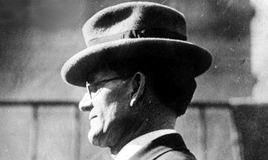 William Hale
Murderer · USA · 1921
Name: William Hale · Known as: the so-called "King of the Osage Hills" · Occupa…
24 victims
William Hale
Murderer · USA · 1921
Name: William Hale · Known as: the so-called "King of the Osage Hills" · Occupa…
24 victims
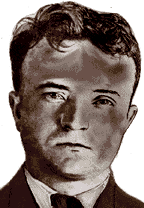 Paul Jaworski
Murderer · USA · 1926
Paul Jaworski was born in Poland as Paul Poluszynski in 1900. He later immigrat…
20 victims
Paul Jaworski
Murderer · USA · 1926
Paul Jaworski was born in Poland as Paul Poluszynski in 1900. He later immigrat…
20 victims
 Edward Adams
Murderer · USA · 1920
Edward J. "Eddie" Adams was born in 1887 on a farm in Hutchinson, Kansas as W.J…
7 victims
Edward Adams
Murderer · USA · 1920
Edward J. "Eddie" Adams was born in 1887 on a farm in Hutchinson, Kansas as W.J…
7 victims
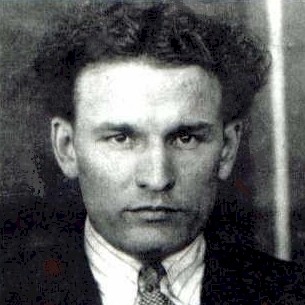 William Kenneth Wagner
Murderer · USA · 1924
William Kenneth (Kinnie) Wagner (born February 18, 1903 in Scott County, VA) wa…
6 victims
William Kenneth Wagner
Murderer · USA · 1924
William Kenneth (Kinnie) Wagner (born February 18, 1903 in Scott County, VA) wa…
6 victims
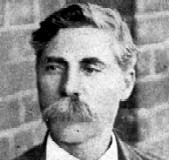 Floyd Allen
Murderer · USA · 1912
Floyd Allen (July 5, 1856 – March 28, 1913) was an American landowner and patri…
5 victims
Floyd Allen
Murderer · USA · 1912
Floyd Allen (July 5, 1856 – March 28, 1913) was an American landowner and patri…
5 victims
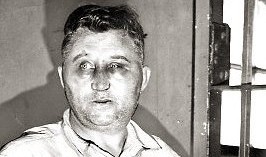 Harry Powers
Murderer · USA · 1931
Harry Powers was executed by hanging on March 18, 1932, at the West Virginia Pe…
5 victims
Harry Powers
Murderer · USA · 1931
Harry Powers was executed by hanging on March 18, 1932, at the West Virginia Pe…
5 victims
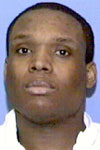 Lamont Reese
Murderer · USA · 1999
Lamont D. “Mont” Reese was a 28-year-old black male. He was scheduled to be exe…
3 victims
Lamont Reese
Murderer · USA · 1999
Lamont D. “Mont” Reese was a 28-year-old black male. He was scheduled to be exe…
3 victims
- Gender
- male
- Country
- USA
- Location
- Clear Lake, Lake County, California, USA
- Date of birth
- ???
- Characteristics
- parricide
- Victim profile
- His wife Emma Spencer
- Method of murder
- Drowning
- Date(s) of murder
- July 26, 1921
- Years active
- 1921
- Date of arrest
- August 20, 1921
- Status
-
Life imprisonment
Sentenced to life in prison in 1921
Case record: Rev. John Spencer
Background
Rev. John Spencer was a minister. He was charged with the murder of his wife, Mrs. Spencer, on Clear Lake on the night of July 26, 1921. The trial took place in Lake County amid visitors who had arrived for the trial, and an atmosphere of interest and anxiety while a jury was to decide the fate of the minister.
The prosecution’s circumstantial-evidence theory was built on three angles: poisoning, choking, and drowning.
The offence
The prosecution alleged that Spencer murdered his wife, Mrs.
Working from the theory of poisoning, choking, and drowning, the prosecution relied on circumstantial evidence.
The autopsy revealed that no poison was contained in Mrs. Spencer’s stomach. Testimony proved that there were no marks of violence on the body and that there could have been no choking. The last theory was that she may have been drowned.
Up to the time described, no damaging evidence had been presented by the prosecution that would serve to show that Spencer murdered his wife.
Investigation
Autopsy and medical testimony
Dr. Bonar, of Santa Rosa, testified that, according to the testimony given by Sidell, Mrs. Spencer met her death by drowning, while characterizing it as very unusual that the body did not sink.
In response to the defense, Dr. Bonar stated that if Mrs. Spencer died from heart trouble, her body would have floated. Dr. Bonar also testified that he examined Mrs. Spencer on May 27 and that at that time her heart was normal. Dr. Bonar did not make an examination of the urine nor take the blood pressure, which were described as necessary for a thorough heart examination.
On Wednesday morning, Dr. Chas. Craig, who examined Mrs. Spencer’s body at the autopsy, said he had found a thickening of the valves of the heart. He did not consider it probable that this would cause her death but stated that such a thing was possible.
Witness testimony affecting the circumstantial case
Hudson Jack, an Indian from the Indian Camp close to the scene of the tragedy, testified that he had heard someone call on the night of Mrs. Spencer’s death. The defense broke down this testimony and made him admit that the voice he heard may have been that of a man, woman, or animal.
W. A. Miller, who held a lease on land owned by Spencer in San Jose, testified that Spencer told him that his wife was a burden to him and that after Mrs. Spencer’s death Spencer never seemed so happy. The defense brought out that Miller had some dealings with Spencer in a controversy over water on the leased land. Miller would not admit that the dealings were of an angry nature.
Evidence about clothing and bodily position
Friends told investigators that it was unusual that Mrs. Spencer left her home without a scarf and hat that she “always” wore. It was said to be known that the deceased always wore a hat and certain shawl when visiting among her friends or sailing with her husband on the lake. The appellate court wrote that, as seen when her body was first observed floating in the bay, the deceased wore neither a hat nor the shawl referred to.
Working from the theory that perhaps Mrs. Spencer did not drown where she was found, authorities looked around the dock near Spencer’s cabin. When dragging the lake area around Spencer’s dock, they managed to bring up a red-and-white shawl that Emma’s friends identified as her favorite.
Arrest
In August 1921, the Lake County Sheriff and district attorney concluded their investigation and arrested Spencer.
During a boat trip back to Lake County, Spencer asked District Attorney Churchill how much he earned annually. When Churchill replied that he received $1,500, Spencer replied, “That’s not enough!” Spencer then offered Churchill a bribe.
Spencer said: “I know of a case where the district attorney was given $200 for not prosecuting a case.” Churchill knew what was going on and began to play along. He talked about how poor he was and about his high mortgage. Spencer asked if Churchill wanted to live on Konocti Bay, which Churchill said sounded very nice. Spencer then proposed giving him 50 feet of frontage along the bay as well as enough lumber to build a home. When Spencer discovered a recording device in a room where he and Churchill were to discuss the bribe further, Spencer dropped the subject.
Trial
Jury selection and composition
The jury was sworn in at noon Tuesday. The jury selection followed examination of sixty-four jurors out of the hundred names drawn. Many jurors disqualified themselves because of prejudice toward circumstantial evidence. Others disqualified themselves because of prejudice against capital punishment.
The jury selected was:
- Bert Sayre
- H. Deverman
- N.C. Fowler
- J.T. Butler
- John F. Garner
- Herbert C. Mosher
- H.W. Lathrop
- T.J. Turner
- Peter S. Pluth
- Ray W. Young
- Eugene W. Rose
- Henry Herman
The alternate juror was:
- H.C. Norman
Prosecution theory and claims
Working from three angles—poisoning, choking, and drowning—the prosecution based its fight on circumstantial evidence.
The prosecution claimed there was no poison in Mrs. Spencer’s stomach, no marks of violence on the body, and no possible choking. The drowning theory was advanced as the last theory.
Character attacks and defense response
Witnesses for the prosecution attacked Spencer’s character by laying his past life as an open book. The defense brought out that most of the testimony had been given by persons who held personal animosity against Spencer.
Robt. Siddell, one of the star witnesses for the prosecution, admitted that he had always disliked Spencer.
Mrs. Ella F. Palmer, who offered strong testimony against Spencer’s character, acknowledged that she held a personal dislike for the minister.
Witnesses and trial testimony described
County Surveyor McIntire was the first witness. McIntire produced maps showing the location of Spencer’s cabin and the spot where the tragedy took place.
Mrs. Robt. Sidell, to whose home the Spencers were bound on the night of Mrs. Spencer’s death, related events that took place that night.
Robt. Sidell testified that on the night of Mrs. Spencer’s death he was awakened by his wife at about 9:30 and heard a voice calling from inside the door of his house. He and his wife ran out and met Spencer, who was calling for a rope and saying that his wife was in the lake. While Mrs. Sidell ran for nearby help, Robt. Sidell followed Spencer to the wharf where they found Mrs. Spencer’s body floating near the boat, face-downward.
The body was pulled out and attempts were made to resuscitate, but the body was already lifeless.
Spencer explained his reason for going to the Sidells. Spencer said his wife had a skirt she desired to fix, and not having the thread to match suggested going to the Sidells and having Mrs. Sidell obtain the thread for her the following day on her trip to town. Spencer said Mrs. Sidell had been making regular trips to the dentist.
Spencer further explained that, while he was getting out of the boat to fasten it to the wharf, he heard a splash and, upon turning, saw that his wife was missing from the boat. He then jumped into the lake and dove down four times in an effort to rescue his wife before going for assistance.
Dr. Bonar testified that, according to Sidell’s account, Mrs. Spencer met her death by drowning, while noting it was very unusual that the body did not sink. Dr. Bonar testified that if Mrs.
Hudson Jack’s testimony about hearing a voice on the night of Mrs. Spencer’s death was contested by the defense, leading to his admission that the voice he heard may have been that of a man, woman, or animal.
The most violent character attacks described were given by Mrs. Mary Caldwell and Mrs. Ella F. Palmer, neighbors in Santa Rosa. They testified that Spencer carried on intimate relations with Mrs. E.D. Duncks (Barber) and that he was often seen going into her apartment.
Mrs. Ella Palmer stated that Spencer had abused his wife on several occasions and that Mrs. Spencer had accused her husband of trying to poison her.
Spencer’s interview statement during trial
Spencer said: “My wife was troubled with melancholy brought on by a change in life. At times she was unduly excited and her feeling got beyond her control. In this condition a person is liable to suspicion their best friends and often suffer hallucination, being possessed with a thought that someone wishes to harm them.”
Letters introduced at trial
A letter addressed to Mr. M. Charmley, Santa Rosa, dated July 27, 1921, was introduced. The letter read: “A sorry accident has entered my household while visiting an old friend. Mrs. Spencer, in stepping from the boat to the wharf, lost her footing and fell into the lake. I at once dived overboard. The water was very deep and although I dove down four times, I could not find her. Our kind host and wife together with other friends that gathered on the wharf assisted in the rescue. It was not until some moments later that we saw the body floating at the far side of the boat. The very place where we had not thought to look. Everything that kind and willing hands could do was done to revive her but without avail. A coroners jury was summoned at once (composed of men and women the best in the county) and returned a verdict of accidental drowning. Hard as this misfortune is to me for I had, in common with herself, made many nice plans for the future. Yet I am grateful to think that it took place in the presence of witnesses and at a public wharf. The evil tongues that have done so much mischief in the past can find nothing here. Hoping this finds you well of your troubles, I remain, very sincerely yours, J.A. Spencer. P.S. I am leaving Lake County for the southland where I expect to remain for a time.”
Another letter was introduced by the prosecution and was claimed to have been sent by Spencer to Mrs. E. D. Duncks (Barber). Spencer claimed it was left in his desk at his home and never mailed. The letter read: “My only Sweetheart: I am writing a late letter to you tonight darling for I have just returned from Mrs. P. and find Mrs. S. very poorly. Mrs. P. says it will not be best for you to come see her for a few days for her poor weak mind has been so poisoned by falsehoods that she does not know her best friends. Of course I know that Mrs. P. has had her share in this, in spite of her statements to the contrary and I accused her of it tonight love. But dearest in spite of this or anything else there will be no change in our love, we will see each other and confess our love to each other just the same darling. My love do not come before 7:30 tomorrow night as I will have to visit Mrs. S. until about that time dear. I will have the room warm for you and we will have a lovely hour together sweet love. Do not tell anyone dearest that Mrs. S. is this way toward you and they will not know. She will change in time. Your loving letter did me much good darling. And I shall count the minutes until tomorrow evening. You can tell D. that you are going to Mrs. P. as you intended. I am a little anxious about the letter you gave Mrs. C. to mail for you. It would be --- if she ever read this. We won’t ever give a letter or notes dear to any other again; they may mean our great loss to each other. Good night my very own forever. J.”
District attorney involvement
The presence of District Attorney Hoyle of Sonoma County caused considerable comment because it was described as rare for a district attorney to assist in a case outside his own county.
Spencer’s version was that Hoyle had personal animosity against him because Spencer took an active part in a recall for Hoyle in Santa Rosa a year and a half earlier.
Hoyle’s statement was that he was assisting on the case at the request of the district attorney of this county and because the Spencer case originated in Sonoma County.
Outcome
Spencer was subsequently convicted of murder and sentenced to life in prison.
Appeals
Spencer appealed, arguing that the corpus delicti was not proved. The appeal was unsuccessful.
Aftermath
Shortly after the funeral, ugly rumors began circulating that perhaps the death was not an accident.
The described discussion included that those who had experience with drownings said a drowned body normally sinks and remains there until gases of decomposition reverse negative buoyancy and cause it to float, typically taking four to six days. It was also described that a body of a person dead before hitting the water would float.
Spencer had written letters to another minister and had told other friends that his wife had fallen overboard in the middle of the afternoon during a party while waving to neighbors on the shore, and that several others had also dived into the water to try to save her.
Spotted an error, or have more information about this case?