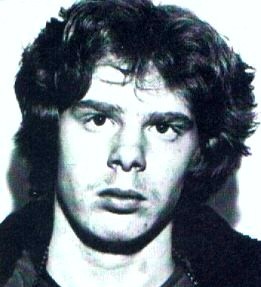
Edward Spreitzer
Serial killer Carl Eugene Watts
Serial killer · USA · 1974
Carl Eugene Watts (born November 7, 1953; died September 21, 2007), also known…
100 victims
Carl Eugene Watts
Serial killer · USA · 1974
Carl Eugene Watts (born November 7, 1953; died September 21, 2007), also known…
100 victims
 Rodney Alcala
Serial killer · USA · 1977
Rodney James Alcala (born August 23, 1943) was also known as Rodrigo Jacques Al…
100 victims
Rodney Alcala
Serial killer · USA · 1977
Rodney James Alcala (born August 23, 1943) was also known as Rodrigo Jacques Al…
100 victims
 Donald Leroy Evans
Serial killer · USA · 1975
Donald Leroy Evans (born July 5, 1957) was an American serial killer who murder…
60 victims
Donald Leroy Evans
Serial killer · USA · 1975
Donald Leroy Evans (born July 5, 1957) was an American serial killer who murder…
60 victims
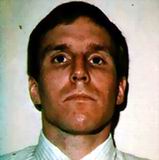 Michael Swango
Serial killer · USA · 1981
Michael Swango (Joseph Michael Swango) was a physician and American serial kill…
60 victims
Michael Swango
Serial killer · USA · 1981
Michael Swango (Joseph Michael Swango) was a physician and American serial kill…
60 victims
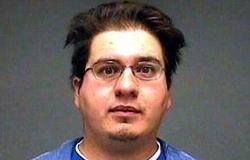 Efren Saldivar
Serial killer · USA · 1989
Efren Saldivar (born 30 September 1969) was an American serial killer who murde…
50 victims
Efren Saldivar
Serial killer · USA · 1989
Efren Saldivar (born 30 September 1969) was an American serial killer who murde…
50 victims
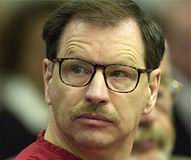 Gary Ridgway
Serial killer · USA · 1982
Gary Leon Ridgway Ridgway was born 18-February-1949 in Salt Lake City, UT. He w…
49 victims
Gary Ridgway
Serial killer · USA · 1982
Gary Leon Ridgway Ridgway was born 18-February-1949 in Salt Lake City, UT. He w…
49 victims
 James Ruzicka
Murderer · USA · 1973
James Ruzicka was described as a “sexual psychopath”. James Edward Ruzicka was…
2 victims
James Ruzicka
Murderer · USA · 1973
James Ruzicka was described as a “sexual psychopath”. James Edward Ruzicka was…
2 victims
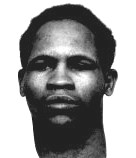 Clarence Curtis Jordan
Murderer · USA · 1977
Clarence Curtis Jordan was sentenced to death on September 12, 1978.
1 victim
Clarence Curtis Jordan
Murderer · USA · 1977
Clarence Curtis Jordan was sentenced to death on September 12, 1978.
1 victim
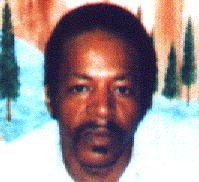 Melvin Turner
Murderer · USA · 1979
Melvin Turner was a parolee who got a job at the airport. Turner and Teague Ham…
2 victims
Melvin Turner
Murderer · USA · 1979
Melvin Turner was a parolee who got a job at the airport. Turner and Teague Ham…
2 victims
- Gender
- male
- Country
- USA
- Location
- Chicago, Illinois, USA
- Date of birth
- January 5, 1961
- Age at first offence
- 20
- Characteristics
- cannibalism, rape, mutilation
- Victim profile
- Women
- Method of murder
- St abbing with knife
- Date(s) of murder
- May 23, 1981 - October 8, 1982
- Years active
- 1981–1982
- Date of arrest
- October 20, 1982
- Status
-
Life imprisonment
Sentenced to death on March 20, 1986; commuted to life in prison in 2003
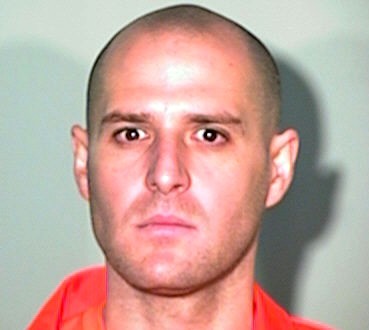
Case record: Edward Spreitzer
Status
Edward Spreitzer was sentenced to death on March 20, 1986. His death sentence was commuted to life in prison in 2003.
Background
A group known as the Ripper Crew or the Chicago Rippers was described as a satanic cult composed of Robin Gecht and three associates, including Edward Spreitzer with brothers Andrew and Thomas Kokoraleis. They were suspected in the disappearances of 18 women in Chicago, Illinois.
Investigators alleged that Gecht and his group drove around in a van looking for prostitutes to sacrifice in Gecht’s apartment. They were described as removing one breast from each victim and eating it as Robin read passages of The Satanic Bible. It was also said that they, after severing the breast, took turns raping the open wound, then masturbated into the flesh of the breast, chopped it into pieces, and devoured it.
Investigators described that Gecht allegedly placed severed breasts in a “trophy case.” Gecht was reported as having claimed innocence. Although Gecht’s associates and other witnesses implicated him in some of the deaths, investigators stated they never had enough evidence to charge him with murder.
The offence
Alleged killings connected to the group
The allegations described multiple killings in Chicago and the surrounding area.
- Linda Sutton, 28: Linda Sutton was described as being abducted on May 23, 1981, with her mutilated body found ten days later in Villa Park; her left breast was missing.
- Lorraine Borowski, 21: Lorraine Borowski was described as abducted around May 15, 1982, and her corpse was described as found October 10 in a cemetery south of Villa Park.
- Shui Mak: Shui Mak was described as abducted on May 29, 1982, with her mutilated body recovered at Barrington on September 30.
- Angel York: Angel York was described as surviving an attack on June 13, when her breast was slashed open before she was dumped on the roadside alive.
- Sondra Delaware: Sondra Delaware was described as found strangled on a river bank on August 28, with her left breast missing.
- Rose Davis: Rose Davis was described as found in an alleyway on September 8 with a similar fate.
- Carol Pappas, wife of a Chicago Cubs player: Carol Pappas was described as abducted on September 11 while shopping and never seen again.
- Beverly Washington, 20: Beverly Washington was described as found near death on October 6 near railroad tracks; she was described as raped, slashed, and having her left breast severed, but she survived to give a description of her attacker and the van she was taken in.
- Additional names in the narrative: The account also mentioned Angel York, Cynthia Smith, Susan Baker, Carole Pappas, and Rose Beck Davis in connection with the killings and related events.
Investigation and confessions involving Spreitzer
The account described that a group of men identified as Robin Gecht, Edward Spreitzer, and brothers Andrew and Tommy Kokoraleis had once lived together at a motel near the dump sites of Sutton and Burrowski.
The narrative described that Spreitzer and the others made confessions describing cannibalization of amputated breasts before Gecht placed them in a “trophy case.” Gecht was described as always claiming innocence.
Investigation
A series of events preceded arrests in connection with the alleged killings and assaults.
Early identification and forensic process
On June 1, 1981, three detectives checked on a call about a corpse discovered at the Moonlit Hotel in Villa Park. A hotel maid reported a terrible odor from somewhere near the hotel that grew worse by the day. The Moonlit’s manager walked into a trash-strewn field behind the hotel and found the source of the smell, described as a young woman whose remains consisted largely of bones and some clinging flesh. The narrative described that she had been bound with handcuffs before being left there and still wore a sweater and panties (pulled down to her thighs). The narrative also described a small wad of dollar bills in her socks and stated that this suggested robbery had not been a motive.
The narrative described that deputy coroner Pete Siekman attempted to determine the cause and manner of death, and to take fingerprints and teeth impressions for comparison to records. Missing persons reports produced no leads, so detectives called the Chicago department, which told them that rolling money inside socks probably indicated the victim had been a hooker. Fingerprints and dental records helped identify the victim as Linda Sutton, 21. The narrative stated the coroner determined she had been dead for only three days despite advanced decomposition, attributing the advanced rate to two rather large wounds to her chest where her breasts had been removed.
Linking events and describing the “red van”
A string of later attacks and murders was described, including the abduction and assault of Beverly Washington. The narrative described that Washington survived and provided officers with a description of the man who attacked her and the van. The narrative described that Washington said the driver was slender and white, around 25, wearing a flannel shirt and square-toed boots, with greasy brown hair and a mustache, and that when he asked her to get into the back of the van he had a gun. The narrative also described that Washington said he ordered her to remove her clothes, placed handcuffs on her, forced her to perform oral sex, and threatened her with violence if she did not swallow pills. As she passed out, she feared she was going to die and saw him holding a cord.
The narrative described that the van was red with tinted windows and a wooden divider, with feathers and a roach clip hanging from the rearview mirror.
Arrests and searches
The narrative described that police arrested Robin Gecht and charged him with the cruel assault on Beverly Washington. It also described that authorities learned that Gecht was one of four men who rented adjoining rooms at Villa Park’s Rip Van Winkle Motel several months before Linda Sutton was murdered nearby.
The narrative described that the manager remembered the men as bringing women to their rooms and said they were “some kind of cultists,” perhaps devil-worshippers. The account described that Thomas and Andrew Kokoraleis left forwarding addresses, and that police found Thomas at home when they called. It stated that Thomas failed a polygraph examination and led police to a described “Satanic chapel” in Gecht’s upstairs bedroom where captive women were tortured, gang-raped, and finally sacrificed to Satan.
The narrative stated that as police swept up Gecht, Spreitzer, and Andrew Kokoraleis on November 5, they lodged them in jail under $1 million bond. It described that a search of Gecht’s apartment revealed the Satanic chapel and that lawmen found a rifle matched to a recent Torado shooting. It also described that satanic literature was retrieved from the apartment occupied by Andrew Kokoraleis. The narrative described that Tom Kokoraleis was charged with the slaying of Lorraine Borowski, formally indicted by a grand jury four days later. It further described that Andrew and Edward Spreitzer were charged on November 14 with the rape and murder of Rose Davis.
Evidence from statements and described rituals
The narrative described that the suspects’ confessions included details about cultic rituals: severing one or both breasts with a thin wire garrote, “taking communion” by eating a piece, and consignment into Gecht’s trophy box. It described that Andrew counted as many as fifteen breasts inside the box. It further described a confession that members severed breasts, then masturbated into the wound, chopped it into pieces, and devoured it, with Gecht reading passages.
The account also described that a psychiatric assessment found Gecht mentally competent for trial on March 2, 1983.
Arrest
The narrative described that Robin Gecht, Ed Spreitzer, and 20-year-old Andrew Kokoraleis were swept up on November 5 and lodged in jail under $1 million bond.
Trial
Trial for Spreitzer’s guilty plea (April 2, 1984)
The narrative described that on April 2, 1984, Ed Spreitzer pled guilty on four counts of murder, including victims Davis, Delaware, Mak, and Torado. It described that he was sentenced to life on each murder count. It also described that he received additional time on conviction for charges of rape, deviant sexual assault, and attempted murder.
Trial for Spreitzer’s sentencing for Linda Sutton (February 25, 1986; March 4, 1986; March 20, 1986)
The narrative described that Spreitzer appeared in a bench trial in front of Judge Edward Kowal on February 25, 1986, but retained his right to have a jury decide his sentence. It stated he admitted that he and his comrades abducted Linda Sutton as she was walking near Wrigley Field and took her to a wooded field near a hotel where he was staying. The narrative described that he handcuffed her, raped her, removed her breasts, then raped her again and left her to die.
The narrative described that defense counsel Carol Anfinson presented Spreitzer as immature, impulsive, and simplistic, as a young man just following orders of a gang leader, and asked the jury to spare his life. It also described that relatives and associates testified that he was docile and had a history of being bullied.
The narrative described that a friend of Spreitzer’s, the Chicago Tribune reported, testified that Spreitzer bragged about what he had done, referring to the women as “broads” and laughing over mutilating and killing several of them. The ADA insisted Spreitzer was “every woman’s nightmare” and one of a “pack of weasels.”
The narrative described the court proceedings on the Linda Sutton murder:
- Spreitzer was convicted on March 4 of aggravated kidnapping and murder.
- Two weeks later, on March 20, the jury deliberated for an hour and gave him the death penalty for this crime.
Sentencing
Death sentence and commutation
Spreitzer received a death sentence for the Linda Sutton murder, with the sentence imposed on March 20, 1986. The narrative also described that in George H. Ryan’s last minute commutation of all death sentences in Illinois in 2003, Spreitzer’s death sentence was commuted to life in prison.
Appeals
The narrative included federal habeas proceedings in the United States Court of Appeals for the Seventh Circuit, styled: Edward Spreitzer, Petitioner-Appellant, v. James M. Schomig, Warden, Respondent-Appellee; No. 99-2474.
It described:
- Argued May 17, 2000
- Decided July 11, 2000
- Rehearing and Rehearing En Banc Denied Aug. 17, 2000
- Appeal from the United States District Court for the Northern District of Illinois, Eastern Division; No. 92 C 2182; David H. Coar, Judge
- Before Bauer, Coffey and Kanne, Circuit Judges; Kanne, Circuit Judge
The narrative described that Spreitzer appealed the dismissal of his habeas corpus petition that had been remanded following an earlier decision in Spreitzer v. Peters, 114 F.3d 1435 (7th Cir. 1997). It described that he claimed error in finding that procedural default barred certain ineffective assistance of counsel claims and that the court erred in refusing evidentiary hearings to determine whether he was denied effective assistance because his attorney failed to develop mitigating evidence of brain damage or investigate good prison conduct. The narrative concluded that the court found him procedurally defaulted and affirmed the district court’s dismissal.
Outcome
Spreitzer’s death sentence was commuted to life in prison in 2003.
Other details
Multiple associated case events mentioned in the narrative
The narrative included multiple other case-related outcomes for other defendants in the group, including:
- Robin Gecht was sentenced to 120 years in Menard Correctional Center for mutilating and raping an 18-year-old prostitute.
- Andrew Kokoraleis was sentenced to death and was executed by lethal injection at Tamms Correctional Center in Southern Illinois for the 1982 strangulation murder of Lorraine Borowski, whose mutilated body was found in a cemetery.
- Thomas Kokoraleis was convicted of Lorraine Borowski’s murder and received a life sentence.
- The account described other indictments and later charges in connection with a shooting death believed to be gang-related: on March 7, 1999, Robin Gecht’s son David and three others were charged with first-degree murder.
Additional details about execution and prisons in the narrative (non-Spreitzer)
The narrative described that Andrew Kokoraleis was executed on March 16, 1999 and included additional procedural details and claims made by defense attorneys regarding coercion and credibility of confessions.
Letters project mentioned in the narrative
The narrative described that Jennifer Furio wrote letters to serial killers and that Robin Gecht and Eric Spreitzer sent letters printed in a book titled The Serial Killer Letters. It described that Furio said Spreitzer sent his letters and discussed his involvement and claims about fear and blackmail, and provided statements about a “thing” with women’s breasts in his family. The narrative also described that his persistent bid for DNA testing was stymied over and over again.
People and roles stated in the narrative (as described)
The narrative named multiple individuals and roles in connection with the case proceedings and related discussions, including:
- Bill Kelly (author of Homicidal Mania, as referenced in the narrative)
- Michael Newton (author of The Encyclopedia of Modern Serial Killers, as referenced in the narrative)
- Michael Wolfe (prosecutor, as referenced)
- Carol Anfinson (public defender, as referenced)
- Judge Edward Kowal (as referenced in the proceedings)
- Dr. Kent Mohr (court-appointed clinical psychologist, as referenced in the appellate/habeas discussion)
- Jennifer Furio (as referenced in connection with letters)
- Eric W. Hickey (criminologist, as referenced)
- Moses Harrison (Supreme Court Justice, as referenced in connection with a stay in the Andrew Kokoraleis case)
- Governor George Ryan (as referenced in commutations and clemency)
Verbatim quotations included in the narrative
Several quotations were included in the narrative and are reproduced verbatim below:
The ADA insisted that Spreitzer was “every woman’s nightmare” and that he was one of a “pack of weasels.”
A friend of Spreitzer’s, the Chicago Tribune reported, testified that he had bragged about what he had done, referring to the women as “broads” and laughing over the fact that he had mutilated and killed several of them.
Spotted an error, or have more information about this case?