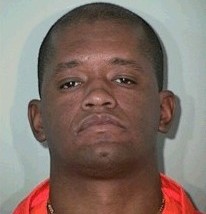
Andre Minnitt
Murderer? Richard Allen Williams
Murderer? · USA · 1992
Boone County Prosecutor Kevin Crane dismissed the charges in August 2003 after…
10 victims
Richard Allen Williams
Murderer? · USA · 1992
Boone County Prosecutor Kevin Crane dismissed the charges in August 2003 after…
10 victims
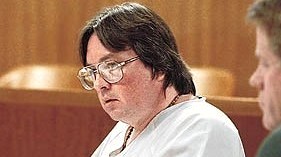 Floyd Tapson
Murderer? · USA · 1987
Floyd Tapson was convicted by a jury in the Thirteenth Judicial District Court,…
3 victims
Floyd Tapson
Murderer? · USA · 1987
Floyd Tapson was convicted by a jury in the Thirteenth Judicial District Court,…
3 victims
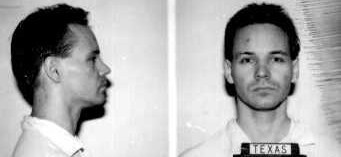 Michael Roy Toney
Murderer? · USA · 1985
Michael Roy Toney (December 29, 1965 – October 3, 2009) · Name as recorded: Mic…
3 victims
Michael Roy Toney
Murderer? · USA · 1985
Michael Roy Toney (December 29, 1965 – October 3, 2009) · Name as recorded: Mic…
3 victims
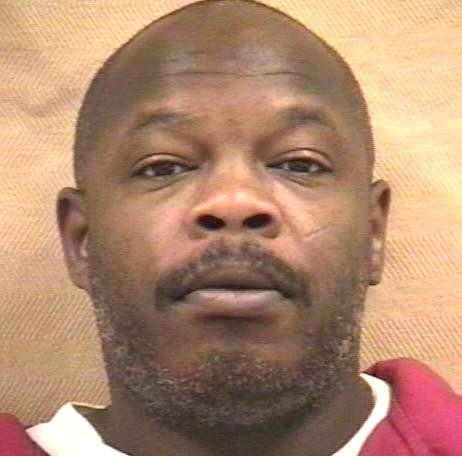 Glen Edward Chapman
Murderer? · USA · 1992
Defendant: Glen Edward Chapman Legal case references: In the Supreme Court of N…
2 victims
Glen Edward Chapman
Murderer? · USA · 1992
Defendant: Glen Edward Chapman Legal case references: In the Supreme Court of N…
2 victims
 James Campbell
Murderer? · USA · 1997
September 1997 — James Campbell’s first trial ended with a hung jury. · January…
2 victims
James Campbell
Murderer? · USA · 1997
September 1997 — James Campbell’s first trial ended with a hung jury. · January…
2 victims
 Abdelali Amer
Serial killer · Morocco · 2004
01 Aug 2005 — A corpse violently bitten was found near the wholesale market in…
14 victims
Abdelali Amer
Serial killer · Morocco · 2004
01 Aug 2005 — A corpse violently bitten was found near the wholesale market in…
14 victims
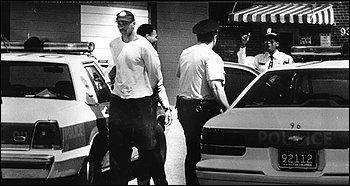 James Edward Swann
Serial killer · USA · 1993
James Edward Swann, Jr., also known as “The Shotgun Stalker,” was an American s…
4 victims
James Edward Swann
Serial killer · USA · 1993
James Edward Swann, Jr., also known as “The Shotgun Stalker,” was an American s…
4 victims
 Edward Charles Allaway
Homicide · USA · 1976
Edward Charles Allaway Edward Charles Allaway was found not guilty by reason of…
7 victims
Edward Charles Allaway
Homicide · USA · 1976
Edward Charles Allaway Edward Charles Allaway was found not guilty by reason of…
7 victims
 Jessel Turner
Murderer · USA · 1986
Jessel Turner was executed by lethal injection in Texas on September 22, 1997.…
1 victim
Jessel Turner
Murderer · USA · 1986
Jessel Turner was executed by lethal injection in Texas on September 22, 1997.…
1 victim
 Leonard Peltier
Murderer · USA · 1975
Leonard Peltier was born September 12, 1944. He was a Native American activist…
2 victims
Leonard Peltier
Murderer · USA · 1975
Leonard Peltier was born September 12, 1944. He was a Native American activist…
2 victims
- Gender
- male
- Country
- USA
- Location
- Pima County, Arizona, USA
- Date of birth
- November 12, 1969
- Age at first offence
- 23
- Characteristics
- robbery, drugs
- Victim profile
- Store manager Fred Gee, 45; his uncle, Huang Ze Wan, 77; and clerk Raymond Arriola, 32
- Method of murder
- Shooting
- Date(s) of murder
- June 24, 1992
- Years active
- 1992
- Date of arrest
- —
- Status
-
Sentenced to death
Death sentence vacated; case dismissed with prejudice following the Arizona Supreme Court’s finding of prosecutorial misconduct and a double-jeopardy violation, including Minute Entry CR 40086 dated 1/13/03.
Case record: Andre Minnitt
Background
Andre Minnitt was convicted of crimes connected to the El Grande Market slayings. He was also described in the mitigating circumstances as having a drug and alcohol abuse history, along with a dysfunctional/unstable family and a deprived childhood, including his father’s incarceration, lack of guidance and family nurturing, poor educational experience, and whippings and violence experienced as a child, and his mother’s drug use.
The offence
On June 24, 1992, Andre Minnitt and his co-defendants decided to rob the El Grande Market, where Martin Soto-Fong had previously worked, and kill anyone who was present to eliminate potential witnesses.
They drove to the market in a distinctive car. Inside the market, Soto-Fong gathered two bags of produce, approached the cash register counter where the owner waited, and produced a .25 caliber autoloading pistol. Soto-Fong took all the money he could find, about $300, and then began shooting three persons in the market: Fred Gee, Ray Arriola, and Zewan Hong. Minnitt ran into the store and joined Soto-Fong in shooting the victims to death. Christopher McCrimmon stood at the doorway to the market, armed with a handgun.
All the victims were shot in the head, execution-style. Neighbors heard the shots and saw the distinctive car leave the market.
The record also stated that Soto-Fong put a few items in a produce bag and paid for the items with food stamps before the shootings.
The police later discovered the distinctive car, and the car and fingerprints at the market tied Soto-Fong and his accomplices to the murders.
Investigation
Police discovered the car used in the killings. The car and fingerprints at the market tied Soto-Fong and his accomplices to the murders.
Other crimes involving the defendant
Minnitt and Christopher McCrimmon were serving 36-year terms for robbing Mariano’s Pizza, 5528 E. Grant Road, on Aug. 26, 1992.
Trial
First trial (combined with Christopher McCrimmon)
Presiding Judge was Robert Buchanan. Prosecutor was Ken Peasley. The defense was Barry Baker-Sipe and Carla Ryan. The start of trial was November 2, 1993. Verdicts were November 29, 1993. Sentencing occurred January 31, 1994.
Minnitt was convicted of three counts of first-degree murder, seven additional counts of armed robbery, aggravated robbery and burglary.
The Arizona Supreme Court later reversed Minnitt’s and McCrimmon’s convictions based on a juror coercion issue.
Second trial
The record stated that Minnitt’s retrial in 1997 ended with a hung jury.
McCrimmon’s second-trial status was described: McCrimmon was acquitted by a jury in 1997 in his second trial after his first verdict was reversed because of alleged juror coercion.
Third trial (retrial)
Presiding Judge was Richard Nichols. Prosecutor was David White. The defense was Eric Larsen and Wanda Day. The start of trial was April 12, 1999. Verdicts were April 19, 1999. Sentencing occurred June 25, 1999.
On April 19, 1999, Minnitt was again convicted of three counts of first-degree murder and several non-capital offenses. He was also sentenced to death.
The record further stated that in the El Grande killings, Martin Raul Soto-Fong was convicted of first-degree murder and was sentenced to death, and he remained in prison on death row as he appealed the case.
It also stated that the other defendant, Martin R. Soto-Fong, remained on death row as he appealed the case, while Christopher McCrimmon was acquitted in his second trial.
Sentencing and aggravating/mitigating circumstances
For Minnitt’s death sentence at the first trial and for the retrial death sentence, the record listed aggravating circumstances and mitigating circumstances.
Aggravating Circumstances:
- Retrial previous conviction for a serious offense
- Pecuniary gain
- Multiple homicides
Mitigating Circumstances:
- Statutory: capacity to appreciate/conform conduct
- Non-Statutory: dysfunctional/unstable family, deprived childhood, father’s incarceration, lack of guidance and family nurturing, poor educational experience, drug and alcohol abuse, whippings and violence experienced as a child, and mother’s drug use
Appeals
The Arizona Supreme Court reversed Minnitt’s and McCrimmon’s convictions based on a juror coercion issue.
A later appeal led the Arizona Supreme Court to vacate Minnitt’s first murder conviction and order a new trial.
The record also described that the third trial, which ended in a conviction and a death sentence, was determined to violate double-jeopardy laws because of alleged false testimony solicited in the previous trials by Kenneth Peasley. It stated that:
"The prosecutor, with full knowledge, introduced false testimony in two trials and this seriously damaged the structural integrity of both," Chief Justice Charles E. Jones wrote.
"Whether or not the 3rd trial was free from false testimony, falsehoods in the 2 previous trials permeated the process to the extent that fairness in the 3rd trial could not correct the misdeeds of trials 1 and 2."
The record stated that Minnitt’s third trial conviction and death sentence were overturned, and the charges were dismissed with prejudice, meaning they could not be refiled.
Outcome
The record stated that a Minute Entry CR 40086 dated 1/13/03 vacated sentence and conviction, and that the case was dismissed with prejudice. It stated that the death penalty sentence was vacated and that the El Grande murder conviction was tossed out.
The record further stated that Minnitt remained in prison on unrelated convictions.
Aftermath
Prosecutorial misconduct and disciplinary proceedings
The record described disbarment proceedings against Kenneth J. Peasley. It stated that the disbarment stemmed from allowing a Tucson police detective to lie while testifying in two capital murder trials.
An Arizona Supreme Court decision was described as disbarring Peasley. It stated that evidence “clearly and convincingly” supported the contention that Kenneth J. Peasley intentionally violated ethical laws by allowing Joseph Godoy to testify falsely at trials in a 1992 triple homicide.
The record included the following quoted statements:
"Peasley violated his duty as a prosecutor to seek justice," Justice Michael D. Ryan wrote in the disbarment opinion.
"By presenting false testimony in the prosecution of two defendants charged with capital murder, Peasley violated one of the most important duties of a lawyer," Ryan wrote.
The record described that the disbarment case related to trials for Andre Minnitt and Christopher McCrimmon in a triple slaying at the now-defunct El Grande Market near South Park Avenue and East 36th Street.
It stated that, at Peasley’s prompting, former Tucson police Detective Godoy testified during a 1993 combined trial for Minnitt and McCrimmon and again at a Minnitt retrial in 1997 that neither defendant was a suspect until key witness Keith Woods reported that both defendants had confessed to him. It also stated that Godoy had determined both were suspects before he talked with Woods, a Supreme Court hearing officer found.
The record described a perjury case against Godoy being taken to state grand juries three times, with details that:
- One grand jury refused to indict.
- Two others indicted him, but both charges were later dismissed. It stated that Godoy retired before the first indictment in 2001.
The record stated that the Arizona Supreme Court found Peasley’s misconduct caused harm because he “sought and obtained the convictions and the death penalty against two capital murder defendants, using false testimony to establish a crucial fact.” It also included the quote:
"Such harm is particularly egregious," Ryan wrote.
The record stated that Peasley retired from the Pima County Attorney’s Office in December 2002, after a state Supreme Court panel and the State Bar recommended disbarment. It stated that Peasley had worked for the office for 28 years and was named twice as Arizona prosecutor of the year.
The record included a statement attributed to County Attorney Barbara LaWall:
"I have worked tirelessly to ensure this office acted with integrity and maintained the trust of the public it was created to serve. In this instance, the Arizona Supreme Court has found otherwise, and for that I am embarrassed for the office and personally saddened," LaWall wrote in a statement.
The record stated Peasley worked with attorney Brick P. Storts III, who said:
"He's one of the brightest lawyers I've ever worked with," Storts said.
The record also stated Peasley would continue to work in his office as a paralegal, and that Godoy also works in Storts’ office. It stated that after five years, Peasley may ask the Supreme Court for reinstatement to the Bar.
It stated that attorney James W. Stuehringer argued to the Supreme Court in November that Peasley’s due-process rights were violated in a disbarment hearing because a report was allowed by the hearing officer that noted findings of misconduct from a Pima County Superior Court judge who was later found to have been influenced by FBI agents. It stated that the justices disagreed that Peasley’s rights were violated.
The record also stated that Stuehringer told the Supreme Court that Peasley deserved leniency, such as a 60-day suspension, because in 28 years of practicing law “there is not a single mark against him.” It included this quoted phrase:
"there is not a single mark against him."
It stated Peasley could not be reached for comment.
Victims and locations
The record stated that store manager Fred Gee was found shot to death at the store located at 805 E. 36th St. It also stated that Fred Gee was 45. It stated that his uncle, Huang Ze Wan, 77, was found shot to death. It also stated that clerk Raymond Arriola, 32, was found shot to death.
Timeline
- June 24, 1992 — Minnitt and co-defendants robbed the El Grande Market in Tucson and shot three persons in the market to death.
- Nov. 2, 1993 — Start of trial for Minnitt’s first trial (combined with Christopher McCrimmon).
- Nov. 29, 1993 — Verdicts in the first trial.
- Jan. 31, 1994 — Sentencing in the first trial.
- Aug. 26, 1992 — Minnitt and Christopher McCrimmon committed a robbery of Mariano’s Pizza, 5528 E. Grant Road, for which they served 36-year terms.
- 1997 — Minnitt’s retrial ended in a hung jury; McCrimmon was acquitted in his second trial.
- Apr. 12, 1999 — Start of trial for Minnitt’s retrial.
- Apr. 19, 1999 — Verdicts in the retrial, convicting Minnitt of three counts of first-degree murder and several non-capital offenses.
- Jun. 25, 1999 — Sentencing in the retrial.
- 1/13/03 — Minute Entry CR 40086 vacated sentence and conviction; the case was dismissed with prejudice and the death penalty sentence was vacated.
- Oct. 12, 2002 — The record described an Arizona Supreme Court ruling overturning Minnitt’s conviction and death sentence and ordering a new trial.
- May 29, 2004 — The record described an Arizona Supreme Court disbarment of former Pima County prosecutor Kenneth J. Peasley.
Other details
The record stated that the El Grande Market slayings occurred at the now-defunct South Side market near South Park Avenue and East 36th Street.
It stated that the record published opinions included State v. Minnitt, 187 Ariz. 169, 927 P.2d 1298 (1996).
It stated that, in the El Grande killings, all three victims were shot in the head, execution-style, and that neighbors heard the shots and saw the distinctive car leave.
It stated that Minnitt and his co-defendants were tied to the murders by the car and fingerprints at the market.
It also stated that Minnitt remained in prison on an unrelated conviction for which he served a 36-year sentence.
It stated that a Tucson Citizen article dated October 12, 2002 described the overturning of Minnitt’s conviction and death sentence and the order for a new trial, and that a Tucson Citizen article dated May 29, 2004 described Peasley’s disbarment.
Spotted an error, or have more information about this case?