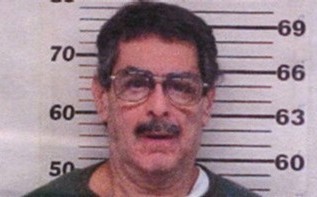
Joel Steinberg
Murderer Brian Kevin Rosenfeld
Murderer · USA · 1985
Brian Kevin Rosenfeld Brian Kevin Rosenfeld was sentenced to three concurrent l…
23 victims
Brian Kevin Rosenfeld
Murderer · USA · 1985
Brian Kevin Rosenfeld Brian Kevin Rosenfeld was sentenced to three concurrent l…
23 victims
 Yahweh ben Yahweh
Murderer · USA · 1980
Yahweh ben Yahweh was born and legally named Hulon Mitchell Jr. (October 27, 19…
23 victims
Yahweh ben Yahweh
Murderer · USA · 1980
Yahweh ben Yahweh was born and legally named Hulon Mitchell Jr. (October 27, 19…
23 victims
 Russell Ellwood
Murderer · USA · 1991
Russell Ellwood was a former taxi driver. Authorities suspected him of killing…
20 victims
Russell Ellwood
Murderer · USA · 1991
Russell Ellwood was a former taxi driver. Authorities suspected him of killing…
20 victims
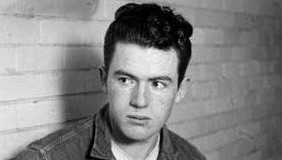 William Edward Hickman
Murderer · USA · 1926
William Edward Hickman was a man who tried to solve his financial problems by k…
5 victims
William Edward Hickman
Murderer · USA · 1926
William Edward Hickman was a man who tried to solve his financial problems by k…
5 victims
 John Kogut
Murderer ? · USA · 1984
John Kogut was a 21-year-old high school dropout and unemployed landscaper. In…
1 victim
John Kogut
Murderer ? · USA · 1984
John Kogut was a 21-year-old high school dropout and unemployed landscaper. In…
1 victim
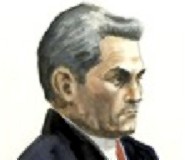 Francesco Mangione
Murderer · Australia · 2002
Francesco Mangione was convicted of the murder of Denis Giunta. Francesco Mangi…
1 victim
Francesco Mangione
Murderer · Australia · 2002
Francesco Mangione was convicted of the murder of Denis Giunta. Francesco Mangi…
1 victim
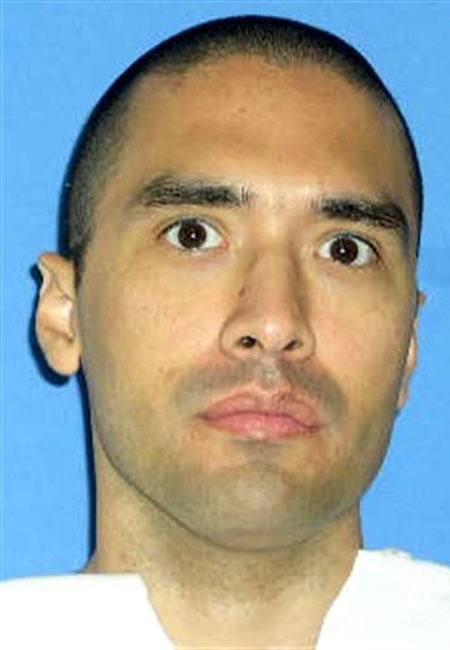 Rolando Ruiz
Murderer · USA · 1992
Rolando Ruiz was convicted of capital murder and was sentenced to death in Bexa…
1 victim
Rolando Ruiz
Murderer · USA · 1992
Rolando Ruiz was convicted of capital murder and was sentenced to death in Bexa…
1 victim
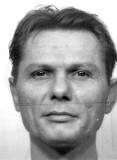 James Emery Paster
Murderer · USA · 1980
James Emery Paster (#752) was convicted of capital murder and sentenced to deat…
3 victims
James Emery Paster
Murderer · USA · 1980
James Emery Paster (#752) was convicted of capital murder and sentenced to deat…
3 victims
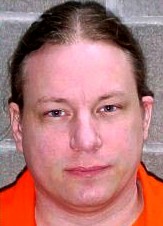 Timothy Stuart Ring
Murderer · USA · 1994
Timothy Stuart Ring was a former Department of Corrections officer who particip…
1 victim
Timothy Stuart Ring
Murderer · USA · 1994
Timothy Stuart Ring was a former Department of Corrections officer who particip…
1 victim
- Gender
- male
- Country
- USA
- Location
- New York City, New York, USA
- Date of birth
- May 25, 1941
- Age at first offence
- 46
- Characteristics
- abuse, alcoholic, child abuse
- Victim profile
- His "adopted" daughter Lisa. 6
- Method of murder
- Hitting on the head
- Date(s) of murder
- November 2, 1987
- Years active
- 1987
- Date of arrest
- —
- Status
-
Released
Convicted of manslaughter; sentenced to the maximum penalty then available for that charge — 8 1/3 to 25 years in prison in 1988; released on June 28, 2004.
People
Joel Steinberg
- Born: May 25, 1941
- Role: Defendant; former New York criminal defense attorney
- Relationship to Lisa: Joel and his live-in partner Hedda Nussbaum raised Lisa, who he and Nussbaum had “adopted” without filing formal adoption papers
- Relationship to Mitchell: Joel and Hedda Nussbaum also raised Mitchell, described as 16 months old at the time of Lisa’s death
Hedda Nussbaum
- Born: circa 1942
- Role: Live-in partner of Joel Steinberg; prosecution witness at trial
- Relationship to Lisa: Lisa was raised in the household by Hedda and Joel
- Relationship to Mitchell: Hedda and Joel raised Mitchell
Elizabeth (“Lisa”) Steinberg
- Role: Victim
- Age: 6 years old at the time of death (six-year-old girl)
- Birth circumstances: Her birth mother paid Steinberg a $500.00 legal fee to place the child with a Roman Catholic family; both Steinberg and Nussbaum were Jewish
- Adoption status: Lisa was “illegally adopted” (adoption never completed)
- Name used: Elizabeth (“Lisa”) Steinberg
Mitchell
- Role: Child in the household
- Age: 16 months old at the time of Lisa’s death (described as “Mitchell, 16 months old” and also “a younger child … 18 months old at the time” in the case summary text)
- Adoption status: Adopted as described by Joel and Hedda Nussbaum, but “never legally adopted”
- Later custody outcome: Returned to his birth mother
Nicole Smigel (Smigel)
- Role: Lisa’s brother’s birth mother
- Later outcome: Waived her parental rights (in the Lisa timeline prose); custody was ultimately granted to her since a legal adoption had never occurred
- Name change: Legally changed the boy’s first name to Travis (from the case summary)
Michele Launders
- Role: Lisa’s birth mother
- Civil claim: Received a $15 million dollar award against Steinberg upheld by the New York Supreme Court, Appellate Division
Appellate counsel / legal representatives named in interview text
- Darnay Hoffman: “lawyer” and “appeals consultant and media spinner” for Joel Steinberg during the 2005 reporting
- Ira London: described as Steinberg’s “chief lawyer” (criticized in the interview material)
- Barry Scheck: described as Hedda Nussbaum’s “chief defense counsel” in the interview material
- Detective Chief Inspector / other officials: no additional named investigators are established as roles in the provided text beyond police/paramedics and court personnel
Timeline
- November 1, 1987 — evening (around 7:00 p.m.) — Lisa received blunt head trauma of great force; she became unconscious; breathing became raspy.
- November 2, 1987 (6:30 a.m.) — Joel carried Lisa’s limp body out to Hedda in the bathroom; later, Lisa was no longer breathing and Joel called 911 after repeated urgings; police and paramedics arrived and rushed Lisa to the hospital.
- November 3, 1987 — neurological tests indicated Lisa was brain dead.
- November 4, 1987 — Lisa died after being removed from life support.
- November 5, 1987 — Life support was discontinued (as stated in the appellate court opinion excerpt).
- 1988 — Joel Steinberg was convicted of first-degree manslaughter and sentenced to 8 1/3 to 25 years in prison.
- June 28, 2004 — Released.
- June 30, 2004 — Paroled (as described in the case summary text; interview material also references June 30) and released during the “good time” law process.
- January 16, 2007 — New York Supreme Court, Appellate Division upheld a $15 million dollar award against Steinberg to Michele Launders.
- June 11, 1992 — New York Court of Appeals decided “The People & C., Respondent, v. Joel Steinberg, A/K/A Joel Barnet Steinberg, Appellant,” 79 N.Y.2d 673 (affirmed the manslaughter conviction).
Background
Joel Steinberg was a former New York criminal defense attorney. International media attention followed when he was accused of murder and convicted of manslaughter in the death of a six-year-old girl, Elizabeth (“Lisa”), in November 1987. Steinberg and his live-in partner Hedda Nussbaum raised Lisa in their apartment in Greenwich Village after “adopting” her, but they did not file formal adoption papers.
The case included a second child in the household, Mitchell, who was described as 16 months old (and also as 18 months old in the case summary prose).
Both the boy and Nussbaum showed signs of physical abuse, and Nussbaum’s battered, unkempt appearance was described as fueling media attention.
In the trial, the defense suggested that Nussbaum’s injuries resulted from a consensual sadomasochistic relationship between Steinberg and Nussbaum. Nussbaum’s attorneys also characterized her decision to remain with him while he beat her as consistent with battered woman syndrome.
The offence
Lisa’s injuries and death
Steinberg was specifically accused of hitting Lisa on the head and then not seeking medical attention for the child. She died at St. Vincent Hospital after being removed from life support.
In the Court of Appeals excerpt, Lisa was described as being unconscious after experiencing blunt head trauma of great force, with raspy breathing. The excerpt states that while Hedda attempted to revive Lisa, Steinberg left for dinner and later freebased cocaine for several hours. The excerpt further states that Steinberg initially rejected the request to call 911 and then acceded when attempts to resuscitate failed. Police and paramedics arrived, administered oxygen, and rushed Lisa to the hospital.
The Court of Appeals excerpt states that doctors determined Lisa suffered severe head injuries from blunt trauma, placed her on life support, and that neurological tests performed on November 3 indicated she was brain dead. It states that life support was discontinued on November 5.
Medical and intent framework discussed in the Court of Appeals excerpt
The New York Court of Appeals addressed Steinberg’s contention that only a person with medical expertise could form the requisite intent to cause serious physical injury by failing to obtain medical care. The Court of Appeals concluded that this contention and other claims lacked merit.
The Court of Appeals excerpt states:
- First degree manslaughter required proof that defendant, with intent to cause serious physical injury, caused death.
- It stated that criminal liability may be based on an omission and that parents have a nondelegable affirmative duty to provide adequate medical care.
- It stated that even a person without specialized medical knowledge could have the intent to cause serious physical injury by withholding medical care.
- It stated that intent depended on the defendant’s conscious objective in doing particular acts, and that knowledge or awareness was not itself a prerequisite of intent.
Investigation
Steinberg and Hedda Nussbaum were arrested after police responded to Hedda’s 911 call. In the Court of Appeals excerpt, Hedda did not seek medical care for Lisa because she believed Steinberg had supernatural healing powers and felt that calling for assistance would be a sign of disloyalty.
In the interview material, Hedda described that police questioned her in a room, leaving her alone and returning to question her again. She described offering stories to police about roller skating falls and bruises rather than stating what she believed actually happened.
The Court of Appeals excerpt states there was no dispute at trial that Lisa’s death was a homicide and that the defense expert agreed the child’s death was caused by brain trauma as a result of abuse.
Arrest
Joel Steinberg and Hedda Nussbaum were arrested after Lisa was found beaten and unconscious and Hedda placed the 911 call.
The interview material includes that Hedda was not under arrest initially, stating that police “took us into the police station” to question her and that she preferred to be arrested after being read her rights.
Trial
Charges and verdicts
The Court of Appeals excerpt states that defendant was indicted for second degree (depraved indifference) murder, first degree manslaughter, and seven charges that were severed or dismissed. It states that defendant was acquitted of murder but convicted of manslaughter.
The Nussbaum testimony excerpt includes verbatim “clarification” from the jurors’ verdict forms:
- “Not guilty.”
- “Guilty.”
Manslaughter conviction and trial deliberations
The case summary prose states that Steinberg was convicted of first-degree manslaughter, described as “the second most serious charge.” The Court of Appeals excerpt states that he was convicted of first-degree manslaughter and that the Appellate Division affirmed the conviction.
The interview material includes Hedda’s statements about jury deliberation and the defense attempt to make her the culprit. Hedda stated:
- “I was -- not really. I was relieved that they convicted him of something because it took the jury, I think, six or seven days of deliberation. And apparently, they -- a lot of the jurors were thinking that I had done it. And I was glad that he got...”
- “The defense tried to say that I...”
- “... that was the culprit, yes.”
The interview material also includes a quote from Hedda about the foreman:
- “Apparently some of them did believe that it was me who had done it, but the ...”
- “The foreman. Thank you. The foreman of the jury apparently convinced them that it had to have been Joel.”
Trial evidence described in the Court of Appeals excerpt
- Hedda testified she did not strike Lisa that night and described Steinberg carrying Lisa’s unconscious body out and that he admitted to knocking Lisa down.
- There was evidence of defendant physically abusing Lisa several days before her death.
- There was evidence that defendant’s knuckles had fresh bruises on November 2.
- It described evidence of Nussbaum’s debilitated physical condition on November 1 that allowed a jury to infer she did not deliver the fatal injury.
- It states that hairs forcibly removed from Lisa’s head were found on defendant’s clothing.
- It states defendant had fresh bruises on his hand.
- It states defendant was present at the apartment at 6:30 a.m. on November 2 as confirmed by police and paramedics.
- It states defendant made statements placing him in the apartment during the hours prior to the 911 call and that he and Nussbaum were the only adults in the apartment.
Jury question and supplemental charge (Court of Appeals excerpt)
The Court of Appeals excerpt described a jury note asking:
“If there was no apparent intention to cause injury, but the acts resulted in serious physical injury nonetheless, would that be grounds to conclude intent as spelled out by law?”
It states the trial court gave an expansive supplemental charge and explained:
- The People had the burden to prove beyond a reasonable doubt that defendant had a conscious objective to cause serious physical injury.
- Intent was a mental operation inferred from the facts and circumstances.
- The jury could infer a person intended the natural and probable consequences of an act.
The Court of Appeals excerpt concluded the supplemental charge was not erroneous.
Sentencing
The judge sentenced Steinberg to the maximum penalty then available for first-degree manslaughter — 8 1/3 to 25 years in prison.
The case summary prose states the judge sentenced him to the maximum penalty then available for that charge, and the Court of Appeals excerpt describes affirmance of the manslaughter conviction.
Appeals
New York Court of Appeals decision (June 11, 1992)
The Court of Appeals decision affirmed the Appellate Division order sustaining the manslaughter conviction.
The decision text includes the holding:
- It stated that defendant’s contention about medical expertise lacked merit.
- It stated that the evidence was legally sufficient to sustain the conviction.
- It stated that the jury instruction response was not erroneous.
It includes the case caption:
- “The People & C., Respondent, v. Joel Steinberg, A/K/A Joel Barnet Steinberg, Appellant.”
- Citation: “79 N.Y.2d 673, 595 N.E.2d 845, 584 N.Y.S.2d 770 (1992).”
- Date: “Decided June 11, 1992”
- It includes Judge Kaye’s concurrence and that Judge Titone took no part.
Outcome
Criminal case outcome
The Court of Appeals excerpt and case summary prose together establish:
- Steinberg was acquitted of murder.
- Steinberg was convicted of first-degree manslaughter.
- He was sentenced to 8 1/3 to 25 years in prison.
- He was released after serving the sentence under good behavior timing described in the case summary.
Civil litigation outcome referenced in the case summary
On January 16, 2007, the New York Supreme Court, Appellate Division upheld a $15 million dollar award against Steinberg to Michele Launders, Lisa’s birth mother.
Aftermath
Parole and post-release life
The case summary prose states that on June 30, 2004, Steinberg was paroled under the state’s “good time” law and was released on June 28, 2004 per the status field.
It describes that he spent most of his imprisonment at New York State’s “Supermax” prison, the Southport Correctional Facility, Southport/Elmira area.
After release, Steinberg moved to West 123rd Street in Harlem and worked in construction.
The interview material includes that Steinberg was at the Fortune Society and described as concerned about his safety once he was in the street.
Mitchell’s outcome
The interview and case summary prose state that Mitchell ended up being adopted by his natural mother, Nicole Smigel/Smigel, who legally changed his first name to Travis.
Hedda Nussbaum’s later life (as described in the interview and case summary prose)
The case summary and interview material state that:
- Prosecutors dropped the charges against Hedda.
- She worked to rebuild her life, including reconstructive plastic surgeries.
- She co-facilitated a support group for battered women for about eight years.
- She later worked as a paralegal for an organization that assists battered women.
- In 1995, she began giving lectures about abuse at colleges and shelters.
- After Steinberg was released, she receded from public attention until the publication of her book about a year and a half later.
Other details
Hedda Nussbaum’s testimony excerpts (LARRY KING LIVE transcript)
The transcript includes verbatim exchanges and statements, including Hedda’s description of her view of the trial and her account of events.
Verbatim statements:
- “I was -- not really. And I was glad that he got...”
- “... that was the culprit, yes.”
- “I was sure that Lisa was going to be fine and I wouldn't tell them what happened. I wouldn't tell them the truth.”
- “Finally they said, do you want to talk -- go down to the DA's office and talk to them? And I said -- or they said, we can read you your rights. And I said, read me my rights. And I preferred to be arrested at that point.”
- “One thing he said was -- about Lisa, I knocked her down, and she didn't want to get up again. This staring business had gotten to be too much for her.”
- “Joel grabbed Lisa by the arms and shoulders, shook her, threw her down on the floor. When she got up, he grabbed her, shook her again and threw her down. And that happened at least two or three times.”
- “Joel Steinberg ordered her to dress Lisa in long-sleeved clothes to cover up bruises.”
- “The medical report said it was a subdural hematoma, which -- apparently, they said she had been hit with great force to her head.”
- “We had been doing free-base cocaine because Joel insisted that I do it with him.”
- “At the hearing, we had a Bezel Vandercoke (ph), who is a professor at Harvard Law School -- Medical School testified that when somebody is repeatedly traumatized, that in order to protect you, your own body secretes something called "endogenous opioids," which numb you, numb the pain, numb the terror.”
- “My daughter (UNINTELLIGIBLE) she's congested, and seems to have stopped breathing. She's 6 years old.”
- “She's not breathing. I'm giving her mouth-to-mouth.”
- “She died four days later.”
- “He went to Rikers Island.”
- “As soon as I heard she was dead, that day I told my attorney everything. That was Barry Scheck, and it was the first time I really was shocked that, you know, I didn't think I would tell anybody, but I told him everything.”
- “I was on the stand six days, and Joel was sitting right across from me.”
- “So the help you got has learned you to have faith in yourself and to know that it wasn't you that killed her/”
- “Yes. … And it was him that killed her.”
- “Because of that day, I made a promise to Lisa and I've dedicated myself to helping other battered women and children.”
Hedda Nussbaum’s journal excerpt (as described in the transcript)
The transcript includes verbatim lines that Hedda said she wrote:
- “You lousy blank, blank. Blank, blank. Look what you did to me. You humiliated me. You kept me a prisoner. You beat me, all in front of our child. You tortured her too by doing that, you sick piece of blank, blank. You're so cheap, you deprived her of the normal pleasures of childhood.”
And it includes:
- “I'm sorry, Lisa. I'm sorry I didn't see. I'm sorry. It's too late to see now, Lisa, but maybe we can help others. Maybe we can save another child's life.”
Verbatim juror vote excerpt
The transcript includes verbatim responses:
- “Not guilty.”
- “Guilty.”
Interview material: Darnay Hoffman and media details (as included in the provided text)
The interview material includes various statements and quotations attributed to Darnay Hoffman and others. Examples of verbatim quotations included:
- “That pale brick pile over there? Jimmy Cagney’s co-op—I never saw him around when I was a kid, but the people in my mother’s circle knew him.”
- “Now, she’s my idea of a great journalist.”
- “Nothing mitigating ever made it to the six o’clock news, or to the front pages of the News or Post.”
- “Like Joel’s exemplary military record.”
- “That’s when I arranged for that limo ride down from Elmira. Five-Star Limo.”
- “I’m ashamed to say, I felt kind of relieved.”
- “A man can be factually guilty but legally innocent.”
- “I wish you’d chosen something else.”
- “So later, when we had to pee, rather than risk more of that nonsense, we just took some empty cognac decanters and pissed into them!”
- “I repeat, there were no present or historical bruises or fractures on Lisa Steinberg!”
- “If a man my size, with a fist as big as mine, hit you in the forehead, you’d hit the floor and have a mark you’d remember.”
Appellate-court footnote
The Court of Appeals excerpt includes a footnote defining “serious physical injury”:
“Serious physical injury” is “physical injury which creates a substantial risk of death, or which causes death or serious and protracted disfigurement, protracted impairment of health or protracted loss or impairment of the function of any bodily organ.” (Penal Law § 10.00[10].)
Spotted an error, or have more information about this case?