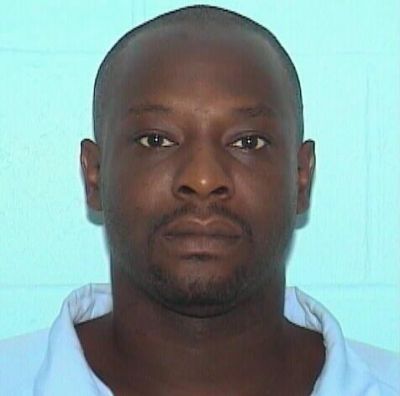
Lorenzo Fayne
Serial killer Glen Edward Rogers
Serial killer · USA · 1993
Glen Edward Rogers was a spree killer whose cross-country rampage in 1994-95 le…
70 victims
Glen Edward Rogers
Serial killer · USA · 1993
Glen Edward Rogers was a spree killer whose cross-country rampage in 1994-95 le…
70 victims
 Michael Swango
Serial killer · USA · 1981
Michael Swango (Joseph Michael Swango) was a physician and American serial kill…
60 victims
Michael Swango
Serial killer · USA · 1981
Michael Swango (Joseph Michael Swango) was a physician and American serial kill…
60 victims
 Efren Saldivar
Serial killer · USA · 1989
Efren Saldivar (born 30 September 1969) was an American serial killer who murde…
50 victims
Efren Saldivar
Serial killer · USA · 1989
Efren Saldivar (born 30 September 1969) was an American serial killer who murde…
50 victims
 Gary Ridgway
Serial killer · USA · 1982
Gary Leon Ridgway Ridgway was born 18-February-1949 in Salt Lake City, UT. He w…
49 victims
Gary Ridgway
Serial killer · USA · 1982
Gary Leon Ridgway Ridgway was born 18-February-1949 in Salt Lake City, UT. He w…
49 victims
 Charles Cullen
Serial killer · USA · 1984
Charles Cullen (born February 22, 1960) was a former nurse and the most prolifi…
45 victims
Charles Cullen
Serial killer · USA · 1984
Charles Cullen (born February 22, 1960) was a former nurse and the most prolifi…
45 victims
 Christopher Coleman
Murderer · USA · 1995
December 14, 1995 — A man approached the passenger side of a car occupied by fo…
3 victims
Christopher Coleman
Murderer · USA · 1995
December 14, 1995 — A man approached the passenger side of a car occupied by fo…
3 victims
 Gregory Lynn Summers
Murderer · USA · 1990
Gregory Lynn Summers was executed by lethal injection in Texas on October 25, 2…
3 victims
Gregory Lynn Summers
Murderer · USA · 1990
Gregory Lynn Summers was executed by lethal injection in Texas on October 25, 2…
3 victims
 Keli Lane
Murderer · Australia · 1996
Keli Lane (born 21 March 1975) was a former Australian water polo player. She w…
1 victim
Keli Lane
Murderer · Australia · 1996
Keli Lane (born 21 March 1975) was a former Australian water polo player. She w…
1 victim
 Russell Eugene Weston
Homicide · USA · 1998
Russell Eugene Weston Jr. was born December 28, 1956 and used the nickname “Rus…
2 victims
Russell Eugene Weston
Homicide · USA · 1998
Russell Eugene Weston Jr. was born December 28, 1956 and used the nickname “Rus…
2 victims
 Bobby Lee Harris
Murderer · USA · 1991
Bobby Lee Harris was convicted in North Carolina and received a death sentence…
1 victim
Bobby Lee Harris
Murderer · USA · 1991
Bobby Lee Harris was convicted in North Carolina and received a death sentence…
1 victim
- Gender
- male
- Country
- USA
- Location
- Wisconsin/Illinois, USA
- Date of birth
- 1965
- Age at first offence
- 24
- Characteristics
- rape
- Victim profile
- Rita D. Scott, 32 / Aree Hunt, 6 (male) / Faith Davis, 17 / Glenda Jones, 17 / Fallon Flood, 9 / Latondra Dean, 14
- Method of murder
- Beating - St abbing with knife - Strangulation
- Date(s) of murder
- 1989- 1993
- Years active
- 1989–1993
- Date of arrest
- J uly 24, 1993
- Status
-
Life imprisonment
Sentenced to life in prison without parole in Illinois on August 1994
Case record: Lorenzo Fayne
Background
Lorenzo Fayne grew up in Milwaukee and lived in the 2400 block of W. Lloyd St. He began drifting between Milwaukee and his grandmother's home in East St. Louis, Illinois, when he turned 18 in 1989.
Fayne had been in and out of legal custody from age 13 for shoplifting, grabbing at women, stealing cars, breaking into homes, and abusing animals. Testimony and mitigation evidence described his upbringing as involving violence at home and abuse. His biological father was found in a Veterans Administration mental hospital and was diagnosed schizophrenic, and Fayne had virtually no contact with him. His stepfather was an alcoholic and often beat Fayne, including choking him until he lost consciousness. Fayne’s grandmother and sister testified about the abusive home environment in which he was raised. There was testimony that Fayne was raped by a neighborhood boy when Fayne was seven years old; the boy was approximately four years older; and the police were not called. After Fayne told his stepfather that he had been raped, the stepfather beat him.
Evidence also described that Fayne’s mother drank heavily and took drugs throughout her pregnancy with Fayne. His mother admitted to hitting Fayne in the head as punishment and, after a child care agency intervened and told her it was improper, she realized something was wrong. His mother was described as a crack cocaine addict and an alcoholic who beat Fayne with anything within reach, including broom handles and extension cords.
A defense attorney argued that Fayne was insane and that his behavior resulted from suffering brutality as a child while growing up in Milwaukee in a home riddled with abuse of alcohol and other drugs. Experts testified that Fayne had limited intellectual abilities and a low IQ and suffered brain damage from beatings.
The offence
Fayne was convicted for the murder of five children in Illinois, involving sexual assaults in all but one case description in the record.
Murder of Aree Hunt
Aree Hunt was six years old. Fayne was convicted of beating Aree Hunt to death. The record states that Aree was found beaten to death at the edge of a state park. His nude body had been sexually assaulted and thrown down a ditch bank. Fayne’s conviction for Aree Hunt was the first of the five murder cases to proceed to trial.
Murder of Faith Davis
Faith Davis was 17. Her nude body was found face-down bent over a coffee table with her knees on the floor and her legs spread apart. She had several stab wounds in her upper chest and back. The crime scene indicated she died in one area and was dragged over to the coffee table. Petroleum jelly was spread on her buttocks, and she had been sexually assaulted.
A statement admitting that Fayne stabbed Davis and then returned to sexually assault her was introduced into evidence.
Murder of Latondra Dean
Latondra Dean was 14. Her nude body was found lying in a bathtub. She died as a result of 24 stab wounds, mainly in her chest and abdomen. A statement admitting that Fayne raped and stabbed Dean was admitted into evidence.
Murder of Fallon Flood
Fallon Flood was nine. Her body was found on the floor of a local high school in an abandoned locker room with a belt tightened around her neck and her underwear around her ankles. A statement admitting to the murder of Flood was introduced into evidence in which Fayne admitted that he choked Flood and attempted to rape her.
The record also included a charge description that Fallon Flood’s body was found in a locker at East St. Louis Senior High School and that she had been strangled with a belt.
Murder of Glenda Jones
Glenda Jones was 17. Her body was found behind Martin Luther King Junior High near the boundary between East St. Louis and Centreville, and she had been stabbed to death. When described for sentencing evidence, her body was badly decomposed when found and she died as a result of stab wounds. She was clothed, but her bra was turned inside out.
A statement admitting that Fayne stabbed Jones and had sex with her was admitted into evidence. In that statement, Fayne stated that he first approached Jones with a knife but that later she consented to sex with him, and that Jones discussed starting a relationship. The record states that Fayne said that something “snapped” and he ended up stabbing Jones.
Investigation
In September 1989, Rita D. Scott’s partially clothed body was found in a pool of blood near a loading dock in the 1500 block of W. Cherry St. Her head had been smashed in with chunks of concrete, and the record states she had been sexually assaulted.
A DNA sample in Scott’s murder case was submitted by the Milwaukee Police Department’s Homicide Cold Case Unit. The unit had submitted evidence recently in about 70 cold case homicides to the State Crime Laboratory and was awaiting results on about 20 of those cases. In May, a routine search of a national DNA databank of convicted felons linked Fayne to Scott’s death.
The record also described that investigators visited Fayne at the Menard Correctional Institution in Chester, Illinois, in October. Fayne told investigators he did not remember the exact date he killed Scott but did remember killing her. Fayne stated he sneaked up to Scott and bashed her head with a rock with such force that the rock broke in two. He then dragged her body through a gangway between a factory and house, continued to beat her with the chunk of rock he still had in his hand, and then had sex with her once she was dead. The complaint also stated: “He stated he regrets committing this homicide as well as the other homicides and that he is glad he is locked up because he would still be doing it if he were not.”
Arrest
The record described that on July 24, 1993, Fayne was arrested in conjunction with the murder of Faith Davis. The East St. Louis fire department was called to the Davis home to extinguish a fire, and an investigation of the fire determined that Davis had been murdered. A trail of blood led from Davis’s home to the home of Fayne’s grandmother, where Fayne was residing. After police talked to witnesses, Fayne was arrested and brought to the East St. Louis police department for questioning. The East St. Louis police department contacted the Illinois State Police to assist in the investigation. The record also stated that Fayne ultimately confessed to the murder of Davis as well as the murders of four other victims.
A different part of the record described that police arrested Fayne after a police dog followed a trail of blood to his grandmother’s home from a burning house where firefighters had found the nude body of Faith Davis.
Trial
Proceedings in Illinois Appellate Court (People v. Fayne)
The Appellate Court of Illinois, Fifth District, in case No. 5-96-0333, dated October 16, 1998, addressed whether the State was barred from seeking the death penalty in four remaining murder cases when the question of death penalty eligibility had been decided in the earlier Aree Hunt prosecution.
Charges and trial sequence
Fayne was charged in the circuit court of St. Clair County with five separate charges of first-degree murder (Ill. Rev. Stat. 1991, ch. 38, par. 9-1(a) (now 720 ILCS 5/9-1(a) (West 1996)).
- Cause No. 93-CF-785: murder of Aree Hunt, age six
- Cause No. 93-CF-786: murder of Faith Davis, age 17
- Cause No. 93-CF-944: murder of Fallon Flood, age nine
- Cause No. 93-CF-945: murder of Glenda Jones, age 17
- Cause No. 94-CF-66: murder of Latonda Dean, age 14
The first case to proceed to trial was No. 93-CF-785.
Verdict and sentencing for Aree Hunt
After a jury trial, Fayne was convicted of first-degree murder in the death of Aree Hunt. At a separate sentencing hearing, the jury could not agree that there were no mitigating factors sufficient to preclude the imposition of the death penalty. The trial court sentenced Fayne to natural life in prison. The appellate court record states that the conviction and sentence were affirmed in People v. Fayne, 283 Ill. App. 3d 382, 669 N.E.2d 1172 (1996).
Motions in remaining cases
In No. 93-CF-786, Fayne filed a motion to dismiss and to bar a death penalty sentencing hearing on the basis that the decision not to impose the death penalty after the murder conviction for Aree Hunt barred any successive capital sentencing hearing. The motion argued double jeopardy because, in the Aree Hunt sentencing hearing, the State had presented evidence of all five murders. Fayne later filed motions to dismiss in No. 93-CF-944, No. 93-CF-945, and No. 94-CF-66.
The trial court denied the pretrial motions to dismiss, and the cases were consolidated for appeal. On June 6, 1998, the appellate court denied the State’s motion to dismiss for lack of jurisdiction.
Jury and evidence presented during Aree Hunt sentencing
At the sentencing hearing conducted from August 16, 1994, through August 18, 1994, the State introduced evidence concerning each of the four remaining murders. The record described the State introducing People’s Exhibit 39 containing five-by-seven-inch color photographs of each of the five victims accused of killing, along with each person’s age, residence, date of death, manner of death, and location where the body was found. Graphic pictures of each of the crime scenes and the victims were introduced into evidence over Fayne’s objection.
The record summarized specific evidence for each of the four victims, including that:
- Flood’s body was found on the floor of a local high school in an abandoned locker room with a belt tightened around her neck and her underwear around her ankles, and Fayne’s statement admitted he choked Flood and attempted to rape her.
- Glenda Jones died as a result of stab wounds, with decomposition described, and Fayne’s statement admitted he stabbed Jones and had sex with her.
- Faith Davis’s nude body was found face-down bent over a coffee table, with stab wounds and sexual assault described, and Fayne’s statement admitted to stabbing Davis and returning to sexually assault her.
- Latonda Dean’s nude body was found lying in a bathtub, with 24 stab wounds described, and Fayne’s statement admitted that he raped and stabbed Dean.
Mitigation evidence
Fayne presented witnesses in mitigation. Evidence described his mother’s heavy drinking and drug use during pregnancy with Fayne, and her admission to hitting him in the head as punishment, with intervention by a child care agency after which she realized it was improper. The mitigation evidence described his mother as a crack cocaine addict and alcoholic who beat Fayne with broom handles and extension cords. The record also described Fayne’s biological father as a schizophrenic diagnosed in a Veterans Administration mental hospital with virtually no contact from Fayne. It described Fayne’s stepfather as an alcoholic who often beat Fayne, including choking him until he lost consciousness. Fayne’s grandmother and sister described the abusive home environment, including that Fayne had been raped at age seven by a neighborhood boy about four years older and that police were not called.
The record also described expert testimony about limited intellectual abilities and a low IQ, and brain damage from beatings.
Outcome of appeal
The appellate court affirmed the circuit court’s judgment. The record stated that the only question decided in the first prosecution was whether Fayne should be sentenced to death for the murder of Aree Hunt, and the question whether he should be sentenced to death for any of the other four murders remained to be decided. The appellate court stated it found that earlier proceedings did not estop the State from seeking and obtaining the death penalty in the remaining four cases, citing Page I and Page II. The appellate court’s opinion was authored by Justice Goldenhersh, with RARICK and MAAG, JJ., concurring.
Sentencing
Sentence for Aree Hunt
Fayne was sentenced to natural life in prison after the Aree Hunt sentencing hearing where the jury could not agree that there were no mitigating factors sufficient to preclude the imposition of the death penalty.
Illinois sentence without parole
The case summary repeatedly stated that Fayne was sentenced in August 1994 to life in prison without parole.
Death penalty recommendation and related proceedings
A later update stated that on November 15, 2001, a jury recommended that Fayne be put to death for the slayings of four girls. The record stated that Fayne showed no emotion as the verdict was read by St. Clair County Circuit Judge James Donovan. The jury reached its decision after about three hours of deliberations.
The record stated that Fayne admitted killing Faith Davis, 17; Glenda Jones, 17; Fallon Flood, 9; and Latondra Dean, 14. Autopsies determined Fayne molested the girls after killing them. The record stated that Donovan set an execution date for May 15, but that the death sentence would likely not be carried out then because of a moratorium on the death penalty imposed by Gov. George Ryan. The appeals process was described as likely extending that date by years.
Appeals
Fayne’s appeals included arguments about double jeopardy and collateral estoppel. In the appellate decision dated October 16, 1998 (No. 5-96-0333), Fayne argued that the State was barred from seeking the death penalty in the remaining four cases because the question whether he should be put to death had been decided in the Aree Hunt case.
The record also stated that the State planned to try Fayne separately for each of the four remaining murders and seek the death penalty for each, and that Fayne’s attorney, John O’Gara, contended that trying Fayne again violated the Constitution’s prohibition against double jeopardy.
Outcome
Fayne was convicted of first-degree murder in the death of Aree Hunt and received a natural life sentence in prison. The appellate court affirmed the circuit court’s judgment in No. 5-96-0333 on October 16, 1998.
The case update stated that a jury recommended Fayne be put to death for the slayings of four girls, with an execution date set for May 15, but with a death penalty moratorium imposed by Gov. George Ryan likely preventing execution at that time. The record stated that Fayne pleaded guilty in October to the four remaining murder charges to avoid multiple trials and opportunities for prosecutors to win a death sentence, and that jurors spent about a week viewing crime scene photos and hearing testimony, including psychologists testifying about Fayne’s childhood and juvenile detention history.
Aftermath
Scott’s family in Milwaukee expressed relief after Fayne was linked to Rita D. Scott’s death. Scott’s mother, Mozella Scott, said: “We've all waited 20 years,” and “We were very happy and relieved. Now my daughter can sleep in peace, I'm pretty sure.”
Rita Scott’s uncle, Mike Mitchell, said his family never gave up hope. He said: “We never gave up, but life went on,” and “We said God would handle it, and that he did.” He also stated: “There's never closure, but there is peace within the family,” and “We all know that (Fayne) will never get out to do this to anyone else.”
Mitchell also said the family was thankful that Milwaukee police never gave up searching for their daughter’s killer and stated: “They hung in there,” and “We hear so much bad about the police, but we need to say something good about the police. This family would really like to thank the police.”
In the November 15, 2001 update, St. Clair County State’s Attorney Robert Haida was quoted stating: “The emotions are different than a normal case. It's so definite and final,” and “We continue to think of the victims and their survivors. That's what kept us pursuing this case to its disposition.”
Other details
The appellate opinion record stated that Defendant, Lorenzo Fayne, was the Defendant-Appellant, and the appellate court styled the case as The People of the State of Illinois, Plaintiff-Appellee v. Lorenzo Fayne, Defendant-Appellant.
The appellate decision stated that the sentencing issue involved whether potential jurors could be asked whether they support or oppose the death penalty, and that in a capital case 14 peremptory challenges were granted, whereas in cases involving imprisonment only 7 were granted, citing 134 Ill. 2d R. 434(d).
A psychiatrist who was described as the trial’s final prosecution witness testified that Fayne’s personality was abnormal but that he suffered no delusions or inability to control his behavior and could not be considered mentally ill as defined by Illinois law. The record stated that Fayne told police he committed all five murders, and that Dr. John Rabun of the Missouri State Hospital said Fayne gave a detailed account of each during a five-hour psychiatric exam and that Rabun said Fayne was typical of serial sex killers—a sadist and necrophiliac who had sex with his victims after they were dead.
Fayne showed no emotion when pronounced guilty and was described as staring down at the defense table during the trial. Fayne stated before being sentenced for murder: “this may sound weird, but the things that I did, I deserve to die. I really do.” Fayne, handcuffed and shackled, twice said he was sorry for killing Aree but said he could not bring him back to life and stated: “I still don't understand none of this,”.
The record described Fayne’s confession in the Scott investigation: Fayne “wanted to hear the sound of a neck breaking” in his confession that he killed Aree Hunt.
The record described Fayne’s motive as “Sex” and stated the method as “Rape-strangler of black children age six to 17.” It stated the motive as “Sex” and listed: “MO: Rape-strangler of black children age six to 17.” It also included a “DISPOSITION: Life term on one count, 1994.”

Spotted an error, or have more information about this case?