Judith Defour
Murderer Sarah Malcolm
Murderer · United Kingdom · 1733
Sarah Malcolm was a powerfully built 22-year-old Irish laundress employed in th…
3 victims
Sarah Malcolm
Murderer · United Kingdom · 1733
Sarah Malcolm was a powerfully built 22-year-old Irish laundress employed in th…
3 victims
 Catherine Hayes
Murderer · United Kingdom · 1726
Catherine Hayes (also spelled Catharine Hayes) was an English murderess. Cather…
1 victim
Catherine Hayes
Murderer · United Kingdom · 1726
Catherine Hayes (also spelled Catharine Hayes) was an English murderess. Cather…
1 victim
 Margaret Dickson
Murderer · United Kingdom · 1724
Margaret Dickson was executed by hanging at Edinburgh on September 2, 1724. She…
1 victim
Margaret Dickson
Murderer · United Kingdom · 1724
Margaret Dickson was executed by hanging at Edinburgh on September 2, 1724. She…
1 victim
 Margaret Waters
Murderer · United Kingdom · 1866
Margaret Waters was an English murderess who was hanged by executioner William…
19 victims
Margaret Waters
Murderer · United Kingdom · 1866
Margaret Waters was an English murderess who was hanged by executioner William…
19 victims
 Catherine Wilson
Murderer · United Kingdom · 1854
Catherine Wilson was a British nurse who poisoned victims after befriending the…
7 victims
Catherine Wilson
Murderer · United Kingdom · 1854
Catherine Wilson was a British nurse who poisoned victims after befriending the…
7 victims
 Graham Backhouse
Murderer · United Kingdom · 1984
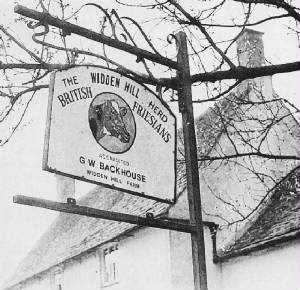
Graham Backhouse was convicted of the murder of Bedale-Taylor and the attempted…
1 victim
Graham Backhouse
Murderer · United Kingdom · 1984
Graham Backhouse was convicted of the murder of Bedale-Taylor and the attempted…
1 victim
 Jesse Caleb Compton
Murderer · USA · 1997
Jesse Caleb Compton Jesse Caleb Compton was sentenced to death in 1998. · June…
1 victim
Jesse Caleb Compton
Murderer · USA · 1997
Jesse Caleb Compton Jesse Caleb Compton was sentenced to death in 1998. · June…
1 victim
 Maxwell Alton Hoffman
Murderer · USA · 1987
Name: Maxwell Alton Hoffman Status: Sentenced to death on June 13, 1989 Maxwell…
1 victim
Maxwell Alton Hoffman
Murderer · USA · 1987
Name: Maxwell Alton Hoffman Status: Sentenced to death on June 13, 1989 Maxwell…
1 victim
 Darrell Keith Rich
Serial killer · USA · 1978
Darrell Keith Rich Darrell Keith Rich was executed by lethal injection in Calif…
4 victims
Darrell Keith Rich
Serial killer · USA · 1978
Darrell Keith Rich Darrell Keith Rich was executed by lethal injection in Calif…
4 victims
 Juan David Rodriguez
Murderer · USA · 1988
Juan David Rodriguez (DOB: 06/26/56) was tried in the Eleventh Judicial Circuit…
1 victim
Juan David Rodriguez
Murderer · USA · 1988
Juan David Rodriguez (DOB: 06/26/56) was tried in the Eleventh Judicial Circuit…
1 victim
- Gender
- female
- Country
- United Kingdom
- Location
- London, England, United Kingdom
- Date of birth
- 1701
- Age at first offence
- 33
- Characteristics
- parricide, alcohol
- Victim profile
- Her daughter Mary Defour, 2
- Method of murder
- Strangulation
- Date(s) of murder
- January 27, 1734
- Years active
- 1734
- Date of arrest
- 3 days after
- Status
-
Executed
Sentenced to death on February 27, 1734; executed by hanging on March 8, 1734
Case record: Judith Defour
Background
Judith Leford, otherwise Defour, or Defoy, was convicted of the murder of her own child. She was about thirty years of age and came from honest but mean parents in Spital-Fields. Her parents gave her no education at school and did not instruct her in the Christian religion, of which she was entirely ignorant.
Her father had been a French weaver. She had been employed serving weavers in winding silk and related work. She worked for one mistress eleven years “honestly, and with Reputation,” and then left that service. She then worked for another master as a house-keeper for four years and wound silk for him.
In her service she “fell into bad Company,” had a bastard child that died, and then had another child, the unfortunate child “lately murder’d,” for whose crime she was convicted.
She was described as very hard-hearted, once wept when spoken of murder, but afterwards when murder was preached upon, she sat quiet and did not appear concerned. The Ordinary described her as “altogether ignorant of God and Religion,” able to remember nothing that was told to her, and “very stupid.”
The Ordinary recorded an account that she “was always roving.” A witness stated: “I have known her two Years, and never knew any Harm of her.”
The offence
Judith Defour was indicted for the murder of Mary Defour, otherwise Cullinder. The murder was carried out by strangling with a piece of line, and choking and strangling with a “Piece of Line” and a linen handkerchief. The child had been stripped naked, a linen handkerchief had been tied hard about its neck to keep it from crying, and the child was laid in a ditch. The child died.
The Ordinary described the victim as “her own Infant” between two and three years of age, “not capable of giving any manner of provocation.”
A confession recorded that Judith Defour had delivered a female bastard child about two years and three months previously, begotten by John Cullender, a weaver from Spittle-Fields Market. The child was baptized by the name of Mary. The child had been in the work house belonging to the Hamlet of Bethnal-green for some weeks. On Sunday last, about 9 or 10 in the morning, Judith went to the work-house to see her child. She found the child within a few days newly clothed, took the child away, kept it until about 6 or 7 in the evening while with one Susannah—her surname to her unknown—and then Susannah persuaded her to sell the child’s clothes and to carry the child into the fields and leave it there.
The confession stated that they went together into a field near Joan Harding, stripped the child, and tied a linen rag very hard about the child’s neck to prevent it crying out, which strangled it. After that they went together leaving the child behind in a ditch near dead to Mary Witts, who lived in Swan-Yard in the parish of St. Leonard Shoreditch, and sold the clothes: a coat, stays, petticoat, and stockings. They received for them sixteen pence, and they parted the money equally between them.
Judith Defour was also described as having taken the child out of a London workhouse for a few hours as she was entitled to do. She met up with a friend identified only as Sukey. She and Sukey took the child into the fields, stripped it, tied a linen handkerchief hard about its neck to keep it from crying, and laid it in a ditch. They then sold the coat and stay for a shilling and the petticoat and stockings for a groat. They joined for a quarter of gin.
The Ordinary’s account included a further description that after the child was left, Sukey was said to have thrown it into the ditch and left it, and that Judith later struck the child on the head with a stone or brick-brat as a “finishing Stroke,” after being told of the wound in the head.
Investigation
A man identified as John Wolveridge lived in the fields leading to Bethnal-green. About a month previously, he heard an outcry that a child was murdered in the field. He went to the place and found a child dead, appearing “upwards of two Years old.” He found a black circle about the neck and “a Mark like the Print of a Thumb, under the right Ear.” He was told that he had seen three women coming from where the child lay, and he afterwards found that one of those three was the prisoner, the mother of the child. He asked her how she could be so barbarous as to murder her own infant.
Elizabeth Scot testified that Judith worked with her as “at a Throwster’s.” Judith came to work at half an hour past seven the night the murder was done and worked until morning. Elizabeth Scot stated that Judith said she had done something that deserved “New gate,” and then told them she had left her child in the field all night. Elizabeth Scot stated they went to the place, found the child dead, and then went to the church-wardens.
Susan Jones testified that when Judith came to work they asked if she carried her child back to the workhouse, because the child was kept in the parish workhouse and Judith had got leave to take it out for two or three hours. Susan Jones stated Judith said she had not carried it back, but that her mother had. Susan Jones testified that Judith worked until one in the morning and then had a dram and would have had another but was stopped. Susan Jones testified that Judith desired a penny to buy a roll and cheese. Susan Jones gave her a penny, but Judith brought in “a Roll and a h'p'orth of Gin.” Susan Jones stated that Judith said she had done something that deserved Newgate, and that Judith said she had left her child all night in the field. Susan Jones recorded a question: “What? says I, in such a dismal cold Night! How can you be so cruel ?” Judith then said she had not done it, but that “one Sukey persuaded her to it.” Susan Jones then had Elizabeth Scot take bread and butter and go with her and Judith to fetch the child, believing Judith had not told her child was dead. Susan Jones testified that when they came to the place they found the child stripped and lying dead in a ditch, with a linen-rag tied hard about its poor neck.
Jane Prig testified that Judith came on Sunday to take the child out, but Jane Prig would not let her without an order from the church-wardens. Jane Prig stated that Judith went away and then came again in half an hour and brought a note as from the church-warden; Jane Prig stated she then let Judith have the child out, but afterwards found that the church-warden had given no such note. Jane Prig also stated that the child had been newly clothed the Thursday before.
Job London testified as a surgeon. He observed “part of a black Circle, like that in executed Persons,” about the fore-part of the child’s neck. He believed the violence done with was “the Cause of her Death.”
Arrest and charge proceedings
Judith Defour was indicted for the murder of Mary Defour, otherwise Cullinder, by choking and strangling her with a piece of line. She was indicted a second time on the coroner’s inquisition for the said murder. She was tried at the Old Bailey.
The Ordinary’s account stated that she had been “indicted … on the 29th of January last” and that she was “a second Time found guilty upon the Coroner's Inquest.”
Trial
The proceedings took place at Justice Hall in the Old-Bailey, at the King’s Commission of Oyer and Terminer, and Gaol-Delivery of Newgate. The sessions were held on Wednesday and Thursday, the 27th and 28th of February, and Friday the 1st of March, 1733-4.
Judith Defour was convicted by the jury and sentenced to death.
Sentencing
Judith Defour was sentenced to death on February 27, 1734.
She “pleaded her belly,” which was described as a means whereby pregnant women could usually have their death sentences commuted. A “jury of matrons” declared that she was not pregnant.
Appeals
No appeal was described.
Outcome
Judith Defour died at the sentence execution by hanging on March 8, 1734.
In the Ordinary’s account, it was recorded that on Tuesday, the Fifth of March, report was made to his Majesty in Council of the seven malefactors under sentence of death in the cells of Newgate; six men and one woman, including Judith Leford, otherwise Defour, or Defoy, had been convicted of capital crimes and had received sentence of death. The Ordinary recorded that Judith Leford, alias Defour or Defoy, was ordered for execution.
Aftermath
An account of the Ordinary’s instructions at Newgate described the exhortations given to the convicted people. The Ordinary “expos’d to her” the “unnaturalness, and barbarity of the horrid crime of Murder, more particularly as committed upon her own Infant.” He also described instructing her against the “Sin of uncleanness” and exhorting repentance and prayers for pardon “that she might be wash'd in the blood of Christ, the Lamb of God, who came to do away the Sins of the World, from the guilt of innocent Blood, and all her other Sins.”
The Ordinary recorded that Judith Defour behaved in a manner described as devout and serious and attentive both to prayers and exhortations, though also described her as hard-hearted and ignorant of God and religion.
The Ordinary recorded her confession and dying words as follows, including her statement in response to questioning and her account of the murder.
“On Sunday Night we took the Child into the Fields, and stripp’d it, and ty’d a Linen Handkerchief hard about its Neck to keep it from crying, and then laid it in a Ditch. And after that, we went together, and sold the Coat and Stay for a Shilling, and the Petticoat and Stockings for a Groat. We parted the Money, and join’d for a Quartern of Gin.”
“THIS Examinant confesseth, that about ' two Years and three Months since, she ' was deliver'd of a female bastard Child, be- ' got on her Body, by one John Cullender , ' who lives in Spittle-Fields Market, by ' Trade a Weaver; and that the said ' Child was haptized by the Name of Mary, ' and that her said Child, Mary hath been ' for some Weeks past in the Work house, ' belonging to the Hamlet of Bethnal-green, in ' the said Country of Middlesex; and that she ' went on Sunday last, about 9 or 10 in the ' Morning to the Work-house, to see her ' said Child, and found the Child had been ' within a few Days new clothed. And that ' she took away her Child, and kept it with ' her, till about 6 or 7 a Clock in the ' Evening, when being in Company with ' one Susannah - her Surname to her ' unknown; but that she has a Sister now ' in Shoreditch Work-house, who (that is, ' Susannah, not her Sister) pursaded her, ' this Examinant, to sell the Child's Clothes, ' and carry it into the Fields and leave it ' there. That they went both of them together ' into a Field near Joan Harding 's, where ' they stripp'd the said Child, and ty'd a linen ' Rag very hard about the Child's Neck, ' to prevent its crying out, which strangled ' her, and that afterwards, they went together, ' leaving the Child behind in a Ditch, ' near dead, to one Mary Witts , who lives ' in Swan-Yard, in the Parish of St. Leonard ' Shoreditch, and sold the Clothes, that is to ' say, a Coat, Stays, Petticoat, and Stockings ' to the said Witts, and received for them ' Sixteen-pence, and that they parted the Money ' equally between them. The Mark of Judith + Defour. Taken before me the Day and Year above written.”
“I did not think to do any thing to the Child, but that wicked Creature Sukey seduced me to it.”
Additional quoted statements included in the record:
“She said, Then, Sir, I will tell you how I did it; but there was a Vagabond Creature, one Sukey, that persuaded me to it; and was equally concern'd with me.”
“Then they drew a Handkerchief about its Neck, each of them pulling the Ends of it, in order to strangle the Child; and lastly they threw her into the Ditch and left her, but the other Woman observing Life in the Child, upon which the Mother of it went back and struck her on the Head with a Stone or Brick-brat, which gave the finishing Stroke.”
“O! that my Parents had taught me something of the Knowledge of God, which I was never instructed in, till now when (it may be fear'd) its out of time;”
The Ordinary stated that Judith acknowledged “the Justice of her Sentence” and “died in Peace with all Mankind.”


Spotted an error, or have more information about this case?