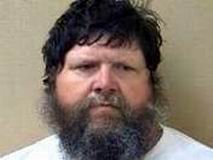
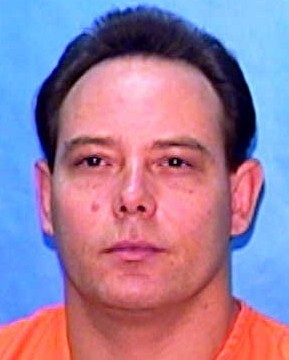
Robert Kenneth Stewart
Mass murderer Gameel Al-Batouti
Mass murderer · USA · 1999
Gameel Al-Batouti (also rendered “Gamil ElBatouty” or “El Batouty” in U.S. offi…
216 victims
Gameel Al-Batouti
Mass murderer · USA · 1999
Gameel Al-Batouti (also rendered “Gamil ElBatouty” or “El Batouty” in U.S. offi…
216 victims
 Omar Mateen
Mass murderer · USA · 2016
Omar Mir Seddique Mateen was an American mass murderer who killed 49 people and…
49 victims
Omar Mateen
Mass murderer · USA · 2016
Omar Mir Seddique Mateen was an American mass murderer who killed 49 people and…
49 victims
 Seung-Hui Cho
Mass murderer · USA · 2007
Seung-Hui Cho was a mass murderer who shot and killed 32 people and wounded man…
32 victims
Seung-Hui Cho
Mass murderer · USA · 2007
Seung-Hui Cho was a mass murderer who shot and killed 32 people and wounded man…
32 victims
 Adam Lanza
Mass murderer · USA · 2012
Adam Lanza, 20, fatally shot twenty children and six adult staff members in a m…
27 victims
Adam Lanza
Mass murderer · USA · 2012
Adam Lanza, 20, fatally shot twenty children and six adult staff members in a m…
27 victims
 Eric Harris
Mass murderer · USA · 1999
Eric Harris committed suicide by gunshot to the roof of the mouth on April 20,…
13 victims
Eric Harris
Mass murderer · USA · 1999
Eric Harris committed suicide by gunshot to the roof of the mouth on April 20,…
13 victims
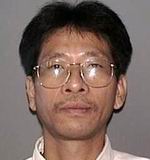 Jiverly Wong
Mass murderer · USA · 2009
December 8, 1967 — Jiverly Antares Wong was born. · late 1980s — Wong first cam…
13 victims
Jiverly Wong
Mass murderer · USA · 2009
December 8, 1967 — Jiverly Antares Wong was born. · late 1980s — Wong first cam…
13 victims
 Brenda Humphrey
Murderer · USA · 1987
Brenda Humphrey was convicted with Gregory Wilson for the kidnapping, rape, rob…
1 victim
Brenda Humphrey
Murderer · USA · 1987
Brenda Humphrey was convicted with Gregory Wilson for the kidnapping, rape, rob…
1 victim
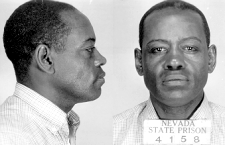 Wilson Henry Boyd
Murderer · 1940
Wilson Henry Boyd was a native of Tennessee and was 44 years of age. Wilson Hen…
2 victims
Wilson Henry Boyd
Murderer · 1940
Wilson Henry Boyd was a native of Tennessee and was 44 years of age. Wilson Hen…
2 victims
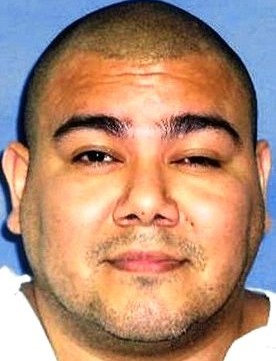 David Martinez
Murderer · USA · 1994
David Martinez was convicted and sentenced to death for the 1994 capital murder…
2 victims
David Martinez
Murderer · USA · 1994
David Martinez was convicted and sentenced to death for the 1994 capital murder…
2 victims
 Albert Fentress
Homicide · USA · 1979
Albert Fentress was a former school teacher and later lived in psychiatric hosp…
1 victim
Albert Fentress
Homicide · USA · 1979
Albert Fentress was a former school teacher and later lived in psychiatric hosp…
1 victim
 Walter Kelbach
Spree killer · USA · 1966
Walter Kelbach was 28 years old. Myron Lance was 25 years old. Kelbach and Lanc…
6 victims
Walter Kelbach
Spree killer · USA · 1966
Walter Kelbach was 28 years old. Myron Lance was 25 years old. Kelbach and Lanc…
6 victims
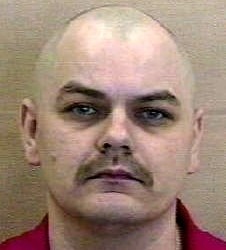 Jerry Wayne Conner
Murderer
Jerry Wayne Conner — defendant. In April 1991, Jerry Wayne Conner was convicted…
1990 victims
Jerry Wayne Conner
Murderer
Jerry Wayne Conner — defendant. In April 1991, Jerry Wayne Conner was convicted…
1990 victims
- Gender
- male
- Country
- USA
- Location
- Carthage, Moore County, North Carolina , USA
- Date of birth
- September 12, 1963
- Age at first offence
- 46
- Characteristics
- shooting rampage
- Victim profile
- Jerry Avant Jr., 39 (nurse) / Louise DeKler, 98 / Lillian Dunn, 89 / Tessie Garner, 75 / John Walter Goldston, 78 / Bessie Hedrick, 78 / Margaret Johnson, 89 / Jesse Vernon Musser, 88
- Method of murder
- Shooting
- Date(s) of murder
- March 29, 2009
- Years active
- 2009
- Date of arrest
- Same day (wounded by police)
- Status
-
Imprisoned
Sentenced to 142 years to 179 1/2 years in prison on September 2, 2011
Overview
Robert Kenneth Wayne Stewart carried out a mass murder at the Pinelake Health and Rehab nursing home in Carthage, North Carolina, on March 29, 2009. He opened fire at the facility, which was later described as having a secured Alzheimer ward. The attack killed eight people and wounded another two people. Stewart was shot and apprehended by a responding police officer.
Timeline
- March 29, 2009 — Stewart opened fire at Pinelake Health and Rehab nursing home in Carthage, North Carolina, killing seven residents and a nurse and wounding a visitor and police.
- June 2002 — Stewart and Wanda Neal married a second time.
- September 2, 2011 — A sentence was imposed of 142 years to 179 1/2 years in prison.
- September 3, 2011 — Stewart was found guilty of eight counts of second-degree murder.
- 2002 — Stewart filed notice that he planned to appeal the verdict was mentioned in the trial reporting as occurring after the verdict; the appeal planning was described as a response to the verdict.
The offence
Stewart arrived at the parking lot of Pinelake Health and Rehab just before 10:00 a.m. dressed in a bib overall. He fired at his estranged wife’s car, shattering its windows, and he shot at Michael Lee Cotten, a visitor, when Cotten pulled into the parking lot. Cotten was hit in the left shoulder.
Stewart then entered the nursing home armed with a handgun and a shotgun and went down the hall apparently searching for his wife. The Alzheimer ward was secured by passcode-protected doors. When Stewart realized that his wife was not where she usually worked, he headed toward the Alzheimer unit.
As staff tried to bring patients to safety, Stewart killed seven residents. One nurse, Jerry Avant, was also shot and killed when he tried to stop the gunman. One witness described Stewart pursuing nurse Jerry Avant, who was trying to push patients out of harm’s way.
The victims were described as residents and ranged in age from 39 to 98. The attack was described as a shooting spree and rampage that was ended when Stewart was stopped by officer Justin Garner in a hallway.
Investigation
Police received the first emergency calls at approximately 10:00 a.m. and the only police officer on duty, Justin Garner, was dispatched to the scene about one minute later.
Multiple weapons were recovered from Stewart. Prosecutors argued the evidence showed Stewart planned the shootings and acted in retaliation against his estranged wife, Wanda Neal, who had left him two weeks prior. The prosecution also argued that Stewart would have had to take four guns from his home, including three from a locked safe, along with multiple rounds of three kinds of ammunition.
Several search warrants police executed in the hours after the shooting were sealed. Moore County District Attorney Maureen Krueger described the attack as not random and said investigators declined to elaborate on a precise motive, stating that information on motive was incomplete at that time.
Stewart had written letters and notes in the days before the shootings. In a journal entry dated eight days before the rampage, Stewart wrote about prostate cancer, that he “hurt deep” because his wife left him, and he said he was considering suicide. He wrote: "I thought about taking a lot of people with me, but I don't care to do that,".
Arrest and police engagement
Stewart was stopped by officer Garner in the hallway at about 10:05 a.m. Stewart refused several orders to drop his weapon. He lowered his shotgun, fired a shot at Garner, and hit Garner in the leg and foot. Garner returned fire and hit Stewart in the shoulder, incapacitating him.
After the shooting, six people were dead at the scene and five others, including Stewart, were taken to a nearby hospital. Two wounded individuals died the same day.
In the hospital, Stewart told a nurse that he had taken six “nerve pills” and did not remember anything about the shooting.
Trial
Stewart was charged with eight counts of first-degree murder. He was also charged with felony assault of a law enforcement officer. At trial, the defense pursued a legal argument that Stewart was not in control of his actions due to side effects of Ambien, with evidence described as an “automatism” defense.
Defense counsel employed the “automatism” argument to contend Stewart was not in control of his actions when he committed the shootings. A Raleigh forensic psychiatrist hired by the defense testified that Stewart was “sleepwalking” during the shootings because he was suffering the side effects of Ambien.
Prosecutors argued Stewart planned the shootings and acted in retaliation. Witnesses described Stewart walking through the hallways shortly after 10 a.m. carrying a 12-gauge pump shotgun and shooting seven patients in their beds or wheelchairs at close range. Stewart pursued Jerry Avant, and then cornered him in a service hallway, where Avant was shot at least two times, according to testimony.
Jurors found Stewart not guilty of two counts of attempted first-degree murder against police Cpl. Justin Garner and Michael Cotton, a visitor who was shot. Jurors found him guilty of eight counts of second-degree murder.
During sentencing, Assistant District Attorney Peter Strickland called family members of the victims to testify. Defense counsel for Stewart included Jonathan Megerian and Franklin Wells was also identified as a public defender involved in the defense.
Victims
The victims named were:
- Jerry Avant Jr., 39, nurse
- Louise DeKler, 98
- Lillian Dunn, 89
- Tessie Garner, 75
- John Walter Goldston, 78
- Bessie Hedrick, 78
- Margaret Johnson, 89
- Jesse Vernon Musser, 88
Additional reporting identified Tessie Garner as a resident and stated that at least two people were killed while seated in their wheelchairs.
Quotations from the trial and proceedings
Connie Hedrick Evans, oldest daughter of 79-year-old Bessie Hedrick, testified:
"I've not missed a day in this courtroom for two and a half years. They said this will help with closure. This is not closure," Evans said. Then, looking directly at Stewart from the witness box she said: "Your mother is sitting behind you. And supposedly you don't have a relationship." She paused, words failing her. "You're the one. You're the one."
Linda DeKler Feola told the judge:
"On Sunday, that man killed her like a roach. And that man will not be going where my mom is. I've heard tell that he was saved. Uh-uh, not in this world,"
A statement attributed to Tessie Garner’s family member outside court included:
"If that's not first-degree murder, I don't know what first-degree murder is," Evans said outside of court.
Sentencing
Stewart was sentenced to 142 years to 179 1/2 years in prison. Reporting described that the judge imposed the maximum sentence for each count of murder—15 years, nine months to 19 years, eight months for each count—with the terms to run consecutively.
The defense argued Stewart had taken Ambien and was unable to control his actions due to the drug’s side effects. Stewart did not speak in his own defense. Defense lawyer Jonathan Megerian told the judge that Stewart remembered nothing of the shootings but was truly sorry for his actions.
Appeals
Stewart’s lawyers filed notice that they planned to appeal the verdict.
Other details
Stewart’s background and relationships
Robert Kenneth Wayne Stewart was born in Robeson County on September 12, 1963. When he was a young boy, his family moved to Eastwood in Moore County. His father was a house painter, and his mother worked at an office of a paving company in Pinebluff. After finishing middle school in Aberdeen, he attended Pinecrest High School but dropped out before graduating.
Stewart was described as known among peers as a quiet loner with a very bad temper every now and then. At 18, Stewart married for the first time for a few months. In 1983, he married then 17-year-old Wanda Gay Neal; this marriage failed within three years due to Stewart’s extreme possessiveness, his drinking habits, and his violent temper.
Wanda Neal’s mother, Margaret Neal, stated:
"He had a rage, it would just explode over everything. He would be good and then something would just set him off."
Wanda Neal’s 14-year-old daughter, Jamie, and Margaret Neal said that, as far as they knew, Stewart had never hit his wife.
Stewart married again in 1986. Sue Griffin, Stewart’s third wife, said Stewart compared her to Wanda Neal and complained that:
"Wanda doesn't do it like that."
Stewart worked as a house painter and had his own painting business and filed twice for bankruptcy. He had been out of work for over a year before the shooting after injuring his back and leg. He served six years in the National Guard and never rose above Private rank before receiving an honorable discharge.
In 1995, Stewart joined the Clay Road Farm Hunt Club in Moore County. He was eventually thrown out after threatening Larry Allred, stating:
"he wasn't scared of no damn Allred. He'd cut Larry Allred's guts out and watch."
In 2001, after 15 years of marriage to Sue Griffin, Stewart divorced again and returned to Wanda Neal. They married a second time in June 2002. Reporting said Stewart would not let his wife go anywhere alone.
Wanda Neal left Stewart three weeks prior to the shooting after he put a gun to her head and threatened to kill her. After Wanda Neal left him, Stewart began calling her family sometimes at 2 or 3 a.m., claiming there was an emergency and he needed to see Wanda and her parents. He also tried to contact his former wife, Sue Griffin, through her family, telling them that he was suffering from prostate cancer and was preparing to “go away” and “was planning on leaving town to visit places he hadn't seen.”
Mack Hancock said Stewart appeared depressed in the last week before the shooting, stating:
"everything had gone to hell."
Reporting also included the description of Stewart being nicknamed “Pee Wee” by hunting buddies because, one said, he was about 6-foot-2 and 300 pounds.
Stewart’s conduct and court appearance
Stewart made his first court appearance Monday on eight counts of first-degree murder and a single charge of felony assault of a law enforcement officer. His court-appointed attorney was John Megerian of Asheboro, and he declined to comment because he had not spoken to his client.
Financial and disability information
Court papers described Stewart as disabled and having an income of $786 a month. Reporting also described Stewart rented a house and 10 acres of land and moved in about a year before the shooting. A neighbor described him as “just a good old country farm guy” and said:
"He'd let me know if anybody went on my property he didn't recognize,"
Reporting on attempts to establish motive
Moore County District Attorney Maureen Krueger said:
"We can share this: This was not a random act of violence,"
Chief Chris T. McKenzie said:
"We're certainly looking into the fact that it may be domestic-related,"
Maureen Krueger also asked:
“When can one look into the heart and mind of another person and truly know what they think?”
Officer engagement and quotations attributed to police leadership
Chief McKenzie described officer Garner’s actions as heroism:
"If that's not heroism, I don't know what is,"
The same account said Garner had to go through the facility to encounter Stewart and it would be hard to believe Garner did not hear gunfire:
"He had to go to all the way through the facility to encounter this individual. It would be hard for me to believe he didn't (hear gunfire)."
Officer Garner was described as a training officer with more than four years on the Carthage force and a past winner of the department's officer of the year award.
Chief McKenzie also said:
"Whether or not he realizes it now, he will hopefully someday realize how many lives he actually saved,"
Cotten’s description of the shooting
Michael Lee Cotten stated:
“The alleged suspect just leveled his weapon, which appeared to be a rifle or shotgun, at me in my vehicle and began shooting before I even came to the complete stop in the parking lot,”
He also said:
“He was very calm, very deliberate; he looked right straight at me,”
and:
"You could hear him coming down the hallway and just shooting randomly, and people hollering and screaming,"
Stewart’s statement after the shooting
Stewart told a nurse that he had taken six “nerve pills” and did not remember anything about the shooting.
Disputed elements addressed in the defence
The defence centered on whether Stewart was legally responsible for the shootings due to side effects of Ambien. Prosecutors argued Stewart planned and carried out the attack, and that multiple actions implied mission planning.
Names appearing with variant spellings across reporting
Victim naming appeared in reporting as Louise DeKler / Louise Decker and Jerry Avant / Jerry Avent. The case record reflects the named individuals as they were presented in the factual narrative.
Spotted an error, or have more information about this case?