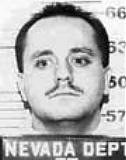
Lawrence Colwell
Murderer Brian Kevin Rosenfeld
Murderer · USA · 1985
Brian Kevin Rosenfeld Brian Kevin Rosenfeld was sentenced to three concurrent l…
23 victims
Brian Kevin Rosenfeld
Murderer · USA · 1985
Brian Kevin Rosenfeld Brian Kevin Rosenfeld was sentenced to three concurrent l…
23 victims
 Russell Ellwood
Murderer · USA · 1991
Russell Ellwood was a former taxi driver. Authorities suspected him of killing…
20 victims
Russell Ellwood
Murderer · USA · 1991
Russell Ellwood was a former taxi driver. Authorities suspected him of killing…
20 victims
 Robert Martines Perez
Murderer · USA · 1994
Name: Robert Martines Perez · Other name used in proceedings: Robert Martinez P…
15 victims
Robert Martines Perez
Murderer · USA · 1994
Name: Robert Martines Perez · Other name used in proceedings: Robert Martinez P…
15 victims
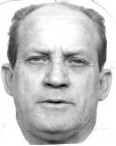 Billy Frank Vickers
Murderer · USA · 1993
Billy Frank Vickers Vickers was executed by lethal injection in Texas on Januar…
14 victims
Billy Frank Vickers
Murderer · USA · 1993
Billy Frank Vickers Vickers was executed by lethal injection in Texas on Januar…
14 victims
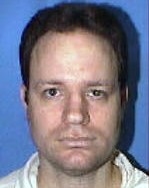 Robert Lookingbill
Murderer · USA · 1984
12:30 to 1:30 a.m. on December 5, 1989 — Robert Andrew Lookingbill knocked on t…
3 victims
Robert Lookingbill
Murderer · USA · 1984
12:30 to 1:30 a.m. on December 5, 1989 — Robert Andrew Lookingbill knocked on t…
3 victims
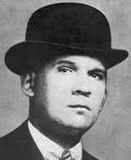 Harry Dobkin
Murderer · United Kingdom · 1941
January 7, 1943 — Harry Dobkin was hanged behind the walls of Wandsworth Prison…
1 victim
Harry Dobkin
Murderer · United Kingdom · 1941
January 7, 1943 — Harry Dobkin was hanged behind the walls of Wandsworth Prison…
1 victim
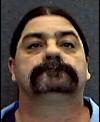 Jeffery Dana Sparks
Murderer · USA · 1998
Jeffery Dana Sparks was sentenced to death on May 14, 1999. Jeffery Dana Sparks…
1 victim
Jeffery Dana Sparks
Murderer · USA · 1998
Jeffery Dana Sparks was sentenced to death on May 14, 1999. Jeffery Dana Sparks…
1 victim
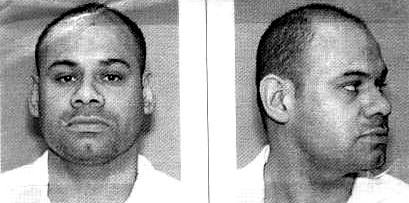 Manuel Vasquez
Murderer · USA · 1998
Manuel Vasquez (Hispanic male) was convicted of capital murder and was sentence…
1 victim
Manuel Vasquez
Murderer · USA · 1998
Manuel Vasquez (Hispanic male) was convicted of capital murder and was sentence…
1 victim
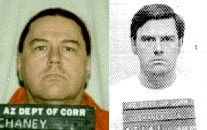 Anthony Lee Chaney
Murderer · USA · 1982
Anthony Lee Chaney (DOB: April 4, 1954) · September 6, 1982 — Coconino County S…
1 victim
Anthony Lee Chaney
Murderer · USA · 1982
Anthony Lee Chaney (DOB: April 4, 1954) · September 6, 1982 — Coconino County S…
1 victim
- Gender
- male
- Country
- USA
- Location
- Clark County, Nevada, USA
- Date of birth
- March 1, 1969
- Age at first offence
- 25
- Characteristics
- robbery, torture
- Victim profile
- Frank Rosenstock, 76
- Method of murder
- Strangulation with a belt
- Date(s) of murder
- March 10, 1994
- Years active
- 1994
- Date of arrest
- —
- Status
-
Executed
Executed by lethal injection in Nevada on March 27, 2004
Case overview
Lawrence Colwell (also known as Charles Durrant) was convicted of murder in the first degree, burglary, and robbery of a victim 65 years of age or older. He was executed by lethal injection in Nevada on March 27, 2004.
Colwell and his girlfriend, Merillee Paul, robbed and murdered Frank Rosenstock, a retired furrier from New York who was visiting Las Vegas. Rosenstock was 76 years old at the time of the killing and was staying at the Tropicana Hotel.
Timeline
- March 10, 1994 — Lawrence Colwell and Merillee Paul robbed and murdered 76-year-old Frank Rosenstock at the Tropicana Hotel in Las Vegas, Nevada.
- August 1988 — Colwell went to prison for kidnapping an ex-girlfriend in Oregon.
- June 1993 — Colwell was released on parole after the 1988 kidnapping conviction.
- February 25, 1995 — Colwell was sentenced to death by a three-judge panel.
- 1996 — Colwell lost a state Supreme Court appeal.
- 2002 — Colwell lost another state Supreme Court appeal.
- March 26, 2004 — Colwell was executed by lethal injection at the Nevada State Prison in Carson City, Nevada.
- March 27, 2004 — Colwell’s execution by lethal injection is also stated as occurring in Nevada.
- May 21, 2004 — Merillee Paul was denied parole.
- May 16, 2007 — Merillee Paul was denied parole again.
The offence
On March 10, 1994, Colwell and Merillee Paul were at the Tropicana Hotel in Las Vegas, Nevada. They devised a plan in which Paul would pretend she was a prostitute, find a male victim, go with him back to his room, and rob him.
Frank Rosenstock, a 76-year-old retired furrier from New York visiting Las Vegas, was targeted. Paul went with Rosenstock back to his room under the pretext of having sex with him. While Rosenstock was in his room, Paul searched through his belongings for money and valuables. She did not locate anything of value and telephoned Colwell in the hotel lobby, where Colwell told her to “wait there” as he proceeded up to the room.
Colwell knocked on the door posing as a security guard, and Paul opened the door to let him enter. Colwell showed a fake badge and told Rosenstock he was being arrested for solicitation. Colwell handcuffed Rosenstock, found his wallet, and took it. The wallet contained credit cards and $91 in cash. While Rosenstock was handcuffed, Colwell took his belt and wrapped it around Rosenstock’s throat. Colwell looped the belt through the buckle and strangled Rosenstock. During the strangulation, Colwell slid Rosenstock off the bed down to the floor. Colwell had his foot on Rosenstock’s shoulders as he pulled on the belt and told Paul that “it took a person six to eight minutes to die from strangulation.” Colwell strangled Rosenstock for at least five minutes. Finally, when Rosenstock’s face was purple and Colwell could tell he was no longer breathing, Colwell removed the belt.
Colwell and Paul then wiped areas of the room with wet rags to remove fingerprints. They took items from the room and placed them in Rosenstock’s suitcase, including the belt used to strangle him, along with many other items including glasses and ashtrays they might have touched. Colwell kept the buckle from the belt. They exited the room leaving Rosenstock lying face-down and dead on the floor.
After the killing, they went to a room at the Royal Oasis Motel. Colwell and Paul left Las Vegas and went to Palm Springs, California, where they met Kenneth Abell. Colwell told Abell about killing Rosenstock.
Colwell, Paul, and Abell’s roles in the events were described as including Colwell telling Abell about the killing and Colwell and Paul using Abell’s car to drive toward Oregon.
Victims
- Frank Rosenstock, 76-year-old retired furrier from New York; killed at the Tropicana Hotel in Las Vegas, Nevada.
Victim family members mentioned in connection with statements and witnessing the execution included:
- Terry Rosenstock, son of Frank Rosenstock, 47 years old; witnessed the execution and made a statement.
- Mindy Dinburg, sister of Frank Rosenstock, 52 years old; witnessed the execution and made a statement.
Investigation and arrest
After the Las Vegas murder, Paul turned herself in to authorities in Oregon.
A former Oregon cellmate provided a tip that led authorities to Colwell. Colwell had wound up in a Grants Pass jail for a parole violation after visiting his mother, Ruby Culp, at a trailer park in nearby Myrtle Creek. The former cellmate described Colwell as threatening and manipulative and said Colwell wanted him to join in robbing a military armory to steal weapons and form a militia-like criminal gang.
Colwell used the alias Charles Durrant. Colwell also claimed to be part of a shadowy, white-only group called “Merces Constrada,” described as Latin for “Mercenary of the Country.” Court records also noted letters from Colwell to various public and police agencies asking them to investigate a conspiracy to “get him,” and letters to then-President Clinton and Hillary Clinton warning them of dangerous gang activity.
Colwell told authorities he did not want to grant any interview requests while he awaited execution.
Trial and sentencing
Colwell desired to represent himself, and a hearing was held to determine if he was intelligently and voluntarily choosing to do so. Prior to this hearing, Colwell had agreed with the State to plead guilty to all charges on the condition that the State change its position and diligently seek the death penalty. The district court filed notice of its intent to seek the death penalty.
Colwell was canvassed and allowed to represent himself, and the court appointed standby counsel. Colwell was allowed to plead guilty to:
- one count of murder in the first degree (pursuant to NRS 200.010 and NRS 200.030),
- one count of robbery of a victim 65 years of age or older (pursuant to NRS 193.167 and NRS 200.380).
Colwell requested that the penalty hearing be conducted as soon as possible.
During a two-day penalty hearing before a three-judge panel, Colwell failed to conduct meaningful cross-examination and attempted to bring out damaging evidence that the prosecution had failed to address. Colwell made no objections to the State’s evidence. The three-judge panel commented on his defense because of the failure to make objections. Colwell refused to introduce any mitigating evidence.
During closing argument, the State argued the existence of seven aggravating factors and the non-existence of any mitigating evidence. Colwell’s closing argument was a plea that he be put to death. Prior to sentencing, Colwell was given one final chance to introduce mitigating evidence and declined. The panel found four of the seven alleged aggravating circumstances and found no mitigating circumstances. By unanimous vote, the panel sentenced Colwell to death.
At sentencing, Colwell told the sentencing panel that he planned for weeks to kill someone and murdered Rosenstock “for the kicks of it, I guess.” He said he was sorry for what he did, but added the murder “was like taking a walk in the park, taking a drive down the street.”
“I took his life for no reason. No reason at all. It wasn't for the money. It was for the kicks of it, I guess.”
“It was like taking a walk in the park, taking a drive down the street,” Colwell said.
“The act itself was committed that easily, and it was uncalled for.”
Colwell also made statements at a federal competency hearing regarding proceeding with execution:
“Am I certain I want to be executed?”
“I'm 99.99 percent certain that I do. Because I'm tired of this.”
The record also reflects that Colwell sought to have the penalty hearing conducted as soon as possible and represented himself during the proceedings.
Merillee Paul was sentenced to life imprisonment with the possibility of parole.
Appeals
Colwell appealed the death sentence through the state courts and also sought federal review.
State appeal: direct appeal
In Colwell v. State, 919 P.2d 403 (Nev. 1996) (Direct Appeal), the Nevada Supreme Court affirmed the death sentence. The Supreme Court held, among other points, that:
- narrowing of death-eligible defendants occurred even though Colwell failed to present mitigating evidence and assisted the State in presentation of its case,
- meaningful appellate review of the death sentence could be conducted,
- a statute limiting power of commutation did not deny Colwell chance for clemency,
- the three-judge panel used during the penalty hearing did not unconstitutionally encroach on judicial power or violate his right to an impartial tribunal,
- the death penalty statute sufficiently narrowed categories of death-eligible defendants,
- the death penalty was not cruel and unusual punishment,
- the death sentence was not imposed under influence of passion, prejudice, or an arbitrary factor, and was not excessive.
State appeal: state habeas
In Colwell v. State, 59 P.3d 463 (Nev. 2002) (State Habeas), the Nevada Supreme Court affirmed the denial of Colwell’s habeas corpus petition without an evidentiary hearing. The Supreme Court held:
- the district court judge had subject matter jurisdiction over the petition,
- Colwell’s vague allegations did not establish ineffective assistance of trial counsel,
- United States Supreme Court’s Ring decision, requiring jury rather than judge to determine aggravating circumstances for death sentencing, did not apply retroactively.
Waiver of further federal appeal rights
After losing appeals at the state level, Colwell waived any further federal appeal rights and volunteered for execution.
Execution
Lawrence Colwell Jr., a white male with the cited age of 35 in connection with the execution coverage, was executed by lethal injection at the Nevada State Prison in Carson City, Nevada.
Colwell went through the execution voluntarily and did not offer any last statement or apology. One account stated that Colwell closed his eyes upon entering the execution room and never opened them or said a word. He was pronounced dead after the lethal drugs were administered.
Department of Corrections Director Jackie Crawford stated:
“We asked him, did he want to say anything and he said absolutely not,” Crawford said.
“To be very honest, sometimes these people become very tired , very weary of being incarcerated,” she said.
Fritz Schlottman described changes in Colwell’s behavior before the execution and said that Colwell’s behavior raised questions about whether he would seek a stay. Fritz Schlottman also described that Colwell was not sedated and “smoked a lot of cigarettes” before his execution.
Colwell’s final meal was listed as:
- a grilled cheeseburger with onions, pickle and tomatoes,
- french fries,
- 3 slices of cheese-and-pepperoni pizza,
- 3 pints of vanilla, chocolate and chocolate chip ice cream,
- water,
- a 20-ounce Coke,
- a 20-ounce Pepsi,
- fruit including an apple, banana and orange.
Colwell’s final words were listed as none.
A United States District Judge Howard McKibben held a competency hearing earlier in the month. The court stated he would sign a stay right up to the last minute if necessary. Assistant Federal Public Defender Michael Pescetta was present to file a stay if Colwell asked.
Aftermath
After the execution, protests outside the prison were described, including candlelight vigil activity and hymns.
Rosenstock’s children were stated to have witnessed the execution and made statements afterwards about justice and closure.
Terry Rosenstock said:
“After 10 years of following this case from our homes in New York and New Jersey, and countless trips to Nevada to face our dad's killer in court, today we feel that our family finally has justice,” Terry Rosenstock said.
Rosenstock also said:
“The tenth anniversary of his murder was just a few days ago,” he said.
“The execution has made us relive this horror.”
A second account included the following statement:
“After 10 years of following this case from our homes in New York and New Jersey, and countless trips to Nevada to face our dad's killer in court, today we feel that our family finally has justice.”
“We have been asked if the execution brings closure to our family and the answer is no. We see today as just the end of another painful chapter in a story we wish had never been written.”
Merillee Paul was scheduled for parole hearings and had parole denied on May 21, 2004 and May 16, 2007.
Other details
Colwell was described as a high school dropout and as having a troubled history beginning in youth. Authorities stated he was in trouble with the law since he was 12 for running away from home, starting a fire, animal cruelty, burglary, theft, forgery, stealing a car and other crimes.
At age 12, Colwell received his first conviction for burglarizing a school in Oregon.
At age 18, the high school dropout used a rifle to kidnap his former girlfriend in Oregon. He went to prison in August 1988 and was released on parole in June 1993.
Additional details about in-prison conduct included that while in prison for the kidnapping, records showed he seduced a female guard and bragged about it.
Accounts also described that Colwell headed for Michigan with his girlfriend, Merilee Paul, to set up a marijuana farm; the pair then ran out of money and in March 1994 headed to Las Vegas.
Colwell was described as having psychiatrists’ conclusions that he had a serious delusional disorder and was anti-social to the point of being psychopathic. It was also described that he studied Latin and learned enough anatomy to figure out how to kill people. Court records noted letters alleging a conspiracy “to get him,” and letters to then-President Clinton and Hillary Clinton warning them of dangerous gang activity.
Colwell’s aliases and names included:
- Lawrence Colwell Jr.
- Charles Durrant
Department of Corrections details included:
- Inmate name listed as “COLWELL, LAWRENCE”
- NDOC ID listed as 47271
- Gender listed as Male
- Ethnicity listed as White/Caucasian
- DOB listed as 03/01/1969
- Approximate age listed as 35
- Height listed as 5' 8"
- Weight listed as 170 lbs
- Build listed as Medium
- Hair color listed as Brown
- Eye color listed as Blue
During pre-execution preparations, it was stated that Colwell asked for a haircut and to have his teeth cleaned before execution. It was also stated that he was placed in protective custody in a single-bed cell with its own exercise yard, declined media interviews, and asked for ice in his soft drinks. It was stated that the prison did not have an ice-making machine.
Spotted an error, or have more information about this case?