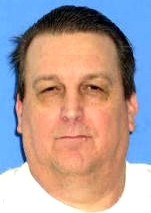
Roy Lee Pippin
Murderer Brian Kevin Rosenfeld
Murderer · USA · 1985
Brian Kevin Rosenfeld Brian Kevin Rosenfeld was sentenced to three concurrent l…
23 victims
Brian Kevin Rosenfeld
Murderer · USA · 1985
Brian Kevin Rosenfeld Brian Kevin Rosenfeld was sentenced to three concurrent l…
23 victims
 Russell Ellwood
Murderer · USA · 1991
Russell Ellwood was a former taxi driver. Authorities suspected him of killing…
20 victims
Russell Ellwood
Murderer · USA · 1991
Russell Ellwood was a former taxi driver. Authorities suspected him of killing…
20 victims
 Robert Martines Perez
Murderer · USA · 1994
Name: Robert Martines Perez · Other name used in proceedings: Robert Martinez P…
15 victims
Robert Martines Perez
Murderer · USA · 1994
Name: Robert Martines Perez · Other name used in proceedings: Robert Martinez P…
15 victims
 Billy Frank Vickers
Murderer · USA · 1993
Billy Frank Vickers Vickers was executed by lethal injection in Texas on Januar…
14 victims
Billy Frank Vickers
Murderer · USA · 1993
Billy Frank Vickers Vickers was executed by lethal injection in Texas on Januar…
14 victims
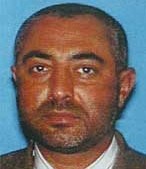 Hesham Hadayet
Murderer · USA · 2002
Hesham Mohamed Hadayet was an Egyptian-American who killed two people at Los An…
2 victims
Hesham Hadayet
Murderer · USA · 2002
Hesham Mohamed Hadayet was an Egyptian-American who killed two people at Los An…
2 victims
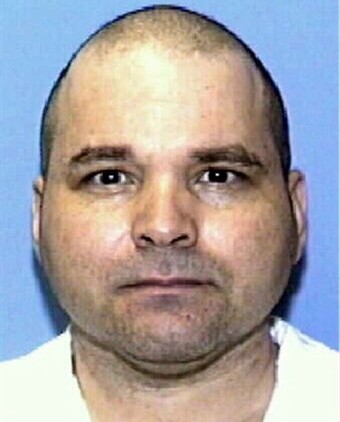 Michael Anthony Rodriguez
Murderer · USA · 1994
Michael Anthony Rodriguez was executed by lethal injection in Texas on August 1…
2 victims
Michael Anthony Rodriguez
Murderer · USA · 1994
Michael Anthony Rodriguez was executed by lethal injection in Texas on August 1…
2 victims
 Beatrice Cenci
Murderer · Italy · 1598
Beatrice Cenci (6 February 1577 – 11 September 1599) was an Italian noblewoman.…
1 victim
Beatrice Cenci
Murderer · Italy · 1598
Beatrice Cenci (6 February 1577 – 11 September 1599) was an Italian noblewoman.…
1 victim
 Jerry Thompson
Murderer · USA · 1991
Jerry Thompson was convicted of two counts of murder, two counts of felony-murd…
3 victims
Jerry Thompson
Murderer · USA · 1991
Jerry Thompson was convicted of two counts of murder, two counts of felony-murd…
3 victims
 Lisa Jo Chamberlin
Murderer · USA · 2004
Lisa Jo Chamberlin was convicted and sentenced to die by lethal injection for t…
2 victims
Lisa Jo Chamberlin
Murderer · USA · 2004
Lisa Jo Chamberlin was convicted and sentenced to die by lethal injection for t…
2 victims
- Gender
- male
- Country
- USA
- Location
- Harris County, Texas, USA
- Date of birth
- April 30, 1955
- Age at first offence
- 39
- Characteristics
- kidnapping, drug dealer, drugs
- Victim profile
- Elmer Buitrago, 34, and his cousin, Fabio, 55
- Method of murder
- Shooting
- Date(s) of murder
- May 4, 1994
- Years active
- 1994
- Date of arrest
- June 28, 1994
- Status
-
Executed
Executed by lethal injection on March 29, 2007 in Texas
Case identification
Roy Lee Pippin
STATUS
Pippin was executed by lethal injection on March 29, 2007 in Texas.
Timeline
- September 1995 — Pippin was convicted and sentenced to death for killing Elmer and Fabio Buitrago.
- Nov. 17, 1994 — A Harris County grand jury indicted Roy Pippin for capital murder in the deaths of Elmer and Fabio Buitrago.
- Sep. 15, 1995 — Judgment was entered after a jury found Pippin guilty of capital murder and following a separate punishment hearing, the court assessed a sentence of death.
- May 21, 1997 — Pippin’s conviction and sentence were affirmed on direct appeal by the Texas Court of Criminal Appeals.
- May 18, 1998 — Pippin filed a state writ application in the trial court.
- Feb. 20, 2002 — The Texas Court of Criminal Appeals denied Pippin’s application for state habeas relief and adopted the findings of the trial court.
- Oct. 7, 2002 — The Texas Supreme Court denied Pippin’s request for certiorari off direct appeal.
- Jun. 20, 2002 — Pippin filed a pro-se petition for writ of habeas corpus in the federal district court.
- Jan 25, 2004 — The federal district court denied Pippin’s petition.
- Dec. 28, 2005 — The 5th U.S. Circuit Court of Appeals denied Pippin’s request for a certificate of appealability.
- Jan 25, 2006 — The 5th Circuit Court denied Pippin’s request for a panel rehearing and granted the State’s request for panel rehearing; the court issued a revised opinion correcting factual error.
- Apr. 21, 2006 — Pippin petitioned the U.S. Supreme Court for certiorari review.
- Oct. 2, 2006 — The Supreme Court denied certiorari review.
- Dec. 18, 2006 — The trial court set an execution date of March 29, 2007.
- March 29, 2007 — Pippin set a fire in his cell hours before execution and was executed later that day in Texas.
- March 30, 2007 — Prison officials and media accounts described Pippin’s execution-day conduct and final statements.
Background
Pippin owned and operated an air conditioning business in Houston that he used to launder Colombian drug money. In December 1993, Pippin became involved in a money laundering scheme to funnel proceeds from the sale of Colombian cocaine in the United States to Mexico, using air conditioners and gas tanks of trucks to transport large sums of money across the Mexican border.
Pippin was scheduled to be executed after 6 p.m. Thursday, March 29, 2007, and was described as a condemned prisoner.
The offence
Pippin realized in mid-April 1994 that approximately $1.8-$2 million in drug proceeds were missing. He notified his “supervisor,” referred to as “Alfredo,” who instructed him to rent a van and some motel rooms.
On April 27, 1994, Pippin rented a white panel van and reserved two rooms at a motel. At Pippin’s request, an employee abducted two cousins, Elmer and Fabio Buitrago, and took them to the motel where they were held captive.
During the days that followed, the men were taken to Pippin’s house or a southwest Houston warehouse several times and repeatedly questioned about the missing money. Pippin would occasionally visit the motel to monitor the situation and bring food, beer, and drugs to the captors. The record showed that Pippin paid $500 per shift to three employees to assist in holding the two men captive.
Before dawn on Wednesday, May 4, 1994, Pippin shot both cousins at the warehouse. Elmer Buitrago was fatally wounded, escaped the warehouse after Pippin left, and began breaking windows in an adjacent apartment complex to draw attention. Fabio Buitrago’s body was discovered later.
Elmer Buitrago died from his wounds at the hospital later that day.
In one account, the record showed that police found eight fired 9mm cartridge cases from a semiautomatic weapon on the right side of the room and some bullet holes and fired bullets lodged in the north wall of the warehouse. In another account, evidence showed that each man was shot approximately four times through a pillow to muffle the sound, and the murder weapons were disposed of after the shootings.
Pippin admitted involvement in the kidnappings but denied being present when the killings occurred and denied that he was the triggerman who killed the cousins. He also insisted that he was under duress from his bosses in the drug trade and said that they threatened his family.
Investigation
Houston Police Officer Eddie Parodi responded to a call of criminal mischief in progress at an apartment complex located behind the warehouse. Warren Garza, the apartment complex security guard, assisted Officer Parodi in finding the source of the commotion that resulted in calls from concerned residents.
Before Officer Parodi arrived, Garza noticed two men fitting physical descriptions of Pippin and Pacheco driving around the apartment complex in a white van. Elmer Buitrago was found wounded and crying out for help in English and Spanish. Elmer told police that Pippin shot him.
A pipe was found on the ground nearby. Elmer stated that after being shot, he had hit Roy with a pipe and was able to run away.
Elmer also identified Pippin as the shooter, and later died at the hospital.
The record also referenced ballistics evidence involving bullets and cartridge cases, including testimony by Charles Anderson, a ballistics expert for the Houston Police Department.
Arrest
Law enforcement officers arrested Pippin on June 28, 1994 at a friend’s house.
Trial
Pippin was indicted on Nov. 17, 1994 for capital murder in the deaths of Elmer and Fabio Buitrago. On Sep. 15, 1995, a jury found him guilty of capital murder, and following a separate punishment hearing, the court assessed a sentence of death.
At his trial, Pippin admitted to participating in the aggravated kidnappings of Elmer and Fabio Buitrago but denied killing either of them and denied being present when they were killed.
Warren Garza testified that he heard Elmer say “Pippin shot me” and also heard him say the name “Roy.”
Charles Anderson testified about ballistics, including that two guns were used in the killings, and that Anderson had prepared a ballistics report and discussed discrepancies with the prosecutor before testifying. Defense cross-examination addressed that Anderson’s report did not clearly indicate that two guns were used.
Mitigating evidence during the punishment phase consisted mainly of testimony from Pippin’s ex-wife and her mother that he was not a violent person. Dr. Walter Quijano, a clinical psychologist, also testified that some studies demonstrate that violent behavior decreases with an inmate’s age.
Sentencing
The court assessed a sentence of death after the separate punishment hearing following the Sep. 15, 1995 capital murder conviction.
Appeals
Pippin’s conviction and sentence were affirmed on May 21, 1997 by the Texas Court of Criminal Appeals.
Pippin filed a state writ application on May 18, 1998. On Feb. 20, 2002, the Texas Court of Criminal Appeals denied Pippin’s application for state habeas relief and adopted the trial court’s findings.
The Texas Supreme Court denied Pippin’s request for certiorari off direct appeal on Oct. 7, 2002.
Pippin filed a pro-se petition for writ of habeas corpus in the federal district court on Jun. 20, 2002, followed by the appointment of succession of counsel and the addition of other federal habeas petitions. On Jan 25, 2004, the federal district court denied Pippin’s petition.
On Dec. 28, 2005, the 5th U.S.
On Jan 25, 2006, the 5th Circuit Court denied Pippin’s request for a panel rehearing and granted the State’s request for panel rehearing; the court issued a revised opinion correcting factual error.
On Apr. 21, 2006, Pippin petitioned the U.S. On Oct. 2, 2006, the Supreme Court denied certiorari review.
A federal habeas proceeding, Pippin v. Dretke, 434 F.3d 782 (5th Cir. 2005), included discussion of claims and the denial of a certificate of appealability, including:
- a claim under Brady v. Maryland about alleged suppression of exculpatory ballistics evidence,
- a claim about refusal to instruct the jury on the lesser included offense of felony murder,
- a claim regarding an inattentive juror during defense counsel’s presentation,
- an ineffective assistance of counsel claim connected to the ballistics issue,
- a Sixth Amendment confrontation claim involving admission of Elmer Buitrago’s dying declaration,
- and a deposition issue regarding the prosecutor.
In Pippin v. Dretke, the court denied Pippin’s application for a certificate of appealability.
Separately, Ex Parte Pippin, Not Reported in S.W.3d, 2007 WL 841771 (Tex.Cr.App. 2007), described a subsequent application for writ of habeas corpus filed pursuant to Texas Code of Criminal Procedure, Article 11.071, Section 5. The application was dismissed as an abuse of the writ, and the motion for stay of execution was denied.
Outcome
Pippin received a sentence of death for capital murder related to the kidnappings and killings of Elmer and Fabio Buitrago.
All subsequent appeals and requests for relief described in the record were denied, and the execution date was set.
Aftermath
Pippin’s execution occurred in Texas by lethal injection on March 29, 2007.
Prison officials credited a chaplain for calming him. Hours before the scheduled death, Pippin set a fire in his cell by piling trash and igniting it using a piece of wire he stuck in an electric outlet; officers extinguished the blaze with a water hose. A prison spokeswoman said there was smoke but no damage or injuries. Pippin was treated for smoke inhalation after the fire.
Pippin was described as protesting his forthcoming execution and as having ended a six-week hunger strike on Monday. He requested no final meal in one account.
From the death house gurney, Pippin made statements including the following verbatim quotations:
“You will answer to your maker when God has found out that you have executed an innocent man,” he said.
“May God have mercy on your souls.”
In another account, Pippin’s final statement included:
“I charge the people of the jury, trial judge, the prosecutor that cheated to get this conviction,” Pippin said while strapped to a gurney in Texas' death chamber.
“I charge each and every one of you with the murder of an innocent man. You will answer to your maker when you find out you have executed an innocent man.”
Another account included:
“I ask forgiveness for all of the poison I brought into the U.S., the country I love,” said Pippin, who owned an air-conditioning business in southwest Houston.
Another verbatim statement included:
“That's it. Warden, go ahead and murder me.”
During the start of the lethal injection, Pippin said:
“Jesus, take me home.”
He was pronounced dead at 6:42 p.m. eight minutes after the lethal drugs began to flow in one account.
Pippin had previously warned that he would not cooperate. One verbatim statement given before the move to the execution chamber included:
“I promise you, my oath, I won't try to hurt any guards,”
Other details
Pippin owned and operated an air conditioning business known as Pippin Services (also described as Pippin Services in the record).
An individual identified as Abraham Pacheco was described as an employee who abducted Elmer Buitrago and his cousin, Fabio Buitrago at Pippin’s request and participated with Pippin in taking the victims to the warehouse.
The record also referenced names of employees Aaron Loweth, Flavio Salazar, and Jorge Pulido, who were paid to assist in holding the captives.
Elmer Buitrago was described as 34 in one account, and Fabio Buitrago was described as 55 in one account.
The record described at least one other person who was held captive at the warehouse (Javier Riasco) and that another person (Jair Salas) was beaten but not killed in an account; the trial and court records were said to have dealt only with the Buitragos’ murders.
In one procedural summary, the court addressed claims that prosecutorial nondisclosure and jury instruction issues warranted relief; the certificate of appealability was denied.
A separate factual narrative from one account described Pippin’s height and weight estimates based on descriptions and trial testimony, including that Elmer described Pippin as approximately 5'9" and 200 pounds with sandy brown hair, and that at trial Pippin testified he was approximately 6'1" and weighed between 210 and 220 pounds.
A person named Julian Ramirez was identified as the Harris County assistant district attorney who prosecuted Pippin.
A lawyer named Winston Cochran was identified in final-day accounts as Pippin’s lawyer, and an additional lawyer named Walter Cochran was referenced in accounts discussing his view of Pippin’s claim of innocence.
Spotted an error, or have more information about this case?