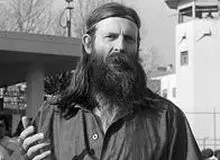
Theodore Streleski
Murderer Ervil LeBaron
Murderer · USA · 1972
Ervil Morrell LeBaron (1925 to August 16, 1981) was the leader of a polygamous…
35 victims
Ervil LeBaron
Murderer · USA · 1972
Ervil Morrell LeBaron (1925 to August 16, 1981) was the leader of a polygamous…
35 victims
 Brian Kevin Rosenfeld
Murderer · USA · 1985
Brian Kevin Rosenfeld Brian Kevin Rosenfeld was sentenced to three concurrent l…
23 victims
Brian Kevin Rosenfeld
Murderer · USA · 1985
Brian Kevin Rosenfeld Brian Kevin Rosenfeld was sentenced to three concurrent l…
23 victims
 Marvin Gray
Murderer · USA · 1975
Marvin Gray was convicted killer who claimed responsibility for 23 slayings and…
23 victims
Marvin Gray
Murderer · USA · 1975
Marvin Gray was convicted killer who claimed responsibility for 23 slayings and…
23 victims
 Yahweh ben Yahweh
Murderer · USA · 1980
Yahweh ben Yahweh was born and legally named Hulon Mitchell Jr. (October 27, 19…
23 victims
Yahweh ben Yahweh
Murderer · USA · 1980
Yahweh ben Yahweh was born and legally named Hulon Mitchell Jr. (October 27, 19…
23 victims
 Allan Baker
Murderer · Australia · 1973
Allan Baker was convicted with Kevin Crump for the murder of Ian James Lamb and…
2 victims
Allan Baker
Murderer · Australia · 1973
Allan Baker was convicted with Kevin Crump for the murder of Ian James Lamb and…
2 victims
 Charles Douglas Raby
Murderer · USA · 1992
October 15, 1992 — Charles Douglas Raby was convicted of killing Edna Franklin;…
1 victim
Charles Douglas Raby
Murderer · USA · 1992
October 15, 1992 — Charles Douglas Raby was convicted of killing Edna Franklin;…
1 victim
 Clifton Charles Russell
Murderer · USA · 1979
Clifton Charles Russell was sentenced to death in April 1980 for the murder of…
1 victim
Clifton Charles Russell
Murderer · USA · 1979
Clifton Charles Russell was sentenced to death in April 1980 for the murder of…
1 victim
 Bernadette Protti
Homicide · USA · 1984
Bernadette Protti was an American juvenile who murdered her classmate Kirsten C…
1 victim
Bernadette Protti
Homicide · USA · 1984
Bernadette Protti was an American juvenile who murdered her classmate Kirsten C…
1 victim
 Marc Dutroux
Serial killer · Belgium · 1995
Marc Dutroux (born 6 November 1956 in Brussels) was a Belgian serial killer and…
5 victims
Marc Dutroux
Serial killer · Belgium · 1995
Marc Dutroux (born 6 November 1956 in Brussels) was a Belgian serial killer and…
5 victims
 William Collis
Murderer · England United Kingdom · 2006
William Collis (also known as John Ryder) William Collis was a 60-year-old teac…
1 victim
William Collis
Murderer · England United Kingdom · 2006
William Collis (also known as John Ryder) William Collis was a 60-year-old teac…
1 victim
- Gender
- male
- Country
- USA
- Location
- Stanford, Santa Clara County, California, USA
- Date of birth
- 1936
- Age at first offence
- 42
- Characteristics
- rape, rapist
- Victim profile
- Professor Karel de Leeuw (his former faculty advisor)
- Method of murder
- Hitting with a small sledge hammer
- Date(s) of murder
- August 18, 1978
- Years active
- 1978
- Date of arrest
- Same day (surrenders)
- Status
-
Released
Convicted of second degree murder; sentenced to seven years in prison in 1978; released in September 1985
Case summary
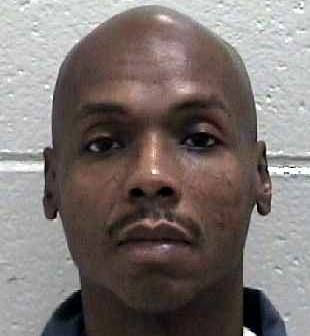
Theodore Streleski was a Stanford mathematician. In 1978 he bludgeoned his adviser, Karel deLeeuw, to death with a ball-peen hammer after being told that, after 19 years of graduate school, he wasn’t going to get his doctorate. Streleski received a sentence of seven years based on a defense of diminished capacity. He did not admit any remorse when he was freed, but said he didn’t have any plans to kill again.
Theodore Streleski (born 1936) was a graduate student in mathematics at Stanford University who murdered his former faculty advisor, Professor Karel de Leeuw, with a small sledge hammer on August 18, 1978. Shortly after the murder, Streleski turned himself in to the authorities, claiming he felt the murder was justifiable homicide because de Leeuw had withheld departmental awards from him, demeaned Streleski in front of his peers, and refused his requests for financial support.
Streleski was in his 19th year pursuing his doctorate in the mathematics department, alternating with low-paying jobs to support himself. During his trial Streleski told the court he felt the murder was "logically and morally correct" and "a political statement" about the department's treatment of its graduate students, and he forced his court-appointed lawyer to enter a plea of "not guilty" rather than "not guilty by reason of insanity" as the lawyer had urged.
Streleski was convicted of second degree murder and he served seven years in prison for his actions. Streleski was eligible for parole on three occasions, but turned it down as the conditions of his parole required him to not set foot on the Stanford campus. Upon his release in 1985, he said, "I have no intention of killing again. On the other hand, I cannot predict the future."
Background
Theodore Landon Streleski was born in Breese, Illinois, and grew up in nearby Carlyle. He was the only child of a mother who was a schoolteacher and a father who, after their divorce, went to work for Caterpillar Tractor Co. He left home when he was 19 and said he had never been back, had not seen his mother since 1959, and that they did not get along.
Streleski married an airline stewardess and part-time secretary named Merrily Merwin. Streleski’s father died of a brain tumor in 1956. After graduating from the University of Illinois, Streleski was admitted to Stanford in 1959 and three years later was awarded a master’s degree in electrical engineering.
Streleski began a 16-year quest for his doctorate that involved frustration and personal slights. He struggled to survive financially and searched in vain for several years for a professor willing to be his thesis adviser. Prof. deLeeuw was described as repeatedly dashing Streleski’s hopes.
In the early years, Streleski said deLeeuw told him he would have to give up his part-time job at the Lockheed Corporation because it was against departmental policy. Streleski also alleged that deLeeuw answered one of his questions cuttingly during an algebra examination, made fun of Streleski’s highly polished Florsheim shoes (and preferred sandals himself), and reacted scornfully when the student asked him for help. Streleski alleged that when he complained to deLeeuw about difficulty in finding an adviser, deLeeuw called him a "schoolboy" so vehemently that he sprayed spittle in Streleski’s face.
Streleski took a year off in 1967, spent some time in San Francisco, and married Merrily. He returned to Stanford the following year. A quote attributed to deLeeuw was: "You still here?" Streleski said deLeeuw had spotted him in the halls. Streleski described it as a crushing rebuke.
Streleski received a $2,000 fellowship after complaining to the dean. Streleski and Merrily were described as living on the edge, barely scraping by on her uncertain income and whatever Streleski could earn on the side. Merrily testified at trial that they qualified for welfare and food stamps, but that he didn’t believe in asking for assistance from anybody. She also testified that as pressures increased, he felt he couldn’t drop the degree because he had spent too many years trying to get it.
By early 1973, Merrily said Streleski was no longer the man she had married. She said he punched her sometimes and sent her to the hospital emergency room. She said he forbade her to answer the telephone and took her on walks so they could talk without being overheard. Merrily testified: "He began to feel that maybe there was a conspiracy against him," and said he would have to work harder. She said he got very tense, broke things occasionally, and said he didn’t understand why Stanford had ignored him, keeping saying it would be over shortly. She said it never was a short time and went on and on.
Merrily left him in 1974, and nearly four years later came the divorce. Streleski had lost his last job and had been living for a week on Rice-A-Roni.
The offence
On August 18, 1978, Streleski packed a two-pound sledgehammer into a small flight bag, left his apartment in San Francisco for the campus of Stanford University, and murdered a mathematics professor he felt had belittled him.
Streleski had traveled to the Stanford campus on the morning of the killing, walked to the mathematics department, and waited. When the professor arrived at his office, Streleski hesitated only a moment at deLeeuw’s door, took a deep breath, stepped inside, and attacked. Streleski recalled: "He was sitting with his back to the door," and said he walked up directly behind him.
Streleski said he hit him squarely on the top of the head with the hammer and then administered two or three of what he called “insurance blows” to the right of the temple. He said there was nothing violent to the action at all and that the professor rolled back to the storage cabinet in a rather graceful motion. Streleski said that at some point he heard what he assumed was a death rattle and that he covered him with a clean garbage bag like a shroud to save the feelings of the janitor who would probably find him.
Investigation
After the murder, Streleski turned himself in to the authorities. He claimed he felt the murder was justifiable homicide because de Leeuw had withheld departmental awards from him, demeaned Streleski in front of his peers, and refused his requests for financial support.
Arrest
Shortly after the murder, Streleski turned himself in to the authorities and handed over the bloodied hammer in a clear plastic bag. He said he had taken a train to San Francisco and phoned his ex-wife’s family to warn them that there might be "some legal problems." He then returned to Palo Alto, had a beer and a slice of pizza, waited in a bus shelter reading a Western novel until 3 the next morning, and walked to the police station to turn himself in.
Trial
Streleski forced his court-appointed lawyer to enter a plea of "not guilty" rather than "not guilty by reason of insanity" as the lawyer had urged.
At trial, Streleski told the court he felt the murder was "logically and morally correct" and "a political statement" about the department's treatment of its graduate students.
In March 1979, Streleski refused to allow his attorney to plead him not guilty by reason of insanity.
A defense psychiatrist characterized him as a paranoid psychotic. The jury, convinced that the killing was not the coolly rational act that Streleski claimed, found the defendant guilty of murder in the second degree.
Streleski said he felt regret but no remorse. He was quoted saying:
"I feel regret, but no remorse," he says. "If you regret something, you say you see the tragic consequences; but if you had to make the decision again, you would do it the same way. That's what I feel."
Streleski said he felt the murder was a logically and morally correct political statement. He also explained his view of the sentencing decision and said:
"My feeling for the jury is mellow," he says, "because they gave me the use of the word 'murderer' at the cheapest possible cost. I wanted that buzz word to play with. There are other students who have encountered the treatment I did, but who has ever heard of them? The publicity has been used as a weapon against Stanford. I think I got out of the murder what I wanted."
Prosecutor Alan Nudelman presented the state’s case against Streleski. Nudelman was quoted as not being reassured by Streleski’s assurances and calling Streleski "a time bomb." The People magazine account also quoted Nudelman as saying:
"The problem was with the law, not the verdict," says prosecutor Nudelman. "The law we had then was an unconscionable expression of an inept legislative process. It was a scandal."
Sentencing
Streleski received a sentence of seven years in prison in 1978. The People magazine account described that because of what a jury determined to be his "diminished mental capacity" at the time of the crime, Streleski was sentenced to a modest eight years. The account further said an additional year was imposed for using a weapon, while also stating the final term served was seven years.
Under current California law at the time described, Streleski could have been sentenced to from 15 years to life in prison. A state law in effect at the time and repealed eight months later set the maximum sentence for second degree murder at only seven years.
Appeals
No appeals were described.
Outcome
Streleski was released from prison in September 1985 after serving a seven-year term. He prepared to resume an unexceptional life on the outside. He described his lack of future promises when asked about killing again and was quoted:
"I have no intention of killing again. On the other hand, I cannot predict the future."
Aftermath
DeLeeuw’s widow, Sita de Leeuw, spoke out after Streleski’s release. She described Streleski not denying the killing and saying she felt the media turned him into a celebrity and permitted him to give his version unchallenged.
She wrote that she watched Streleski explain to a nationwide television audience on the Phil Donahue show why it was necessary to kill her husband, and that she heard him air grievances with no one to challenge him. She said she felt indignant that the media would pander to base instincts and that she thought those base instincts were nurtured by a media that continued to feed a hungry public.
She described hopes that publicity would die quickly and said Stanford refused to be drawn into further public debate about the fairness of his treatment by the university. She said she was besieged by reporters during Streleski’s final year in prison when he was eligible for parole three times.
She said she wanted to respond to reporters’ inquiries in an effort to inject a dimension that was being forgotten and stated:
"I wanted people to know that whether Streleski was crazy or sane, whether his grievances were legitimate or not, a good man died on Aug. 18, 1978."
She said that her husband’s life was dedicated to a deeper integrity. She also said she found solace in prayer and meditation and in playing with her new grandson.
A quote from Donahue was included about his calling attention to a criminal justice system that had released an acknowledged murderer from jail so quickly, and that as a result such laws might be changed. The statement about Donahue also said:
Donahue said he is calling attention to a criminal justice system that has released an acknowledged murderer from jail so quickly. And Donahue says that as a result of such publicity, such laws might be changed.
Streleski’s plans after release included returning to San Francisco and looking for a job, described as “probably some normal introverted thing,” and he said:
"I'm an incorrigible technician personality."
He said he killed for notoriety and that if he killed again it would weaken his argument:
"I killed for notoriety," he explains one more time. "If I kill again, it weakens my argument."
Other details
The People magazine account described Streleski as emerging from the California Medical Facility in Vacaville and preparing to resume life on the outside, with Streleski described as 49 in that account. It also described that he did not promise to violate parole conditions and simply refused to accept parole when offered.
The record also included the statement: "Last month, Streleski was released from prison after serving a seven-year term."
A quote attributed to Streleski about his regret and his view of decision-making was included above in the trial section. A quote attributed to Streleski about visiting Stanford and his rationale for the murder also included quotes about having no leverage with the media:
"I realized that I had no leverage," he explains. "Television and the media don't cover struggling graduate students. But they do cover murderers."
The account also described Streleski systematically drawing up a short list of candidates and described his consideration of alternatives:
"The essential thing was to be able to bad-mouth Stanford and do it with some impact," he says. "I considered other alternatives. I considered going to the alumni or students. I thought about trashing the place. I considered going to the media directly."
Spotted an error, or have more information about this case?