
Larry Swearingen
Murderer Russell Ellwood
Murderer · USA · 1991
Russell Ellwood was a former taxi driver. Authorities suspected him of killing…
20 victims
Russell Ellwood
Murderer · USA · 1991
Russell Ellwood was a former taxi driver. Authorities suspected him of killing…
20 victims
 Robert Martines Perez
Murderer · USA · 1994
Name: Robert Martines Perez · Other name used in proceedings: Robert Martinez P…
15 victims
Robert Martines Perez
Murderer · USA · 1994
Name: Robert Martines Perez · Other name used in proceedings: Robert Martinez P…
15 victims
 Billy Frank Vickers
Murderer · USA · 1993
Billy Frank Vickers Vickers was executed by lethal injection in Texas on Januar…
14 victims
Billy Frank Vickers
Murderer · USA · 1993
Billy Frank Vickers Vickers was executed by lethal injection in Texas on Januar…
14 victims
 Barry Lee Loukaitis
Homicide · USA · 1996
Barry Lee Loukaitis Barry Loukaitis was a convicted American murderer. He was b…
3 victims
Barry Lee Loukaitis
Homicide · USA · 1996
Barry Lee Loukaitis Barry Loukaitis was a convicted American murderer. He was b…
3 victims
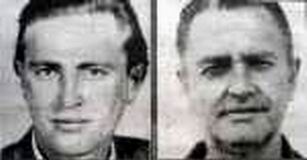 Romulus Veres
Serial killer · Romania · 1972
Romulus Vereş was a serial killer known as “the man with the hammer”. He was bo…
5 victims
Romulus Veres
Serial killer · Romania · 1972
Romulus Vereş was a serial killer known as “the man with the hammer”. He was bo…
5 victims
 Jesse James Hollywood
Murderer · USA · 2000
Jesse James Hollywood, also known as Sean Michaels, was born January 28, 1980,…
1 victim
Jesse James Hollywood
Murderer · USA · 2000
Jesse James Hollywood, also known as Sean Michaels, was born January 28, 1980,…
1 victim
 Tsutomu Miyazaki
Serial killer · Japan · 1988
Tsutomu Miyazaki was a Japanese serial killer. He murdered four girls aged betw…
4 victims
Tsutomu Miyazaki
Serial killer · Japan · 1988
Tsutomu Miyazaki was a Japanese serial killer. He murdered four girls aged betw…
4 victims
- Gender
- male
- Country
- USA
- Location
- Montgomery County, Texas, USA
- Date of birth
- May 21, 1971
- Age at first offence
- 27
- Characteristics
- kidnapping, rape
- Victim profile
- Melissa Trotter, 19
- Method of murder
- Strangulation
- Date(s) of murder
- December 8, 1998
- Years active
- 1998
- Date of arrest
- —
- Status
-
Sentenced to death
Sentenced to death on July 11, 2000 for the kidnapping, rape, and strangulation of Melissa Trotter; execution date set for January 27, 2009; the conviction and sentence were affirmed on March 26, 2003
Case details
Larry Ray Swearingen was convicted of capital murder for murdering Melissa Trotter by ligature strangulation in the course of committing or attempting to commit kidnapping or aggravated sexual assault. He was sentenced to death.
Timeline
- 12/08/1998 — Swearingen strangled and killed 19-year-old Melissa Trotter after kidnapping her; her body was later found in Sam Houston National Forest.
- 12/11/1998 — Swearingen was arrested pursuant to outstanding warrants.
- 01/02/1999 — Trotter’s partially nude body was discovered in Sam Houston National Forest.
- 01/06/1999 — Police went to Swearingen’s trailer to see if anyone still lived there; the trailer had been cleaned out for rental, and recovered pantyhose were found in relation to the trash.
- 01/26/1999 — A Montgomery County grand jury indicted Swearingen for kidnapping-related capital murder.
- 02/??/1999 — (No dated entry provided in the record.)
- Nov. 2, 1999 — Swearingen was reindicted, with rape-related capital murder added.
- June 28, 2000 — A jury found him guilty of capital murder.
- July 11, 2000 — After a separate punishment hearing, the court sentenced him to death.
- July 12, 2000 — Date received (as listed).
- Mar. 11, 2002 — Swearingen filed his initial state application for habeas corpus relief.
- Mar. 26, 2003 — The Texas Court of Criminal Appeals affirmed his conviction and sentence; delivered March 26, 2003.
- May 21, 2003 — The Texas Court of Criminal Appeals denied his initial application for habeas corpus relief.
- April 7, 2005 — The trial court denied his request for additional DNA testing.
- April 8, 2005 — Still acting without counsel, Swearingen sought mandamus review with the Texas Court of Criminal Appeals.
- May 20, 2005 — Swearingen filed a second application for mandamus review with the Texas Court of Criminal Appeals.
- June 8, 2005 — The Court of Criminal Appeals denied both mandamus review requests.
- Sept. 1, 2005 — Swearingen filed a petition for writ of certiorari with the U.S. Supreme Court.
- Sept. 8, 2005 — In federal habeas proceedings, the district court denied relief but allowed him to appeal.
- Sept. 9, 2005 — Swearingen filed a notice of appeal with the Fifth U.S. Circuit Court of Appeals.
- Feb. 1, 2006 — The Texas Court of Criminal Appeals dismissed his appeal in connection with his request for DNA testing.
- Feb. 21, 2006 — Swearingen sought rehearing from the Court of Criminal Appeals in connection with his DNA testing request.
- Mar. 27, 2006 — The U.S. Supreme Court denied certiorari review of state court’s denial of mandamus review.
- May 10, 2006 — The Texas Court of Criminal Appeals denied his request for rehearing on his DNA appeal.
- July 31, 2006 — The Fifth U.S. Circuit Court of Appeals affirmed the federal district court’s denial of habeas corpus relief.
- Nov. 22, 2006 — Swearingen filed a petition for writ of certiorari with the U.S. Supreme Court.
- Jan. 22, 2007 — Swearingen filed a second application for state habeas corpus relief.
- Jan. 23, 2007 — The Texas Court of Criminal Appeals remanded the application for a hearing.
- Jan. 16, 2008 — The Texas Court of Criminal Appeals denied relief on Swearingen’s second state habeas corpus application after remand.
- Jan. 22, 2008 — Swearingen filed a third state application for habeas corpus relief.
- Mar. 5, 2008 — The Texas Court of Criminal Appeals remanded the third application for a hearing.
- July 31, 2008 — Swearingen, without an attorney, filed a third application for mandamus review with the Texas Court of Criminal Appeals.
- Nov. 26, 2008 — The Texas Court of Criminal Appeals dismissed Swearingen’s motion to recuse, filed without an attorney.
- Dec. 4, 2008 — Swearingen, without an attorney, for the fourth time sought mandamus review with the Court of Criminal Appeals.
- Dec. 17, 2008 — On Swearingen’s third state habeas corpus application, the Texas Court of Criminal Appeals denied relief and rejected his third request for mandamus review; the convicting court set the execution date for January 27, 2009.
- Jan. 6, 2009 — The Texas Court of Criminal Appeals rejected his fourth request for mandamus review.
Offence
Swearingen was convicted for murdering Melissa Trotter by ligature strangulation in the course of committing or attempting to commit kidnapping or aggravated sexual assault.
Victim
- Melissa Trotter, a 19-year-old white female.
Conduct alleged and established at trial (capital murder circumstances)
According to the prosecution’s theory, Swearingen became angry that Trotter rejected his sexual advances. He strangled her with pantyhose and left her body in the woods. Trotter remained there until about 25 days after the crime was committed.
At trial, evidence showed Trotter’s body was found lying on her back with clothing pulled up under her arms, and one shoe off. Her jeans were on and the fly was closed, but one pocket was torn exposing red underwear. No scratches were found on her exposed skin, and no soil was on her shoes. Evidence showed the pantyhose came from Swearingen’s home.
The record also described an injury on Trotter’s neck that could have been caused by a knife, though the discussion included that a cut with a sharp object could not be ruled out. It described that Trotter had no injuries indicating she had struggled, but she had a bruise on her face and discoloration in her vagina that could have been a bruise; there was no evidence of penetration. Swearingen wrote a letter in Spanish to his mother purporting to be from a female who implicated her boyfriend was the murderer; at trial, the state proved the letter was written in Swearingen’s handwriting.
During the punishment phase of his trial, evidence was introduced that Swearingen had committed two unadjudicated rapes, one unadjudicated assault on his ex-wife, and that while awaiting trial, he had tried to escape.
Background
Swearingen had prior prison record #758150 with a two year sentence for one count of Burglary of a Building. He had originally been sentenced to probation, but probation was revoked and he was sentenced to TDCJ-ID when arrested for the current offense.
Personal details
- Name: Larry Ray Swearingen
- TDCJ Number: 999361
- Date of Birth: 05/21/1971
- Age at the offence: 27
- Age at receipt: 29
- Education Level: 11
- Race: white
- Gender: male
- Hair Color: brown
- Height: 5 ft 10 in
- Weight: 194
- Eye Color: blue
- Native County / Native State: Montgomery / Texas
- Prior Occupation: electrician, mechanic, laborer
- County: Montgomery
- Race and Gender of Victim: white female
His co-defendants were none.
Investigation and evidence
After meeting Trotter, a nineteen-year-old college student, in December 1998, Swearingen told coworkers and friends he had met an attractive college girl and hinted he wanted to have sex with her.
The record described the early afternoon of December 8: Swearingen and Trotter were seen departing together from Montgomery College in Conroe after talking in the school library. Trotter’s friends and family never again saw her alive.
The record stated that Trotter’s body was found in Sam Houston National Forest on January 2, 1999. It described that she had been strangled with a piece of torn hosiery found around her neck. It described evidence that she had been raped. It also described:
- fiber evidence showing Trotter had been in Swearingen’s trailer, on the floor and perhaps on the bed, and in the cab of his pickup truck;
- evidence in the truck cab that some of her hair had been pulled from her head;
- a pack of cigarettes identified as Trotter’s brand found in Swearingen’s trailer, despite neither Swearingen nor his wife smoking;
- a piece of hosiery, the companion to the piece used to strangle Trotter, found in a trash heap beside Swearingen’s trailer;
- hair evidence linking the hosiery to Swearingen’s wife;
- cell phone records showing that on the day Trotter disappeared, Swearingen traveled from his trailer to the area where the body was found.
The record stated that after Trotter disappeared, Swearingen told friends he was in trouble and that the police would be after him.
Letter written while in jail
While in jail awaiting trial, Swearingen used a Spanish-English dictionary and composed a letter in crude Spanish purportedly written by “Robin.” The prosecution alleged Swearingen composed the letter, arranged for it to be hand-copied by a cellmate, and had the letter delivered to authorities to deflect blame.
In the appellate court’s recitation of the translated content, the letter translation was presented verbatim as follows:
Larry I have information that I need to tell you about Melissa and Wanda. I was with the murderer of Melissa, and with the one that took Wanda from work. I am not sure what he did with Wanda, but I saw everything that happened to Melissa. He was talking to her in the parking lot. They went to school together is what he told me. "We drove for awhile, and then we went and had breakfast. I began to talk about sex when she said she had to go home." He hit her in the left eye, and she fell to the floor of her car. He took her to the wood and began to choke her with his hands at first, then he jerked (jalar is slang) her to the bushes. He cut her throat to make sure that she was dead. Her shoe came off when he jerked (slang) her into the bushes. Her jabear (cannot make out/ no such word in Spanish) was torn. I am in love with him, and I don't want him in jail. The man in jail doesn't deserve to be in jail, either. To make sure that you know, I am telling you the truth. She was wearing red panties when R.D. murdered her. He choked her with his hands first, but he used A piece of rope the truck from his truck; he had a piece of black rope that he used in his boat to anchor it, or something, he said. When he dragged her from the car, he put her in the shrub on her back. I know that I should turn him in, but he told me that he would kill me, too, and I believe him. He has told about this murder to 3 other women in the past, will tell you that he smokes, and he smoked with her at the college at 2:30 and drove a blue truck. His hair is blonde and brown and lives here. His name is Ronnie, but that is all I can tell, if you want more information, say it on paper and I will continue to write, but I want to come in. Robin
The appellate discussion also described that Swearingen sent a letter to his mother with the help of an English-Spanish dictionary and had his cellmate copy it. It described that the letter stated it was written by “Robin,” who could identify Trotter’s murderer as someone other than Swearingen and who knew details of the murder.
Arrest
On December 11, 1998, Swearingen was arrested on several outstanding warrants. While handcuffed, he said his wrist and ribs were sore from a bar fight he had been in the week before.
Trial
Charges and legal basis
Swearingen appealed his conviction of capital murder for which he was sentenced to death under:
- Tex. Penal Code Ann. §19.03(a)(2)
- Tex. Code Crim. Pro. Article 37.071, §§ 2(b), 2(e), 2(g), 2(h)
The conviction was for murdering Melissa Trotter by ligature strangulation in the course of committing or attempting to commit kidnapping or aggravated sexual assault.
Swearingen raised twenty-four points of error on direct appeal.
Jury selection challenges for cause
Swearingen challenged venirepersons Jeffrey Hollier, Doreen Sipe, and Wayne Lightfoot on the basis of bias or prejudice, arguing each had a bias against the law applicable to the case upon which he was entitled to rely, namely: Swearingen’s presumption of innocence. He exercised peremptory strikes against each of these venirepersons. He requested and received two additional peremptory strikes but was denied a third additional peremptory strike. Connie Taylor was seated on the jury, to whom Swearingen objected. The appellate discussion stated that to demonstrate harm, Swearingen had to show that challenges for cause against all three of the venirepersons were erroneously denied.
The appellate discussion described:
- Hollier suspected the defendant was “here for some reason,” had “a slight bias against the defendant” based on media information and that he had daughters, but agreed with the presumption of innocence.
- Sipe’s daughter had been sexually molested and her husband had been abusive and was sent to the penitentiary; she repeatedly testified she could separate her experience from the case and stated she could give Swearingen the benefit of the presumption of innocence.
- Lightfoot used the term “abducted” when summarizing what he read in the newspaper, explained he might have used it loosely, and stated he did not have bias or prejudice against the defendant.
The appellate court overruled Swearingen’s points of error five through seven.
Motions to suppress
Swearingen filed motions to suppress evidence.
Motion to suppress seized pursuant to search warrants
In points of error eight through thirteen, he asserted the trial court erred in denying his motion to suppress evidence seized pursuant to search warrants issued on December 15 and 18, 1998, arguing the supporting affidavits failed to set forth substantial facts establishing probable cause. He argued constitutional and statutory violations, including:
- Fourth, Fifth, Ninth, Fourteenth Amendments to the U.S. Constitution,
- Article I, section 9 of the Texas Constitution,
- Texas Code of Criminal Procedure Article 38.23.
The appellate discussion stated that the challenged points were overruled, and that Swearingen failed to adequately brief because he did not distinguish how affidavits related to the various places to be searched.
Motion to suppress confidential communication
In points of error fourteen through twenty, Swearingen asserted the trial court erred in denying his motion to suppress evidence seized from his attorney’s office, claiming it was a confidential communication between attorney and client.
The item seized was the letter Swearingen mailed to his mother that stated, on its face, that it was written by someone named “Robin.” Swearingen argued:
- the evidence was seized in violation of the Fourth, Sixth, and Fourteenth Amendments to the U.S. Constitution,
- Texas Code of Criminal Procedure Articles 18.02(10) and 38.23,
- Texas Rule of Evidence 503.
The appellate discussion stated that Swearingen asserted he did not author the letter, and the letter was sent to and handled by several third parties; it further stated there was no evidence appellant intended the communication to be privileged and that because the purpose of the letter was to perpetrate a fraud, it would have been excepted from attorney-client privilege. The trial court’s denial was affirmed as overruled.
Motion to suppress warrantless search / abandonment
In points of error twenty-one through twenty-four, Swearingen argued the trial court erred in denying suppression of evidence seized from his residence without a warrant.
The appellate discussion described that after his arrest on December 11, he and his wife Terry agreed to move into his parents’ home. It stated that on December 24, Terry left a note for the landlord that they had to move and returned both keys by January 1, 1999.
It described that Sergeant Leo Mock went to the trailer on January 6, 1999, found the landlord and his wife had cleaned out the trailer to rent to another party, and that the landlord showed Mock where the trash had been thrown out; Mock recovered a pair of pantyhose with one leg missing.
The appellate decision stated that abandonment occurred if the defendant intended to abandon and the decision was not due to police misconduct, and that where police take possession of abandoned property independent of police misconduct no seizure occurs under the Fourth Amendment; it also stated that when a defendant voluntarily abandons property he lacks standing to contest a search of the abandoned property. It concluded Swearingen voluntarily abandoned his trailer prior to January 6, 1999, and lacked standing to complain about any search conducted of the trailer or trash removed on that date. The appellate court overruled the points.
Sufficiency of the evidence on appeal
The appellate decision addressed legal and factual sufficiency.
Legal sufficiency
Swearingen argued that evidence was legally and factually insufficient to prove beyond a reasonable doubt the aggravating elements of the capital offense alternatively alleged—intentional causation of Trotter’s death while in the course of committing or attempting kidnapping or aggravated sexual assault. The appellate court stated Swearingen did not contend evidence was insufficient to prove beyond a reasonable doubt that he intentionally murdered Trotter.
The appellate recitation included the following sequence and evidentiary points:
- Swearingen became acquainted with Trotter on Sunday, December 6, 1998.
- Swearingen made plans to see or talk with her on the next day; coworkers teased him about being stood up.
- On the evening of December 7, Swearingen told Bryan Foster and William Brown he was going to meet Melissa for lunch and if everything went right he was going to “have Melissa for lunch.” Brown noticed various items of clothing in the backseat of Swearingen’s truck.
- Swearingen called Trotter from Foster’s house.
- On Tuesday, December 8, he met Trotter in the college library around 1:30 p.m., after she purchased tater-tots.
- Trotter left with Swearingen around 2 p.m.; Trotter’s vehicle remained in the parking lot.
- At 2:05 p.m., Swearingen returned a page and said he would have to call back later because he was at lunch.
- Swearingen returned to his trailer sometime before 3:30 p.m., left between 2:00 p.m. and 3:30 p.m., then returned before 5:30 p.m., asked his landlord questions, then left again between 4:30 p.m. and 5:30 p.m. to pick up his wife Terry from his mother’s house.
- His neighbor saw Swearingen’s truck come and go but could not see who got in and out because of tinted windows.
- When Swearingen and Terry returned home, a package of Marlboro Light cigarettes and a red lighter were on top of the television.
- That evening, Swearingen called Phyllis Morrison, a former girlfriend, and told her he was in trouble and police might be after him.
- On December 11 Swearingen was arrested on outstanding warrants and stated his wrist and ribs were sore from a bar fight the week before.
- Trotter’s body was found on January 2, 1999, with a piece of hosiery tied around her neck; the record described the decomposition as consistent with being in the woods about 25 days.
- The record described the body’s position and clothing, including creases on her back from neck to waist, jeans on with fly closed but right rear pocket torn exposing part of her buttocks, red underwear, one shoe on and one lying nearby, and no scratches on exposed skin.
- It stated she died from asphyxia due to ligature strangulation; the nylon ligature was a section cut from pantyhose, with the complementary portion found in Swearingen’s trailer.
- It described a sharp-forced injury on Trotter’s neck that could have been inflicted before death while blood continued to circulate, and that a cut with a sharp object like a knife could not be ruled out.
- It discussed absence of defensive wounds and difficulty of tying elastic nylon, suggesting she may have been unconscious when the ligature was applied.
- It stated the left side of her face was much darker and at a more advanced stage of decomposition consistent with a bruise.
- It described a deep bruise on Trotter’s tongue and discoloration on her vaginal wall that could have been caused by sexual intercourse.
- It described fiber and hair evidence linking Swearingen’s jacket, truck seat and head-liner, and Swearingen’s master bedroom carpet, plus hair forcibly removed from Trotter’s head.
- It described stomach contents including what appeared to be potato, chicken, and a small amount of greenish vegetable material.
- It stated Swearingen’s letter to his mother was shown to be fabrication and provided a timeline.
The appellate court concluded a rational jury could have found the aggravating elements beyond a reasonable doubt and overruled points of error one and three.
Factual sufficiency
Swearingen argued factual insufficiency.
The appellate decision described only significant independent evidence contrary to the verdict as:
- Swearingen’s testimony explaining he left Trotter at the college while she was talking to another man and went to see his grandmother,
- the grandmother’s testimony that Swearingen picked her up and took her to the post office around 2:30 p.m. on December 8, 1998 and left her around 2:50 p.m. The appellate discussion said the State challenged the grandmother’s memory of date and time and credibility because she had not informed authorities about her knowledge of Swearingen’s whereabouts while he was in jail awaiting trial. The appellate court stated the jury could have disbelieved both witnesses.
It also stated evidence tending to disprove guilt included testimony that forensic evidence could be consistent with other theories, including the possibility the shirt could have been pulled up during dragging, and differing testimony about absence of scratches, possible post-mortem creases, and the possibility that vaginal discoloration could have been due to infection indicated by medical records. It concluded proof of guilt was not so obviously weak as to undermine confidence or so outweighed by contrary proof, and overruled points of error two and four.
Direct appeal disposition
The appellate decision stated it would affirm the conviction and sentence. It stated that:
- Points of error one and three were overruled.
- Points of error two and four were overruled.
- Points of error five through seven were overruled.
- Points of error eight through thirteen were overruled.
- Points of error fourteen through twenty were overruled.
- Points of error twenty-one through twenty-four were overruled. It concluded that Swearingen’s conviction for capital murder and sentence of death were affirmed.
Appeals
The appellate decision was delivered March 26, 2003.
The procedural history also included multiple habeas corpus applications and petitions for mandamus review, including:
- Initial state habeas filing March 11, 2002; denied and affirmed by Texas Court of Criminal Appeals in 2003.
- Federal habeas corpus proceedings in Houston Division of the Southern District.
- Denial of additional testing and successive petitions for mandamus review in the Texas Court of Criminal Appeals.
- Denials and dismissals across the U.S. Supreme Court and Fifth U.S. Circuit Court of Appeals in the years 2005 through 2008 as described in the timeline.
- Remands and later denials of second and third state habeas applications as described in the timeline.
- A dismissal of a motion to recuse and successive mandamus review requests as described in the timeline.
Other details
Court panel and opinions on direct appeal
The record included case caption and judges:
- In the Court of Criminal Appeals of Texas No. 73,851 Larry Ray Swearingen, Appellant v. The State of Texas
- On Direct Appeal from Montgomery County
- Holcomb, J., delivered the opinion of the Court
- Keller, P.J., and Meyers, Keasler, Hervey, and Cochran, JJ., joined
- Womack, J., concurred in the result
- Johnson, J., filed a dissenting opinion in which Price, J., joined
Execution scheduling notice included in the record
A Texas Attorney General media advisory included that Swearingen was scheduled for execution after 6 p.m. on Tuesday, January 27, 2009, and referenced a scheduling notice dated January 27, 2009.
Charging and trial outcome dates
- Jan. 26, 1999 — indicted for kidnapping-related capital murder.
- Nov. 2, 1999 — reindicted with rape-related capital murder added.
- June 28, 2000 — jury found him guilty of capital murder.
- July 11, 2000 — sentenced to death.
- Mar. 26, 2003 — conviction and sentence affirmed.
People named in evidentiary narrative
The appellate recitation named several individuals in describing events and testimony:
- Bryan Foster
- William Brown
- Terry Swearingen
- Phyllis Morrison
- Sergeant Leo Mock
- Connie Taylor
- Jeffrey Hollier
- Doreen Sipe
- Wayne Lightfoot
- Wanda (appeared in the letter text)
- Melissa (appeared in the letter text as “Melissa”)
- Robin (the purported author named in the letter text)
- R.D. (named in the letter text)
- Ronnie (named in the letter text)
- Melissa Trotter (the victim)
- Terry (as Swearingen’s wife in the narrative)
- Trotter’s friends and family (mentioned in narrative as never seeing her alive again)

Spotted an error, or have more information about this case?