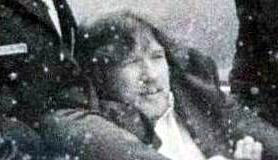
John Paul Phillips
Serial killer Donald Henry Gaskins
Serial killer · USA · 1969
Donald Henry Gaskins, also known as Donald “Pee Wee” Gaskins, was a serial kill…
200 victims
Donald Henry Gaskins
Serial killer · USA · 1969
Donald Henry Gaskins, also known as Donald “Pee Wee” Gaskins, was a serial kill…
200 victims
 Carl Eugene Watts
Serial killer · USA · 1974
Carl Eugene Watts (born November 7, 1953; died September 21, 2007), also known…
100 victims
Carl Eugene Watts
Serial killer · USA · 1974
Carl Eugene Watts (born November 7, 1953; died September 21, 2007), also known…
100 victims
 Rodney Alcala
Serial killer · USA · 1977
Rodney James Alcala (born August 23, 1943) was also known as Rodrigo Jacques Al…
100 victims
Rodney Alcala
Serial killer · USA · 1977
Rodney James Alcala (born August 23, 1943) was also known as Rodrigo Jacques Al…
100 victims
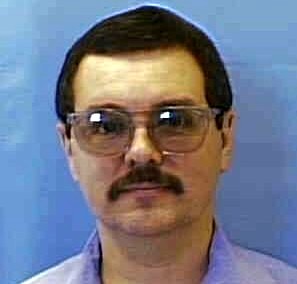 Donald Harvey
Serial killer · USA · 1970
Donald Harvey was known as an American serial killer and a self-professed “Ange…
87 victims
Donald Harvey
Serial killer · USA · 1970
Donald Harvey was known as an American serial killer and a self-professed “Ange…
87 victims
 Donald Leroy Evans
Serial killer · USA · 1975
Donald Leroy Evans (born July 5, 1957) was an American serial killer who murder…
60 victims
Donald Leroy Evans
Serial killer · USA · 1975
Donald Leroy Evans (born July 5, 1957) was an American serial killer who murder…
60 victims
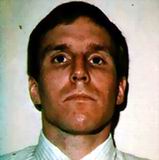 Michael Swango
Serial killer · USA · 1981
Michael Swango (Joseph Michael Swango) was a physician and American serial kill…
60 victims
Michael Swango
Serial killer · USA · 1981
Michael Swango (Joseph Michael Swango) was a physician and American serial kill…
60 victims
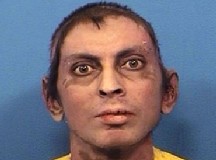 Kaushik Patel
Murderer · USA · 2007
Kaushik Patel pleaded guilty and was sentenced to life in prison on May 18, 201…
2 victims
Kaushik Patel
Murderer · USA · 2007
Kaushik Patel pleaded guilty and was sentenced to life in prison on May 18, 201…
2 victims
 James Barney Hubbard
Murderer · USA · 1957
James Barney Hubbard was executed by lethal injection in Alabama on August 5, 2…
2 victims
James Barney Hubbard
Murderer · USA · 1957
James Barney Hubbard was executed by lethal injection in Alabama on August 5, 2…
2 victims
 Keli Lane
Murderer · Australia · 1996
Keli Lane (born 21 March 1975) was a former Australian water polo player. She w…
1 victim
Keli Lane
Murderer · Australia · 1996
Keli Lane (born 21 March 1975) was a former Australian water polo player. She w…
1 victim
 Steven Parkus
Murderer · USA · 1985
Steven Parkus was convicted of strangulation in the November 1985 death of Mark…
1 victim
Steven Parkus
Murderer · USA · 1985
Steven Parkus was convicted of strangulation in the November 1985 death of Mark…
1 victim
 Angela Norman
Homicide · USA · 2011
Angela Norman was a Dayton resident and the mother of Makayla Norman, a 14-year…
1 victim
Angela Norman
Homicide · USA · 2011
Angela Norman was a Dayton resident and the mother of Makayla Norman, a 14-year…
1 victim
 Gregory Rouster
Murderer · USA · 1986
John and Henrietta Rease, an elderly couple who lived in Gary, Indiana, cared f…
2 victims
Gregory Rouster
Murderer · USA · 1986
John and Henrietta Rease, an elderly couple who lived in Gary, Indiana, cared f…
2 victims
- Gender
- male
- Country
- USA
- Location
- Carbondale, Illinois, USA
- Date of birth
- 1953
- Age at first offence
- 22
- Characteristics
- rape
- Victim profile
- Theresa Clark, 22 / Kathleen T. McSharry, 24 / Joan Wetherall
- Method of murder
- St abbing with knife / Hitting with a hammer
- Date(s) of murder
- 1975-1976 / 1981
- Years active
- 1975–1981
- Date of arrest
- January 8, 1982
- Status
-
Died in custody
Sentenced to death on 1986; died on death row on November 2, 1993
Background
John Paul Phillips was a convicted murderer who was sentenced to death in 1986 and died on death row on November 2, 1993.
Phillips gave a jailhouse confession to his cellmate in the early 1980s in which he admitted to killing McSharry, Clark, and Wetherall.
The offence
Murder of Kathleen McSharry (1976)
Kathleen McSharry was murdered in 1976. Her nude body was found in her Allyn Street apartment bedroom by her roommate on July 12, 1976. McSharry was a 24-year-old Southern Illinois University Carbondale student. She was stabbed in the back, her throat was slit, and she was sexually assaulted.
Police closed the books on the 1976 murder of Kathleen McSharry using degraded DNA evidence to link convicted murderer John Paul Phillips to the crime. The technique was known as Mini STR sampling, which allowed police to use DNA materials that were previously too damaged or decayed to be of any use. Police used skin samples found underneath the fingernails of McSharry’s left hand. The samples were taken at McSharry’s autopsy in July 1976 and matched DNA extracted from a femur bone from Phillips.
William Frank, a DNA research coordinator with the state police’s Research and Development Lab, explained the technique: "As DNA degrades, it (the amount of useable material) gets smaller and smaller," he said. "This (mini STR testing) allows us to use it as it gets smaller and degraded." Frank said the new technology increased by a factor of 100 the ability of scientists to identify DNA compared to earlier DNA technology, which he said was from "the age of dinosaurs" in comparison. Frank said Illinois State Police was the first law enforcement agency to use the technology.
Murder of Theresa Clark (1975)
Theresa Clark was murdered in 1975. She was found dead in her apartment in a manner almost identical to McSharry’s. Police announced they were closing the books on the 1975 murder of Theresa Clark using the jailhouse confession and case linkage.
Carbondale Police Officer Lt. Paul Echols said the cases were mirrors of one another and that from the outset of the McSharry investigation, police believed the two crimes were committed by the same person. Echols said that the confession Phillips gave to his cellmate in the early 1980s, in which he admitted to killing McSharry, Clark, and Wetherall, was enough for police to close the books on the Clark case: "We are comfortable to close the Clark case," he said.
Murder of Joan Wetherall (1981) and sentencing
John Paul Phillips was convicted of the 1981 murder of Joan Wetherall and sentenced to death in 1986. Wetherall was strangled with a rope, clubbed on the head with a hammer, and left naked in a strip pit north of Carbondale in 1981.
Investigation
Police used Mini STR sampling on degraded DNA evidence in the Kathleen McSharry case. The method was used to match skin samples taken underneath McSharry’s fingernails to DNA extracted from Phillips’s femur bone.
Police said that evidence collected from the 1976 McSharry murder was insufficient for DNA profiling and thus they were not able to determine if Phillips was connected to the murder.
In the Theresa Clark case, police said the jailhouse confession Phillips gave to his cellmate in the early 1980s was enough for police to close the books on the Clark case.
Carbondale Police Chief Bob Ledbetter credited William Frank and the state for the forensics work and said he was pleased to have two cold cases closed and excited by the new technology’s capabilities: "It is truly exciting to watch the evolution of the technology that is enabling us to solve crimes," he said. "I've watched it evolve from a fingerprint being the best way to identify a suspect."
Trial
Phillips died in 1993 while on death row for the murder of Joan Wetherall.
Sentencing
Phillips was sentenced to death in 1986.
Appeals
No appeals information was provided.
Outcome
Police announced they had closed the books on the 1976 murder of Kathleen McSharry by using degraded DNA evidence to link Phillips to the crime.
Police also announced they were closing the books on the 1975 murder of Theresa Clark.
In 2002, Carbondale police said Phillips was eliminated as a suspect in an Southern Illinois University student murder after a test showed his DNA did not match DNA found at the scene. Police said Susan K. Schumake was raped and murdered on Aug. 17, 1981, and her body was found in a wooded area between U.S. 51 and the Illinois Central Gulf railroad tracks near a trail the students at the time called the "Ho Chi Minh Trail." Schumake was 21 and a senior in radio-television. Police said Phillips was never charged in the Schumake case.
On Oct. 30, 2001, Carbondale police officers supervised the exhumation of Phillips’s body at the Rose Hill Cemetery in Marion. A portion of Phillips’s leg bone was taken from the remains and was sent to the Illinois State Police DNA Lab in Springfield.
Carbondale Police Sgt. Paul Echols stated Phillips was eliminated as a suspect: "From the police department's standpoint, since his genetic code does not match the evidence, and we strongly feel the evidence was left by the suspect, this eliminates him as a suspect," said Carbondale Police Sgt. Paul Echols.
Echols said police would research the case file to look for other possible suspects from the original investigation. Carbondale Police Chief R.T. Finney said that if leads were developed, the police department would dedicate manpower to them: "We will do that on murder cases," Finney said. "That's never a question. We'll do what we have to to get them solved."
A possible suspect was described as a man who was a drifter at the time and was questioned by police in connection with the Schumake murder. Echols said Carbondale police had kept an eye on him during the years and knew where he was, but Echols declined to give his name since the man remained a possible suspect. Echols said the DNA sample left at the crime scene was tested against others in the database and no match was found. Echols said that now that it was known the person who left the genetic material at the crime scene was not in the database, that eliminated many potential suspects.
Aftermath
Phillips’s DNA profile was to become part of the Illinois DNA database and accessible by law enforcement agencies across the nation. The database expansion to include all felons meant that, over time, the DNA profile from the crime scene would be compared to other samples added.
Police said Phillips died of a heart attack in 1993 while on death row.
Other details
Police said Phillips was charged after confessing to a cellmate in 1983 that he had murdered Theresa Clark, Kathleen McSharry, and Wetheral.
Spotted an error, or have more information about this case?