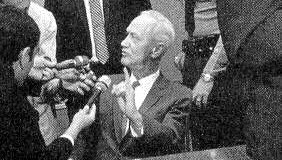
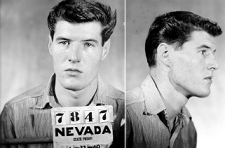
William Dale Archerd
Serial killer Richard Kuklinski
Serial killer · USA · 1949
Richard “Iceman” Kuklinski was sentenced to life in prison in 1988. He died in…
100 victims
Richard Kuklinski
Serial killer · USA · 1949
Richard “Iceman” Kuklinski was sentenced to life in prison in 1988. He died in…
100 victims
 Raymond Fernandez
Serial killer · USA · 1947
Raymond Martinez Fernandez was executed by electrocution at Sing Sing prison in…
17 victims
Raymond Fernandez
Serial killer · USA · 1947
Raymond Martinez Fernandez was executed by electrocution at Sing Sing prison in…
17 victims
 Carroll Edward Cole
Serial killer · USA · 1948
Carroll Edward Cole, also known as “Eddie,” was born in Sioux City, Iowa on May…
15 victims
Carroll Edward Cole
Serial killer · USA · 1948
Carroll Edward Cole, also known as “Eddie,” was born in Sioux City, Iowa on May…
15 victims
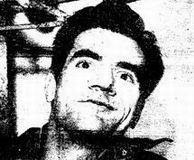 Stephen Nash
Serial killer · USA · 1955
Stephen Nash Stephen Nash was executed by asphyxiation-gas in California on Aug…
11 victims
Stephen Nash
Serial killer · USA · 1955
Stephen Nash Stephen Nash was executed by asphyxiation-gas in California on Aug…
11 victims
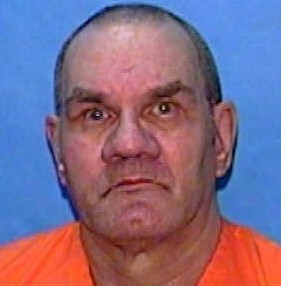 Paul Alfred Brown
Murderer · 1986
Paul Alfred Brown was convicted and sentenced to death for the murder of Paulin…
1 victim
Paul Alfred Brown
Murderer · 1986
Paul Alfred Brown was convicted and sentenced to death for the murder of Paulin…
1 victim
 Aubrey Dennis Adams
Murderer · USA · 1978
Aubrey Dennis Adams, Jr. was tried in a Florida court and was convicted of firs…
1 victim
Aubrey Dennis Adams
Murderer · USA · 1978
Aubrey Dennis Adams, Jr. was tried in a Florida court and was convicted of firs…
1 victim
 Terry Lee Hankins
Murderer · USA · 2000
Terry Lee Hankins was convicted by a jury of capital murder and was sentenced t…
5 victims
Terry Lee Hankins
Murderer · USA · 2000
Terry Lee Hankins was convicted by a jury of capital murder and was sentenced t…
5 victims
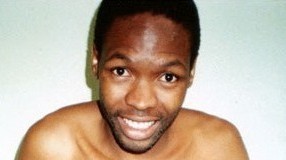 Moses Sithole
Serial killer · South Africa · 1994
Moses Sithole (November 17, 1964) was a serial rapist and serial killer in Sout…
38 victims
Moses Sithole
Serial killer · South Africa · 1994
Moses Sithole (November 17, 1964) was a serial rapist and serial killer in Sout…
38 victims
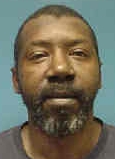 Jay Scott
Murderer · USA · 1983
Jay D. Scott (August 21, 1952 - June 14, 2001) was executed by the state of Ohi…
2 victims
Jay Scott
Murderer · USA · 1983
Jay D. Scott (August 21, 1952 - June 14, 2001) was executed by the state of Ohi…
2 victims
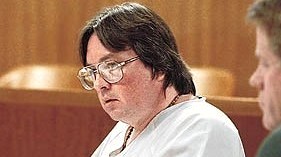 Floyd Tapson
Murderer? · USA · 1987
Floyd Tapson was convicted by a jury in the Thirteenth Judicial District Court,…
3 victims
Floyd Tapson
Murderer? · USA · 1987
Floyd Tapson was convicted by a jury in the Thirteenth Judicial District Court,…
3 victims
- Gender
- male
- Country
- USA
- Location
- California/Nevada, USA
- Date of birth
- 1912
- Age at first offence
- 35
- Characteristics
- poisoner, bluebeard
- Victim profile
- Women (three wives)
- Method of murder
- Poisoning (insulin)
- Date(s) of murder
- 1947 - 1966
- Years active
- 1947–1966
- Date of arrest
- July 27, 1967
- Status
-
Died in custody
Sentenced to death in 1968; commuted to life in 1972; died in prison in 1977
Case record: William Dale Archerd
Background
William Dale Archerd was born in 1912. He had a lifelong fascination with medicine. He lacked the cash and self-discipline required for medical school, so he sought work as a hospital attendant, learning what he could of drugs and their effects through practical experience.
During 1940 and 1941, Archerd worked at Camarillo State Hospital in California. He served in departments where insulin shock therapy was used to treat mental illness.
In 1950, Archerd pled guilty to illegal possession of morphine in San Francisco and received five years probation. A second offense revoked his probation. He was confined to the minimum-security prison at Chino, then escaped in 1951, was swiftly recaptured, and was transferred to San Quentin.
By October 1953, Archerd was free on parole.
Archerd married seven times in fifteen years. He lost three wives to mysterious bouts of illness between 1956 and 1966. His friends and other relatives were also dying.
Archerd also used another name, calling himself James Lynn Arden.
The offence
On July 27, 1967, Archerd was arrested in Los Angeles and charged with three counts of first-degree murder.
The victims identified in the indictment were:
- Zella (his fourth wife), who collapsed two months after their marriage; she died July 25, 1956
- Burney Archerd (his teenage nephew), dead at Long Beach on September 2, 1961
- Mary Brinker Arden (his wife number seven, described as an authoress), who died on November 3, 1966
Archerd was suspected of injecting each victim with an overdose of insulin, thereby producing lethal attacks of hypoglycemia.
At least three other victims were suspected in the murder series.
Archerd’s first known victim, according to police, was William Jones, who died in Fontana, California on October 12, 1947.
Archerd’s fifth wife, Juanita, had displayed classic symptoms of hypoglycemia at her death in a Las Vegas hospital on March 13, 1958.
Another of Archerd’s friends, Frank Stewart, died in the same hospital two years later on March 17, 1960.
Investigation
The Los Angeles County district attorney’s office alleged that Archerd’s preference for murder matched his penchant for marriage.
Investigators later implicated Archerd in multiple deaths after following a suspected pattern that included deaths showing symptoms associated with insulin poisoning, and investigators cited his earlier conviction of peddling narcotics in the early 1950s.
More than 25 years earlier, it had turned out that Archerd had worked as an orderly in the insulin-shock ward of a state mental hospital.
Arrest
On July 27, 1967, William Archerd was arrested in Los Angeles.
Trial
On March 6, 1968, William Archerd was convicted on three counts of murder. He was described as the first American defendant convicted of using insulin as a murder weapon.
Sentencing
His death sentence was affirmed by California’s Supreme Court in December 1970.
Appeals
Outcome
Archerd was sentenced to death in 1968. His death sentence was commuted to life in 1972. He died in prison in 1977.
Aftermath / other details
The narrative described Archerd as a Bluebeard slayer of wives and others, via insulin injections.
The narrative compared him to English male nurse Kenneth Barlow, described as the first known insulin murderer, sentenced to life imprisonment in 1957 for the murder of his wife by insulin injection.
Insulin was described as a natural hormone that helps control the body’s use of sugar for energy. The narrative stated that injected insulin lowers an abnormally high blood-sugar level, and that too great a dosage can bring the sugar content down to a danger point, causing convulsions, coma, and death.
The narrative provided additional details about alleged suspected deaths:
- William Jones Jr. (described as 34) died in 1947.
- Zella (described as 48) died in 1956 after two months of their marriage, and the narrative included an allegation that Archerd told police that two burglars entered their house with guns and hypodermic needles, injected both himself and Zella with a drug, and then made off with $500 in cash.
- The narrative described Juanita Plum Archerd (described as wife number 5) as suffering from what was described as an overdose of barbiturates two days after the marriage in Las Vegas, and she died the next day of a condition looked like insulin poisoning.
- Frank Stewart (described as 54) was taken to a hospital after apparently faking a fall in an airport rest room to collect on insurance; he was visited by Archerd and died after convulsions that night; the narrative said Archerd was the recipient of the insurance and tried but failed to collect.
- The narrative stated that Archerd’s brother Everett died at his job and that Archerd and his mother were entrusted with $5,000 for Everett’s son, Burney, described as 15.
- In August 1961, Burney was taken to the hospital and reported that he had been hit by a car, though an investigation showed no such accident had taken place. Burney remained in the hospital and was visited by Archerd. He died soon thereafter, with symptoms described as those of insulin poisoning.
- The narrative stated that Archerd’s mother, co-trustee of the $5,000, died three weeks later of causes not disclosed by the investigation.
- In April 1965, Archerd, calling himself James Lynn Arden, took bride number 7. His new wife was Mary Brinker Post (described as 59), a widow with grown children, described as a successful author of short stories and novels for the women’s market and described as a public relations woman.
- The narrative stated Mary was admitted in a coma to Pomona Valley Community Hospital last November and died next day of hypoglycemia (shortage of blood sugar).
- The narrative said Mary’s death was “one coincidence too many,” and that the Los Angeles County sheriff’s department put eight detectives on the trail of Archerd.
Spotted an error, or have more information about this case?