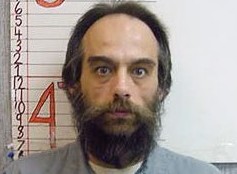
Charles Lee Mathenia
Murderer Brian Kevin Rosenfeld
Murderer · USA · 1985
Brian Kevin Rosenfeld Brian Kevin Rosenfeld was sentenced to three concurrent l…
23 victims
Brian Kevin Rosenfeld
Murderer · USA · 1985
Brian Kevin Rosenfeld Brian Kevin Rosenfeld was sentenced to three concurrent l…
23 victims
 Marvin Gray
Murderer · USA · 1975
Marvin Gray was convicted killer who claimed responsibility for 23 slayings and…
23 victims
Marvin Gray
Murderer · USA · 1975
Marvin Gray was convicted killer who claimed responsibility for 23 slayings and…
23 victims
 Yahweh ben Yahweh
Murderer · USA · 1980
Yahweh ben Yahweh was born and legally named Hulon Mitchell Jr. (October 27, 19…
23 victims
Yahweh ben Yahweh
Murderer · USA · 1980
Yahweh ben Yahweh was born and legally named Hulon Mitchell Jr. (October 27, 19…
23 victims
 Russell Ellwood
Murderer · USA · 1991
Russell Ellwood was a former taxi driver. Authorities suspected him of killing…
20 victims
Russell Ellwood
Murderer · USA · 1991
Russell Ellwood was a former taxi driver. Authorities suspected him of killing…
20 victims
 Patrick Mahon
Murderer · United Kingdom · 1924
Patrick Herbert Mahon (also known as Pat Waller), born in West Derby, Liverpool…
1 victim
Patrick Mahon
Murderer · United Kingdom · 1924
Patrick Herbert Mahon (also known as Pat Waller), born in West Derby, Liverpool…
1 victim
 Alexander Solonik
Murderer · Russia · 1990
In February 1997, Greek newspapers published articles that claimed a Russian mo…
10 victims
Alexander Solonik
Murderer · Russia · 1990
In February 1997, Greek newspapers published articles that claimed a Russian mo…
10 victims
 Gerald Pizzuto
Murderer · USA · 1985
Gerald Pizzuto Jr. was sentenced to death in Idaho in May 1986. On February 22,…
4 victims
Gerald Pizzuto
Murderer · USA · 1985
Gerald Pizzuto Jr. was sentenced to death in Idaho in May 1986. On February 22,…
4 victims
 Jeremy Sheets
Murderer? · USA · 1992
Jeremy Sheets was sentenced to death on September 26, 1997. His conviction was…
1 victim
Jeremy Sheets
Murderer? · USA · 1992
Jeremy Sheets was sentenced to death on September 26, 1997. His conviction was…
1 victim
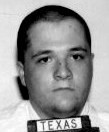 Justin Dickens
Homicide · USA · 1994
Justin Wiley Dickens (often referred to as “Chicken”) was convicted in the Marc…
1 victim
Justin Dickens
Homicide · USA · 1994
Justin Wiley Dickens (often referred to as “Chicken”) was convicted in the Marc…
1 victim
- Gender
- male
- Country
- USA
- Location
- Jefferson County, Missouri, USA
- Date of birth
- September 14, 1958
- Age at first offence
- 26
- Characteristics
- rape, revenge
- Victim profile
- Daisy Nash, 72, and her mentally impaired sister Louanna Bailey, 70
- Method of murder
- St abbing with a kitchen knife
- Date(s) of murder
- April 24, 1984
- Years active
- 1984
- Date of arrest
- Next day
- Status
-
Sentenced to death
Sentenced to death on January 9, 1985
Case information
Charles Lee Mathenia
Timeline
- September 1983 — Louanna Bailey reported that Mathenia allegedly twice raped her.
- December 1983 — Mathenia was charged in relation to the rape allegations upon Louanna Bailey’s complaint.
- February 1984 — Louanna Bailey dropped the charges and indicated she would refuse to testify against Mathenia.
- April 24, 1984 (after midnight) — Mathenia returned home after spending the day with his sister and brother-in-law; an argument began with Daisy Nash; he struck Daisy Nash, retrieved a butcher knife, kicked and beat her, and stabbed her several times; Mathenia rode his bicycle two blocks to Louanna Bailey’s home, told her he had killed Daisy Nash, procured a butcher knife, and stabbed Louanna Bailey fatally in the back while she attempted to flee.
- April 25, 1984 — Mathenia was arrested the following day.
- May 5, 1984 — On Saturday, May 5, 1984, Mathenia advised a deputy sheriff he wished to talk.
- May 7, 1984 — On Monday, May 7, 1984, Mathenia spoke with his attorney by telephone, told the sheriff his lawyer had advised him not to make a statement but he wanted to do so anyway, and the sheriff took a video-taped confession; during the forty minute video-taped confession, Mathenia confessed to the murders of Nash and Bailey.
- June 7, 1984 — A pre-trial conference occurred; Mathenia’s counsel indicated he planned to file a motion to suppress the videotaped confession.
- July 19, 1984 — During a preliminary hearing in Madison County Circuit Court, Mathenia’s counsel stated he had not filed a motion to suppress the defendant’s statement at the circuit court level because he believed it would have no chance of success.
- January 8, 1992 — The Eighth Circuit case was submitted.
- September 11, 1992 — The Eighth Circuit decided the case.
- November 3, 1992 — Rehearing and rehearing en banc were denied.
- November 1, 1986 — (In the legal citations, State of Missouri v. Charles Mathenia is given as 702 S.W.2d 840 (Mo.banc 1986).)
- April 22, 1991 — The United States District Court for the Eastern District of Missouri denied the petition for writ of habeas corpus (Mathenia v. Delo, No. 89-88C(1) (E.D.Mo. April 22, 1991)).
- 1988 — The Missouri Court of Appeals affirmed the denial of state post-conviction relief (Mathenia v. State, 752 S.W.2d 873 (Mo.App.1988)).
- 1989 — Certiorari was denied in the post-conviction phase (cert. denied, 488 U.S. 1019 (1989)).
- 1986 — Certiorari was denied following direct appeal (cert. denied, 477 U.S. 909 (1986)).
Background
Daisy Nash was 72 years old and was killed. Louanna Bailey was 70 years old and was killed. Louanna Bailey was described as mentally impaired.
Mathenia had lived with Daisy Nash for some seven years prior to her death. At the time of the killings, Mathenia was 25 years old and was still living with Nash.
In September of 1983, Mathenia allegedly twice raped Louanna Bailey. In December of 1983, Mathenia was charged for those offenses upon her complaint. In February of the following year, Bailey dropped the charges, indicating she would refuse to testify against Mathenia.
The evidence indicated that the murders were motivated by Mathenia’s resentment at having been arrested and confined in connection with these charges. Mathenia vowed to take revenge on the two sisters.
The offence
Sometime after midnight on April 24, 1984, Mathenia returned home after spending the day with his sister and brother-in-law. An argument began with Daisy Nash as soon as he entered the house. During the course of the argument, Mathenia hit the 72-year-old woman in the face, knocking her to the floor.
Mathenia retrieved a butcher knife from the kitchen. He then kicked and beat Daisy Nash savagely and stabbed her several times.
Shortly thereafter, Mathenia rode his bicycle the two blocks to Bailey’s home and told her he had killed Nash. While Bailey tried to call Nash, Mathenia got a butcher knife.
When he returned, Bailey attempted to flee but Mathenia stabbed her fatally in the back.
Investigation
Mathenia was arrested the following day.
Mathenia was given Miranda warnings on arrest. He made no statement at that time. On Saturday, May 5, 1984, Mathenia advised a deputy sheriff he wished to talk. Because a lawyer had been appointed to represent him, the sheriff refused to permit him to make a statement at that time.
On Monday, May 7, defendant spoke with his attorney by telephone, then told the sheriff his lawyer had advised him not to make a statement but he wanted to do so anyway. Only then did the sheriff take the video-taped confession.
Arrest
Mathenia was arrested the following day after the killings.
Trial
Mathenia was convicted by a jury of two counts of capital murder and sentenced to death in the Circuit Court of Jefferson County.
Following a change of venue, Mathenia was convicted in Jefferson County Circuit Court of two counts of capital murder and sentenced to death by lethal gas.
Mathenia was represented at trial by public defender Donald Hager.
Evidence admitted at trial
A forty minute video-taped confession was admitted at trial and was shown to the jury.
During the forty minute video-taped confession, Mathenia described in detail the events of April 24 and April 25, 1984.
Joyce St. Clair, Mathenia’s step-sister, testified at trial that Mathenia told her he had committed the murders.
Robert Massey and Ronald Reed, inmates at the Jefferson County jail, each testified that Mathenia told them that he had killed two people.
Penalty phase and aggravating circumstances
At the penalty phase, the trial court instructed the jury on statutory aggravating circumstances and required unanimous findings beyond a reasonable doubt at least one of the following:
- that “the murder of [Nash and Bailey] was outrageously or wantonly vile, horrible or inhuman in that it involved torture or depravity of mind”; and
- that “the murder of [Nash and Bailey] was committed by the defendant for the purpose of preventing [Nash and Bailey] from testifying in a judicial proceeding.”
The jury found only the first statutory aggravating circumstance as to Nash’s murder and found both statutory aggravating circumstances as to Bailey’s murder.
At the penalty phase, the jury was instructed on a second statutory aggravating circumstance that “the murder of Louanna Bailey was committed by the defendant for the purpose of preventing Louanna Bailey from testifying in a judicial proceeding.” The jury found this aggravating circumstance only with respect to Bailey’s murder.
Non-statutory aggravating circumstances
The jury was instructed on non-statutory aggravating circumstances as follows (as provided in the record):
You may also consider any of the following circumstances if you find from the evidence beyond a reasonable doubt that it exists and that it is an aggravating circumstance: That within approximately six hours [after, prior] the murder of [Nash, Bailey] defendant committed a second murder, the victim being [Bailey, Nash]. The murders were committed at different locations; That [Nash, Bailey] was a potential witness in a past felony criminal proceeding against the defendant on charges in Madison County Circuit Court, case number CR283-343FX, and [Nash, Bailey] was killed as a result of her involvement as a material witness against the defendant; That defendant on April 24, 1984, was a 25 year old male and [Nash, Bailey] was a [72, 70] year old female. After the murders of Daisy Nash and Louanna Bailey, the defendant committed additional felonies involving the use or threat of violence to other persons while being held in the custody of the Jefferson County Jail.
The jury found all four non-statutory aggravating circumstances as to both murders.
Mitigating circumstances instructions
At the penalty phase, the jury was instructed as follows:
If you decide that a sufficient aggravating circumstance or circumstances exist to warrant the imposition of death, [ ] it will then become your duty to determine whether a sufficient mitigating circumstance or circumstances exist which outweigh such aggravating circumstance or circumstances so found to exist. In deciding that question you consider all of the evidence relating to the murder of [Nash, Bailey]. You may consider: 1. Whether the defendant has no significant history of prior criminal activity. 2. Whether the murder of [Nash, Bailey] was committed while the defendant was under the influence of extreme mental or emotional disturbance. 3. Whether the capacity of the defendant to appreciate the criminality of his conduct or to conform his conduct to the requirements of the law was substantially impaired. You may also consider that the defendant had a mental disease or defect at the time of the murder of [Nash, Bailey]. The phrase “mental disease or defect,” as used in these instructions, means any mental abnormality, regardless of its medical label, origin or source. You may also consider any circumstance which you find from the evidence in extenuation or mitigation of punishment.
Sentencing
Mathenia was sentenced to death by lethal gas by the Circuit Court of Jefferson County.
Appeals
Direct appeal and certiorari
Mathenia’s convictions and sentences of death were affirmed on direct appeal. The case was cited as State v. Mathenia, 702 S.W.2d 840 (Mo. banc 1986). Certiorari was denied (477 U.S. 909).
State post-conviction proceedings
Mathenia then sought state post-conviction relief pursuant to Missouri Supreme Court Rule 27.26 (repealed 1988). The circuit court denied relief and the Missouri Court of Appeals affirmed (Mathenia v. State, 752 S.W.2d 873 (Mo.App.1988)). Certiorari was denied (488 U.S. 1019).
Federal habeas corpus and Eighth Circuit decision
Mathenia then filed a petition for writ of habeas corpus in the United States District Court for the Eastern District of Missouri pursuant to 28 U.S.C. § 2254. Following a limited evidentiary hearing, the district court denied the petition (Mathenia v. Delo, No. 89-88C(1) (E.D.Mo. April 22, 1991)).
Mathenia appealed to the United States Court of Appeals, Eighth Circuit, and the appellate court affirmed. The appeal was captioned:
- “Chuck Lee MATHENIA, Appellant, v. Paul DELO, Appellee.”
- Case No. 91-2042.
- Submitted Jan. 8, 1992; Decided Sept. 11, 1992.
- Rehearing and Rehearing En Banc Denied Nov. 3, 1992.
Ineffective assistance of counsel claims
Mathenia claimed the district court erred in denying his claims of ineffective assistance of counsel and claims of violations of his Fifth, Sixth, Eighth, and Fourteenth Amendment rights. The Eighth Circuit affirmed.
One ineffective assistance claim concerned counsel’s failure to investigate and file a motion to suppress a confession. The Missouri Court of Appeals described the confession circumstances as:
Defendant was arrested on April 25, 1984, and given Miranda warnings. He made no statement at that time. On Saturday, May 5, 1984, he advised a deputy sheriff he wished to talk to him. Because a lawyer had been appointed to represent defendant, the sheriff refused to permit him to make a statement at that time. On Monday, May 7, defendant spoke with his attorney by telephone, then told the sheriff his lawyer had advised him not to make a statement but he wanted to do so anyway. Only then did the sheriff take the video-taped confession. Mathenia v. State, 752 S.W.2d at 875.
On May 7, 1984, Mathenia confessed to the murders of Nash and Bailey during a forty minute video-taped confession that was admitted at trial and shown to the jury.
At the evidentiary hearing before the district court, Donald Hager testified:
Q. Why did you not pursue or file such motion?
A. I felt that it had no chance of success, based on my assessment of this case, the facts of this case, and several years of experience in prosecuting and defending. And experience with state trial judges. Hearing Tr. 171.
The appellate discussion stated that Mathenia was mildly mentally retarded with an intelligence quotient of approximately 70, and he asserted that because of his mental retardation he could not have knowingly and intelligently waived his Miranda rights. The appellate court concluded that the circumstances established that Mathenia possessed “the requisite level of comprehension” to waive his Miranda rights, citing Moran v. Burbine, and it held that counsel’s failure to file a motion to suppress was not deficient performance.
Mathenia also contended counsel was ineffective for failing to present a diminished capacity defense. The discussion stated that mental examinations performed by Dr. Basset and Dr. Vicioso did not reveal a mental disease or defect, and that mental retardation in itself was insufficient to support a diminished capacity defense. The discussion also stated that voluntary intoxication did not negate purpose or knowledge on the record.
Mathenia also contended counsel was ineffective for failing to present additional mitigating witnesses. The record described that Mathenia presented three witnesses at the penalty phase:
- Thomas Davis (Mathenia’s brother) testified as to Mathenia’s childhood,
- Dr. Gary Bassett testified that Mathenia was mildly mentally retarded, and
- Nina Hamilton testified as to her observations of Mathenia when he was in grade school. The appellate court agreed with the district court that additional mitigation witnesses would have been cumulative.
Statutory aggravating circumstances and Eighth Amendment arguments
The penalty phase instructions included the two statutory aggravating circumstances quoted above, and the jury findings were described as:
- only the first aggravating circumstance for Nash’s murder,
- both aggravating circumstances for Bailey’s murder.
Mathenia relied on Maynard v. Cartwright and Godfrey v. Georgia in contending the first statutory aggravating circumstance was vague. The discussion included the Missouri Supreme Court’s discussion of factors for “depravity of mind,” including:
mental state of defendant, infliction of physical or psychological torture upon the victim as when victim has a substantial period of time before death to anticipate and reflect upon it; brutality of defendant’s conduct; mutilation of the body after death; absence of any substantive motive; absence of defendant’s remorse and the nature of the crime. State v. Preston, 673 S.W.2d 1, 11 (Mo. banc). cert. denied, 469 U.S. 893, 105 S.Ct. 269, 83 L.Ed.2d 205 (1984).
The appellate decision addressed the application on this case and described that the Missouri Supreme Court found the savage beating of Daisy Nash supported the first circumstance and that psychological torture was supported as to Louanna Bailey, including that after killing Nash, Mathenia told Bailey he had just killed Nash and then procured a knife and stabbed Bailey in the back as she attempted to flee.
The discussion also addressed the second statutory aggravating circumstance and Mathenia’s arguments about vagueness, sufficiency of evidence, and ex post facto application. It described the Missouri Supreme Court’s reasoning, including that Daisy Nash and Louanna Bailey were potential witnesses against Mathenia for the alleged rapes and that Bailey was a potential witness against him in the murder of Daisy Nash.
Non-statutory aggravating circumstances authorized by law
Mathenia claimed the non-statutory aggravating circumstances presented to the jury had not been authorized by law. The district court had noted that Zant v. Stephens permitted the jury to consider non-statutory aggravating circumstances. The jury was instructed to consider non-statutory aggravating circumstances only after finding at least one statutory aggravating circumstance. The appellate court stated the district court correctly denied relief.
Mitigating instruction complaint
Mathenia objected to the lack of instruction concerning non-statutory mitigating circumstances. The appellate discussion stated the jury was instructed to consider any circumstance which it found in extenuation or mitigation of punishment and that the Missouri Supreme Court had held that a defendant was not entitled to an instruction on particular circumstances. It further stated that Mathenia did not request an instruction on a non-statutory mitigating circumstance and could not complain about a hypothetical instruction.
Post-arrest silence
Mathenia contended the trial court erred in overruling objections to the sheriff’s statement about post-arrest silence after receiving Miranda warnings. The appellate discussion described the trial colloquy between Madison County Sheriff Gary Asher and the prosecutor:
Q. Sheriff, you made the arrest of the defendant on April 25th, '84, out at his sister's house in Madison County, Missouri?
A. Yes, sir.
Q. And after you arrested him did you advise him of his rights?
Q. And did he make a statement to you at the time of the arrest?
A. No, sir.
Trial Tr. 270.
The Missouri Supreme Court determined the reference to post-arrest silence was not used to impeach Mathenia or as affirmative proof, and instead found the colloquy “merely preliminary to the admission into evidence of [Mathenia's] video-taped statement.” The district court agreed.
The appellate discussion further stated that the prosecutor’s reference to the testimony in closing remarks was not a basis for relief.
Jury selection
Mathenia made two claims concerning voir dire. First, a venireman stated they would automatically vote for the death penalty following a capital murder conviction; Mathenia’s challenge for cause was denied. Second, a venireman indicated they could not follow the trial court’s instructions on aggravating and mitigating circumstances; Mathenia removed the venireman with a peremptory strike. The district court found fair support in the record for the trial court’s conclusion that the venireman would follow the court’s instructions, and the appellate court agreed.
Mathenia also challenged the sustaining of the state’s challenges for cause to two veniremen who indicated they could not impose the death penalty; the district court denied relief citing Lockhart v. McCree, and the appellate court agreed.
Mental culpability
Mathenia asserted mental retardation prevented him from having the degree of culpability necessary to justify capital punishment. The district court found the claim procedurally defaulted. It also found he showed neither cause for nor prejudice from the default and that the record provided no grounds for relief on the merits. The appellate court agreed, citing Penry v. Lynaugh.
The appellate discussion also stated the evidence demonstrated premeditation, including testimony from Joyce St. Clair that Mathenia said he “ought to kill Louanna” for having been locked up on the rape charges. It also stated she testified that shortly before the murders, Mathenia asked her how much time his father had received for a murder and that she told him his father had received thirty-five years. The appellate discussion also stated that in Mathenia’s confession, he said:
“I'd just like to see if I can get put somewhere for about ten or twenty years ...”
Finally, it stated the district court did not err in limiting the scope of the evidentiary hearing, and therefore denied the petition for writ of habeas corpus.
Other details (judicial opinions in the appeal)
Special concurrence by BEAM
BEAM concurred in the opinion prepared by Judge Van Sickle and wrote separately in response to Judge Bright’s dissent. BEAM objected to the description of the videotaped confession and included discussion of Mathenia’s demeanor and the Miranda process during the filming. BEAM described that the sheriff went over Miranda warnings in detail and discussed that Mathenia’s lawyer had just advised him against “giving the tape.” BEAM stated Mathenia replied:
“That is right.”
BEAM also wrote about a response to being asked:
“you siad you would rather go ahead?” and stated Mathenia answered: “[y]es.”
BEAM also wrote about counsel advising Mathenia that he could “get the death penalty” if he gave the taped confession.
Dissent by BRIGHT
BRIGHT dissented and stated he would require the State of Missouri to grant Chuck Lee Mathenia a new hearing on the penalty phase of his capital murder conviction or reduce the death sentence to life imprisonment without parole, citing Mo.Rev.Stat. § 565.020.
BRIGHT asserted that appointed public defender Donald W. Hager was incompetent and that Hager permitted the jury to view Mathenia’s color videotaped confession without objection. BRIGHT described the videotaped statement as showing Mathenia in “dirty prison garb,” unkempt and unshaven, with long scraggly hair, and stated that Mathenia had a vacant disconnected stare and demeanor.
BRIGHT wrote that he did not quarrel with the conviction for capital murders and focused on the penalty. He stated that Hager failed to seek to suppress the confession or prevent the jury from seeing the videotaped footage.
BRIGHT included questions and answers from the federal district court habeas corpus hearing and reproduced the colloquy:
Q. Knowing that Chuck had confessed to a rape that he did not commit, and knowing that he was at least borderline mentally retarded, and knowing that the doctor in his certification, I have trouble--Dr. Vicioso--in his certification, had found him to be at least borderline mentally retarded; knowing all of that, you did not make any attempt to talk to the sheriff when you received that phone call and say, "I don't want Chuck doing anything until I get there"?
A. That's right.
Id. at 130.
Yet, Hager knew that the events transpiring at the jail could compromise his client's rights.
Q. Do you recall someone telling you that there was a proposal that Chuck make a statement?
A. Probably so but I don't have any good memory on that. I know that I understood that something must be going on at the jail that they considered to be very important; possibly they were about to get a confession. I was aware of the importance of what was happening and the nature of what it was.
Id. at 125.
BRIGHT stated that Hager’s excuse that a suppression motion would do no good was inadequate and discussed videotaped confession law, including discussion of Hendricks v. Swenson and the lack of precedent addressing whether the video portion should be redacted.
BRIGHT also described medical and waiver issues and said that Sheriff Asher read Mathenia the standard seven line statement of Miranda warnings “without checking to determine whether Mathenia actually understood each component of the warning,” and that Mathenia appeared “completely oblivious to what they [we]re doing,” citing Dr. Daniel J. Cuneo’s observations.
BRIGHT also discussed Hager’s conduct at the guilt phase, including that Hager called no witnesses and rested without presenting a defense, and stated that Hager failed to object when Sheriff Asher testified that Mathenia said his attorney told him “he'd get the electric chair” if he made a statement.
BRIGHT described his conclusion under Strickland and argued that prejudice required relief on the penalty phase.
BRIGHT concluded by stating that Hager had provided ineffective assistance in another Missouri death penalty case, referencing Chambers v. Armontrout and State v. Jones, and stated that in Mathenia’s case, in his view, Hager’s performance prejudiced the client.
Outcome
The United States Court of Appeals, Eighth Circuit affirmed the district court’s denial of Mathenia’s petition for writ of habeas corpus.
Spotted an error, or have more information about this case?