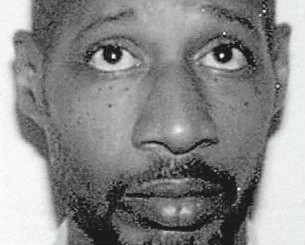
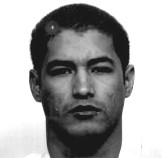
Dawud Mu'Min
Murderer Ervil LeBaron
Murderer · USA · 1972
Ervil Morrell LeBaron (1925 to August 16, 1981) was the leader of a polygamous…
35 victims
Ervil LeBaron
Murderer · USA · 1972
Ervil Morrell LeBaron (1925 to August 16, 1981) was the leader of a polygamous…
35 victims
 Marvin Gray
Murderer · USA · 1975
Marvin Gray was convicted killer who claimed responsibility for 23 slayings and…
23 victims
Marvin Gray
Murderer · USA · 1975
Marvin Gray was convicted killer who claimed responsibility for 23 slayings and…
23 victims
 Yahweh ben Yahweh
Murderer · USA · 1980
Yahweh ben Yahweh was born and legally named Hulon Mitchell Jr. (October 27, 19…
23 victims
Yahweh ben Yahweh
Murderer · USA · 1980
Yahweh ben Yahweh was born and legally named Hulon Mitchell Jr. (October 27, 19…
23 victims
 Charles Manson
Murderer · USA · 1969
Charles Milles Manson (born November 12, 1934) was an American criminal and mus…
9 victims
Charles Manson
Murderer · USA · 1969
Charles Milles Manson (born November 12, 1934) was an American criminal and mus…
9 victims
 Jose Noey Martinez
Murderer · USA · 1995
José Noey Martinez was an applicant in an application for writ of habeas corpus…
2 victims
Jose Noey Martinez
Murderer · USA · 1995
José Noey Martinez was an applicant in an application for writ of habeas corpus…
2 victims
 John Elliott
Murderer · USA · 1986
John Elliott was convicted of murder committed in the course of kidnapping and…
1 victim
John Elliott
Murderer · USA · 1986
John Elliott was convicted of murder committed in the course of kidnapping and…
1 victim
 Billy Ray Waldon
Murderer · USA · 1985
Billy Ray Waldon (born 1952), also known as Billy Joe Waldon and Nvwtohiyada Id…
3 victims
Billy Ray Waldon
Murderer · USA · 1985
Billy Ray Waldon (born 1952), also known as Billy Joe Waldon and Nvwtohiyada Id…
3 victims
 Christopher Vaughn
Mass murderer · USA · 2007
Christopher Vaughn was sentenced to four consecutive life terms on November 26,…
4 victims
Christopher Vaughn
Mass murderer · USA · 2007
Christopher Vaughn was sentenced to four consecutive life terms on November 26,…
4 victims
 John Spenkelink
Murderer · USA · 1973
John Spenkelink was executed by electrocution in Florida on May 25, 1979. · Feb…
1 victim
John Spenkelink
Murderer · USA · 1973
John Spenkelink was executed by electrocution in Florida on May 25, 1979. · Feb…
1 victim
 Romulus Veres
Serial killer · Romania · 1972
Romulus Vereş was a serial killer known as “the man with the hammer”. He was bo…
5 victims
Romulus Veres
Serial killer · Romania · 1972
Romulus Vereş was a serial killer known as “the man with the hammer”. He was bo…
5 victims
- Gender
- male
- Country
- USA
- Location
- Grayson/Prince William Counties, Virginia, USA
- Date of birth
- May 19, 1953
- Age at first offence
- 20
- Characteristics
- —
- Victim profile
- Man (taxi driver) / Gladys Nopwasky (store owner)
- Method of murder
- ??? - St abbing with a screwdriver
- Date(s) of murder
- 1973 / 1988
- Years active
- 1973–1988
- Date of arrest
- —
- Status
-
Executed
Executed by lethal injection in Virginia on November 17, 1997
Case record: Dawud Mu'Min
Background
Dawud Majid Mu'Min (born as David Michael Allen) was a convicted murderer executed by the State of Virginia. He was executed by lethal injection in Virginia on November 17, 1997.
While in prison, he converted to Islam and changed his name from David Michael Allen to Dawud M. Mu'Min.
Mu'Min was serving a 48 year prison sentence for a 1973 murder conviction of a taxi driver in Grayson County, Virginia.
Mu'Min was an inmate of Haymarket Correctional Unit 26 in Prince William County, Virginia, having been convicted of first-degree murder in 1973 and sentenced to 48 years imprisonment.
The offence
On September 22, 1988, Mu'Min was assigned to a daily work crew detail with the Virginia Department of Transportation (VDOT) in Dale City.
During his lunch break that day, Mu'Min left his group, which was supervised only by an unarmed transportation crew worker. Mu'Min made his way to Dale City Floors in the Ashdale Shopping Center.
At Dale City Floors, Mu'Min stabbed Gladys Nopwasky, the proprietor, 16 times in the neck and chest with a screwdriver.
During the course of the incident, Mu'Min argued with the proprietor, Gladys Nopwasky, and a struggle ensued during which Nopwasky was partially disrobed. Mu'Min beat Nopwasky severely and stabbed her multiple times with a weapon he had fashioned earlier. The weapon had been made by sharpening a short piece of metal on a bench grinder and attaching a wooden handle to it. The stabbing severed Nopwasky’s jugular vein and pulmonary artery.
Mu'Min removed some coins from Nopwasky’s desk and returned to VDOT headquarters, discarding his weapon and bloody shirt along the way. He took $4.00 and returned to the road detail, leaving Nopwasky’s half-naked body lying in a pool of her blood.
Although a customer discovered Nopwasky and summoned paramedics to the scene, efforts to revive her failed.
Mu'Min was charged with and convicted of one count of capital murder.
Investigation
During September 1988, Mu'Min fashioned a weapon by sharpening a short piece of metal on a bench grinder and attaching a wooden handle to it. He then walked away from VDOT headquarters and proceeded to a carpet store approximately one mile away, where the confrontation occurred.
Arrest
Mu'Min was arrested for the crime.
Trial
Prior to the guilt phase of his trial, Mu'Min moved for a change of venue on the basis that pretrial publicity had rendered it impossible for him to receive a fair trial in Prince William County. The trial judge deferred action on the motion, with the agreement of defense counsel, pending an attempt to impanel an impartial jury. After succeeding in doing so, the trial court denied the motion.
The court also denied Mu'Min’s motion in limine to exclude or redact an order memorializing Mu'Min’s 1973 conviction for first-degree murder, which the Commonwealth proposed to introduce to establish that Mu'Min had been incarcerated when he murdered Nopwasky.
During its sentencing-phase deliberations, the jury sent a note to the trial court asking: “[W]hat exactly is life imprisonment?” J.A. 634. The court responded: “I am sorry; I cannot answer that question. Neither should you be concerned about it.” J.A. 635. Despite an invitation by the court for comments, Mu'Min’s counsel did not object.
The jury then imposed a sentence of death. The jury found that Mu'Min posed “a continuing serious threat to society” and that the murder of Nopwasky “was outrageously or wantonly vile, horrible, or inhuman.” Va.Code Ann. § 19.2-264.2 (Michie 1995).
Mu'Min raised numerous arguments on direct appeal, including challenges to the admission of the 1973 order of conviction on the basis that the prejudicial impact of this evidence outweighed its probative value and challenges to various aspects of the procedure employed in impaneling the jury.
Mu'Min did not appeal the denial of his motion for a change of venue, the admission of the 1973 order of conviction on constitutional grounds, or the manner in which the trial court responded to the question by the jury regarding the meaning of “life imprisonment.”
Sentencing
The jury imposed a sentence of death after sentencing-phase deliberations.
Appeals
Supreme Court of Virginia and United States Supreme Court
The Supreme Court of Virginia upheld Mu'Min's conviction and sentence.
The United States Supreme Court granted certiorari to consider whether the trial court had erred in refusing to allow Mu'Min to question potential jurors regarding the content of pretrial publicity to which they had been exposed and concluded that it had not. The case is listed as Mu'min v. Virginia, 500 U.S. 415 (1991).
Mu'Min v. Virginia (90-5193), 500 U.S. 415 (1991) is indicated with concurrence by O'Connor and dissent by Marshall and Kennedy.
After direct appeal, Mu'Min sought postconviction relief in state court. A state habeas court conducted a hearing and denied relief. The state habeas court ruled that Mu'Min’s claims—with the exception of his claims of ineffective assistance of counsel—either had been presented on direct appeal (and thus were not cognizable in a state habeas proceeding) or were procedurally defaulted due to his failure to raise them on direct appeal.
The state habeas court further found that Mu'Min’s claims of ineffective assistance of counsel were without merit.
The Supreme Court of Virginia denied review.
The United States Supreme Court denied Mu'Min’s petition for a writ of certiorari. See Mu'Min v. Murray, 511 U.S. 1026, 114 S.Ct. 1416, 128 L.Ed.2d 87 (1994).
Federal habeas corpus proceedings (4th Cir.)
125 F.3d 192: Dawud Majid Mu'Min, Petitioner-Appellant, v. Samuel v. Pruett, Warden, Mecklenburg Correctional Center, Respondent-Appellee.
The panel consisted of Chief Judge Wilkinson and Circuit Judges Wilkins and Motz.
The appeals court affirmed by published opinion.
Mu'Min appealed an order of the district court dismissing his petition for a writ of habeas corpus that challenged his Virginia conviction for capital murder and resulting death sentence. The appeals court concluded that the district court correctly held that the refusal of the Supreme Court of Virginia to consider the merits of the three issues Mu'Min sought to present constituted an adequate and independent state-law basis for their denial. As a result, federal habeas review of these issues was unavailable unless cause and prejudice or a miscarriage of justice was demonstrated.
The appeals court determined that Mu'Min had failed to make the showing necessary to excuse his default for claims that:
- the state trial court erred in denying his motion for a change of venue; and
- the state trial court erred in admitting into evidence an order memorializing Mu'Min’s 1973 conviction for first degree murder.
The appeals court also held that, regardless of whether Mu'Min could establish an excuse for the default of the claim that his constitutional rights were violated when the trial court refused to provide the jury with information regarding Mu'Min's parole eligibility, Mu'Min was not entitled to the relief sought. The appeals court accordingly affirmed the district court’s dismissal.
Outcome
Mu'Min’s conviction and death sentence were upheld on appeal.
The United States Court of Appeals for the Fourth Circuit affirmed the dismissal of the federal habeas corpus petition. The panel concluded that all of Mu'Min’s claims were procedurally defaulted under Virginia law, and it determined that Mu'Min failed to show cause and prejudice or a miscarriage of justice to excuse his default.
The appeals court held that Mu'Min was not entitled to the benefit of a rule declaring that due process requires that a jury be informed of a capital defendant's parole prospects if it requests such information.
AFFIRMED.
Mu'Min was put to death by lethal injection at Greensville Correctional Center. He was put to death by lethal injection on November 13, 1997 at Greensville Correctional Center.
Aftermath
The Corrections Department responded to public outcry over the killing by revamping its 80-year-old practice of using inmate labor outside the prison fences. Virginia then allowed only inmates convicted of nonviolent crimes and considered to be low security risks to take part in work details, which were supervised by armed department guards.
Spotted an error, or have more information about this case?