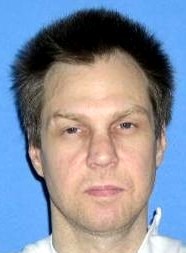
Andrew Lavern Smith
Murderer Brian Kevin Rosenfeld
Murderer · USA · 1985
Brian Kevin Rosenfeld Brian Kevin Rosenfeld was sentenced to three concurrent l…
23 victims
Brian Kevin Rosenfeld
Murderer · USA · 1985
Brian Kevin Rosenfeld Brian Kevin Rosenfeld was sentenced to three concurrent l…
23 victims
 Marvin Gray
Murderer · USA · 1975
Marvin Gray was convicted killer who claimed responsibility for 23 slayings and…
23 victims
Marvin Gray
Murderer · USA · 1975
Marvin Gray was convicted killer who claimed responsibility for 23 slayings and…
23 victims
 Yahweh ben Yahweh
Murderer · USA · 1980
Yahweh ben Yahweh was born and legally named Hulon Mitchell Jr. (October 27, 19…
23 victims
Yahweh ben Yahweh
Murderer · USA · 1980
Yahweh ben Yahweh was born and legally named Hulon Mitchell Jr. (October 27, 19…
23 victims
 Russell Ellwood
Murderer · USA · 1991
Russell Ellwood was a former taxi driver. Authorities suspected him of killing…
20 victims
Russell Ellwood
Murderer · USA · 1991
Russell Ellwood was a former taxi driver. Authorities suspected him of killing…
20 victims
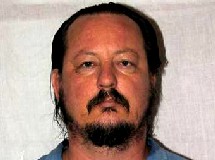 Troy Adam Ashmus
Murderer · USA · 1984
Troy Adam Ashmus was a 22-year-old carnival worker at the time of the crime. Ma…
1 victim
Troy Adam Ashmus
Murderer · USA · 1984
Troy Adam Ashmus was a 22-year-old carnival worker at the time of the crime. Ma…
1 victim
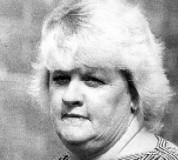 Valmae Beck
Murderer · Australia · 1987
Valmae Beck Valmae Beck was sentenced to life imprisonment with a non parole pe…
1 victim
Valmae Beck
Murderer · Australia · 1987
Valmae Beck Valmae Beck was sentenced to life imprisonment with a non parole pe…
1 victim
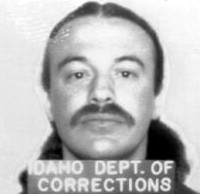 Gerald Pizzuto
Murderer · USA · 1985
Gerald Pizzuto Jr. was sentenced to death in Idaho in May 1986. On February 22,…
4 victims
Gerald Pizzuto
Murderer · USA · 1985
Gerald Pizzuto Jr. was sentenced to death in Idaho in May 1986. On February 22,…
4 victims
 Ineta Dzinguviene
Murderer · United Kingdom · 2009
Ineta Dzinguviene was convicted of murdering her newborn son, Paulius Dzingus,…
1 victim
Ineta Dzinguviene
Murderer · United Kingdom · 2009
Ineta Dzinguviene was convicted of murdering her newborn son, Paulius Dzingus,…
1 victim
 Esmie Tseng
Homicide · USA · 2005
Name: Esmie Tseng Age: 16 at the time of the incident Role: accused Esmie Tseng…
1 victim
Esmie Tseng
Homicide · USA · 2005
Name: Esmie Tseng Age: 16 at the time of the incident Role: accused Esmie Tseng…
1 victim
- Gender
- male
- Country
- USA
- Location
- Anderson County, South Carolina, USA
- Date of birth
- 1960
- Age at first offence
- 23
- Characteristics
- robbery, abduction, rape
- Victim profile
- Christy Johnson, 86, and his wife, Corrie Johnson , 82 (his cousins)
- Method of murder
- St abbing with knife
- Date(s) of murder
- May 28, 1983
- Years active
- 1983
- Date of arrest
- —
- Status
-
Executed
Executed by lethal injection in South Carolina on December 18, 1998
Case information
Andrew Lavern Smith was executed by lethal injection in South Carolina on December 18, 1998. He was 38 years old at the time of the killings.
Background
Smith grew up preaching sermons from the Bible only to become a convicted murderer. He was on death row in a state prison in Ridgeville. On death row, he was cited for five minor infractions, including fighting with another inmate in 1989 and swearing at guards in 1992. After undergoing a religious conversion, he drew greeting cards that he regularly sent to relatives and friends. Smith was transferred from death row to the Broad River prison, home of the state’s death chamber, about five hours before his execution.
The offence
On Saturday, May 28, 1983, Smith, armed with a pistol and a knife, went to the home of Christy and Corrie Johnson to see whether he could borrow their car. Christy Johnson, 86 years old, refused. Smith struck Mr. Johnson with such force that he fell to the floor. When Mrs. Johnson, 82 years old, came to her husband’s aid, Smith reached for his knife and stabbed her several times. Smith then stabbed Mr. Johnson as he got up from the floor to help his wife.
During the course of the attack, Mrs. Johnson was stabbed seventeen times on and about her face, back, chest, and hands. Mr. Johnson suffered twenty-seven stab wounds, including several defensive wounds, on and about his face, neck, chest, hands, wrists, and back. In addition to the stab wounds, both victims had “blunt force” injuries consistent with having been struck with a pistol.
Dr. Joel Sexton, the forensic pathologist who performed the Johnsons’ autopsies, testified that most of the Johnsons’ wounds and injuries were inflicted before death and during consciousness. After leaving his knife in Mrs. Johnson’s back, Smith took the keys to the Johnsons’ car and drove away from the scene.
The following day, the police found the Johnsons’ car stripped of its wheels, battery, spare tire, and various other parts. Christy Johnson’s wallet was taken along with the couple’s car.
Smith rented a house from Christy Johnson and his wife, Corrie Johnson, who were Smith’s cousins.
Investigation
Based upon several different tips, the police lawfully searched the residence of Smith’s mother. There, the police found the parts taken from the Johnsons’ car. Smith was arrested and charged with the two murders.
After waiving his Miranda rights, Smith confessed to brutally murdering the Johnsons. Smith identified the knife found in Mrs. Johnson’s back as the knife he used to stab the Johnsons. Smith also told the police that he hid the pistol he had used during the murders in the false ceiling at his place of employment.
Smith’s confession, as quoted, read:
Last Saturday I was drinking all day and walking. I needed a ride and I wanted to see if Christy Johnson would let me borrow his car, so I walked up to his house and he wouldn't let me use the car. We got to arguing. I got mad and I hit Christy Johnson. He fell to the floor and Corrie, his wife, came at me with something, I don't know what. I pushed her back. I reached for a knife and I stabbed her several times; then I stabbed Christy Johnson several times after he got up off the floor. I got the keys and went and got the car. (J.A. at 1073-74.)
Arrest
Smith was arrested and charged with the two murders after the police searched the residence of Smith’s mother and found the parts taken from the Johnsons’ car.
Trial
Competency to stand trial
Before the trial began, the trial court held a hearing to determine Smith’s competency to stand trial. Dr. John Dunlap, a psychiatrist at the South Carolina Department of Mental Health, testified that Smith was capable of assisting his counsel and competent to stand trial. Based upon the evidence introduced at that hearing, the trial court specifically found, beyond a reasonable doubt, that Smith was competent to stand trial.
Charges
Smith was indicted in October of 1983 on two counts of murder. At that time, the State notified Smith that it intended to seek the death penalty.
Insanity defence
Smith raised an insanity defense and presented the testimony of Dr. Helen Clark, a clinical psychologist. Dr. Clark testified that Smith suffered from schizophrenia and a dissociative disorder at the time of the murders and could not distinguish right from wrong. Smith elected not to take the stand in his own defense.
In reply, the State introduced testimony of Dr. Spurgeon Cole, also a clinical psychologist. Dr. Cole testified that Smith’s test results did not support Dr. Clark’s conclusion that Smith was legally insane at the time of the murders.
Dates of trial and verdict
Smith’s trial began on January 9, 1984. On January 14, 1984, the jury rejected Smith’s insanity defense and found him guilty on both counts of murder.
Sentencing
Following the jury’s recommendation in the original trial, the trial court sentenced Smith to death. On direct appeal, the South Carolina Supreme Court affirmed Smith’s convictions and death sentences.
After state post-conviction proceedings, Smith was resentenced pursuant to Skipper v. South Carolina. Neither party appealed the order for resentencing.
On October 26, 1987, Smith’s resentencing trial began. After four days of testimony, the jury recommended the imposition of the death sentence. Following the jury’s recommendation, the trial court once again sentenced Smith to death.
During resentencing, the trial court submitted several aggravating circumstances for the jury’s consideration. In addition to finding physical torture, the jury, in returning a recommendation of death, found that Smith committed the murders while in the commission of a felony—larceny with the use of a deadly weapon. The jury’s sentencing verdict was returned after two hours of deliberation. The jury sent a question to the judge concerning parole.
At Smith’s resentencing, the trial court instructed the jury that its sentencing recommendation, whether the death penalty or a life sentence, must be unanimous.
Appeals
Direct appeal and certiorari
See State v. Smith, 286 S.C. 406, 334 S.E.2d 277 (1985). The United States Supreme Court denied Smith’s petition for a writ of certiorari. See Smith v. South Carolina, 475 U.S. 1031, 106 S.Ct. 1239, 89 L.Ed.2d 347 (1986).
After resentencing, on direct appeal the South Carolina Supreme Court affirmed the death sentence. See State v. Smith, 298 S.C. 482, 381 S.E.2d 724 (1989). See Smith v. South Carolina, 494 U.S. 1060, 110 S.Ct. 1536, 108 L.Ed.2d 775 (1990).
Post-conviction relief and federal habeas corpus
Smith filed an application for post-conviction relief in state court on July 9, 1986. After an evidentiary hearing, the state PCR court denied Smith’s application as to the guilt phase of his trial but ordered that Smith be resentenced pursuant to Skipper v. South Carolina, 476 U.S. 1, 106 S.Ct. 1669, 90 L.Ed.2d 1 (1986).
Smith filed an application for PCR in state court on August 13, 1990. After an evidentiary hearing, the state PCR court denied Smith’s application.
The United States Supreme Court again denied Smith’s petition for a writ of certiorari. See Smith v. South Carolina, 515 U.S. 1126, 115 S.Ct. 2285, 132 L.Ed.2d 288 (1995).
On January 24, 1996, Smith filed a habeas petition pursuant to 28 U.S.C.A. § 2254 in the United States District Court for the District of South Carolina. On August 27, 1996, a hearing was held before a federal magistrate judge. In February of 1997, the magistrate judge issued a 151-page Report and Recommendation in which he recommended that the district court deny Smith’s request for an evidentiary hearing and federal habeas corpus relief. In June of 1997, the district court adopted the Report and Recommendation and denied Smith’s petition for federal habeas relief.
On appeal, Smith raised the following arguments:
- That South Carolina’s “physical torture” aggravating circumstance is unconstitutional.
- That his counsel were ineffective for failing to present evidence in mitigation of punishment at his resentencing trial.
- That he was incompetent to stand trial.
- That the State violated his Sixth Amendment right to counsel.
- That the grand jury and the petit jury were selected in violation of the Equal Protection Clause.
- That the trial court’s instructions on expert testimony and insanity violated the Sixth Amendment.
- That the trial court erroneously instructed the jury that its sentencing recommendation must be unanimous.
The decision affirmed the district court and stated that none of the numerous claims raised by Smith provided a basis for habeas relief.
Federal appellate case details
The appellate case was Andrew Lavern Smith, Petitioner-Appellant, v. Michael Moore, Commissioner, South Carolina Department of Corrections; Charles Condon, Attorney General, South Carolina, Respondents-Appellees., Docket number: 97-18 Federal Circuits, 4th Cir. Argued: December 1, 1997. Decided: March 04, 1998. The opinion was affirmed by published opinion. Judge WILLIAMS wrote the opinion, in which Judge LUTTIG joined. Judge MOTZ wrote a separate opinion concurring in all of the opinion of the Court except for Part II.B.
Outcome
Smith’s petition for federal habeas corpus relief was denied and the appellate court affirmed. The United States Supreme Court rejected last-ditch appeals less than an hour before he was put to death. Gov. David Beasley refused to grant clemency to halt the execution.
Smith was executed on December 18, 1998.
Aftermath
About 60 protesters gathered outside the prison where Smith died. Nine death penalty opponents were arrested outside Broad River Correctional Institution shortly before the execution after they blocked a street during a peaceful demonstration while Smith ate his last meal. Demonstrators led by the South Carolina Coalition Against The Death Penalty lit candles for the 500 inmates executed nationally and unfurled a banner calling for abolition of the death penalty, covering the white cloth with “bloody” red handprints.
Demonstrator Abe Bonowitz said:
"The bloody handprints will symbolize the blood that is on all our hands. Then we will wash the blood from our hands and stage a civil disobedience," demonstrator Abe Bonowitz said before the execution. "I'm going to jail rather than allow the state to kill in my name."
Steven Bates, head of the state chapter of the American Civil Liberties Union, said:
"All the people opposed to the death penalty seem to be coming together and working together," Steven Bates, head of the state chapter of the American Civil Liberties Union, said Friday. "Tonight we see the level of debate and the level of opposition being raised."
Before the execution, witnesses could hear Smith, his lawyer and two chaplains singing “Amazing Grace” as they walked through the corridor. Chaplain Carolyn Metzler told the Anderson Independent-Mail:
"I was with him for about three hours beforehand, and he was very well-prepared," Chaplain Carolyn Metzler told the Anderson Independent-Mail. "We worshiped together, joked and shared a final meal. He was concerned with his mother."
Smith had no final public words. Donna Craig said:
"My brother was the 1st person killed by Andy Smith. The Johnsons were the last,'' said Donna Craig, who witnessed the execution.
Nine death penalty opponents were arrested outside Broad River Correctional Institution shortly before the execution.
Other details
Smith was indicted but not tried in two other murders and was a chief suspect in another two. One of his own character witnesses at the second State PCR hearing testified that Smith had a reputation for violence. One of the aggravating considerations described was physical torture, defined under South Carolina law as the intentional infliction of serious, vile, horrible or inhuman abuse upon the body of another before death, with the instantaneous death of the victim not constituting torture. The definition quoted was:
Physical torture is the intentional infliction of serious, vile, horrible or inhuman abuse upon the body of another before death. The instantaneous death of the victim does not constitute torture. Physical torture may include the malicious infliction of bodily harm to another by depriving him or her of a member of his or her body or by rendering a member of his or her body useless, or by seriously disfiguring his or her body or a member of his or her body, or the intentional and unmerciful prolonging of severe pain and abuse to the body of another, or the intentional and unmerciful infliction of serious and extensive physical pain and abuse to the body of another. (J.A. at 2093 (emphasis added).)
Smith argued in federal proceedings that he was incompetent to stand trial because he was taking Mellaril. The state PCR judge dismissed this claim as procedurally defaulted. The appellate court held the claim was barred from federal habeas review due to procedural default. Mellaril was described as “the trade name for thioridazine, an antipsychotic drug.” The appellate decision discussed Riggins v. Nevada in connection with Mellaril.
Smith also argued that Dr. Spurgeon Cole’s rebuttal testimony violated the Sixth Amendment, and the appellate decision held that the Sixth Amendment issue Smith sought was barred under the Teague new-rule analysis.
Smith conceded that claims about grand jury and petit jury selection in violation of the Equal Protection Clause and trial court instructions on expert testimony and insanity were not specifically raised on direct appeal; the appellate decision found those claims procedurally barred. The appellate decision rejected Smith’s argument that in favorem vitae review prevented procedural default.
In a separate opinion, Judge Diana Gribbon Motz concurred in the judgment and in the opinion of the court except for Part II.B. Judge Motz stated:
"If the "physical torture" aggravating circumstance were invalid, see ante section II.B, I could not conclude that the error would not have infected the jury's decision to sentence Smith to death. However, for the reasons set forth in section II.A of the opinion of the court, I believe the district court correctly instructed the jury as to "physical torture" and the evidence supported the jury's finding of physical torture. Accordingly, I concur in the judgment and in the opinion of the court, except for section II.B. *****"
Spotted an error, or have more information about this case?