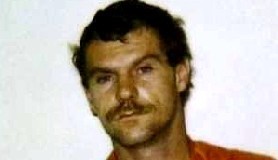
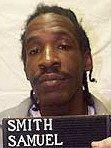
Steven Smith
Murderer Russell Ellwood
Murderer · USA · 1991
Russell Ellwood was a former taxi driver. Authorities suspected him of killing…
20 victims
Russell Ellwood
Murderer · USA · 1991
Russell Ellwood was a former taxi driver. Authorities suspected him of killing…
20 victims
 Robert Martines Perez
Murderer · USA · 1994
Name: Robert Martines Perez · Other name used in proceedings: Robert Martinez P…
15 victims
Robert Martines Perez
Murderer · USA · 1994
Name: Robert Martines Perez · Other name used in proceedings: Robert Martinez P…
15 victims
 Billy Frank Vickers
Murderer · USA · 1993
Billy Frank Vickers Vickers was executed by lethal injection in Texas on Januar…
14 victims
Billy Frank Vickers
Murderer · USA · 1993
Billy Frank Vickers Vickers was executed by lethal injection in Texas on Januar…
14 victims
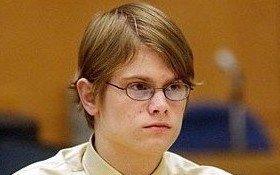 Daniel Matthew Carter
Homicide · USA · 2002
July 16, 2002 — Jack Carter bled to death after a violent struggle with Daniel…
1 victim
Daniel Matthew Carter
Homicide · USA · 2002
July 16, 2002 — Jack Carter bled to death after a violent struggle with Daniel…
1 victim
 Andrew Golden
Mass murderer · USA · 1998
March 23, 1998 — Golden helped Mitchell Johnson load his mother's 1991 Dodge Ca…
5 victims
Andrew Golden
Mass murderer · USA · 1998
March 23, 1998 — Golden helped Mitchell Johnson load his mother's 1991 Dodge Ca…
5 victims
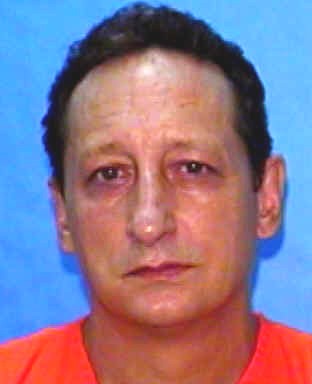 Paul William Scott
Murderer · USA · 1978
Defendant: Paul William Scott · Also known as / aliases: Steven William Prince;…
1 victim
Paul William Scott
Murderer · USA · 1978
Defendant: Paul William Scott · Also known as / aliases: Steven William Prince;…
1 victim
 Terry Melvin Sims
Murderer · USA · 1977
Terry Melvin Sims was convicted and sentenced to death for the murder of George…
1 victim
Terry Melvin Sims
Murderer · USA · 1977
Terry Melvin Sims was convicted and sentenced to death for the murder of George…
1 victim
 Michael Ronning
Murderer · USA · 1986
Michael Ronning was an inmate in Arkansas serving life in prison without parole…
7 victims
Michael Ronning
Murderer · USA · 1986
Michael Ronning was an inmate in Arkansas serving life in prison without parole…
7 victims
 Leslie Alfred Camilleri
Murderer · Australia · 1997
Leslie Alfred Camilleri was convicted in Victoria for the abduction, rape and m…
2 victims
Leslie Alfred Camilleri
Murderer · Australia · 1997
Leslie Alfred Camilleri was convicted in Victoria for the abduction, rape and m…
2 victims
- Gender
- male
- Country
- USA
- Location
- Mansfield, Richland County, Ohio, USA
- Date of birth
- February 9, 1967
- Age at first offence
- 31
- Characteristics
- rape, alcohol
- Victim profile
- Autumn Breeze Carter, 6 month old ( his live-in girlfriend's daughter)
- Method of murder
- Suffocation
- Date(s) of murder
- September 29, 1998
- Years active
- 1998
- Date of arrest
- Next day
- Status
-
Sentenced to death
Sentenced to death on March 25, 1999
Background
Steven Smith was an Ohio inmate sentenced to death for raping and murdering a six-month-old baby.
In April 1998, Smith met and started dating Keysha Frye. A short time later, Smith moved in with Frye and her two young daughters, Ashley, age two, and Autumn, six months.
In the middle of September 1998, Frye asked Smith to move out due to his heavy drinking. Smith moved back in after he promised Frye that he would stop drinking. Around this same time, Smith was fired from his job and began watching Frye’s children while she was at work.
Smith was known to consume as many as 12 beers a day. He had been a heavy drinker who had blacked out in the past. His blood-alcohol level was later tested at 0.123.
The offence
Autumn Carter, a six-month-old baby, died after Smith raped and beat her, causing compression asphyxia and blunt trauma to the head.
Investigation
On September 28, 1998, Frye arrived home from work at 2:30 p.m. The attack happened early in the morning of Sept. 29, 1998, in the Mansfield apartment of the girl’s mother, Kaysha (Keysha) Frye.
According to Frye’s account, she and Smith left the apartment with her two children. They ran some errands, ate dinner at Burger King, and visited one of Smith’s friends, Brett Samples. While visiting Samples, Smith drank three beers and played pool. They left Samples’s home at 7:30 p.m. On the way home, Smith purchased a twelve-pack of Busch Ice at a gas station and drank one of the beers in the car.
Upon arriving home around 8:00 p.m., Frye locked the apartment’s two outer doors. Smith changed Autumn’s diaper, fed her, and dressed her in a pink sleeper. At around 10:15 p.m., Smith took Autumn upstairs and put her to sleep in her crib. Frye put Ashley to bed at 10:30 p.m. Frye went back downstairs and watched television with Smith, who drank more beer. Shortly thereafter, she and Smith went upstairs. Smith removed his cutoff shorts and red underwear, and they had sexual intercourse. Smith did not ejaculate, but Frye stated that he did not seem upset. Frye and Smith then went back downstairs, watched more television, and Smith consumed more beer. Frye went upstairs to sleep at 11:00 p.m., while Smith remained downstairs watching television. Frye checked in on her children and brought Ashley into her bed to sleep with her. Frye left Autumn in her crib.
At around 3:22 a.m. on September 29, 1998, Frye was awakened by Smith, who was standing next to her bed, naked. Smith placed Autumn, who was also naked, down beside Frye in bed. Frye went to pick Autumn up and noticed that Autumn’s head fell over her arm. She placed her hand on Autumn’s stomach and realized that the baby was not breathing. Frye told Smith that he had killed her baby. In response, Smith threw the alarm clock and said that the baby was not dead.
Frye quickly left the apartment with Autumn and Ashley and went to the apartment of neighbors Mya Brooks and Jeff Pierce. Brooks testified that when she opened the door, Frye screamed, “[H]e killed my baby, he killed my baby, Mya, help me.” Frye entered the apartment with her children, and Brooks called 911.
Before the ambulance arrived, Smith came to Brooks’s door, asked what Frye was doing, and exclaimed that “he didn't do anything” and “why was she fucking lying.” Brooks shut the door on Smith.
Emergency medical personnel arrived and discovered Autumn’s nude, lifeless body lying on a blanket. They observed injuries on her head and bruising around her eyes. They began CPR, and Autumn was transported to the hospital. After trying to resuscitate Autumn for close to an hour, medical personnel pronounced her dead.
The emergency room doctor testified that upon her arrival, Autumn had no pulse and had suffered a retinal hemorrhage. The physician stated that Autumn had bruising around her rectum and that the opening of her vagina was ten times the normal size for a baby her age—injuries consistent with sexual abuse.
Pierce observed Smith throw a trash bag in a dumpster shortly after EMS arrived at the scene. Pierce heard Smith say that he did not do anything and that he was leaving. Pierce told Smith to stay with him, which he agreed to do.
Soon thereafter, the police arrived at the crime scene. Officers entered Frye’s apartment and saw no signs of forcible entry. They found that the television had been left on and was extremely loud. Police also discovered the victim’s pink baby sleeper under the coffee table and Smith’s cutoffs and jeans near the couch. They also found whitish-colored material, later determined to be pieces of shredded diaper, scattered on the floor in the same area near the baby swing and sofa. Small piles of the victim’s hair were found on the coffee table.
Police retrieved a garbage bag from the outside trash dumpster that contained a torn baby diaper, Smith’s tee shirt, and ten empty cans of Busch Ice.
Officer Joseph Dean Petrecky approached Smith, who was standing outside the apartment. Before asking him any questions, Smith told the officer, “I didn't do it, I didn't do it.” Smith smelled of alcohol, was disheveled, and swayed back and forth while speaking with the officer. The officer arrested Smith for public intoxication. Later that morning, at 11:00 a.m., Smith’s blood-alcohol level was tested and found to be .123.
At the police station, Detective Robert Burks interviewed Smith. Smith told the detective that he had drunk four beers during the entire day and night. He stated that he and Frye had gone to bed at midnight and that he was awakened by Frye, who was accusing him of killing her daughter.
On October 27, 1998, Smith gave police a second statement. He changed his version of what had occurred. He told police that he had consumed three beers at Samples’s house and six additional beers when he returned to the apartment. Smith said that later that evening, after they had returned home, they put Autumn to sleep in the baby swing and Ashley to sleep on the downstairs love seat. He also said they had had sexual intercourse on the living room couch while the two children were asleep in the same room. According to Smith, he woke up at 3:25 a.m. and, believing something was wrong with Autumn, carried her upstairs while he yelled for Frye. Smith said that Frye grabbed Autumn and accused him of killing her.
On November 3, 1998, Smith signed and verified the October 27 statement. In answer to follow-up questions, he denied putting trash in the dumpster the morning of the crime and said that the cotton materials found on the living room floor were baby wipes put there by Ashley.
Arrest
Officer Joseph Dean Petrecky arrested Smith for public intoxication after Smith smelled of alcohol and swayed back and forth while speaking with the officer.
Smith’s blood-alcohol level was tested later that morning at 11:00 a.m. and found to be .123.
Trial
The grand jury indicted Smith on two counts of aggravated murder, with two death penalty specifications.
Each count included a sexual motivation specification and a sexually violent predator specification.
The indictment included:
- murder during rape or attempted rape under R.C. 2929.04(A)(7)
- purposely causing the death of someone under the age of 13 under R.C. 2929.04(A)(9)
At trial, Dr. Marvin S. Platt, the coroner who performed the autopsy, displayed autopsy photographs and slides and testified that Autumn died from compression asphyxia and blunt trauma to the head.
Dr. Platt found that injuries to Autumn’s head and abrasions on her forehead, cheek, and chin indicated that the victim was lying on her abdomen and that her face had been forced into a pillow. Contusions to her buttocks indicated that they were subject to pressure from the weight of another person. Dr. Platt further testified that Autumn suffered subarachnoid and retinal hemorrhages consistent with shaken baby syndrome, indicating that an attempt had been made to restrain the baby. Other bruising and abrasions revealed that Autumn had resisted the attack.
Dr. Platt also testified that Autumn was missing hair from the back of her head, evidence consistent with someone grasping the back of her head. Further, as attested by the emergency room physician, Dr. Platt found that Autumn’s clitoris was red, her vagina was enlarged, and there was a hemorrhage in her anus, all indicative of attempted penetration.
Forensic evidence revealed human blood on two seat cushions and on Autumn’s pink sleeper. DNA tests excluded Smith as the source of the blood. However, DNA from the two couch cushions and the pink sleeper matched Autumn’s DNA. No semen was found.
In his defense, Smith offered the testimony of Robert Forney Jr., a board-certified forensic toxicologist, to support his theory that he was intoxicated when he committed the assault. Forney testified that Smith’s blood-alcohol level would have been at least .36 and possibly as high as .60 at 11:30 p.m. on September 28. Forney testified that even an alcoholic with a .28 blood-alcohol level would be intoxicated.
Smith called other witnesses who testified that he was a heavy drinker who had blacked out in the past. His former girlfriend, with whom he had a child, and his sister testified that when Smith watched their children, he took good care of them.
The jury found Smith guilty as charged.
After a penalty hearing, the jury recommended death on each aggravated murder charge. The state then dismissed the violent sexual predator specification.
The trial court sentenced Smith to death on each aggravated murder count, finding that the two aggravating circumstances were not outweighed by any mitigating factors.
Sentencing
Smith was sentenced to death on each aggravated murder count.
In independent review, the Ohio Supreme Court stated it found beyond a reasonable doubt that Smith purposely killed Autumn Carter, a child under 13 years of age, while committing or attempting to commit rape.
The Ohio Supreme Court found nothing in the nature and circumstances of the offense to be mitigating. It described the attack lasting between ten and thirty minutes and said Smith brutally raped and murdered Autumn while her mother was asleep in the apartment. It stated Autumn’s hair was ripped out, her vagina and anus were seriously damaged, she was suffocated by the weight of Smith on her small body, and she suffered subarachnoid and retinal hemorrhages.
The Ohio Supreme Court stated Smith’s history and background provided only modest mitigating value, including that he was raised by a mother who paid little attention to his well-being and had little contact with his biological father, and that his mother’s first husband was abusive. It also stated Smith’s stepfather, Kale Mosier, and his grandmother were positive influences.
The court found Smith’s use of alcohol provided little, if any, mitigation and stated Smith was aware of what he was being accused of and hid physical evidence in a trash dumpster outside the building. It said the use of alcohol should have little impact on the weighing process.
The Ohio Supreme Court stated of the statutory mitigating factors only R.C. 2929.04(B)(5) and (B)(7) were slightly applicable. It described R.C. 2929.04(B)(5) as lack of a significant criminal record and said it was entitled to some weight since Smith’s criminal record consisted of two DUI convictions and arrests for minor offenses. It described R.C. 2929.04(B)(7) as other relevant factors, stating Dr. Ort testified Smith suffered from a dysthymic disorder, a personality disorder, and alcoholism, and that alcohol permanently impaired his judgment.
The Ohio Supreme Court independently weighed aggravating circumstances against mitigating factors and found aggravating circumstances outweighed mitigating factors beyond a reasonable doubt. It found the death penalty appropriate when compared to other rape cases involving victims over the age of 13.
The Ohio Supreme Court affirmed Smith’s convictions and sentence of death.
Appeals
Direct appeal (Ohio Supreme Court)
State v. Smith, 97 Ohio St.3d 367, 780 N.E.2d 221 (Ohio 2002).
The Ohio Supreme Court reviewed propositions of law.
It upheld the trial court’s refusal to instruct the jury on involuntary manslaughter and on voluntary intoxication.
The Ohio Supreme Court addressed jury instructions regarding the defendant’s right not to take the witness stand and overruled proposition of law one.
On penalty-phase instructions, it overruled proposition of law five, which challenged the trial court’s instruction regarding life imprisonment.
It also rejected other propositions including those that addressed defining principal offender and reasonable doubt.
The Ohio Supreme Court overruled proposition of law two regarding admission of autopsy photographs and slides.
It overruled proposition of law six regarding expert and lay testimony.
It overruled proposition of law four regarding allegedly repetitive and inflammatory testimony.
On hearsay, it addressed Frye’s statements asserting “he killed my baby” and found harmless error.
It overruled proposition of law three regarding prosecutorial misconduct, including allegations tied to comments and cross-examination, a CPR doll incident, and various comments in closing argument.
It overruled proposition of law ten regarding ineffective assistance of counsel.
It overruled proposition of law 15 regarding victim-impact evidence.
It overruled proposition of law 17 regarding sentencing opinion and weight given to a history of alcohol abuse.
The Ohio Supreme Court affirmed convictions and sentence of death and stated “Judgment affirmed.”
United States Court of Appeals for the Sixth Circuit (habeas corpus appeal)
Smith v. Bradshaw, 591 F.3d 517 (6th Cir. 2010).
The United States Court of Appeals for the Sixth Circuit affirmed the denial of a writ of habeas corpus.
The court held:
- Smith’s claim that the prosecutor improperly commented on his failure to testify was procedurally defaulted.
- Defense counsel’s failure to object to the prosecutor’s comment was not deficient.
- Counsel’s failure to object to death penalty instruction during capital murder prosecution was not deficient.
- The state court’s determination that the evidence would not permit a jury rationally to find Smith guilty only of involuntary manslaughter was not contrary to or an unreasonable application of clearly established federal law.
- Smith’s evidence of intoxication was insufficient, under Ohio law, to negate intent to kill.
The opinion summarized the underlying facts, including:
- Smith living with girlfriend Keysha Frye and her daughters Ashley and Autumn on September 28, 1998.
- Smith drinking three beers while visiting a friend and purchasing a twelve-pack and drinking one beer in the car.
- Frye going to bed around 11:00 p.m. while Smith stayed up drinking.
- Smith waking Frye at approximately 3:22 a.m. by placing Autumn’s naked body next to her.
- Frye realizing Autumn was not breathing and accusing Smith of killing her.
- Smith throwing an alarm clock and stating she was not dead.
- Frye taking Autumn and Ashley to a neighbor’s apartment and screaming that Smith had killed her baby.
- Smith following, exclaiming he “didn't do anything” and asking “why was she fucking lying.”
- A neighbor observing Smith throw a trash bag in a dumpster and hearing Smith say he did not do anything and that he was leaving.
- Police arriving, finding no signs of forcible entry, and finding the television on and extremely loud, and finding the victim’s pink baby sleeper and Smith’s cutoffs and jeans, with shredded diaper materials and piles of Autumn’s hair.
- Police retrieving a garbage bag from outside the trash dumpster containing a torn baby diaper, Smith’s t-shirt, and ten empty beer cans.
- Officer approach and Smith’s preemptive exclamation, “I didn't do it, I didn't do it.”
- Smith’s blood-alcohol level test at 0.123% at 11:00 a.m. on September 29 and the toxicologist testimony about levels at 11:30 p.m. on September 28.
- The jury finding Smith guilty and sentencing him to death.
The Sixth Circuit noted the Ohio Supreme Court affirmed the conviction and sentence of death and that the Ohio Court of Appeals denied postconviction review. The Sixth Circuit affirmed the district court’s denial of habeas relief.
Outcome
Smith’s convictions and sentence of death were affirmed on direct appeal by the Ohio Supreme Court.
Smith’s petition for writ of habeas corpus was denied, and the denial was affirmed by the Sixth Circuit.
Steven Smith was scheduled to die May 1.
Other details
Smith was never charged with rape, meaning the jury’s only choice was to convict or acquit him of aggravated murder, his attorneys argued.
However, rape was included in the indictment against Smith as one of the factors making him eligible for the death penalty. Under Ohio law, an aggravated murder committed in the course of another crime—such as burglary, robbery, arson or the killing of a police officer or child—is an element that can make someone eligible for capital punishment.
In clemency-related materials described in the case record, the Ohio Parole Board rejected Smith’s mercy request and said some arguments for sparing Smith, such as his turbulent childhood, were far outweighed by the nature of the crime. The board said Smith took the life of an innocent 6-month-old infant while using the baby to sexually gratify himself and said it was hard to fathom a crime more repulsive or reprehensible in character.
In the same materials, Smith’s attorneys argued that Autumn’s death was a horrible accident and that Ohio law required intent to kill. Smith’s attorneys Joseph Wilhelm and Tyson Fleming stated in a written argument prepared for the board that “The evidence suggests that Autumn’s death was a horrible accident” and that Smith’s death sentence should be commuted because “genuine doubts exist whether he even committed a capital offense.” The attorneys said Smith’s attorneys declined to comment at the time described.
Richland County prosecutor James Mayer called Smith’s actions “the purposeful murder of a helpless baby girl” and told the parole board that the injuries were consistent with a homicide contradicting Smith’s claim he didn’t intend to kill her.
In April 1998, Smith met and started dating Keysha Frye, and Smith moved in with Frye and her daughters Ashley and Autumn. Frye asked Smith to move out due to heavy drinking and Smith moved back in after promising to stop drinking. Smith was fired from his job and began watching the children.
During the penalty hearing, five witnesses testified in mitigation:
- Jane Mosier, Smith’s mother: She testified Smith was the second of four children. She testified Smith’s biological father, William Haught, had no contact with him while he was growing up. She testified she later married an abusive man who drank, used drugs, and threatened to burn their house down. She testified she then married Kale Mosier, a “decent guy” whom Smith called dad, and he died in 1998. She described Smith as a “good boy” who “loved school,” “loved to work,” and got along with everybody. She testified Smith left home at seventeen to live and work on a farm. She testified she was first aware of Smith’s drinking problem after Smith obtained his driver’s license and was convicted of drunk driving. She testified she had little contact with Smith and for the last couple of years saw him only once or twice a year.
- Judy Ann Rigsby, Smith’s first cousin: She testified Smith’s mother’s first husband physically beat Smith by whipping him with a belt, described Kale Mosier as a “very nice man” who took care of Smith, testified Smith’s grandmother was his primary caregiver, and described Smith as an average student.
- Karen Sue Samples, Smith’s sister: She testified Smith received little attention while growing up and started drinking alcohol at age nine or ten. She described Smith as a “good boy” who would not hurt anyone, and she testified the only problem was drinking. She asked the jury to spare her brother’s life.
- Sergeant Helen Johnson, corrections officer: She testified Smith committed two minor violations of inmate rules since being incarcerated, and otherwise was respectful toward correction officers.
- Dr. Janice Ort, clinical psychologist: She interviewed and conducted psychological testing. She testified Smith’s youth involved both parents absent from his life, with grandmother and aunt helping care for him. She described Smith as an average student in high school, ranking 149 out of 162 students. She testified Smith’s judgment was impaired by alcohol and that he was alcohol-dependent, probably in the middle to late stages of alcoholism. She stated Smith told her he had no memory other than that he had fallen asleep on the couch, found Autumn asleep in the swing, and wondered when he awoke how and why she was there. She testified Smith’s IQ was 80 in the low-average range of intelligence, with low scores on information and vocabulary and fine on basic arithmetic. She testified results included possible problems with depression, alcohol abuse, and sensitivity to others, and she testified the Rorschach inkblot test suggested he contained his emotions, had difficulty understanding and processing information, and had possible trouble with impulse control. She diagnosed Smith with a dysthymic disorder and substance abuse.
In the concurring opinion in Smith v. Smith (Ohio Supreme Court), Justice Lundberg Stratton stated disagreement with the majority’s resolution of an Evid.R. 803 issue regarding Frye’s out-of-court statement “he killed my baby.”
Bradshaw (Sixth Circuit), Judge Ronald Lee Gilman concurred in parts III and IV and expressed concerns about the Ohio Supreme Court’s analysis regarding a lesser-included-offense instruction under Beck, while joining the conclusion to affirm denial of habeas relief.
Spotted an error, or have more information about this case?