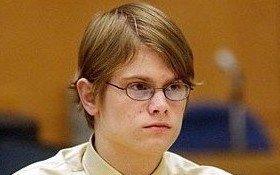
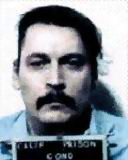
Daniel Matthew Carter
Homicide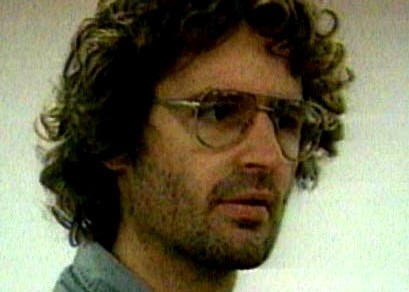 David Koresh
Homicide · USA · 1993
David Koresh (born Vernon Wayne Howell; August 17, 1959 – April 19, 1993) led t…
79 victims
David Koresh
Homicide · USA · 1993
David Koresh (born Vernon Wayne Howell; August 17, 1959 – April 19, 1993) led t…
79 victims
 Todd Hall
Homicide · USA · 1996
Todd Hall was described by neighbors as "mentally slow" and was said to have su…
9 victims
Todd Hall
Homicide · USA · 1996
Todd Hall was described by neighbors as "mentally slow" and was said to have su…
9 victims
 Joshua Jenkins
Homicide · USA · 1996
Joshua Jenkins was a 15-year-old American killer who killed five members of his…
5 victims
Joshua Jenkins
Homicide · USA · 1996
Joshua Jenkins was a 15-year-old American killer who killed five members of his…
5 victims
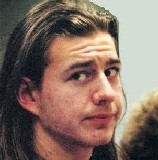 Alex Baranyi
Homicide · USA · 1997
Alex Baranyi and David Anderson were 17-year-old high-school dropouts from Bell…
4 victims
Alex Baranyi
Homicide · USA · 1997
Alex Baranyi and David Anderson were 17-year-old high-school dropouts from Bell…
4 victims
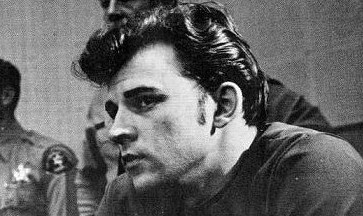 Paul Ferguson
Murderer · USA · 1968
Paul Ferguson was sentenced to life imprisonment in 1969 and was paroled less t…
1 victim
Paul Ferguson
Murderer · USA · 1968
Paul Ferguson was sentenced to life imprisonment in 1969 and was paroled less t…
1 victim
 Debra Hartmann
Murderer · USA · 1982
Debra Hartmann was sentenced to 22 years in prison for conspiracy connected to…
1 victim
Debra Hartmann
Murderer · USA · 1982
Debra Hartmann was sentenced to 22 years in prison for conspiracy connected to…
1 victim
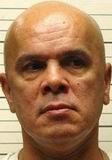 Gerald Lee Powers
Murderer · USA · 1996
Gerald Lee Powers was convicted in Tennessee of first degree felony murder in t…
1 victim
Gerald Lee Powers
Murderer · USA · 1996
Gerald Lee Powers was convicted in Tennessee of first degree felony murder in t…
1 victim
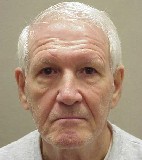 Robert Reldan
Murderer · USA · 1974
Name: Robert Reldan Robert Reldan was sentenced to life in prison on two counts…
8 victims
Robert Reldan
Murderer · USA · 1974
Name: Robert Reldan Robert Reldan was sentenced to life in prison on two counts…
8 victims
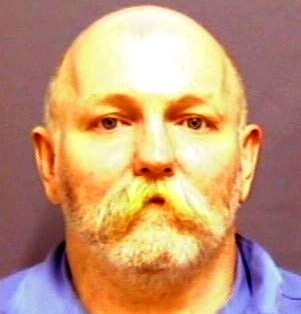 Glen Burton Ake
Homicide · USA · 1979
Glen Burton Ake was sentenced to death and later had that death sentence overtu…
2 victims
Glen Burton Ake
Homicide · USA · 1979
Glen Burton Ake was sentenced to death and later had that death sentence overtu…
2 victims
- Gender
- male
- Country
- USA
- Location
- Escambia County, Florida, USA
- Date of birth
- J une 11, 1987
- Age at first offence
- 15
- Characteristics
- juvenile, history of mental illness
- Victim profile
- H is uncle, Jack Carter, 46
- Method of murder
- St abbing with knife
- Date(s) of murder
- July 16, 2002
- Years active
- 2002
- Date of arrest
- Same day
- Status
-
Acquitted / overturned
Acquitted by a jury on March 5, 2004
Timeline
- July 16, 2002 — Jack Carter bled to death after a violent struggle with Daniel Carter in Daniel's bedroom at Cindy Carter's home in Beulah.
- August 2002 — Daniel Carter was charged with attempting to escape a juvenile detention facility; authorities said he popped ceiling tiles and unsuccessfully attempted to get out through the ceiling.
- March 2, 2004 — Jury selection began for Daniel Carter’s first-degree murder trial.
- March 4, 2004 — The trial proceeded with testimony including a recorded interview between Carter and Escambia County homicide investigator Frank Fillingim.
- March 5, 2004 — A jury acquitted 16-year-old Daniel Carter of first-degree murder after deliberating three hours.
Background
Daniel Matthew Carter was 15 when he fatally stabbed his uncle, Jack Carter, with an antique knife during a violent struggle inside Daniel’s bedroom in July 2002. He was held without bail at the Escambia County jail for 19 months.
Cindy Carter described Daniel as wanting a double-cheese pizza and a guitar after his acquittal, saying he spent nearly 24 hours after being acquitted looking to the future. Cindy Carter also described Daniel as more introspective and a more kind, gentler person after the 19 months.
Friends and supporters of Jack Carter portrayed Daniel as a troubled teen who savagely killed his uncle with a rusty knife. Cindy Carter said Jack Carter had come to her Beulah home to help discipline Daniel the night he was killed, and testified that Jack Carter began beating Daniel after entering the room in a rage.
Cindy Carter said she was homeschooling Daniel because he had been expelled from high school after an arrest on a prescription drug charge later dropped. She also said Daniel had spent two years in an alternative middle school after turning in marijuana other boys had given him.
Cindy Carter said Daniel took medication for post-traumatic stress disorder and had attention deficit hyperactivity disorder, and defense attorney Patrece Cashwell was unsure whether an appellate ruling involving Lionel Tate would affect Daniel’s case because Daniel had undergone testing. Cashwell said Daniel was “a very well-grounded, soft-spoken young man” and “He's not the type of kid who likes to fight.”
Jack Carter was 46. Cindy Carter described him as a 6-1, 180-pound bodybuilder and Kung Fu expert, two inches taller and 30 pounds heavier than Daniel, with a short temper. Tests disclosed traces of muscle-building steroids and a prescription anti-anxiety drug in Jack Carter’s blood. Blood-alcohol level was described as 0.13 percent, and other reported results included 0.17 percent.
Cindy Carter said she and Daniel’s father never married and that he remained out of the picture. She said court records show she collected a substantial sum from her brother’s life insurance when he died.
The offence
On the night of July 16, 2002, Jack Carter bled to death inside Daniel’s bedroom at Cindy Carter’s Beulah home after what Cindy Carter described as an enraged confrontation and a violent struggle. Cindy Carter testified she heard profanity-filled outbursts from Jack Carter, the sound of objects being thrown and slammed around, and that Jack Carter would calm down and then rage again.
Cindy Carter testified that Jack Carter threatened to hogtie Daniel, strip his clothes off, and beat him. She also testified that Jack Carter threatened to castrate Daniel and that her television was crashing to the floor.
The struggle resulted in multiple knife wounds to Jack Carter. Multiple accounts described 10 knife wounds, including a fatal gash to the side of Jack Carter’s neck. Former associate medical examiner Michael Berkland presented slides depicting knife wounds on Jack Carter’s arms, chest, head and neck, and evidence was described as including “struggle kinds of injuries.”
Daniel Carter maintained that he acted in self-defense after Jack Carter stormed into his bedroom, beat him with a large steel flashlight for 20 minutes, and threatened to tie him up and castrate him. Daniel told investigators he picked up a knife only to make his uncle stop beating him and that his uncle ripped a telephone out of the wall when he tried to call 911.
Cindy Carter testified that she removed all guns and knives she could find from the house, left the back door unlocked, and went to her bedroom. She testified that Jack Carter told her to stay there and let him handle it, and that Jack Carter promised not to hit Daniel. She testified that when Jack Carter arrived, she heard a bang as he yanked open the door to Daniel’s room and slammed it behind him, then ordered Daniel out of bed and began cursing and breaking things in the room.
Brian Voeks testified that Daniel Carter made a comment earlier that day about slitting Jack Carter’s throat. Voeks also testified he did not tell police at the time because Daniel was his best friend.
Investigation
Escambia County homicide investigator Frank Fillingim investigated the case. Jurors heard a 20-minute recorded interview between Daniel Carter and Fillingim that was conducted about 12 hours after Carter was taken into custody.
During the recorded interview, Daniel Carter said:
"It was the only thing I knew to do," Carter said in the interview, conducted the day after his 46-year-old uncle, Jack, bled to death after a violent struggle inside the teenager's bedroom.
"I just wanted him to stop, and he wouldn't. He kept coming. If I had known I would have killed him, I would have just let him beat me."
Cindy Carter’s 911 call was played for jurors, with sobs and screams. Cindy Carter asked the emergency dispatcher:
"Why isn't somebody here?" and said: "He's bleeding to death."
Forensic toxicologist David Black testified that steroids detected in Jack Carter’s body were not likely to cause violent, aggressive behavior. Laboratory results showed Jack Carter had a blood-alcohol level of 0.13 percent, along with Valium, traces of a painkiller, and anabolic steroids.
A forensic pathologist and crime scene analyst, Berkland, testified that the evidence he reviewed seemed to support Daniel Carter’s claims of a sudden struggle in a cramped bedroom. Berkland said:
"These are struggle kinds of injuries." and: "They're not wounds that seemed to be inflicted intentionally."
Berkland’s statements contradicted earlier testimony by former District 1 Medical Examiner Gary Cumberland, who had performed the autopsy and said many wounds appeared to be “classic defense injuries.”
Crime-scene technician Phillip Davies testified that he collected two knives, a box of shotgun shells, and a 7-foot length of rope from Jack Carter’s clothing. Defense attorney Patrece Cashwell challenged Fillingim about his failure to instruct investigators to collect several pieces of evidence from Jack Carter’s truck. Fillingim said the evidence was collected impartially and is not intended to support any individual’s version of events.
Arrest
Daniel Carter was arrested and held in the Escambia County jail. He was being held for 19 months.
An employee at the juvenile assessment center where Carter was taken after his arrest said the teenager did not appear angry and instead was “traumatized and glazed over.”
After being taken into custody, Daniel Carter told an investigator he believed that brandishing a knife was the only way to make his uncle stop beating him.
Trial
Charges and proceedings
Daniel Carter was tried as a juvenile accused of first-degree murder in the July 2002 stabbing death of his uncle, Jack Carter. He faced a mandatory life sentence if convicted, described as life in prison or life without parole depending on the phrasing used. He did not testify at trial.
Defense attorney Patrece Cashwell told the court she believed she helped save the teenager “from the guillotine.” She argued Daniel acted in self-defense when he stabbed his uncle during a violent rage confrontation.
Assistant State Attorney David Rimmer argued that Daniel planned to attack his uncle when he showed up to punish him and that Daniel was a troubled boy resented by his uncle. Rimmer’s closing argument included:
"Jack Carter confronted an angry, out-of-control teenager with a chip on his shoulder, a knife in his hand and murder in his heart."
Cashwell portrayed Daniel as “terrified and terrorized” when his uncle entered his room in a violent rage, smashing Daniel’s belongings and ripping a telephone out of the wall when Daniel tried to call 911:
"He couldn't call 911, he couldn't get his mom, he couldn't get out of the room," and: "Daniel Carter had nobody protecting him that day."
Cashwell also argued:
"He did not need to inflict that fatal blow," and: "After he had cuts on his arms and blood dripping down his face, Jack Carter was a vanquished foe. He was at the mercy of Daniel."
Witness testimony and evidence
Cindy Carter testified during the trial about the confrontation, threats, and injuries. She recounted hearing profanity-filled outbursts, objects being thrown, and Jack Carter’s threats including castration. She testified that Daniel screamed “Mommy, mommy, Uncle Jack's dying.” She also testified to multiple conversations with Jack Carter and described a promise from Jack Carter not to physically harm Daniel.
A University of Florida professor, Bruce Goldberger, testified that Jack Carter had a blood-alcohol level of 0.13 percent at the time of his death and also had Valium and hydrocodone. Goldberger testified that combined with alcohol the drugs would have a “sedating” effect and could have impaired Jack Carter’s ability to defend himself from an attack.
Another account described Jack Carter as having 10 knife wounds including a fatal gash to the neck and described the prosecution’s argument that the wounds showed premeditation. Rimmer pointed to the 10 knife wounds as proof that Daniel’s attack was premeditated, with enough time for “reflective thought.”
Juror statements later described that jurors did not believe the prosecution proved its case beyond a reasonable doubt. Juror Brandon Howell said:
"We couldn't say 100 percent that he did it," and: "Nobody wants to put a guy away for something they're not sure he did."
Jury selection
Jury selection began on March 1 for the first-degree murder trial. On March 2, 2004, Daniel Carter sat in court looking at a list of 46 strangers’ names and wore something besides a jail uniform. The selection included eight Escambia County residents—four men and four women—with six to serve and two alternates.
Rimmer asked potential jurors about viewing graphic photographs of Jack Carter’s body and whether they felt they could convict a juvenile on adult murder charges. Cashwell questioned potential jurors about child abuse versus punishment, their discipline practices, exposure to anabolic steroids and “ 'roid rage,” and how they would handle issues of child abuse.
Sentencing
Daniel Carter was acquitted by a jury of first-degree murder, so no sentencing for the murder charge was imposed.
Appeals
No appeal outcome was described for the murder case.
Outcome
An Escambia County jury acquitted Daniel Carter of first-degree murder charges stemming from the July 2002 stabbing death of his uncle, Jack Carter. The jury deliberated about three hours and reached its verdict about 5:30 p.m. The verdict was announced after closing arguments were scheduled before the jury began deliberations.
After the acquittal, Daniel walked out of jail at 10:32 p.m. Cindy Carter said the death, Daniel’s incarceration, and his vindication were in the past and that he looked to the future.
Defense attorney Patrece Cashwell said she believed she helped save the teenager “from the guillotine.”
Additional pending charge
Daniel Carter still faced a criminal charge for attempting to escape from a juvenile detention facility. Authorities said he popped ceiling tiles and unsuccessfully attempted to get out through the ceiling. He received a $1,000 bond.
A court appearance for the attempted escape charge was scheduled for April 6, with discussion that it might not result in further jail time after 19 months served. Assistant State Attorney David Rimmer said he would not decide how to proceed until Monday at the earliest.
Several children's-rights advocates protested the adult prosecution for the killing but also described hope that the escape charge would be dropped.
Aftermath
After his acquittal, Daniel spent his first day of freedom at home, laying low and talking with friends by telephone. He worked through a GED manual while behind bars and planned to take adult high school classes at Pensacola Junior College. Cindy Carter said:
"He could go ahead and take his GED," and: "He doesn't want to do that. He wants to go to school."
Cindy Carter said Daniel had matured and described him as becoming more introspective and kinder. She also stated:
"It's incredible," and: "Despite the horrible circumstances, he has become a more kind, gentler person."
Friends of Jack Carter did not agree with that portrayal and described Daniel as not an innocent teenager, saying he had drug and behavioral problems.
Supporters of Daniel exchanged hugs outside the courthouse after the verdict and made preparations to pick him up from Escambia County Jail. Cindy Carter said:
"We just want to get him home tonight," and: "He's going to get to open his Christmas presents."
A number of advocates rallied outside the courthouse and protested the prosecution as an adult. Donna Gallegos said:
"Daniel Carter was abused and beat by his uncle, but he was abused a second time by the state of Florida," and bishop Thomas Masters said: "How can a child be 12 on a Monday and suddenly be considered 18 on a Tuesday?"
Cindy Carter stated:
"It was a double loss for my family when my brother died and my son was arrested," and: "I think we've still got a lot of wounds to heal." She added: "They won't be closed for a long time."
Other details
Jack Carter had two knives, a box of shotgun shells, and a 7-foot length of rope with him when he was killed. He also had a loaded shotgun in his truck.
Cindy Carter testified she was home-schooling Daniel because he had been expelled from high school after a prescription drug charge later dropped, and that Daniel and Brian Voeks rummaged through Jack Carter’s surfing magazines stored in the barn.
Cindy Carter said Jack Carter called her from his cell phone at about 10 p.m. on the night of his death to say he was in Gulf Breeze and on his way there.
She testified she started walking toward Daniel’s bedroom after hearing Jack Carter threaten to castrate Daniel while she had a broken foot.
Defense attorney Patrece Cashwell questioned prospective jurors about disciplining children and asked:
"Where do you draw that line between punishment and abuse?"
During testimony, a juror earlier stated that the jury did not believe the prosecution proved its case beyond a reasonable doubt.
The record also mentioned that defense counsel Patrece Cashwell had taken over the case after Carter’s first lawyer, James Stokes, was killed in a plane crash on June 11.
The trial was presided over by Circuit Judge Terry Terrell.
Assistant State Attorney David Rimmer and defense attorney Patrece Cashwell were expected to offer closing arguments before deliberations began.
Spotted an error, or have more information about this case?