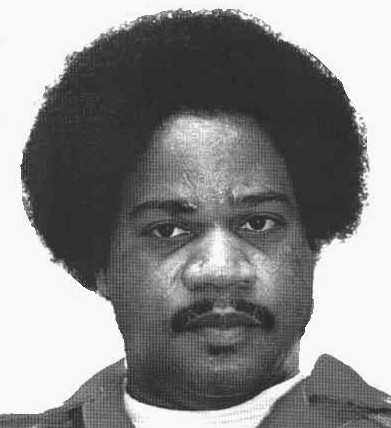
Tommie Smith
Murderer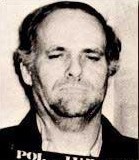 Ervil LeBaron
Murderer · USA · 1972
Ervil Morrell LeBaron (1925 to August 16, 1981) was the leader of a polygamous…
35 victims
Ervil LeBaron
Murderer · USA · 1972
Ervil Morrell LeBaron (1925 to August 16, 1981) was the leader of a polygamous…
35 victims
 Brian Kevin Rosenfeld
Murderer · USA · 1985
Brian Kevin Rosenfeld Brian Kevin Rosenfeld was sentenced to three concurrent l…
23 victims
Brian Kevin Rosenfeld
Murderer · USA · 1985
Brian Kevin Rosenfeld Brian Kevin Rosenfeld was sentenced to three concurrent l…
23 victims
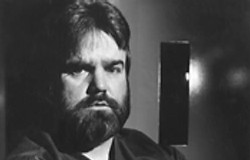 Marvin Gray
Murderer · USA · 1975
Marvin Gray was convicted killer who claimed responsibility for 23 slayings and…
23 victims
Marvin Gray
Murderer · USA · 1975
Marvin Gray was convicted killer who claimed responsibility for 23 slayings and…
23 victims
 Yahweh ben Yahweh
Murderer · USA · 1980
Yahweh ben Yahweh was born and legally named Hulon Mitchell Jr. (October 27, 19…
23 victims
Yahweh ben Yahweh
Murderer · USA · 1980
Yahweh ben Yahweh was born and legally named Hulon Mitchell Jr. (October 27, 19…
23 victims
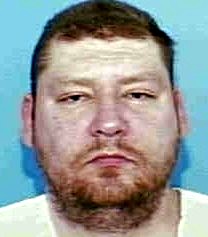 John William Byrd
Murderer · USA · 1983
John William Byrd, Jr. was executed by lethal injection for the murder of conve…
1 victim
John William Byrd
Murderer · USA · 1983
John William Byrd, Jr. was executed by lethal injection for the murder of conve…
1 victim
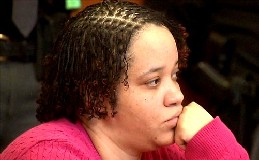 Joy Hodge
Murderer · USA · 2011
Joy Hodge was a Warren, Ohio mother who lived with her daughter A’nana Brantley…
1 victim
Joy Hodge
Murderer · USA · 2011
Joy Hodge was a Warren, Ohio mother who lived with her daughter A’nana Brantley…
1 victim
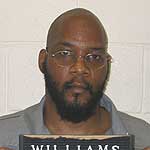 Marcellus Williams
Murderer · USA · 1998
Marcellus Williams was convicted in the State of Missouri case styled State of…
1 victim
Marcellus Williams
Murderer · USA · 1998
Marcellus Williams was convicted in the State of Missouri case styled State of…
1 victim
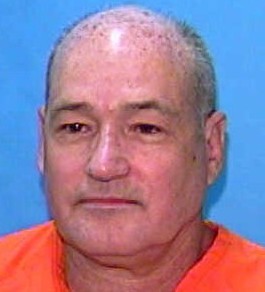 Roy Clifton Swafford
Murderer · USA · 1982
Roy Swafford was convicted and sentenced to death for the 02/14/82 murder of Br…
1 victim
Roy Clifton Swafford
Murderer · USA · 1982
Roy Swafford was convicted and sentenced to death for the 02/14/82 murder of Br…
1 victim
 Sabine Radmacher
Murderer · Germany · 2010
Sabine Radmacher Sabine Radmacher was fatally shot by special police units the…
3 victims
Sabine Radmacher
Murderer · Germany · 2010
Sabine Radmacher Sabine Radmacher was fatally shot by special police units the…
3 victims
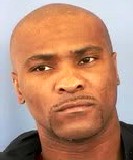 Stephen Elliot Powers
Murderer · USA · 1998
Stephen Elliot Powers was convicted of capital murder and was sentenced to deat…
1 victim
Stephen Elliot Powers
Murderer · USA · 1998
Stephen Elliot Powers was convicted of capital murder and was sentenced to deat…
1 victim
- Gender
- male
- Country
- USA
- Location
- Marion County, Indiana, USA
- Date of birth
- February 6, 1954
- Age at first offence
- 26
- Characteristics
- to avoid arrest
- Victim profile
- Jack Ohrberg, 44 (Indianapolis Police Sergeant )
- Method of murder
- Shooting ( AR-15 rifle)
- Date(s) of murder
- December 11, 1980
- Years active
- 1980
- Date of arrest
- Same day
- Status
-
Executed
Executed by lethal injection in Indiana on July 18, 1996
Case record: Tommie Smith
Status and identity
Tommie Smith was executed by lethal injection in Indiana on July 18, 1996. His DOC#: 4330.
Tommie Smith was also known as Ziyon I Yisrayah.
Timeline
- December 11, 1980 — Detective Sergeant Jack Ohrberg attempted to serve arrest warrants at a duplex where Tommie Smith was believed to be staying; armed gunfire occurred, and Ohrberg was struck and later died.
- June 29, 1981 — Tommie J. Smith was convicted by a jury in Marion Superior Court of murder and conspiracy to commit murder.
- June 30, 1981 — The jury returned a sentence recommendation of death.
- July 23, 1981 — Judge Jeffrey Boles sentenced Smith to death for murder and 50 years in prison for conspiracy to commit murder.
- July 24, 1981 — Judge Boles issued a warrant for Smith's execution to take place on November 1, 1981.
- September 21, 1981 — Smith filed a Motion to Correct Errors.
- October 22, 1981 — The trial court denied the Motion to Correct Errors.
- October 23, 1981 — Judge Boles issued an order staying the execution previously set for November 1, 1981.
- November 25, 1981 — Smith filed a petition to stay the execution set for December 1, 1981; Judge Boles granted the stay on November 30, 1981, pending perfection of an appeal to the Indiana Supreme Court.
- July 24, 1984 — The Indiana Supreme Court unanimously affirmed Smith's conviction and sentence (Smith v. State, 465 N.E.2d 1105 (Ind. 1984)).
- October 12, 19984 — The Indiana Supreme Court stayed the execution previously set for October 18, 1984, by Judge Boles.
- December 4, 1984 — The Indiana Supreme Court vacated the stay of execution.
- December 10, 1984 — Judge Boles ordered Smith to be executed on January 10, 1985; Smith obtained a stay pending post-conviction relief.
- August 2, 1985 — Smith filed an Amended Petition for Post-Conviction Relief in state trial court.
- December 5–6, 1985 — Evidentiary hearings were held.
- September 29, 1986 — Judge Patricia Gifford denied the petition for post-conviction relief.
- October 8, 1986 — Judge Boles issued an order setting an execution date of November 10, 1986.
- October 24, 1986 — The Indiana Supreme Court granted Smith's Petition for a Stay of Execution.
- December 16, 1987 — The Indiana Supreme Court unanimously affirmed the denial of the post-conviction relief petition (Smith v. State, 516 N.E.2d 1055 (Ind. 1987), cert. denied, 488 U.S. 934 (1988)).
- October 31, 1988 — The United States Supreme Court denied Smith's Petition for Writ of Certiorari on the denial of post-conviction relief (Smith v. State, 488 U.S. 934 (1988)).
- November 4, 1988 — Judge Boles set an execution date of December 11, 1988.
- November 25, 1988 — Smith filed a Petition for Writ of Habeas Corpus in the United States District Court for the Northern District of Indiana.
- November 29, 1988 — The United States District Court granted a stay of execution pending disposition of the habeas petition.
- March 29, 1989 — Chief Judge Allen Sharp heard arguments on the habeas petition.
- May 19, 1989 — Chief Judge Sharp stayed the habeas proceedings at Smith's request pending the filing and disposition of a second post-conviction relief petition.
- October 3, 1990 — Smith filed his second Petition for Post-Conviction Relief.
- November 14, 1991 — The state trial court dismissed the second post-conviction relief petition.
- May 12, 1993 — The Indiana Supreme Court affirmed the dismissal of the second post-conviction relief petition and remanded the matter to the trial court to set a date for Smith's execution (Smith v. State, 613 N.E.2d 412 (Ind. 1993)).
- October 4, 1993 — The Indiana Supreme Court denied rehearing.
- April 25, 1994 — The United States Supreme Court denied Smith's Petition for Writ of Certiorari (Smith v. State, 114 S. Ct. 1634 (1994)).
- October 14, 1994 — The United States District Court heard oral arguments on the habeas petition.
- October 31, 1994 — Chief Judge Sharp denied Smith's habeas petition and request for an evidentiary hearing (Smith v. Farley, 873 F. Supp. 1199 (N.D. Ind. 1994)).
- July 5, 1995 — The United States Court of Appeals for the Seventh Circuit affirmed the district court's denial of habeas corpus relief (Smith v. Farley, 59 F.3d 659 (7th Cir. 1995)).
- July 18, 1995 — Smith filed a petition with the United States Court of Appeals for the Seventh Circuit for rehearing with a suggestion for rehearing en banc.
- August 1, 1995 — The Seventh Circuit denied rehearing.
- February 20, 1996 — The United States Supreme Court denied Smith's Petition for Writ of Certiorari from the denial of the habeas petition (Smith v. Parke, 116 S. Ct. 935 (1996)).
- February 26, 1996 — Smith filed with the United States Supreme Court a Notice of Application for Stay of the Order Denying Certiorari.
- February 27, 1996 — The Supreme Court denied Smith's motion to stay the certiorari denial.
- March 25, 1996 — Smith filed a Verified Tender for Successive Petition for Post-Conviction Relief, asking the Indiana Supreme Court to authorize the filing of a third post-conviction relief petition and requesting oral argument.
- April 24, 1996 — The Indiana Supreme Court issued an order denying Smith's request to authorize the filing of a successive petition for post-conviction relief and denying oral argument; it ordered that Smith be executed on June 14, 1996 (Smith v. State, No. 49S00-9603-SD-246 (Ind. Apr. 24, 1996)).
- May 3, 1996 — Smith filed a Motion for Modification and Correction of Order Denying Leave to File a Successive Post-Conviction Petition.
- May 8, 1996 — The Indiana Supreme Court denied the motion (Smith v. State, No. 49S00-9603-SD-246 (Ind. May 8, 1996)).
- May 13, 1996 — Smith filed a Petition for Clemency before the Indiana Parole Board.
- May 14, 1996 — Smith filed before the United States Court of Appeals for the Seventh Circuit a Motion to Recall the Mandate and For Leave to File a Second Petition for Rehearing with Suggestion for Rehearing En Banc.
- May 20, 1996 — The Seventh Circuit denied Smith's motion.
- May 28, 1996 — The Parole Board conducted a hearing at the State Prison regarding Smith's clemency petition.
- June 3, 1996 — The Parole Board conducted a public hearing at the Indiana Government Center regarding Smith's clemency petition.
- June 4, 1996 — The Parole Board unanimously recommended that Smith's petition for clemency or reprieve be denied.
- June 6, 1996 — Smith filed a Motion for an Order Authorizing the District Court to Consider a Second Habeas Corpus Application with the United States Court of Appeals for the Seventh Circuit.
- June 10, 1996 — The Seventh Circuit denied the motion.
- June 10, 1996 — Smith filed with the United States Supreme Court a Petition for Writ of Certiorari from Denial of Relief from the Seventh Circuit, a Petition for Writ of Habeas Corpus and a Petition for Stay of Execution.
- June 13, 1996 — The Court granted a stay pending review of Smith's Petition for Writ of Certiorari (Smith v. Parke, No. 95-9261, 64 U.S.L.W. 3834 (U.S. June 13, 1996)).
- July 1, 1996 — The Supreme Court denied Smith's Petition for Writ of Certiorari from Denial of Relief from the Seventh Circuit, dismissed the Petition for a Writ of Habeas Corpus and automatically dissolved the stay of execution (Smith v. State, No. 95-9264, 64 U.S.L.W. 3868 (U.S. July 1, 1996)).
- July 3, 1996 — The Indiana Supreme Court ordered that Smith be executed on July 18, 1996 (Smith v. State, No. 49S00-9603-246 (Ind. July 3, 1996)).
- July 5, 1996 — Smith filed a subsequent petition for clemency or reprieve with the Indiana Parole Board.
- July 9, 1996 — The Parole Board conducted a hearing at the State Prison regarding Smith's clemency petition.
- July 9, 1996 — Smith filed a motion with the Indiana Supreme Court for stay of execution pending resolution of his Petition for a Writ of Habeas Corpus from the United States Supreme Court.
- July 10, 1996 — The Indiana Supreme Court denied the motion (Smith v. State, No. 49S00-9603-SD-246 (Ind. July 10, 1996)).
- July 10, 1996 — Smith filed a Petition for a Writ of Habeas Corpus in the United States Supreme Court.
- July 10, 1996 — The Parole Board conducted a public hearing regarding Smith's clemency petition; after hearing testimony, the Board unanimously recommended that Smith's petition for clemency or reprieve be denied.
- July 15, 1996 — Governor Evan Bayh denied Smith's petition for a reprieve.
- July 18, 1996 — Smith was executed by lethal injection in Indiana.
Background
Tommie J. Smith was convicted of murder and conspiracy to commit murder and sentenced to death.
The governor’s statement described Smith as “a multiple murderer and a career criminal.” It described the case as beginning over fifteen years earlier when Smith and his confederate Gregory Resnover ambushed Detective Sergeant Jack Ohrberg as Ohrberg attempted to serve arrest warrants on Smith, Gregory Resnover, and Earl Resnover on charges of murder and armed robbery.
Smith was described as being known to the Indianapolis Police Department for being in and out of juvenile and adult correctional facilities continuously since the age of fifteen. The governor’s statement also said Smith had been under investigation by Ohrberg for at least two major crimes in Indianapolis: a murder in the course of an armed robbery of American Fletcher National Bank and the murder and armed robbery of a Brink’s guard, William Sieg, Sr. The statement said Smith was later tried and convicted for murdering and robbing Sieg.
The offence
At 5:30 a.m. on December 11, 1980, Ohrberg and several other police officers went to a duplex where they believed Smith to be staying.
Ohrberg pounded on the door, with both his fist and his police radio, and shouted “#police,#” but no one answered. Ohrberg went to the other side of the duplex to ask a neighbor whether anyone was inside. The neighbor confirmed she had heard people next door on the night before. The statement said the neighbor heard “runnin” and thumpin” or something.” The statement also said the neighbor heard a male voice from inside shout “It’s the mother f---in” police.”
According to the governor’s statement, Ohrberg attempted to open the door but it was barricaded with a piece of furniture. Waiting on the other side were Smith and Gregory Resnover, each armed with AR-15 semiautomatic military assault rifles.
After Ohrberg managed to pry the door partially open with his shoulder, Smith and Resnover opened fire. Smith hit Ohrberg in the abdomen, causing him to collapse on the porch. The statement described other officers scrambling for cover as further rounds of gunfire were directed toward them out the door and through windows shattering the glass.
When the gunfire subsided, a black male matching Smith’s description leaned out the door onto the porch and, according to testimony, appeared to fire more shots at Ohrberg’s downed body.
The statement said that in all, at least sixteen rounds were fired at the police—eight from Smith’s weapon and eight from Resnover’s—and that one of the weapons was reloaded.
Ohrberg was struck three times: once in the abdomen and twice in his left side.
The statement said that during the melee Ohrberg managed to fire one shot that wounded Smith in his leg. It also said Smith alleged he was hit as he retreated inside after stepping onto the porch.
The governor’s statement also quoted Smith’s remark to a friend a few days before the murder:
“[i]f the dude keep on goin' at it like he's goin' at it he's gonna come up missin'.”
It described Smith telling a newspaper reporter that he was sleeping in the front room and was awakened by the pounding on the door.
Investigation
The trial evidence summarized in the legal appendix included forensic pathologist testimony from Dr. James A. Benz performing an autopsy on Ohrberg.
Dr. Benz testified that Ohrberg died as a result of multiple gunshot wounds and that one bullet perforated Ohrberg’s abdominal wall and external iliac artery and completely severed his iliac vein. He testified that another shot lodged in the soft tissues of Ohrberg’s back after fracturing parts of two vertebrae, and that a third shot entered Ohrberg’s left side, fractured his tenth rib and bruised his lung. The appendix stated that there were 600 mililiters of blood in Ohrberg’s abdominal cavity.
The legal appendix also summarized evidence recovery by Russell Bartholomew, a crime lab technician, and evidence technician Cosmos Raimondi, describing weapons, ammunition clips, bullets, and shell fragments recovered from inside the house and on the porch, including:
- an AR-15 automatic rifle with live rounds thrown down by Appellant,
- loaded AR-15 and a loaded .38 caliber Smith and Wesson revolver on the porch,
- an AR-15 rifle inside with its broken clip located nearby that fired the bullet retrieved from Ohrberg’s body,
- and an AR-15 recovered from the front porch bearing Appellant’s fingerprints on the ammunition clip.
The appendix described atomic absorption tests performed by crime lab technician Robert McCurdy on swabbings taken from the arms of Appellant and Tommy Smith. It said Appellant’s right arm had significantly higher amounts of barium and antimony indicating handling or firing of a gun. It said tests on swabbings from Appellant’s left arm were inconclusive. It also said atomic absorption tests on swabbings taken from Tommie Smith indicated his handling or firing of a gun.
The legal appendix further described recovery of Earl Resnover’s billfold containing Sergeant Ohrberg’s business card.
Arrest
No separate arrest narrative with a distinct date was provided beyond the described police presence and attempted forcible entry on December 11, 1980.
Trial
Smith and Gregory Resnover were charged with the murder of Ohrberg and conspiracy to murder Ohrberg.
They were tried together in Marion Superior Court before a special judge, the Honorable Jeffrey Boles.
After a trial limited to the issue of the defendants’ guilt, the jury convicted Smith and Resnover on both charges.
At the conclusion of the separate penalty proceeding on whether the death penalty should be imposed, the jury unanimously recommended that Smith and Resnover be sentenced to death, and Judge Boles imposed the death penalty on each.
The governor’s statement said Smith and Resnover boycotted the proceeding and chose not to testify on their own behalf.
The governor’s statement identified the trial court’s actions under “The Legal Proceeding,” and stated the court conducted a separate proceeding after the guilt phase and imposed death following the jury recommendation.
Charges and convictions (trial outcome)
The allowed legal appendix stated the Supreme Court described the jury verdict as involving:
- Conspiracy to Commit Murder, Ind. Code §§ 35-41-5-2 and 35-42-1-1(1) (Burns Repl. 1979),
- and Murder, Ind. Code § 35-42-1-1 (Burns Repl. 1979).
It stated Smith was convicted in the Superior Court, Marion County, Jeffrey V. Boles, Special Judge, of murder and conspiracy to commit murder.
The appendix stated Smith was sentenced to fifty (50) years imprisonment for conspiracy and to death for murder.
Sentencing
Judge Boles sentenced Smith to death for murder and 50 years in prison for conspiracy to commit murder.
The legal appendix described that the trial judge made detailed and written findings pursuant to Ind. Code § 35-50-2-9 (Burns Supp. 1984). It stated the trial judge found beyond a reasonable doubt the aggravating circumstance that the victim was a law enforcement officer acting in the course of his duty and considered mitigating circumstances under that statute.
The appendix described the trial judge’s findings including:
- a significant history of prior criminal conduct and that mitigation was not proven in that regard,
- no evidence of extreme mental or emotional disturbance,
- no evidence that the victim participated in or consented to Smith’s conduct,
- and that the defendant’s participation was direct rather than relatively minor.
It described the trial judge’s findings that there was no evidence that Smith lacked appreciation of the criminality of his conduct or could not conform his conduct due to mental disease or defect or intoxication.
It described findings regarding the felony’s threat of death and great bodily harm to other people, Smith’s direction of gunfire toward Ohrberg while in the performance of his duties as a police officer, and that there was no provocation.
It stated the trial judge concluded that the proper sentence for Smith was death by electrocution.
Appeals
The governor’s statement said Smith’s case had been reviewed by multiple courts, including the Indiana Supreme Court and the United States Supreme Court, the United States Court of Appeals for the Seventh Circuit, and federal district court and trial court, and that “Each of these courts found, without exception, that Smith's trial was fair and his sentence appropriate.”
Direct appeal
On July 24, 1984, the Indiana Supreme Court unanimously affirmed Smith’s conviction and sentence (Smith v. State, 465 N.E.2d 1105 (Ind. 1984)).
The appendix stated the Supreme Court held:
- the death penalty statute is constitutional;
- there was no violation of Smith’s rights in excusing jurors who unequivocally stated they could not, under any circumstances, vote for the death penalty;
- the defendant was not entitled to reversal on the ground that the jury panel included only persons who were not black;
- any error in denying a motion for a change of venue was invited;
- the defendant did not receive ineffective representation of counsel;
- it was proper for the defendant to be tried jointly with his codefendant and to have presented to the same jury in the same trial both charges of murder and conspiracy to commit murder;
- the trial court's evidentiary rulings were proper;
- the trial court could properly conclude that the defendant did not have standing to challenge a search of the apartment in which the shooting occurred;
- the defendant could be tried, convicted and sentenced for both murder and conspiracy to commit murder;
- the evidence was sufficient to sustain the convictions; and
- the death penalty was not arbitrarily or capriciously imposed.
It stated “Affirmed.”
Post-conviction and habeas
- September 29, 1986 — Judge Patricia Gifford denied post-conviction relief.
- December 16, 1987 — Indiana Supreme Court affirmed denial of post-conviction relief and cert. denied.
- October 31, 1988 — United States Supreme Court denied certiorari.
- November 29, 1988 — federal district court granted a stay pending habeas disposition.
- October 31, 1994 — federal district court denied habeas petition and request for evidentiary hearing (Smith v. Farley, 873 F. Supp. 1199 (N.D. Ind. 1994)).
- July 5, 1995 — Seventh Circuit affirmed denial (Smith v. Farley, 59 F.3d 659 (7th Cir. 1995)).
- February 20, 1996 — United States Supreme Court denied certiorari (Smith v. Parke, 116 S. Ct. 935 (1996)).
Clemency and parole board proceedings
Smith filed a Petition for Clemency before the Indiana Parole Board.
The governor’s statement described the Parole Board as reviewing Smith’s case twice and reaching a unanimous conclusion that a reprieve was unwarranted and clemency unjustified.
It said the Parole Board considered records from the original trial, post-conviction proceedings, court orders and opinions, and materials submitted by Smith’s attorneys in connection with clemency proceedings. It also said the Board considered matters never considered by the courts, including oral testimony from Smith’s family and friends and experts, and it heard testimony from four of Smith’s fellow death-row inmates about Smith’s character and conduct while incarcerated. The governor’s statement said the Board heard Smith’s testimony on two different occasions.
It also said the Board heard testimony from Smith himself and concluded unanimously that reprieve was unwarranted.
The appendix provided dates for Parole Board actions including:
- May 28, 1996 — hearing at the State Prison,
- June 3, 1996 — public hearing at Indiana Government Center,
- June 4, 1996 — unanimous recommendation to deny,
- July 9, 1996 — hearing at the State Prison,
- July 10, 1996 — public hearing and unanimous recommendation to deny.
Governor’s decision
Governor Evan Bayh denied Smith’s petition for a reprieve.
Governor’s “Statement Re: Tommie J. Smith's Petition for Clemency or Reprieve”
The governor’s statement described Smith’s petition and the governor’s reasons for denial.
It said Smith initially filed a petition for clemency from his capital sentence imposed for the murder of Detective Sergeant Jack Ohrberg in 1980.
It said Smith amended his request, asking only that he receive a reprieve from his scheduled execution pending re-examination of some facts surrounding his case.
It stated that, in the governor’s view, clemency’s principal purpose was preventing a gross miscarriage of justice and that the governor focused on new pivotal evidence proving actual innocence, whether a fundamental defect prevented meaningful judicial review, extraordinary moral virtue, and the nature and circumstances of the crime and Smith’s criminal history, institutional conduct, and degree of remorse.
The governor’s statement described Smith as asking that another fact finder review evidence he claimed had been ignored or not presented to the courts.
The governor’s statement summarized Smith’s claims as:
- ballistic evidence, the testimony of the officers, and the autopsy report showing Smith did not shoot Ohrberg in his back as he laid wounded on the porch,
- the “execution on the porch” version being impossible in Smith’s view,
- and the claim that if the jury and trial judge had known the “execution on the porch” did not occur, Smith might have been acquitted or avoided the death sentence.
It described Smith’s argument that he believed Ohrberg was an intruder whom he shot in self-defense, not a police officer attempting to arrest him, and that Smith asserted that another opportunity to establish the evidence would be new, pivotal evidence demonstrating his innocence.
The governor’s statement then rejected those arguments for two independent reasons.
It said Smith’s factual assertions did not establish innocence because the record demonstrated Smith opened fire and at a minimum shot Ohrberg in the abdomen as Ohrberg forced open the barricaded door, which facts Smith conceded.
The governor’s statement included a quotation attributed to the trial testimony of the forensic pathologist who performed the autopsy on Ohrberg:
“perforated Ohrberg's abdominal wall and external iliac artery and completely severed his iliac vein...there were 600 milliliters of blood in Ohrberg's abdominal cavity.”
It said the record showed Smith knew the pounding on the door was a police officer, and it relied on the neighbor’s testimony that she heard a male inside yell “It's the mother f---in' police” police and on Smith’s admission that he was awakened by Ohrberg’s pounding.
The governor’s statement also said Smith’s contentions failed to establish a gross miscarriage of justice and, separately, that Smith’s contentions were neither new nor exculpatory because courts had afforded exhaustive review, and that the Seventh Circuit explained the evidence was “contestable and peripheral.”
It referenced Smith v. Farley, 59 F.3d 659, 667 (7th Cir. 1995).
Smith’s moral character and conduct (governor’s statement)
The governor’s statement addressed evidence presented at the prison hearing where a fellow inmate, Charles E. Roche, testified that he had attacked a prison guard with the intent to kill and would have done so but for Smith’s intervention. The governor’s statement said Department of Correction records made no mention of Smith, and that Roche’s account before the Parole Board varied from his account at the time of the incident. It also stated that Smith’s version before the Parole Board was at odds with Roche.
The governor’s statement said Smith asserted that Roche informed Smith of his intent to kill the guard, and Smith said he recommended Roche stab the guard but not kill him. It said that even if Smith’s assertions were true, it would not provide a basis for reprieve.
The governor’s statement asserted that Smith had not demonstrated remorse and had not expressed regret to the families of his victims, and it said Smith described himself before the Parole Board as a victim of an unfair judicial process.
It also said Smith suggested to the Parole Board that the only reason his home contained an arsenal of military assault weapons was because he was a sportsman interested in rabbit hunting, and it said Smith refused to acknowledge he was prepared to and did engage in heinously criminal conduct causing continual and immeasurable suffering.
Outcome
Smith’s petition for a reprieve was denied by Governor Evan Bayh on July 15, 1996.
Smith was executed by lethal injection in Indiana on July 18, 1996.
Aftermath and execution-related details
The case record included additional details about an execution event description:
- Smith was not pronounced dead until an hour and 20 minutes after the execution team began to administer the lethal combination of intravenous drugs.
- Prison officials said the team could not find a vein in Smith’s arm and had to insert an angio-catheter into his heart, a procedure that took 35 minutes.
- According to authorities, Smith remained conscious during that procedure.
Other details
Clemency hearing reporting
A reported account described that Smith asked the Indiana Parole Board to consider giving him clemency but made it clear he expected no compassion.
It said the clemency petition argued that Smith should not be executed because he was acting in self-defense when he fired a rifle at Indianapolis Police Detective Jack Ohrberg in 1980.
It described a clemency hearing story that Smith’s attorney, Andrew Maternowski of Indianapolis, said he could prove it would have been physically impossible for Smith to have fired the two other shots that struck Ohrberg as he attempted to kick in the door.
The reported account quoted Smith’s statement:
“In defense of my life from what I thought was an intruder, I grabbed a nearby rifle and fired one shot,”
It said Smith claimed he could not have fired another shot because Ohrberg fired at him, disabling his AR-15 assault rifle and wounding him in his leg.
The reported account said Smith conceded that if he had walked out on his porch and fired two more shots at Ohrberg as the prosecution claimed, he would deserve the death penalty.
It also reported that Maternowski said Smith had never been allowed to raise that issue in his many appeals since his original conviction.
Names and roles mentioned in the record
- Detective Sergeant Jack Ohrberg (victim)
- Gregory Resnover (confederate/codefendant)
- Earl Resnover (mentioned in warrant context and described as having Ohrberg’s business card in a billfold)
- William Sieg, Sr. (named in the governor’s statement; referred to as a Brink’s guard)
- Sergeant Lewis J. Christ (named in the legal appendix)
- Officers Schneider and Harvey (named in the legal appendix)
- Officers Ferguson and Foreman (named in the legal appendix)
- Sandra Richardson (named in the legal appendix)
- Russell Bartholomew (crime lab technician in the legal appendix)
- Cosmos Raimondi (evidence technician in the legal appendix)
- Robert McCurdy (crime lab technician in the legal appendix)
- Dr. James A. Benz (forensic pathologist in the legal appendix)
- Andrew Maternowski (attorney mentioned in the reported account)
- Charles E. Roche (inmate witness mentioned in the governor’s statement)
- Judge Patricia Gifford (post-conviction judge mentioned in the timeline)
- Chief Judge Allen Sharp (federal habeas judge mentioned in the timeline)
- Governor Evan Bayh (governor who denied reprieve)
- Indiana Parole Board (clemency body)
- Special Judge Jeffrey Boles (trial judge mentioned in the legal appendix)
- Special Judge Jeffrey V. Boles (trial context in the governor’s statement)
- Special Judge Jeffrey Boles (used in the timeline and appendix)
Document metadata included in the record
The record included the notation: “DOB: 02-06-1954.” It also included: “Marion County Superior Court Special Judge Jeffrey V.”
Spotted an error, or have more information about this case?