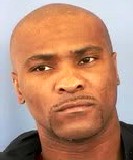
Stephen Elliot Powers
Murderer Russell Ellwood
Murderer · USA · 1991
Russell Ellwood was a former taxi driver. Authorities suspected him of killing…
20 victims
Russell Ellwood
Murderer · USA · 1991
Russell Ellwood was a former taxi driver. Authorities suspected him of killing…
20 victims
 Robert Martines Perez
Murderer · USA · 1994
Name: Robert Martines Perez · Other name used in proceedings: Robert Martinez P…
15 victims
Robert Martines Perez
Murderer · USA · 1994
Name: Robert Martines Perez · Other name used in proceedings: Robert Martinez P…
15 victims
 Billy Frank Vickers
Murderer · USA · 1993
Billy Frank Vickers Vickers was executed by lethal injection in Texas on Januar…
14 victims
Billy Frank Vickers
Murderer · USA · 1993
Billy Frank Vickers Vickers was executed by lethal injection in Texas on Januar…
14 victims
 Jock Palfreeman
Murderer · Bulgaria · 2007
Jock Palfreeman was an Australian convicted of murder in Bulgaria. In December…
1 victim
Jock Palfreeman
Murderer · Bulgaria · 2007
Jock Palfreeman was an Australian convicted of murder in Bulgaria. In December…
1 victim
 Judy Buenoano
Serial killer · USA · 1971
Judy Buenoano was executed by electrocution in Florida on March 30, 1998. Judy…
3 victims
Judy Buenoano
Serial killer · USA · 1971
Judy Buenoano was executed by electrocution in Florida on March 30, 1998. Judy…
3 victims
 Ronald Lee Fitzgerald
Murderer · USA · 1993
January 29, 1993 — Ronald Lee Fitzgerald was convicted of capital murder in sla…
2 victims
Ronald Lee Fitzgerald
Murderer · USA · 1993
January 29, 1993 — Ronald Lee Fitzgerald was convicted of capital murder in sla…
2 victims
 Byran Uyegusi
Mass murderer · USA · 1999
Byran Koji Uyesugi killed seven of his co-workers on November 2, 1999 in Honolu…
7 victims
Byran Uyegusi
Mass murderer · USA · 1999
Byran Koji Uyesugi killed seven of his co-workers on November 2, 1999 in Honolu…
7 victims
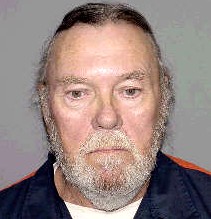 John Rodney McRae
Serial killer? · USA · 1950
John Rodney McRae was a defendant in a first-degree murder case tried in 1998.…
5 victims
John Rodney McRae
Serial killer? · USA · 1950
John Rodney McRae was a defendant in a first-degree murder case tried in 1998.…
5 victims
- Gender
- male
- Country
- USA
- Location
- Forrest County, Mississippi, USA
- Date of birth
- May 15, 1969
- Age at first offence
- 29
- Characteristics
- attempted rape, rape
- Victim profile
- Beth Lafferty, 27
- Method of murder
- Shooting
- Date(s) of murder
- June 14, 1998
- Years active
- 1998
- Date of arrest
- Same day
- Status
-
Sentenced to death
Sentenced to death in 2000; the Supreme Court of Mississippi affirmed the capital murder conviction and death sentence in 2003, and the U.S. Supreme Court sought the full record in 2005
Overview
Stephen Elliot Powers was convicted of capital murder and was sentenced to death in 2000. His capital murder conviction and death sentence were affirmed by the Supreme Court of Mississippi in 2003 (Powers v. State, No. 2001-DP-00474-SCT). In 2005, the U.S. Supreme Court took a closer look at his appeal and asked for the full record of the Mississippi case.
Timeline
- June 13, 1998 — Elizabeth Lafferty was introduced to Stephen Elliot Powers and his nephew, “Junior” or “Jay” Otis, Jr., by a mutual friend, Eddie Barnes; Powers and Lafferty later cooked out and drank beer at Lafferty's home.
- June 14, 1998 — Police searched Powers's apartment under a search warrant at approximately 8:00 p.m. and arrested him; Powers was advised of his Miranda rights and signed a waiver; he led police to a shed behind his apartment where a .22 caliber gun and bullets were found.
- December 18, 2003 — The Supreme Court of Mississippi affirmed the capital murder conviction and death sentence in an en banc decision.
- January 16, 2005 — The U.S. Supreme Court took a closer look at Powers's appeal and asked for the full record of the Mississippi case.
- 2000 — Powers was convicted and sentenced to death.
- 2003 — The Mississippi Supreme Court upheld Powers's capital murder conviction and death sentence.
The offence
Stephen Elliot Powers was convicted of capital murder for the June 14, 1998 murder of Elizabeth Lafferty. The capital murder was elevated by an underlying attempted rape offense.
The Mississippi Supreme Court described the homicide and the attempted rape basis for capital murder, stating that the jury found attempted rape as the underlying charge which elevated the homicide to capital murder and found that the capital offense was especially heinous, atrocious, or cruel.
Victim
Elizabeth Lafferty was 27 years old.
Manner of killing and injuries
Lafferty's body was discovered at approximately 1:00 a.m. the next morning in the hallway. Lafferty had been shot five times, three times at a point-blank range in the back of her head, once under the chin, and once in the temple. The State's experts were unable to determine the order in which the shots occurred. The bullets came from a .22 caliber gun.
Attempted rape allegations and physical positioning
Photographs were introduced at trial to explain the position of the body in the hallway where it was found. The Supreme Court described the prone position of the victim’s body: her legs were spread open more than ninety degrees, with a foot in each of the doors of the bedroom and bathroom, which were on opposite sides of the hallway where she was found. The left leg was raised slightly higher than the right and wedged within the doorjam to the bedroom. Her shorts were “wadded up” around the left ankle, and she was nude from the waist down except for these wadded up shorts. The body had several injuries consistent with defensive posturing, including abrasions to the back of her right upper arm, back of her left hand, and on the right knee. Although Lafferty was menstruating, no feminine hygiene products were found on or near her body.
The Supreme Court also stated that the physical evidence “clearly revealed” there was an attempt toward the commission of rape and that there was sufficient evidence to support the jury’s finding.
Jury findings described in the appeal
The jury found all four of the Enmund factors: the defendant actually killed, attempted to kill, intended that a killing take place, and contemplated that lethal force would be employed (Enmund v. Florida, 458 U.S. 782). The jury also found, beyond a reasonable doubt, that the capital offense was committed while Powers was engaged in the commission of or an attempt to commit the crime of rape and that the capital offense was especially heinous, atrocious, or cruel. Finally, the jury found there were “insufficient mitigating circumstances to outweigh the aggravating circumstances” and “that the defendant should suffer death.”
Investigation and evidence
After learning that Powers was the last person seen with Lafferty and that he had a .22 caliber gun on the night in question, police obtained a search warrant. On Sunday, June 14 at approximately 8:00 p.m., police searched Powers's apartment and then arrested him.
Miranda and statements
Powers was advised of his Miranda rights, but signed a waiver of those rights. Powers began writing a statement that the gun was in the woods, then stopped and agreed to take the police to the gun. After leading police on several pretextual excursions to locate the gun, he led the police to a shed behind his apartment where a .22 caliber gun and bullets were found. Powers made the statement: “you did not have a case until I gave you the murder weapon.”
Afterwards, Powers was taken back to the police station where he produced a written statement admitting that he killed Lafferty and left her body in her final position and state of undress. Powers told police that he and Lafferty “struggled with the gun, and the gun went off.” Powers denied having sex with Lafferty and claimed that she voluntarily partially undressed herself because she was “playing” around with him.
Arrest
Police searched Powers's apartment and arrested him on Sunday, June 14 at approximately 8:00 p.m. in connection with a search warrant.
Trial
Participants and relationships mentioned
Elizabeth Lafferty was introduced to Stephen Elliot Powers and his nephew, “Junior” or “Jay” Otis, Jr., by mutual friend Eddie Barnes. Later, Otis and Barnes left the Lafferty home, leaving Powers and Lafferty alone. The Supreme Court noted that Powers’s mother testified for the State at trial. Eddie Barnes testified regarding Lafferty claiming she had herpes on the day of the murder. Powers’s brother and/or his girlfriend picked up a computer later placed in a nearby alley.
Evidence presented at trial
The Supreme Court described the presentation of photographs, testimony placing Powers at the scene with the gun immediately prior to the shooting, and testimony that after Lafferty’s body was found, Powers told his friend that “something happened” to Lafferty.
The Supreme Court also described what it characterized as defensive posture injuries and other scene-related details: abrasions on the victim’s body and menstruation with no feminine hygiene products found on or near her body.
Physical evidence and notes
A search of Powers’s person after he asked to use the restroom revealed what appeared to be a blood-stained note to his mother located in his crotch area. The handwritten note said: “Everything I do is wrong.” However, the note was never tested to determine whether the stains were indeed blood or not.
Powers also admitted taking a computer from Lafferty’s home and placing it in a nearby alley, where it was later picked up by Powers's brother and/or his girlfriend.
Sanitary napkin testimony
While cleaning Powers's apartment after his arrest, Powers's mother found a used sanitary napkin rolled up in one of Powers’s baseball caps. This was turned over to police. At trial, Powers's mother testified for the State. On cross-examination, she testified that Powers's girlfriend gave the used sanitary napkin to Powers as some sort of “hex” or “voodoo-type thing” to keep him from having sex with any other female. Although the sanitary napkin was sent to the State Crime Lab for analysis, Crime Lab personnel were unable to positively match the blood on the napkin with that of the victim.
Medical and expert evidence
At trial, Dr. Stephen Hayne testified for the State. The Supreme Court described his testimony as including that the wounds found on Lafferty were “consistent with defensive posturing” and that he could not testify to a “reasonable degree of medical certainty” the specific cause of the injuries. Dr. Hayne also testified that the position of the body was “sexually explicit” and “not consistent” with consensual sex, particularly in light of the fact that she was shot three times in the back of the head.
The Supreme Court also described the defense-related expert attempt: trial counsel attempted to have Dr. Michael West qualified as an expert in crime scene reconstruction, but the court refused to accept him as an expert. Ultimately, Dr. West testified that no one could say exactly what happened to Lafferty based on the physical evidence and could not determine whether Lafferty was putting on or pulling of her shorts at the time of her death, or whether someone else had done so. Dr. West also could not determine whether Lafferty may have been going to the restroom or bedroom from the hallway, could not conclude how she came to be in the position where she was found, and testified that he saw nothing other than her position that indicated rape.
Regarding the herpes issue, Powers argued that trial counsel questioned Dr. West about herpes. The Supreme Court stated that the record reflected that Eddie Barnes testified that, on the day of the murder, Lafferty claimed she had herpes. The Supreme Court also stated that the court was disturbed with trial counsel for asking Dr. West about herpes when Dr. West had been barred by the court from seeking Lafferty’s medical records prior to trial, and that when the State objected, the court excused the jury and expressed surprise that trial counsel raised the question when he knew Dr. West had not been permitted to review medical records.
Disputed motion statements and suppression context
The Supreme Court noted that Powers admitted in a written statement that he and Lafferty struggled with a gun and that he shot Lafferty, but he denied having sex with the woman.
It also noted that Powers argued at a suppression hearing that he denied parts of his statements; however, the appeal described the denial of his motion to suppress as upheld by the Supreme Court of Mississippi.
Sentencing
Powers was sentenced to death. At sentencing, the jury found “insufficient mitigating circumstances to outweigh the aggravating circumstances” and “that the defendant should suffer death.”
The Supreme Court described a review required by Miss. Code Ann. § 99-19-105(3) (Rev. 2000), including:
- whether the sentence of death was imposed under the influence of passion, prejudice or any other arbitrary factor;
- whether evidence supported statutory aggravating circumstances;
- whether the sentence was excessive or disproportionate compared to similar cases;
- whether any aggravating circumstances found invalid on appeal were outweighed by mitigating circumstances or whether inclusion was harmless error.
The Supreme Court stated there was no evidence supporting a finding that the death sentence was imposed under the influence of passion, prejudice or any other arbitrary factor. It stated the evidence supported statutory aggravating circumstances, including that the capital offense was committed while Powers was engaged in the commission of or an attempt to commit rape and that the crime was especially heinous, atrocious, or cruel. It also stated that, after comparing the facts to other similar cases, the sentence was not disproportionate or excessive.
Appeals
Mississippi Supreme Court (direct appeal)
The Supreme Court of Mississippi reviewed Powers’s direct appeal from the Circuit Court of Forrest County.
Powers appealed on several ineffective assistance grounds and on the sufficiency of the attempted rape evidence:
- evidence of attempted rape was insufficient to support the capital murder charge;
- ineffective assistance of trial counsel during the motion to suppress;
- ineffective assistance of trial counsel during the guilt phase;
- ineffective assistance of trial counsel during jury selection;
- ineffective assistance of trial counsel for failing to have the capital murder charge reduced to simple murder or manslaughter;
- ineffective assistance of trial counsel in instructing the jury;
- ineffective assistance of trial counsel during the sentencing phase.
The Supreme Court found Powers’s arguments without merit and affirmed the conviction for capital murder and the sentence of death.
Underlying offense sufficiency: attempted rape
The Supreme Court explained that capital murder in Mississippi was defined as murder committed along with the commission of another crime, and that attempted rape was the underlying charge elevating the homicide to capital murder.
The Supreme Court found the attempted rape evidence sufficient and stated that the physical evidence “clearly reveals” there was an attempt and a direct ineffectual act toward the commission of rape. It also stated the case took it outside the realm of circumstantial evidence due to the sexually explicit position in which Lafferty’s body was found and Powers’s admission that he shot her and left her in the position in which she was found.
Ineffective assistance of counsel issues
The Supreme Court addressed ineffective assistance claims at multiple stages, including:
- motion to suppress: it described testimony by Detective Berry of the Hattiesburg Police Department about Powers’s arrest timing, Miranda warnings, waiver, lack of intoxication, and lack of threats or promises. It also described the suppression hearing where Powers testified that he lied to the police and claimed drinking beer the day before and morning of arrest, and that he was scared. The Supreme Court concluded counsel was not deficient and Powers was not prejudiced.
- jury selection/Batson challenge: it described that the State exercised six peremptory challenges and the defense nine, and the absence of a record of jurors’ race; it also summarized that trial counsel later raised Batson in a motion for J.N.O.V. or new trial and that the trial judge had indicated surprise. The Supreme Court concluded there was no indication trial counsel would have had a viable Batson challenge.
- coherent defense: the Supreme Court described that counsel’s strategy contested attempted rape and the link of the gun and bullets to the killing by forensic testing; it also addressed the choice not to have Powers testify and the attempt to qualify Dr. Michael West.
- reduction to simple murder or manslaughter: it described that reduction was in the prosecutor’s discretion and trial judge’s discretion, and that counsel attempted to quash indictment and sought directed verdict. The Supreme Court found no basis to reduce to manslaughter.
- jury instructions: it described that an instruction on murder was submitted at the State’s request and that the jury had the option of capital murder, murder, or not guilty; it also described the manslaughter instruction issue and counsel’s strategic decision not to pursue it.
- sentencing phase ineffective assistance: it described that trial counsel chose to beg for mercy rather than introduce additional mitigation evidence, conducted interviews, filed a list of eleven potential witnesses, and made tactical decisions about mitigation evidence such as drinking problems and other claimed mitigating factors.
The Supreme Court ultimately concluded trial counsel was effective and that the claims of ineffective assistance were without merit.
U.S. Supreme Court actions on appeal
In 2005, the U.S. Supreme Court took a closer look at Powers’s appeal. The justices were initially scheduled to discuss the case in conference next week, and on Thursday they asked for the full record of the Mississippi case. The court did not explain the request.
Powers argued he wanted a new trial because he claimed attempted rape was not a felony that would support a capital murder charge or conviction. The argument was rejected by Mississippi courts, and he asked the U.S. Supreme Court to consider that issue.
Outcome
Powers’s capital murder conviction and sentence of death were affirmed by the Supreme Court of Mississippi. The Supreme Court stated: “CONVICTION OF CAPITAL MURDER AND SENTENCE OF DEATH BY LETHAL INJECTION, AFFIRMED.”
It also described that, in the En Banc decision, the judgment was affirmed and it included a statement in conclusion that Powers’s claims that the evidence was insufficient and counsel ineffective were without merit.
Dissenting opinions (verbatim quotations included)
Dissent by Justice Carlson’s opinion section (including separate opinions)
The record included dissenting discussion and statements of disagreement from justices.
Main dissent narrative and key quoted phrase(s)
In the portion labeled as dissent, the dissenting justice wrote:
I am often reminded that, as a Justice of this Supreme Court, my task is to ensure that the law of this state is followed.
The dissent further stated:
Let us be “very clear” about what the majority is announcing in this case.
and:
Needless to say, I do not agree with these propositions.
The dissent also used the quoted expression:
bull frog's leap
It concluded:
Accordingly, I dissent.
Dissenting critique of attempted rape instruction rationale
The dissent described disagreement with the majority’s propositions regarding circumstantial evidence instruction for attempted rape and the evidentiary use of the victim’s post mortem position. It argued that the photographs were insufficient as direct evidence because Powers indicated he moved the body post mortem, and it stated that the “position is not directly, or circumstantially, probative of an attempted rape.”
Noted dissenting disposition
The dissent stated that it would affirm only on the lesser offense of simple murder and remand for resentencing.
Other details
Trial court procedural outcomes cited
The Supreme Court described that Powers’s motion for judgment notwithstanding the verdict or, alternatively, a new trial was denied, and that the direct appeal followed.
Legal standard references included in the appeal
The Supreme Court described standards of review for judgment notwithstanding the verdict and motion for new trial, and the Strickland v. Washington standard for ineffective assistance of counsel claims.
Enmund factors cited
The Supreme Court referenced “Enmund v. Florida, 458 U.S. 782,” and stated that the jury found all four of the Enmund factors.
Participants and named judges/attorneys mentioned
The Supreme Court’s entry included attorney names and court roles: Michael Adelman was listed as attorney for appellant; Office of the Attorney General included Judy T. Martin and Marvin L. White, Jr., as attorneys for appellee.
The justice lineup mentioned:
- “CARLSON, Justice, for the Court.”
- “SMITH, P.J., WALLER, COBB AND EASLEY, JJ., CONCUR.”
- “GRAVES, J., DISSENTS WITHOUT SEPARATE WRITTEN OPINION.”
- “McRAE, P.J., DISSENTS WITH SEPARATE WRITTEN OPINION JOINED IN PART BY GRAVES, J.”
- “PITTMAN, C.J., AND DIAZ, J., NOT PARTICIPATING.”
- “GRAVES, J., JOINS THIS OPINION IN PART.”
Docket numbers and case caption elements
The Supreme Court included: “Powers v. State” and “No. 2001-DP-00474-SCT.” It also listed “No. 2003-DR-02810-SCT” and described the Supreme Court of Mississippi decision as “December 18, 2003 EN BANC.” It referenced the U.S. Supreme Court appeal context in 2005, including the mention of “Mississippi inmate Stephen Elliot Powers” and his attempted rape argument.
Included appendix material (included in the case text)
The record included a long appendix listing death cases affirmed and death cases reversed (as to guilt phase and sentence phase; as to punishment and remanded; and others). Those lists included numerous case citations and notes such as “following remand” and “remanded for new sentencing hearing.”
Spotted an error, or have more information about this case?