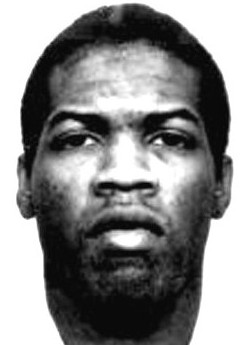
Derrick Sonnier
Murderer Brian Kevin Rosenfeld
Murderer · USA · 1985
Brian Kevin Rosenfeld Brian Kevin Rosenfeld was sentenced to three concurrent l…
23 victims
Brian Kevin Rosenfeld
Murderer · USA · 1985
Brian Kevin Rosenfeld Brian Kevin Rosenfeld was sentenced to three concurrent l…
23 victims
 Russell Ellwood
Murderer · USA · 1991
Russell Ellwood was a former taxi driver. Authorities suspected him of killing…
20 victims
Russell Ellwood
Murderer · USA · 1991
Russell Ellwood was a former taxi driver. Authorities suspected him of killing…
20 victims
 Robert Martines Perez
Murderer · USA · 1994
Name: Robert Martines Perez · Other name used in proceedings: Robert Martinez P…
15 victims
Robert Martines Perez
Murderer · USA · 1994
Name: Robert Martines Perez · Other name used in proceedings: Robert Martinez P…
15 victims
 Billy Frank Vickers
Murderer · USA · 1993
Billy Frank Vickers Vickers was executed by lethal injection in Texas on Januar…
14 victims
Billy Frank Vickers
Murderer · USA · 1993
Billy Frank Vickers Vickers was executed by lethal injection in Texas on Januar…
14 victims
 Alvin Andrew Kelly
Murderer · USA · 1984
Alvin Andrew Kelly was convicted of capital murder for the killing of Devin Mor…
4 victims
Alvin Andrew Kelly
Murderer · USA · 1984
Alvin Andrew Kelly was convicted of capital murder for the killing of Devin Mor…
4 victims
 Tony Leslie Fry
Murderer · USA · 1994
Tony Leslie Fry · February 21, 1994 — Tony Fry and his accomplice, 17-year-old…
1 victim
Tony Leslie Fry
Murderer · USA · 1994
Tony Leslie Fry · February 21, 1994 — Tony Fry and his accomplice, 17-year-old…
1 victim
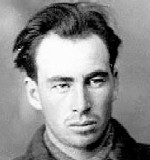 Charles Bannon
Mass murderer · USA · 1930
January 29, 1931 — A mob seized Charles Bannon from the Schafer jail and hanged…
6 victims
Charles Bannon
Mass murderer · USA · 1930
January 29, 1931 — A mob seized Charles Bannon from the Schafer jail and hanged…
6 victims
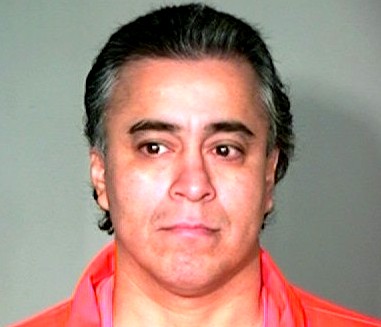 Angel Mayora Medrano
Murderer · USA · 1987
Angel Mayora Medrano was a defendant in a case involving rape. Medrano was at a…
1 victim
Angel Mayora Medrano
Murderer · USA · 1987
Angel Mayora Medrano was a defendant in a case involving rape. Medrano was at a…
1 victim
 Jason Thomas Scott
Serial killer · USA · 2008
Jason Thomas Scott was a man dubbed as the "mother-daughter killer" after killi…
5 victims
Jason Thomas Scott
Serial killer · USA · 2008
Jason Thomas Scott was a man dubbed as the "mother-daughter killer" after killi…
5 victims
- Gender
- male
- Country
- USA
- Location
- Harris County, Texas, USA
- Date of birth
- October 26, 1967
- Age at first offence
- 24
- Characteristics
- rape, stalker, child killer
- Victim profile
- Melody Flowers, 27, and her 2 year old son Patrick
- Method of murder
- Beating with a hammer / St abbing with knife
- Date(s) of murder
- September 16, 1991
- Years active
- 1991
- Date of arrest
- —
- Status
-
Executed
Executed by lethal injection in Texas on July 23, 2008
Case record: Derrick Sonnier
Background
Derrick Sonnier lived with his girlfriend and her daughter two apartments down from Melody Flowers in the same complex in Humble, in Harris County. In the summer of 1991, Sonnier, his girlfriend, and her daughter lived two apartments down from Flowers and her five children in the same complex in Humble.
The offence
In the summer of 1991, Sonnier was obsessed with Melody Flowers. Neighbors testified that he peeped into Flowers’ bedroom and made suggestive comments to her and her teenage niece. At least twice, Sonnier slipped into Flowers’ apartment and hid in her closet in an apparent attempt to scare her.
On September 16, 1991, Melody Flowers received a telephone call at her apartment from her sister. Melody informed her sister that she had just returned from an errand and was preparing herself and her two infant children, Patrick and Morgan, for a nap.
Around 3:00 p.m., Morgan was discovered crying at the door of her apartment by a neighbor. Unable to find Melody, the neighbor peeked into Flowers’ window and saw blood, then got the apartment manager. The manager entered the apartment, saw blood everywhere, and called the police.
Police discovered the bodies of Melody Flowers and her son Patrick submerged in a bathtub, partially covered by a blanket. Patrick had been stabbed to death. Melody Flowers had been bludgeoned with a hammer, strangled, stomped, and stabbed. Patrick had been stabbed twice, and Melody had been stabbed, bludgeoned with a hammer, strangled, and stomped.
Witness testimony described Sonnier as being near a field by the complex during the afternoon of September 16, 1991. A neighbor saw Sonnier walking toward a field near the complex with a bloody towel wrapped around one hand. Police testimony also described Sonnier carrying a “Fiesta” grocery store bag with a cardboard soda carton sticking out of it. When greeted, he ignored the greeting and continued hurriedly. When he reached the corner of the building, he stopped, peeked around the corner, and looked behind him before continuing.
Victims
Melody Flowers was 27 at the time of the murders. Her son Patrick was 2 at the time of the murders. The case also involved Melody Flowers’ one-year-old son’s crying at the door of her apartment and blood on her clothes.
Investigation
Testing showed that Melody Flowers’s DNA matched that of the blood found on one of the socks. Police found towels and a blouse, all blood-stained, in Sonnier’s apartment. One of the towels and the blouse were identified as belonging to Flowers.
In a field near the complex, police discovered a plastic shopping bag containing a piece of cord, shoes, socks, shorts, and a shirt, all blood-stained. The clothes were identified as being similar to those worn by Sonnier that day before the murder. DNA testing also established that blood taken from one of the socks in the grocery store bag matched the blood of Melody Flowers.
Inside Sonnier’s apartment, police discovered a blouse and additional towels, all blood-stained. Officers saw that Sonnier’s hand was wrapped in a bloody towel.
Arrest / police contact
As part of the initial investigation on the day of the murders, police officers knocked on Sonnier’s door. Sonnier answered. Before being questioned, he told the officers: “I didn’t hurt her. I am just here with my daughter.” The officers noted the bloody towel wrapped around his hand.
When police knocked at the front door, Sonnier answered and immediately stated “I didn't hurt her.” When asked about what had happened to his hand, Sonnier answered that he had cut it while slicing sausage. When that claim was presented at trial, testimony indicated that someone else had sliced the sausage cooking when police arrived.
Sonnier’s cut required nine stitches.
Trial
Procedural history and convictions
A Harris County grand jury indicted Sonnier for capital murder on Oct. 29, 1992.
A jury found Sonnier guilty on Feb. 17, 1993.
After separate punishment hearing, Sonnier was sentenced to death on Feb. 18, 1993.
The trial conviction and death sentence were subject to direct appeal and later collateral review.
Evidence presented at trial (guilt phase)
Shortly before 2:00 p.m. on September 16, 1991, Melody Flowers received a telephone call at her apartment. Around 3:00 p.m. Morgan was discovered crying at the apartment door with blood on her clothes.
Neighbors and witnesses testified about seeing Sonnier walking toward a field and about the bloody towel and “Fiesta” grocery bag with a cardboard soda carton.
Witnesses testified that soon after the bodies were discovered, Henderson saw Sonnier walking toward his apartment with a bloody towel wrapped around his hand. Henderson asked if he had heard about Melody Flowers. Sonnier answered “no.” Henderson testified that he told Sonnier that “something” had happened to Melody Flowers.
In testimony about police contact, an account described that when police knocked at the front door, Sonnier answered and immediately stated “I didn't hurt her.” When asked about his injury, he answered he had cut his hand while slicing sausage. D. Mosley testified that she sliced the sausage cooking when police arrived.
Police found blood-stained towels and a blouse in Mosley’s apartment trash bag in a hall closet after consent to search.
A witness described that when searching the field between the apartment complex and the middle school, police discovered a “Fiesta” grocery sack under a bush containing a bloody piece of cord, a pair of bloody shoes, a pair of bloody socks, bloodied shorts, and a bloodied shirt. Testimony described that when she left for work around 2:00 p.m., Sonnier was wearing unsoiled clothes identical to those discovered in the bag.
Evidence presented at trial (injuries and forensic findings)
Dr. T.J. Brown, pathologist, testified that Melody Flowers suffered four fatal injuries, each capable of causing her death. The injuries described were blunt trauma to the head, blunt trauma crushing her neck bones, asphyxia due to manual and ligature strangulation, stomping upon the chest and neck, and fatal stabbing twice in the chest.
A hammer head with human hair was found in the victims’ apartment. A bloodied condition of the apartment and multiple ligature marks indicated that Melody struggled fiercely for her life. The strangulation, beatings, blunt trauma to the head, and the stabbing were described as occurring before Melody Flowers died.
Patrick Flowers’ death was described as caused by two stab wounds to the chest, one of which penetrated the heart. Because of profuse bleeding caused by the wound to the heart, Patrick probably died within a minute of receiving the wound.
A blood splatter expert testified about blood distribution and soaking consistent with someone being stabbed on the bed, and a drag mark consistent with a small body being stabbed on the bed and dragged off.
Blood, semen, and DNA testing were described as mostly inconclusive, but DNA testing established that blood taken from one of the socks in the grocery bag matched the blood of Melody Flowers.
Jury findings and sentencing in the capital case
In February 1993, Sonnier was tried and convicted under Texas Penal Code § 19.03 of capital murder. The offence was a double murder committed on September 16, 1991.
The jury affirmatively answered the special issue submitted under Article 37.071 § 2(b)(1). Sonnier was sentenced to death as mandated by Article 37.071 § 2(g).
The trial court’s punishment charge required the jury to answer whether there was a probability that the defendant would commit criminal acts of violence that would constitute a continuing threat to society.
Sentencing
After the punishment hearing, Sonnier was sentenced to death on Feb. 18, 1993.
Appeals
Direct appeal (Texas Court of Criminal Appeals)
On Nov. 29, 1995, the Texas Court of Criminal Appeals affirmed.
On Jan. 10, 1996, the appeals court overruled Sonnier’s motion for rehearing.
State habeas
On Aug. 18, 1997, Sonnier filed his application for state habeas corpus relief.
On Nov. 5, 2003, the Texas Court of Criminal Appeals denied relief.
Federal habeas and certificates of appealability
On June 4, 2004, Sonnier filed his initial petition for federal habeas corpus relief.
On Aug. 5, 2005, Sonnier filed an amended petition.
On Jan. 24, 2006, the federal district court dismissed his case.
On Jan. 30, 2006, Sonnier filed his notice of appeal in the district court.
On Jan. 22, 2007, the 5th Circuit Court of Appeals denied certificate of appealability.
On Mar. 9, 2007, the 5th Circuit Court of Appeals denied Sonnier’s petition for rehearing.
Supreme Court petition
On June 5, 2007, Sonnier filed a petition for writ of certiorari in the U.S. Supreme Court.
On Oct. 9, 2007, Sonnier’s petition was denied.
Legal stay and rescheduling
On April 23, 2008, Sonnier’s execution was scheduled for June 3, 2008.
On June 3, 2008, the Texas Court of Criminal Appeals stayed the execution.
On June 9, 2008, the Court of Criminal Appeals denied habeas corpus and lifted the stay.
On June 13, 2008, execution was scheduled for July 23, 2008.
Outcome
On July 23, 2008, Derrick Sonnier was executed by lethal injection in Texas.
Multiple accounts described that Sonnier did not make a last statement. At one point when asked if he had any final statement, he shook his head once and later was pronounced dead.
A public information officer statement described: “Derrick Sonnier was executed on Wednesday for the 1991 sexual assault and murder of Melody Flowers and her 2-year-old son Patrick,” and: “Sonnier declined to give a last statement — in fact, when he was asked if he had anything to say, he just shook his head. “He was pretty quiet and didn’t really display a lot of outward emotion.”
The public reaction quoted included statements by Tameka Traylor:
“Justice can never be done,” Tameka Traylor, whose mother, Melody Flowers, 27, and brother, Patrick, 2, were killed in 1991. “After 17 years, it can never be done. ” “What hurts the most is not about justice. It's not about him dying. That doesn't change anything. It's the many nights I had to stay up and cry and want her as a child... Taking his life, that doesn't give any kind of comfort, no type of comfort for what he took from us.”
The case narrative also included quoted statements by family members, including Tameka Flowers:
“I’m actually upset because this shows who he was as a person,” she said. “It really shows his character, and I hate that he was somebody we had to meet in our life. “What I feel now is a lot of anger because I didn’t see any remorse for what he had done.” “Whoever decided to say lethal injection was cruel and unusual punishment to the inmates, I feel like that’s a slap in the face to everybody’s family who had to go through something like we’ve had to endure — like they never think about what we have to go through, or what we have to deal with,” she said. “If they think that’s cruel, just think about being stabbed, beaten with a hammer or strangled, or worst of all, losing a child.”
Other details
Alleged timeline and procedural dates in narrative
The narrative included that Sonnier was scheduled to die in February but that execution date was withdrawn by prosecutors pending the outcome of the Kentucky case before the Supreme Court. It also described that he had a prior execution date set aside and then had a stay granted around 90 minutes before the previously scheduled punishment date, before rescheduling for July 23, 2008.
Letters and mitigation-related claims in later proceedings
In a letter written by Sonnier’s victim’s daughter, Tameka Traylor, the narrative stated that she wrote Sonnier telling him that although he robbed her and her siblings of a life with their mother and brother, they no longer were his victims, and she told him she no longer felt hatred for him. The narrative stated that Traylor and her sister wanted to hear him confess and apologize for the murders.
In the later legal discussion about the trial, the record described that at sentencing, Sonnier’s attorneys, pursuant to his wishes and instructions, did not present any mitigation evidence. It also described that Sonnier confirmed on the record that he consistently instructed his attorneys not to present any mitigation evidence.
Appellate legal holdings in cited case summaries
The Texas Court of Criminal Appeals’ decision described that the evidence supported convictions, that photographs of victims’ bodies were admissible, that evidence supported finding of future dangerousness, that the death penalty article was constitutional, and that voluntary but mistaken choice not to allow his attorney to present mitigating evidence provided no grounds for reversal. The judgment was affirmed.
The federal appeals summary described that trial counsel’s failure to conduct in-depth investigation for mitigation evidence constituted deficient performance, but Sonnier failed to show prejudice under Strickland. It also stated that Simmons was inapplicable to the Texas death penalty sentencing scheme at issue and that the amended Texas capital sentencing system did not violate the Eighth Amendment or the Fourteenth Amendment equal protection clause. Request for certificate of appealability was denied.
Spotted an error, or have more information about this case?