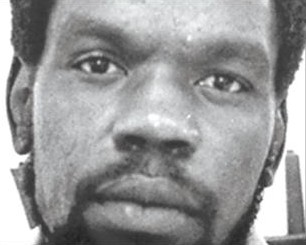
Charles Stamper
Murderer Ervil LeBaron
Murderer · USA · 1972
Ervil Morrell LeBaron (1925 to August 16, 1981) was the leader of a polygamous…
35 victims
Ervil LeBaron
Murderer · USA · 1972
Ervil Morrell LeBaron (1925 to August 16, 1981) was the leader of a polygamous…
35 victims
 Brian Kevin Rosenfeld
Murderer · USA · 1985
Brian Kevin Rosenfeld Brian Kevin Rosenfeld was sentenced to three concurrent l…
23 victims
Brian Kevin Rosenfeld
Murderer · USA · 1985
Brian Kevin Rosenfeld Brian Kevin Rosenfeld was sentenced to three concurrent l…
23 victims
 Marvin Gray
Murderer · USA · 1975
Marvin Gray was convicted killer who claimed responsibility for 23 slayings and…
23 victims
Marvin Gray
Murderer · USA · 1975
Marvin Gray was convicted killer who claimed responsibility for 23 slayings and…
23 victims
 Yahweh ben Yahweh
Murderer · USA · 1980
Yahweh ben Yahweh was born and legally named Hulon Mitchell Jr. (October 27, 19…
23 victims
Yahweh ben Yahweh
Murderer · USA · 1980
Yahweh ben Yahweh was born and legally named Hulon Mitchell Jr. (October 27, 19…
23 victims
 Stephanie Stephens
Murderer · USA · 2001
Stephanie Stephens was convicted of murdering her husband, Dr. David Stephens,…
1 victim
Stephanie Stephens
Murderer · USA · 2001
Stephanie Stephens was convicted of murdering her husband, Dr. David Stephens,…
1 victim
 Tom Lionel Burns
Homicide · 1958
Tom Lionel Burns was a retired driver and played the piano. He was 71 years old…
2 victims
Tom Lionel Burns
Homicide · 1958
Tom Lionel Burns was a retired driver and played the piano. He was 71 years old…
2 victims
 Milos Milosevic
Murderer · USA · 1966
Milos Milosevic (Serbian: Miloš Milošević) (July 1, 1941 – January 30, 1966) wa…
1 victim
Milos Milosevic
Murderer · USA · 1966
Milos Milosevic (Serbian: Miloš Milošević) (July 1, 1941 – January 30, 1966) wa…
1 victim
 Gary Bradford Cone
Murderer · USA · 1980
Gary Bradford Cone — defendant Gary Bradford Cone was convicted of murder in th…
2 victims
Gary Bradford Cone
Murderer · USA · 1980
Gary Bradford Cone — defendant Gary Bradford Cone was convicted of murder in th…
2 victims
 Kimberly McCarthy
Murderer · USA · 1988
Kimberly LaGayle McCarthy was convicted in Dallas, Texas, of capital murder inv…
3 victims
Kimberly McCarthy
Murderer · USA · 1988
Kimberly LaGayle McCarthy was convicted in Dallas, Texas, of capital murder inv…
3 victims
- Gender
- male
- Country
- USA
- Location
- Henrico County, Virginia, USA
- Date of birth
- 1953
- Age at first offence
- 25
- Characteristics
- robbery, drugs
- Victim profile
- Steven Staples, Agnes Hicks, Franklin Cooley (restaurant employees)
- Method of murder
- Shooting ( .22 caliber pistol)
- Date(s) of murder
- March 25, 1978
- Years active
- 1978
- Date of arrest
- —
- Status
-
Executed
Executed by electrocution in Virginia on January 19, 1993
Case overview
Charles Stamper was convicted and sentenced to death for three capital murders committed during a robbery. He was employed as a cook at a Shoney's Restaurant in Henrico County, Virginia, and he murdered three co-workers there during an early morning robbery on March 25, 1978.
Timeline
- March 25, 1978 — At approximately 6:35 a.m., Richard Wren discovered the bodies of Steven Staples, Agnes Hicks, and Franklin Cooley at Shoney's Restaurant in Henrico County; the front door to the restaurant was broken from the inside out and the safe was open.
- November 17, 1978 — A Circuit Court of Henrico County convicted Charles Stamper after trial on three counts of capital murder and four associated felony counts; he received death sentences on each capital murder conviction.
- 1979 — The Virginia Supreme Court affirmed the conviction and imposition of the death penalty; Stamper v. Commonwealth, 220 Va. 260, 257 S.E.2d 808 (1979).
- 1980 — The Supreme Court denied certiorari; Stamper v. Virginia, 445 U.S. 972, 100 S.Ct. 1666, 64 L.Ed.2d 249 (1980).
- December 4, 1980 — The Circuit Court of Henrico County denied Stamper's first petition for a writ of habeas corpus.
- November 20, 1981 — The Virginia Supreme Court affirmed the denial of Stamper's habeas petition; Stamper's first habeas corpus petition was affirmed by order dated November 20, 1981.
- February 12, 1982 — A plenary hearing was held in the United States District Court for the Eastern District of Virginia, and the petition was dismissed on February 12, 1982; Stamper v. Baskerville, 531 F.Supp. 1122 (E.D.Va.1982).
- October 4, 1982 — The Fourth Circuit found Stamper had failed to exhaust state remedies and ordered dismissal of the appeal.
- February 22, 1983 — The Supreme Court denied certiorari in Baskerville v. Stamper, 459 U.S. 1225, 103 S.Ct. 1231, 75 L.Ed.2d 466 (1983).
- 1983 — After waiver of the exhaustion requirement, the district court dismissed the petition on its merits; Stamper v. Baskerville, 558 F.Supp. 100 (E.D.Va.1983).
- 1984 — The Fourth Circuit remanded again for dismissal for failure to exhaust state remedies; Stamper v. Baskerville, 724 F.2d 1106 (4th Cir.1984).
- February 6, 1984 — The district court dismissed the petition for failure to exhaust state remedies.
- September 6, 1984 — A plenary hearing was held in the Circuit Court of Henrico County on another petition for a writ of habeas corpus.
- December 28, 1984 — The Circuit Court of Henrico County denied the petition by order dated December 28, 1984.
- May 3, 1988 — The Virginia Supreme Court denied the appeal from that denial by order dated May 3, 1988.
- November 5, 1990 — The United States District Court for the Eastern District of Virginia denied Stamper's petition for a writ of habeas corpus.
- January 18, 1993 — The Supreme Court of Virginia dismissed Stamper's petition for a writ of habeas corpus by order dated January 18, 1993.
- January 19, 1993 — The district court dismissed Stamper's petition for a writ of habeas corpus; Stamper was executed by electrocution at 11:15 P.M. at Greensville Correctional Center; Stamper appealed the dismissal and the Fourth Circuit summarily affirmed.
The offence
On March 25, 1978, at approximately 6:35 a.m. (Saturday), Richard Wren discovered the bodies of Steven Staples, Agnes Hicks, and Franklin Cooley at Shoney's Restaurant in Henrico County.
The door to Shoney's was broken from the inside out. Wren crawled through the broken door to enter the restaurant and found the bodies. Cooley was still alive when discovered but died several hours later without regaining consciousness. Wren observed that the safe was open. Shoney's Restaurant did not open until 7:00 a.m., and only employees were allowed inside prior to opening.
Victims and medical evidence
The medical evidence established that the deaths occurred at 6:00 a.m. (except for Cooley, who died several hours later).
- Steven Staples, assistant manager, died of gunshot wounds to the chest from a .22 caliber copper jacketed bullet made by Winchester Western. The bullet had entered Staples' chest from above the collarbone and traveled downward from front to rear. Powder burns on Staples' chin and right wrist indicated the weapon was fired only inches from him. Staples' skull had been fractured by a heavy rectangular object, possibly from an angle iron found near his body. There was also a cut along the right side of Staples' neck caused by a sharp-edged weapon.
- Franklin Cooley, night janitor, died of gunshot wounds to the head. Powder burns indicated the weapon had been fired at close range. Cooley was killed with a .22 caliber copper clad bullet manufactured by Winchester Western.
- Agnes Hicks, an employee of Shoney's, was killed by two shots from a .22 caliber weapon. One bullet was a copper clad bullet and the other was plain lead. Plain lead bullets were manufactured by Remington.
Access, locks, and safe
Stamper did not have a key to Shoney's, and all locks on the doors had been changed with the advent of new management. Of those murdered, only Staples had the combination to the safe or a key to the door.
The restaurant had a fire exit which could be opened from the inside, but an alarm sounded and a key was required to turn the alarm off. All Shoney's employees knew about the fire door.
The safe had been locked the night before the crime and contained about $4,500. Michael Gambill, an assistant manager at the time of the murders, checked the safe on the morning of March 25, 1978, at about 1:00 a.m. At that time, Cooley was present cleaning. An audit conducted after the crime revealed that $3,983.77 was missing from the safe.
Investigation
Henrico County police investigated the robbery and murders. Numerous photographs were taken, a black and white video tape of the crime scene was recorded, and both were introduced into evidence. The police interviewed employees of Shoney's.
At approximately 9:45 p.m. on March 25, police stopped Stamper on Dill Road. Earlier that day, Stamper's car had been parked in the driveway of his parents' home at 2213 Cleary Road. Stamper was not a suspect at that time and agreed to go to police headquarters for an interview.
During the interview, Stamper's car was locked. Stamper stated that no one else had access to the car that weekend. After a policeman peering into the car noticed some glass particles on the floor board, the police asked Stamper if they could search the car, and Stamper consented. The glass particles were recovered from the front floorboard.
Stamper told the police he had last been at Shoney's at 3:00 p.m. on March 24, 1978. His alibi was that he had gone out to a social on the night of March 24, and that he and his wife had watched TV late on March 24 through March 25.
Glass evidence
It was stipulated that the glass comprising the samples from Stamper's car was substantially identical in various optical properties with the glass analyzed by Eugene Reichenbecher, a glass analyst. Tests revealed that of the 36 particles of glass found in Stamper's car, 20% matched in optical properties the glass at Shoney's. The glass from the window at Shoney's was comparable with only 4% to 5% of other glass made.
Keys and firearm evidence
The keys to Staples' automobile were found in the woods near Stamper's parents' home, where Stamper had lived up until a short time prior to moving to Menole Avenue. A .22 caliber pistol was also found in the same area.
Cecil Moorehead, a ballistics expert, testified that the .22 caliber pistol found near Stamper's parents' home had four empty cartridge casings, four live cartridges, and one empty cylinder. The cartridges fired consisted of three Winchester Western (copper clad) and one Remington (plain lead) cartridges. The live cartridges remaining in the pistol consisted of two Winchester Western and two Remington.
Moorehead explained the order of firing of the cartridges by the rotation of the cylinder: Winchester Western, Winchester Western, Remington, Winchester Western. The pistol examined by Moorehead was consistent with the murder weapon as to pistol type, the bullets fired, and the lands and grooves of the rifling; however, Moorehead could not definitely say that the pistol was the murder weapon because the bore had been pitted by rust, making accurate comparison impossible.
Witness sightings
Witnesses in the area of Shoney's on the day and time in question testified that a car fairly resembling Stamper's had been in the parking lot off Hilliard Road at approximately 5:40 to 5:50 a.m., and that a car resembling Stamper's had come out of the parking lot beside Dumbarton Square at about 5:50 a.m. As an employee, Stamper was supposed to park his vehicle in the parking lot on the Hilliard Road side of Shoney's.
Arrest
Stamper was stopped by police at approximately 9:45 p.m. on March 25 on Dill Road and agreed to go to police headquarters for an interview.
Trial
Stamper went on trial in Henrico County, Virginia.
Charges and verdict
Stamper was tried and convicted on three counts of capital murder and four associated felony counts in Henrico County, Virginia on November 17, 1978.
Sentences
He was sentenced to death on each of the capital murder convictions and to a term of life imprisonment plus three years on the other charges.
Separately described sentencing included:
- death on each of the capital murder charges,
- life on the robbery charge,
- one year each on the use of a firearm.
Trial evidence as described on appeal
The appellate opinion described the following facts as established at trial:
- Stamper was employed as a cook at the restaurant where the murders took place and was not scheduled to work on the Saturday the crime was committed unless another cook failed to come to work.
- The murders took place before the restaurant opened; Stamper did not have a key to the restaurant; the front door was broken from the inside out; a back door fire exit had an alarm that would sound if opened.
- The three people murdered were all employees; only victim Staples knew the combination to the safe; the safe was found open by the person who discovered the victims; the safe was locked the night before and contained about $4,500; an audit showed $3,983.77 missing.
- Staples was shot once in the chest by a .22 caliber copper jacketed bullet made by Winchester Western; Cooley was shot once and killed with the same type of bullet; Hicks was killed by two shots from a .22 caliber weapon with Winchester Western copper jacketed and Remington lead bullets; a .22 caliber pistol was recovered from woods near Stamper's parents' home; the weapon contained four empty cartridge casings, four live rounds, and one empty cylinder; the ballistic expert testified bullets were consistent with the recovered pistol as to rifling, lands, and grooves but could not conclude the pistol was the murder weapon because of rusted bore and mutilated condition of fired bullets.
- Two witnesses testified to seeing a car resembling Stamper's car in and later out of the restaurant parking lot.
- The keys to victim Staples' car were recovered from the woods near the home of Stamper's parents.
- Stamper was behind on March 1978 rent ($100 per month) and received a pay or quit notice; he paid $100 on March 30; as of March 8, he owed Stonestreet Jewelers $63.55 and faced a judgment; he paid all but $5.50 on April 5; on April 8, he paid the remaining $5.50, paid $100 down on a $187 watch, and co-signed a note for a friend for $395; he was a regular lay-away customer since March 1977; on March 27 or 28, he discussed purchasing a 1972 Lincoln priced at $3500 with $1500 cash in his pocket but did not purchase it because the dealer never saw the money.
- Nineteen fingerprints and a footprint were recovered from the crime scene and none were Stamper's.
- Stamper told police he had been to a social with his wife the night before, stayed up late watching TV, and was asleep with his wife on the morning of the murders; his wife corroborated his account on the stand.
- Stamper did not show up for work on Monday and Tuesday March 27 and 28 and returned on Wednesday the 29th.
- The appellate opinion further described the inferences the Commonwealth asked the jury to draw, including that only an employee could have gained access before opening, that the broken door suggested the victims let Stamper in knowing him, that Stamper grabbed Staples' car keys rather than restaurant keys in his escape, that Stamper broke through the front door expecting escape through the fire exit, and that the safe and the presence of Staples' safe combination and other knowledge supported a motive for robbery tied to indebtedness.
Counsel and juror issues
Stamper argued that the evidence was circumstantial and insufficient as a matter of law and challenged the competency of his trial counsel based on jurors excused due to death-penalty views, including Witherspoon-based arguments, and later argued counsel failed to make certain objections.
Stamper also challenged trial counsel's acquiescence in a response to a juror's question about a possible accomplice, and the appellate opinion addressed the issue as to Strickland prejudice.
Sentencing
Stamper was sentenced to death on each of three capital murder convictions. He was also sentenced to life imprisonment plus three years on the other charges, with additional detail that life was imposed on the robbery charge and one year each was imposed on use of a firearm.
Appeals
Direct appeal and certiorari
Upon automatic appeal to the Virginia Supreme Court, the conviction and the death penalty were affirmed. Certiorari was denied by the United States Supreme Court.
- Stamper v. Commonwealth, 220 Va. 260, 257 S.E.2d 808 (1979) (affirmed).
- Certiorari denied; Stamper v. Virginia, 445 U.S. 972 (1980).
Habeas corpus history
Stamper pursued a series of petitions for writs of habeas corpus before state and federal courts.
- The Circuit Court of Henrico County denied Stamper's state habeas petition by an order dated December 4, 1980, and the Virginia Supreme Court affirmed by an order dated November 20, 1981.
- The federal district court conducted a plenary hearing and dismissed the petition on February 12, 1982; Stamper v. Baskerville, 531 F.Supp. 1122 (E.D.Va.1982).
- The Fourth Circuit ordered dismissal on October 4, 1982 for failure to exhaust state remedies.
- Certiorari in Baskerville v. Stamper was denied on February 22, 1983, 459 U.S. 1225.
- After remand, the Commonwealth waived exhaustion and the district court dismissed the petition on its merits in Stamper v. Baskerville, 558 F.Supp. 100 (E.D.Va.1983).
- The Fourth Circuit remanded again for failure to exhaust state remedies; **Stamper v.
- The district court dismissed the petition for failure to exhaust state remedies on February 6, 1984.
- Another state habeas petition was denied by the Circuit Court of Henrico County on December 28, 1984 following a plenary hearing on September 6, 1984.
- The Virginia Court of Appeals affirmed; Stamper v. Townley, 4 Va.App. 101, 354 S.E.2d 802 (1987).
- The Virginia Supreme Court denied the appeal by order dated May 3, 1988.
- A federal habeas petition was denied on November 5, 1990.
Fourth Circuit decision and subsequent filing
In Stamper v. Muncie, 944 F.2d 170, the Fourth Circuit addressed claims including sufficiency of the evidence and competency of trial counsel related to juror dismissal and court responses. The Fourth Circuit affirmed.
In a later Fourth Circuit matter, 93-4000, Charles Stamper appealed the district court's dismissal of his petition for writ of habeas corpus, and the Fourth Circuit summarily affirmed. The court described that his current litigation commenced on January 15, 1993, when he filed a petition in the Supreme Court of Virginia, which dismissed the petition on January 18, 1993. He then filed in the district court on January 18, 1993. The warden moved to dismiss, the district court permitted proceeding in forma pauperis, dismissed the petition, and granted a certificate of probable cause. The Fourth Circuit denied a stay of execution.
Outcome
Stamper was executed by electrocution in Virginia on January 19, 1993.
He was executed at Greensville Correctional Center at 11:15 P.M. on January 19, 1993, according to the prison operations officer Wayne Brown. Prison guards held him by the shoulders and helped him walk to the electric chair. Stamper used leg braces and a walker so he could take the last few steps on his own. He had begun using a wheelchair after a spinal cord injury from a 1988 fight with other prisoners.
Other details
Roles and relationships
- Richard Wren was a breakfast cook who discovered the bodies.
- Michael Gambill was an assistant manager.
- Stamper worked Monday through Friday from 6:30 a.m. to 2:00 p.m. at the Shoney's.
- Staples was Stamper's manager.
- Stamper had told Janice Gaberdiel, a manager at Shoney's, that he was quitting because he needed more money, and he gave his notice a week before March 25, 1978.
- Stamper was scheduled to work on Monday and Tuesday after the killings but did not appear until Wednesday.
- Stamper lived with his wife in the Laburnum Apartments on Menole Avenue, about an eight to ten minute drive from his parents' residence on Cleary Road.
Furniture of quotations and named statements
No verbatim quotations were provided in a way that established speakers and attribution within the given text for inclusion as quotations.
Execution scheduling and clemency investigation material included in status narrative
The provided narrative described that the Governor ordered the execution in January 1993 after medical condition investigation and previously stayed the execution for medical evaluation. It also included described reactions from disability advocacy groups and attorneys for Stamper, as well as statements attributed to named individuals including Willie Stamper, Dennis W. Dohnal, T. L. Twitty, and Richard C. Dieter, and a statement attributed to Larry Stargell.

Spotted an error, or have more information about this case?