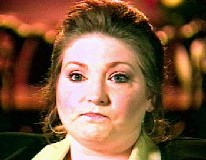
Stephanie Stephens
Murderer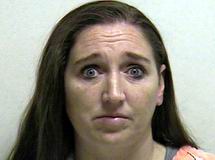 Megan Huntsman
Murderer · USA · 1996
Megan Huntsman was 40 at sentencing. She was a mother of three children who wer…
6 victims
Megan Huntsman
Murderer · USA · 1996
Megan Huntsman was 40 at sentencing. She was a mother of three children who wer…
6 victims
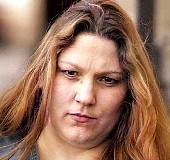 Angela Johnson
Murderer · USA · 1993
Angela Jane Johnson was convicted in federal court of aiding and abetting the m…
5 victims
Angela Johnson
Murderer · USA · 1993
Angela Jane Johnson was convicted in federal court of aiding and abetting the m…
5 victims
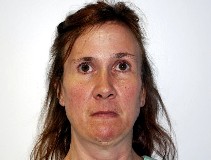 Michele Kalina
Murderer · USA · 1996
Michele Kalina pleaded guilty to murder for one of five infants she initially w…
5 victims
Michele Kalina
Murderer · USA · 1996
Michele Kalina pleaded guilty to murder for one of five infants she initially w…
5 victims
 Tiffany Hall
Murderer · USA · 2006
Tiffany Hall was 24 when she was charged in September 2006. She later entered a…
5 victims
Tiffany Hall
Murderer · USA · 2006
Tiffany Hall was 24 when she was charged in September 2006. She later entered a…
5 victims
 Banita Jacks
Murderer · USA · 2007
Banita Jacks was a Washington, DC resident convicted of murdering her four daug…
4 victims
Banita Jacks
Murderer · USA · 2007
Banita Jacks was a Washington, DC resident convicted of murdering her four daug…
4 victims
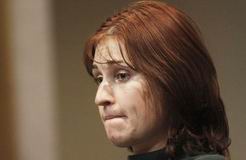 Holly Grigsby
Murderer · USA · 2011
Holly Grigsby was sentenced to life in prison without parole on July 15, 2014.…
4 victims
Holly Grigsby
Murderer · USA · 2011
Holly Grigsby was sentenced to life in prison without parole on July 15, 2014.…
4 victims
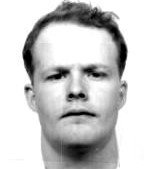 Johnny Ray Anderson
Murderer · USA · 1981
Johnny Ray Anderson attempted to collect insurance money. He shot and killed hi…
1 victim
Johnny Ray Anderson
Murderer · USA · 1981
Johnny Ray Anderson attempted to collect insurance money. He shot and killed hi…
1 victim
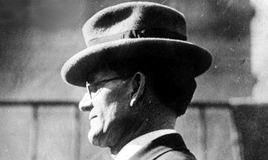 William Hale
Murderer · USA · 1921
Name: William Hale · Known as: the so-called "King of the Osage Hills" · Occupa…
24 victims
William Hale
Murderer · USA · 1921
Name: William Hale · Known as: the so-called "King of the Osage Hills" · Occupa…
24 victims
 Hadden Clark
Murderer · 1986
Hadden Clark was a cross-dressing cannibal killer convicted in Maryland of two…
2 victims
Hadden Clark
Murderer · 1986
Hadden Clark was a cross-dressing cannibal killer convicted in Maryland of two…
2 victims
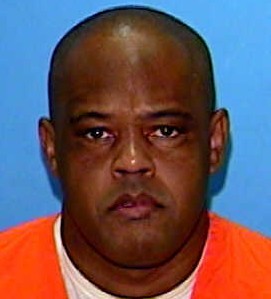 Kayle Barrington Bates
Murderer · 1982
Kayle Barrington Bates was convicted of first-degree murder, kidnapping, armed…
1 victim
Kayle Barrington Bates
Murderer · 1982
Kayle Barrington Bates was convicted of first-degree murder, kidnapping, armed…
1 victim
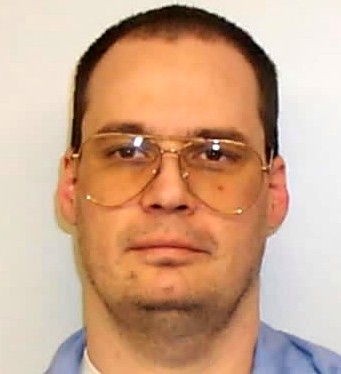 Darrell Edward Payne
Murderer · USA · 2000
Darrell Edward Payne was 36 and of Nampa at the time of the July 2000 murder of…
1 victim
Darrell Edward Payne
Murderer · USA · 2000
Darrell Edward Payne was 36 and of Nampa at the time of the July 2000 murder of…
1 victim
- Gender
- female
- Country
- USA
- Location
- Hattiesburg, Mississippi, USA
- Date of birth
- September 12, 1967
- Age at first offence
- 34
- Characteristics
- poisoner, to inherit
- Victim profile
- Dr. David Stephens, 59 (her husband)
- Method of murder
- Poisoning ( put a lethal dose of anesthetic drugs into Dr. Stephens' insulin pump)
- Date(s) of murder
- May 1, 2001
- Years active
- 2001
- Date of arrest
- September 12, 2002
- Status
-
Died in custody
Sentenced to life in prison in September 2003; died in prison on October 14, 2006
Case record: Stephanie Stephens
Overview
Stephanie Stephens was convicted of murdering her husband, Dr. David Stephens, in violation of Section 97-3-19 of the Mississippi Code of 1972. She was sentenced to life imprisonment in the custody of the Mississippi Department of Corrections. She later died in prison on October 14, 2006.
Stephanie Stephens was born September 12, 1967, and she died October 14, 2006.
Timeline
- September 12, 2002 — Stephanie Stephens was charged with her husband’s murder.
- January 2003 term — The Forrest County Grand Jury indicted Stephanie for the murder of her husband in violation of Section 97-3-19 of the Mississippi Code of 1972.
- April 14, 2003 — Stephanie was arraigned; the trial was set for September 8, 2003.
- June 5, 2003 — A pre-trial motion hearing occurred regarding media coverage and cameras in the courtroom.
- June 16, 2005 — The Supreme Court of Mississippi issued its decision in Stephens v. State, No. 2003-KA-02549-SCT.
- September 8, 2003 — The trial occurred (trial set for this date).
- September 15, 2003 — Stephanie was found guilty of murder and sentenced to life imprisonment in the custody of the Mississippi Department of Corrections.
- October 14, 2006 — Stephanie Stephens died of double pneumonia in a prison hospital; she had been brought to the hospital from prison that day.
Background
Stephanie Stephens’ early life, health, and marriage
Stephanie was born as Stephanie Tate. She lived in Bogalusa, Louisiana. After graduating high school and after college, she took a job as a nurse at Forrest General Hospital in Hattiesburg, Mississippi, where she met heart surgeon David Stephens.
After both had spouses at home, she and David began an affair. In 1995, Karen Stephens confronted David and the police narrative described that she then shot herself; Karen died on April 28, 1995, and the death was ruled as a suicide. David and Stephanie were married on May 13, 1996. The case proceedings also described that in March 1996 Karen confronted David about an affair allegedly involving Stephanie Kennedy, and that in the argument Karen retrieved a pistol that discharged in her mouth, rendering her immediately paralyzed from the neck down and eventually resulting in her death some two months later.
The Supreme Court of Mississippi described additional details regarding Stephanie’s condition. By 2001, Stephanie’s health began to deteriorate. She had severe complications from Crohn’s disease and a broken hip that limited her mobility. These conditions rendered Stephanie unable to work. With both David and Stephanie unable to maintain employment, they hired a nanny to care for Stephanie’s two young children and a medical professional to see after them.
David Stephens’ career, illnesses, and insulin pump
The Supreme Court of Mississippi stated that in 1987, Dr. David Stephens moved to Hattiesburg to establish a cardiovascular program at Forrest General Hospital, accompanied by his wife, Karen, and two children.
In 1998, David began suffering from symptoms of hepatitis C, diagnosed years earlier but previously asymptomatic. He was also diagnosed at approximately the same time with diabetes mellitus, described as the most serious form of diabetes, causing complications such as dizziness, blurred vision, difficulty concentrating, and confusion. He underwent two courses of interferon therapy, which did little to slow the progression of his hepatitis C and caused severe damage to his liver.
By 2000, David’s illnesses rendered him unable to work. He drew disability benefits from a policy with UNUM Insurance Company. He requested that the Hattiesburg Clinic allow him to continue practicing medicine by reading diagnostic studies, but it was turned down by the Clinic’s board of directors for a full-time position; he was given part-time work instead. His monthly salary dropped from $50,000 to approximately $6,000.
The Supreme Court of Mississippi described that by 2001 David’s condition worsened to the point that he was placed on an organ transplant list at Ochsner Hospital in New Orleans. His diabetes worsened due to his poor eating and health habits such that he wore an insulin pump twenty-four hours a day, automatically injecting a regulated amount of insulin into his abdomen at regular intervals.
In the trial and related narrative, the doctor was described as 59 years old when he died on May 1, 2001, and he suffered from several ailments, was sick, and used an insulin pump.
The offence
Stephanie was convicted of murdering her husband, Dr.
The Supreme Court of Mississippi and the accompanying case summary described that tests identified anesthetic drugs in David Stephens’ system following his death. The Supreme Court of Mississippi stated that the autopsy cause of death was the “laudanosine overdose and also etomidate toxicity,” and that investigation revealed the presence of Atricurium, a drug used to paralyze muscles during surgery. Investigators concluded that Stephanie injected David with sedatives and a heart medication, and that the drugs were accessible to Stephanie at the Forrest General Hospital where she previously worked.
Investigation
Initial death investigation and lab results
On May 1, 2001, Stephanie awoke to find David lying lifeless in his bed. Bobby Shurden, the deputy coroner, spoke with Dr. Philip Rogers, David’s treating physician, and concluded that David died of natural causes as a result of his end-stage liver failure.
Initially, the Supreme Court of Mississippi stated that neither Dr. Rogers nor Butch Benedict, the Forrest County Coroner, saw any indication of foul play, other than the possibility that the death may have resulted from a malfunction of the insulin pump. As customary practice, the Forrest County Coroner’s Office drew two vials of blood from David and sent them to the Mississippi Crime Laboratory for analysis. The lab report revealed that a chemical called laudanasine, described as a metabolite of a hypnotic anesthetic drug called atricurium, was found in the sample of blood drawn from David.
Police investigation; contacts with Stephanie; exhumation and autopsy
After receiving the lab report, local law enforcement launched a full investigation into David’s death. On June 1, 2001, Officer Rusty Keyes of the Hattiesburg Police Department, along with Benedict, visited the Stephens home and met with Stephanie regarding the lab report. Stephanie claimed no knowledge of what the drugs were or how they could have gotten into David’s system.
The Hattiesburg Police Department continued its investigation by subpoenaing phone records, banking information, and David’s medical records. On June 25, 2001, Keyes and Benedict received an order from Forrest County Circuit Judge Dickie McKenzie to have David’s body exhumed for an autopsy. Dr. Stephen Hayne performed the autopsy, which revealed that the cause of death was the “laudanosine overdose and also etomidate toxicity.”
The investigation also revealed that David maintained a deferred compensation plan with MetLife Insurance Company valued at approximately $732,000. The Supreme Court of Mississippi described that on May 1, 2001, MetLife sent a standard form letter regarding participant renegotiations of pay-out dates to all participants in the Maximum Deferred Compensation program, then resent the form to David’s residence on June 1, 2001. On June 14, 2001, MetLife received a form purportedly signed by David and dated April 30, 2001.
Arrest warrant and charges
With the above information, the Hattiesburg Police Department obtained an arrest warrant for Stephanie Stephens. During the January 2003 term, the Forrest County Grand Jury indicted Stephanie for the murder of her husband in violation of Section 97-3-19 of the Mississippi Code of 1972.
Stephanie was arraigned on April 14, 2003. The trial was set for September 8, 2003.
Arrest
Stephanie Stephens was charged with her husband’s murder on September 12, 2002.
Trial
Venue change and media coverage in court
Due to enormous pretrial publicity, the trial court granted Stephanie’s Motion for Change of Venue and selected a jury from DeSoto County. During pretrial proceedings, the trial court announced that CBS Television wished to cover the courtroom proceedings to create a news documentary. Neither counsel for the State nor Stephanie objected to the presence of the media.
A pretrial motion hearing occurred on June 5, 2003, where the trial court addressed cameras in the courtroom. Then-Circuit Judge Jess H. Dickinson made the following observations in open court:
“The third thing I want to cover is that I have disclosed previously a contact that was made to the Court through the clerk's office from an executive producer with CBS News.
CBS, through its television program “48 Hours,” is interested in filming this trial for a subsequent segment on one of their shows. Their reason for making the inquiry is that our Supreme Court recently passed a new rule which allows cameras in the courtroom. And as of the time that this trial will begin, that rule will be in effect. So they made the inquiry stating that they would like to come down and film the trial. ․ I have talked with counsel for Ms. Stephens and with the district attorney about this, but now on the record in open court, I would ask if either of you have any comment to make, any objection, or statement to make to the Court prior to the Court making a determination of whether or not that permission will be granted.”
The court noted that both counsel for the State and the defendant made no objections to granting CBS access to the courtroom proceedings. The trial judge continued:
“The Supreme Court has certain requirements attendant to the rule allowing cameras in the courtroom, and those rules are going to be followed. Some of the rules are that the camera cannot film jurors and various other aspects that we will follow.”
The trial lasted seven days and involved approximately twenty witnesses and numerous exhibits.
Jury verdict and sentence
In September 2003, Stephanie Stephens’ murder trial occurred in Forrest County. The trial court found she was found guilty of murder and sentenced her to life imprisonment in the custody of the Mississippi Department of Corrections.
On September 15, 2003, Stephanie was found guilty of murder and sentenced to life imprisonment in the custody of the Mississippi Department of Corrections.
Prosecution and defense theories
Prosecutors argued that Stephanie killed her husband for his money. The defense attorney Ray Price argued that the husband had killed himself.
Dr. Stephens’s estate was estimated at about $3 million.
The Supreme Court of Mississippi described a confession issue through Karen Burnett’s testimony. During the discussion on appeal, the opinion stated that Burnett testified that on the day of Stephanie’s wedding, Stephanie told her that David wanted to die and requested that Stephanie help him, and that Burnett said Stephanie injected him with two sedatives and a heart medication.
The Supreme Court of Mississippi quoted Burnett’s testimony as follows (in the section addressing sufficiency of the evidence):
“[Stephanie] told me that [David] had expressed to her that he wanted to die and he asked her to help him. And [Stephanie] told me that she injected him with two sedatives and a heart medication, I believe.”
The Supreme Court of Mississippi also described Stephanie’s inconsistent statements when confronted with drug results, including:
- “You drew blood?”
- “Am I being charged with murder?”
Cameras in the courtroom arguments on appeal
Stephanie argued on appeal that the trial court violated Rule 4 of the Mississippi Rules of Electronic and Photographic Coverage (MREPC) by allowing media into the courtroom. She contended the placement of cameras prejudiced her and that when the trial court advised the jury about national news program coverage, the protections afforded by the order changing venue were reversed.
The Supreme Court of Mississippi described her contentions about camera placement:
- one camera placed immediately behind the jury box on a tall tripod with the lens over the back rail of the jury box directly above the jurors’ heads;
- a second camera operated via remote control located in a corner between the jury box and the jury room that panned the entire jury seated in the box;
- a third camera located in the balcony somewhat to the rear of the jury and not located in a spot continually conspicuous to the jury.
The Supreme Court of Mississippi set out relevant portions of Rule 4(a) and Rule 4(b) and Rule 4(e). The opinion reproduced Rule 4 provisions as follows:
(a) The location of equipment and personnel necessary for electronic media coverage of judicial proceedings shall be at a place either inside or outside the courtroom so as to be minimally intrusive to the proceedings. Only equipment which does not produce distracting sound or light shall be employed to cover judicial proceedings. No flash or strobe lighting shall be used. All running wires shall be securely taped to the floor. No other artificial lighting device of any kind shall be employed in connection with electronic coverage unless otherwise authorized by the court.
(b) No members or potential members of the jury may be recorded or shown at any time prior to their dismissal, nor shall the jury selection process be subject to electronic coverage. The presiding judge shall inform all potential jurors at the beginning of the jury selection process of the restrictions of this particular provision.
․ (e) Electronic media equipment shall not be taken into the courtroom, relocated, or removed from the designated media area except prior to convening of the judicial proceedings, during recess, and after adjournment of the day.
The Supreme Court of Mississippi held Stephanie had waived the issue by failing to object contemporaneously and also found that Stephanie failed to demonstrate prejudicial effect.
Corpus delicti and sufficiency of evidence
On appeal, Stephanie argued the trial court should have dismissed the charge because the State failed to prove all essential elements beyond a reasonable doubt, and she argued the State failed to prove David was actually murdered, asserting that suicide evidence existed.
The Supreme Court of Mississippi defined corpus delicti as:
“[c]orpus delicti is defined as the body or substance of the crime.”
It quoted Parks v. State in defining that corpus delicti has two elements and explained that:
- the existence of a certain act or result forming the basis of a criminal charge must be proven;
- criminal agency must be proven as the cause of the act or result.
The Supreme Court of Mississippi addressed that Stephanie did not dispute an alleged confession to Burnett but argued corpus delicti was not established. The Supreme Court found that Stephanie’s confession, coupled with other evidentiary proof, supported corpus delicti to a probability.
Stephanie also challenged sufficiency of the evidence through motions for directed verdict and J.N.O.V. The Supreme Court stated it considered all evidence in the light most favorable to the State and gave the State the benefit of all favorable inferences that may reasonably be drawn. The Supreme Court held the evidence was legally sufficient to support the conviction.
Sentencing
Stephanie Stephens was sentenced to life imprisonment in the custody of the Mississippi Department of Corrections on September 15, 2003.
Appeals
Supreme Court of Mississippi decision
Following the denial of her post-trial motions, Stephanie timely appealed.
The Supreme Court of Mississippi decision is titled Stephens v. State, with:
- Stephanie K. STEPHENS v. STATE of Mississippi
- No. 2003-KA-02549-SCT
- June 16, 2005
- Before SMITH, C.J., EASLEY and GRAVES, JJ.
- Ray T. Price, Hattiesburg, attorney for appellant.
- Office of the Attorney General by W. Glenn Watts, attorney for appellee.
The Supreme Court of Mississippi stated its conclusion and ruling:
Finding no reversible error, we affirm the judgment of the trial court.
The opinion’s conclusion included:
- “CONCLUSION”
- “Finding no reversible error in any of the issues raised by Stephanie K. Stephens, we affirm the judgment of the Forrest County Circuit Court.”
- “CONVICTION OF MURDER AND SENTENCE OF LIFE IMPRISONMENT IN THE CUSTODY OF THE MISSISSIPPI DEPARTMENT OF CORRECTIONS, AFFIRMED.”
The Supreme Court listed portions of its discussion addressing multiple issues, including:
- cameras in the courtroom;
- corpus delicti;
- sufficiency of the evidence;
- Karen Burnett’s testimony;
- a circumstantial evidence instruction;
- identity of a confidential informant.
Identity of a confidential informant (Brady issue)
On appeal, Stephanie argued the trial court should have compelled disclosure of the identity of a “confidential informant” discovered through Officer Keyes. The Supreme Court of Mississippi described that Keyes testified he learned about Burnett being a suspect through a confidential informant, but that it was not a confidential informant in the usual sense, describing it as “a friend of Keyes who had come to him with information he had overheard in a conversation.”
The Supreme Court of Mississippi discussed the Brady test and held it did not need to reach the later prongs, stating that Stephanie did not show favorable evidence existed. The Supreme Court also cited M.R.E. 401 and M.R.E. 402 and discussed URCCC 9.04 B 2, stating:
“Disclosure of an informant's identity shall not be required unless the confidential informant is to be produced at a hearing or trial or a failure to disclose his/her identity will infringe the constitutional rights of the accused or unless the informant was or depicts himself/herself as an eyewitness to the events or event constituting the charge against the defendant.”
The Supreme Court concluded that none of the conditions requiring disclosure were met and held it was correct to refuse to disclose the informant’s identity.
Outcome
The Supreme Court of Mississippi affirmed the conviction and the life imprisonment sentence.
Aftermath
Death in prison
On October 14, 2006, Stephanie Stephens died of double pneumonia in a prison hospital after being brought to the hospital from prison. She had served three years of her life sentence at the Central Mississippi Correctional Facility in Pearl, Mississippi. Her family was not notified until the next day.
The case narrative also stated that Coroner Jimmy Roberts claimed that she died around noon that Saturday, and that she was interred at Hillcrest Cemetery in Petal, Mississippi.
Other statements and media references included in the materials
The case materials included references to media coverage and related commentary, including CBS News’ “48 Hours” program. The materials also included a statement attributed to Rusty Keyes in which he said:
“[Stephanie Stephens] wanted money,” Rusty Keyes told 48 Hours. “She wanted the nice cars. But she didn’t wanna work for ‘em. She wanted it given to her. And she saw that with Dr. Stephens. She started spending money at a clip after his death.”
The materials also stated that Stephanie’s life was profiled on Snapped, a TV series on Oxygen in 2005.
Other details
Parties, institutions, and individuals named
- Officer Rusty Keyes of the Hattiesburg Police Department.
- Butch Benedict, Forrest County Coroner.
- Bobby Shurden, deputy coroner.
- Dr. Philip Rogers, treating physician.
- Dr. Stephen Hayne, performed the autopsy.
- Forrest County Circuit Judge Dickie McKenzie, issued the order for exhumation.
- Trial judge Jess H. Dickinson, who made observations at a pretrial motion hearing.
- Trial counsel Ray T. Price (attorney for appellant).
- W. Glenn Watts (Office of the Attorney General), attorney for appellee.
- Supreme Court of Mississippi Justices: SMITH, C.J., EASLEY, GRAVES, JJ.; and also noted concurrences and non-participation by other justices in the opinion.
- Coroner Jimmy Roberts.
- Central Mississippi Hospital, identified as just outside Jackson in the narrative.
- Central Mississippi Correctional Facility in Pearl, Mississippi.
- Hillcrest Cemetery in Petal, Mississippi.
- MetLife Insurance Company.
- UNUM Insurance Company.
- Ochsner Hospital in New Orleans.
- Forrest General Hospital in Hattiesburg, Mississippi.
- Forrest County.
- DeSoto County (jury selected from DeSoto County).
- Jackson, Mississippi.
- Rankin County (Central Mississippi Correctional Facility identified as located in Rankin County in the narrative).
Spotted an error, or have more information about this case?