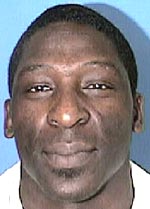
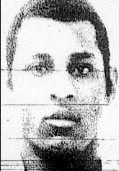
Gary Lynn Sterling
Murderer Brian Kevin Rosenfeld
Murderer · USA · 1985
Brian Kevin Rosenfeld Brian Kevin Rosenfeld was sentenced to three concurrent l…
23 victims
Brian Kevin Rosenfeld
Murderer · USA · 1985
Brian Kevin Rosenfeld Brian Kevin Rosenfeld was sentenced to three concurrent l…
23 victims
 Yahweh ben Yahweh
Murderer · USA · 1980
Yahweh ben Yahweh was born and legally named Hulon Mitchell Jr. (October 27, 19…
23 victims
Yahweh ben Yahweh
Murderer · USA · 1980
Yahweh ben Yahweh was born and legally named Hulon Mitchell Jr. (October 27, 19…
23 victims
 Russell Ellwood
Murderer · USA · 1991
Russell Ellwood was a former taxi driver. Authorities suspected him of killing…
20 victims
Russell Ellwood
Murderer · USA · 1991
Russell Ellwood was a former taxi driver. Authorities suspected him of killing…
20 victims
 Robert Martines Perez
Murderer · USA · 1994
Name: Robert Martines Perez · Other name used in proceedings: Robert Martinez P…
15 victims
Robert Martines Perez
Murderer · USA · 1994
Name: Robert Martines Perez · Other name used in proceedings: Robert Martinez P…
15 victims
 James Edward Wood
Murderer · USA · 1993
James Edward Wood was sentenced to death in Idaho on January 14, 1994. He died…
1 victim
James Edward Wood
Murderer · USA · 1993
James Edward Wood was sentenced to death in Idaho on January 14, 1994. He died…
1 victim
 David Kevin Hocker
Murderer · USA · 1998
March 21, 1998 — David Kevin Hocker stabbed and beat his boss, Jerry Wayne Robi…
1 victim
David Kevin Hocker
Murderer · USA · 1998
March 21, 1998 — David Kevin Hocker stabbed and beat his boss, Jerry Wayne Robi…
1 victim
 Louis Wagner
Murderer · USA · 1873
Louis Wagner had lived on Smuttynose Island with six Norwegian immigrants: Mare…
2 victims
Louis Wagner
Murderer · USA · 1873
Louis Wagner had lived on Smuttynose Island with six Norwegian immigrants: Mare…
2 victims
 Isabella Guzman
Murderer · USA · 2013
Isabella Guzman was an 18-year-old who lived in an Aurora home with her mother,…
1 victim
Isabella Guzman
Murderer · USA · 2013
Isabella Guzman was an 18-year-old who lived in an Aurora home with her mother,…
1 victim
 Brandon Rhode
Murderer · USA · 1998
Brandon Rhode was a white male and had been sentenced to death for the murders…
3 victims
Brandon Rhode
Murderer · USA · 1998
Brandon Rhode was a white male and had been sentenced to death for the murders…
3 victims
- Gender
- male
- Country
- USA
- Location
- Navarro/Hill Counties, Texas, USA
- Date of birth
- J uly 25, 1967
- Age at first offence
- 21
- Characteristics
- kidnapping, drugs, robbery
- Victim profile
- John W. Carty, 72, and Deloris June Smith, 52 / William Porter, 72, and Leroy Porter, 71
- Method of murder
- Beating with a car bumper jack
- Date(s) of murder
- May 13/17, 1988
- Years active
- 1988
- Date of arrest
- May 18, 1988
- Status
-
Executed
Executed by lethal injection in Texas on August 10, 2005
Case record: Gary Lynn Sterling
Background
Gary Lynn Sterling was convicted of capital murder and sentenced to death for the May 1988 Navarro County robbery and murder of John W. Carty. Sterling was scheduled to be executed after 6 p.m. Tuesday, August 10, 2005.
Sterling was 38 years old. He was Black and male. He had brown hair and black eyes. He was 6 ft 01 in and weighed 176.
Sterling received TDCJ# 931 and dated received: 02/09/89. He had 12th grade education.
The date of offense was 05/13/88. The county of conviction was Navarro.
Other details
- Sterling pled guilty in two separate trials to the 1988 murders of William Porter and Leroy Porter, and he was sentenced to life in prison in both cases.
- Sterling was not tried for the murder of Delores Smith.
- Evidence at trial indicated Sterling knew all four victims.
- The circumstances described included robbery in connection with the capital murder.
The offence
John W. Carty was kidnapped from his home. Deloris June Smith, 52, was also kidnapped from Carty’s home. The bodies of both were later discovered in an isolated area of Navarro County.
Carty, 72, was bludgeoned to death with a car bumper jack.
Evidence at trial showed that Sterling struck Carty in the head with a bumper jack, causing his death. Sterling also took Carty’s automobile, cash, and wallet. Sterling later sold the automobile for cash.
Sterling also took Carty’s car, a TV, a shotgun, and a lantern, and he sold the car for cash he needed to buy crack cocaine.
Authorities said Sterling took Carty and Delores Smith from Carty’s home and beat them to death with a car bumper jack.
Prosecutors also had evidence tying Sterling to the slaying of Delores Smith, a friend of Carty’s whose purse and glasses were found at Sterling’s home. Sterling was not tried for Smith’s murder.
Investigation
While in jail in an adjoining county on a separate offense, Sterling stated that he wanted to tell authorities about a dead person in Navarro County. After being warned by a magistrate, Sterling led Navarro County authorities to the location of Carty’s body.
Sterling admitted shortly thereafter in a written statement that he had killed the deceased and had taken his money, wallet, and automobile.
In custody for the slayings of William and Leroy Porter, Sterling led police to the bodies of John Carty and Deloris Smith. Authorities said he abducted Carty and Smith from Carty’s home, drove them to an isolated field, and beat them to death with a car bumper jack.
Arrest
Sterling was arrested in connection with a separate offense in an adjoining county. He was captured after eluding police on the night the Porter brothers were killed.
Authorities said Sterling evaded police when the Porter brothers spotted him stripping a car that belonged to Leroy Porter. He was caught the next day, when officers acting on a tip found him hiding in the attic of his home in Blooming Grove, a town of about 800 some 15 miles west of Corsicana.
Sterling was arrested for the slayings of William Porter, 72, and Leroy Porter, 71, at their home in Hill County, about 35 miles northeast of Waco.
Trial
Sterling’s capital murder trial took place in the 13th Judicial District Court, Navarro County, with Kenneth A. Douglas, J.
Sterling was convicted of capital murder specifically, “murder committed in the course of a robbery in Navarro County, Texas.” The jury answered the two issues submitted to it in the affirmative and sentenced Sterling to death.
In a written statement, Sterling admitted that he killed Carty and took his money, wallet, and automobile.
Evidence and disputes in the trial and direct appeal
In his first point of error, Sterling challenged the admission into evidence of Sterling’s oral statements that directed authorities to the deceased’s body and implicated himself in the killing.
Sterling claimed that the oral statements were not admissible because he did not voluntarily waive his right to self-incrimination. Both Officer Jones and Ranger Smith testified that Sterling received warnings from a magistrate on the same day but prior to the time that he made his statements.
At a pre-trial hearing on Sterling’s motion to suppress the oral statements, the trial court found that Sterling was lawfully arrested pursuant to a warrant, was duly warned of his rights in compliance with Article 38.22 V.A.C.C.P prior to his statements, knowingly and affirmatively waived his rights, and that his oral statements were voluntary and not the result of any promise, threat or coercion on the part of the officers.
The Court of Criminal Appeals held that the trial court’s findings were supported by the record and would not be disturbed.
The Court of Criminal Appeals affirmed the judgment of the trial court after finding no reversible error.
Other trial-related claims described in later proceedings
In later federal habeas proceedings, Sterling pursued an ineffective assistance of counsel claim based on counsel’s failure to question juror Victor Walther about racial bias during voir dire.
The ineffective assistance claim centered on Strickland v. Washington, 466 U.S. 668 (1984).
The court record included mention that a post-trial affidavit used a highly inflammatory racial epithet in reference to African-Americans, and that the juror was seated after counsel did not question juror Walther about racial bias during voir dire. Sterling alleged counsel was deficient in that regard.
Sentencing
After a separate punishment hearing, the court assessed a sentence of death.
Sterling’s conviction and sentence were affirmed on direct appeal.
Sterling also received life prison terms for the murders of William Porter and Leroy Porter in separate proceedings after he pled guilty.
Appeals
Direct appeal
- July 14, 1988 — A Navarro County grand jury indicted Gary Sterling for capital offense in the death of John Carty.
- February 9, 1989 — A jury found Sterling guilty of capital murder and following a separate punishment hearing, the court assessed a sentence of death.
- April 22, 1992 — Sterling’s conviction and sentence were affirmed on direct appeal by the Texas Court of Criminal Appeals.
- December 14, 1992 — The U.S. Supreme Court denied Sterling’s petition for certiorari review.
State and federal habeas proceedings
- December 30, 1996 — Sterling filed an application for writ of habeas corpus in the state trial court.
- June 27, 2001 — The Texas Court of Criminal Appeals denied habeas relief.
- January 14, 2002 — The U.S.
- January 17, 2002 — Sterling filed a petition for writ of habeas corpus in a Dallas federal court.
- April 23, 2003 — The federal district court denied habeas relief.
- March 17, 2004 — The 5th U.S. Circuit Court of Appeals granted Sterling permission to appeal one issue.
- November 23, 2004 — The 5th Circuit affirmed the federal district court’s denial of habeas relief.
- March 21, 2005 — Sterling petitioned the U.S. Supreme Court for certiorari review.
- May 9, 2005 — The U.S. Supreme Court denied Sterling’s petition.
- June 20, 2005 — Sterling petitioned the Supreme Court for rehearing from the denial of certiorari review.
- Aug 1, 2005 — Sterling’s petition for rehearing was denied by the U.S. Supreme Court.
Habeas holding described in the case materials
In Sterling v. Dretke, 117 Fed. Appx. 328 (5th Cir. 2004) (Habeas), the Court of Appeals affirmed the district court’s judgment. The court described that it granted a certificate of appealability as to the ineffective assistance of counsel claim based on counsel’s failure to question juror Victor Walther about racial bias during voir dire, but it later affirmed the district court’s denial of habeas relief and held that defendant failed to prove ineffective assistance of trial counsel.
Outcome
Sterling was executed by lethal injection in Texas on August 10, 2005. He was pronounced dead at 6:16 p.m.
A Texas Attorney General media advisory stated that Sterling was convicted and sentenced to death for the May 1988 Navarro County robbery and murder of John W. Carty.
The lethal injection began after Sterling’s final remarks. Sterling asked for the chaplain to say a prayer.
Final meal
Sterling’s final meal was chicken fried steak, fried chicken, mashed potatoes, French fries, pecan pie, sweet tea and a vanilla milkshake.
Final words
“I wish I could do something to replace your father, your loved one,” Gary Sterling said as two daughters and three sons of his victim stood a few feet away watching through a window.
“But I can't. I know this was a heinous crime. I just wish I could get him back. I would like the chaplain to say a prayer, not only for me but for the victim's family. For them being misled, I am sorry. That is all I have to say. I'll put in a good word for everybody.”
Sterling also addressed the warden when asked by the warden if he had a final statement, and he said he wanted the chaplain to say a prayer. As the drugs began flowing, Sterling smiled and said:
“I'll put in a good word for everybody.”
As Larry Hart, a prison chaplain, finished his brief prayer, Sterling said:
“I can only say I'm sorry,” Gary Sterling said.
“For them being misled, I am sorry. That is all I have to say.”
Spotted an error, or have more information about this case?