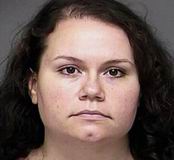
Rhonda Orr
Murderer Miranda Barbour
Murderer · USA · 2013
Miranda Barbour, 19, defendant. · Elytte Barbour, 22, defendant and husband of…
100 victims
Miranda Barbour
Murderer · USA · 2013
Miranda Barbour, 19, defendant. · Elytte Barbour, 22, defendant and husband of…
100 victims
 Megan Huntsman
Murderer · USA · 1996
Megan Huntsman was 40 at sentencing. She was a mother of three children who wer…
6 victims
Megan Huntsman
Murderer · USA · 1996
Megan Huntsman was 40 at sentencing. She was a mother of three children who wer…
6 victims
 Angela Johnson
Murderer · USA · 1993
Angela Jane Johnson was convicted in federal court of aiding and abetting the m…
5 victims
Angela Johnson
Murderer · USA · 1993
Angela Jane Johnson was convicted in federal court of aiding and abetting the m…
5 victims
 Michele Kalina
Murderer · USA · 1996
Michele Kalina pleaded guilty to murder for one of five infants she initially w…
5 victims
Michele Kalina
Murderer · USA · 1996
Michele Kalina pleaded guilty to murder for one of five infants she initially w…
5 victims
 Tiffany Hall
Murderer · USA · 2006
Tiffany Hall was 24 when she was charged in September 2006. She later entered a…
5 victims
Tiffany Hall
Murderer · USA · 2006
Tiffany Hall was 24 when she was charged in September 2006. She later entered a…
5 victims
 Banita Jacks
Murderer · USA · 2007
Banita Jacks was a Washington, DC resident convicted of murdering her four daug…
4 victims
Banita Jacks
Murderer · USA · 2007
Banita Jacks was a Washington, DC resident convicted of murdering her four daug…
4 victims
 Abdelaâli Hadi
Serial killer · M orocco · 2001
Abdelaâli Hadi was a homeless man living near the place where the bodies of the…
9 victims
Abdelaâli Hadi
Serial killer · M orocco · 2001
Abdelaâli Hadi was a homeless man living near the place where the bodies of the…
9 victims
 Edwin Snelgrove
Murderer · USA · 1983
Edwin “Ned” Snelgrove was born Edwin Fales Snelgrove, Jr. on August 9, 1960. He…
2 victims
Edwin Snelgrove
Murderer · USA · 1983
Edwin “Ned” Snelgrove was born Edwin Fales Snelgrove, Jr. on August 9, 1960. He…
2 victims
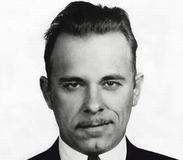 John Dillinger
Murderer? · USA · 1933
John Dillinger (John Herbert Dillinger, Jr.; June 22, 1903 – July 22, 1934) · J…
1 victim
John Dillinger
Murderer? · USA · 1933
John Dillinger (John Herbert Dillinger, Jr.; June 22, 1903 – July 22, 1934) · J…
1 victim
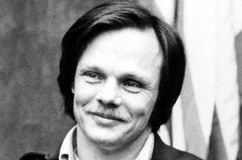 Lawrence Bittaker
Serial killer · USA · 1979
Lawrence Sigmund Bittaker was adopted shortly after his birth by Mr. and Mrs. G…
5 victims
Lawrence Bittaker
Serial killer · USA · 1979
Lawrence Sigmund Bittaker was adopted shortly after his birth by Mr. and Mrs. G…
5 victims
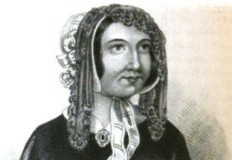 Maria Manning
Murderer · United Kingdom · 1849
Maria Manning was also identified as Marie Manning and Marie de Roux. Maria Man…
1 victim
Maria Manning
Murderer · United Kingdom · 1849
Maria Manning was also identified as Marie Manning and Marie de Roux. Maria Man…
1 victim
- Gender
- female
- Country
- USA
- Location
- Little Elm, Denton County, Texas , USA
- Date of birth
- 1974
- Age at first offence
- 29
- Characteristics
- arson, to collect insurance money, parricide
- Victim profile
- James Orr, 32 (her disabled husband)
- Method of murder
- Smoke inhalation and burns
- Date(s) of murder
- May 14, 2003
- Years active
- 2003
- Date of arrest
- —
- Status
-
Imprisoned
Sentenced 88 years in prison on April 2, 2008
Case information
Name: Rhonda Orr
Background
Rhonda and James Orr married in 1999. James Orr required the use of a wheelchair and died in a house fire in the early morning hours of May 14, 2003.
Rhonda was 34 at sentencing. She had a teenage daughter, Amanda, and later remarried and had a 2-month-old baby and two stepchildren. Her defence attorney was Robert Jones. Her attorney said her smile was for her teenage daughter, Amanda.
During the trial, Rhonda’s mother, Judy Spangler of Dallas, told the jury during the punishment phase that Rhonda was a registered nurse who worked in Mesquite and volunteered with Red Cross disaster relief efforts. Spangler told the jury that if Rhonda went to prison, she and her retired husband would care for Amanda and the baby would remain with Rhonda’s husband.
Rhonda’s mother, Marian Poole of Celina, said after the jury announced the sentence: “Justice is justice and it's been done,”.
During trial, Rhonda’s defence argued that the Orrs were in the midst of an amicable separation and that Rhonda had no reason to set fire to the house because James Orr had agreed to give his wife the proceeds of its sale.
The State portrayed Rhonda as wanting her husband dead so she could collect more than $1 million in insurance policies, and the State said Rhonda was pregnant with another man’s child at the time of the fatal blaze.
During the punishment-phase evidence, the trial court rebuffed the prosecution’s efforts to introduce evidence showing that Rhonda aborted that pregnancy.
The offence
A grand jury indicted Rhonda in February 2004. The indictment alleged that Rhonda started the fire by igniting a combustible substance knowing that the house was within the limits of an incorporated city or town with intent to damage or destroy the house and that James Orr died as a result of the fire.
A jury found Rhonda guilty of first-degree arson resulting in the death of her husband, James Orr, and assessed her punishment at eighty-eight years’ imprisonment.
The evidence at trial included testimony that Rhonda intentionally started a fire that killed James and that there were multiple points of origin caused by a combustible substance, possibly Wild Turkey liquor.
Investigation
Former Little Elm Police Officer William Miller received a 9-1-1 dispatch around 3:45 a.m. that the fire department was en route to a house fire with a person still inside the house. Miller arrived “really quickly,” noticed smoke coming out of the house, and saw Rhonda, her daughter, and neighbors standing outside. Miller was told by Rhonda that her husband was still in the back bedroom.
Rhonda told Officer Miller she tried to get her husband out of the house but he kicked her away and shut and locked the door. Miller went into the house alone and found the master bedroom door locked. Miller kicked in the door and chest-high smoke billowed out. Miller entered the room and found the wheelchair but did not find James.
Miller made two more unsuccessful trips into the master bedroom to find James. The fire and increasing smoke caused Miller to lose his breath and start choking, and parts of the ceiling fell on him. Miller felt he had to leave the house. Officer Robert Walton arrived near this time, and Miller and Walton went to the back of the house.
Miller kicked out the back window to the master bedroom with his foot, getting his boot caught in the window in the process, and air rushed in and flames then rushed out. When the fire department arrived, Miller returned to the front of the house and apologized to Rhonda for not finding James. Miller was care-flighted to Parkland Hospital for treatment. Miller later learned James was found in the bathroom near the toilet; Miller testified he might have found James had he been told there was a restroom in the bedroom.
Miller said Rhonda seemed upset at the scene and that, although she had not previously done so, Rhonda insisted on going back inside the house once the fire department arrived.
Bart Vest, a firefighter-paramedic with the Frisco Fire Department, testified he arrived to assist in treating any victims and said he understood two police officers and a pregnant female (Rhonda) had smoke inhalation. Vest testified Rhonda did not want any treatment and insisted that someone get her husband out of the house.
Robert Wren O'Neal and his wife, Lindsey O'Neal, lived next door to Rhonda and James. O’Neal testified he and his wife were awakened around 3:30 or 3:45 a.m. on May 14, 2003, by Rhonda’s “frantic knocks” at their front door. Rhonda stood at the door with her daughter Amanda and said that her house was on fire and James was still inside. Lindsey O’Neal called 9-1-1 because Rhonda said she had not done so.
O’Neal testified that Amanda stayed with his wife and that he went next door with Rhonda. He heard smoke detectors going off and saw the entryway full of smoke. He recalled Rhonda frantically screamed that James was locked in the master bedroom. O’Neal and Rhonda went down the hallway to the door of the master bedroom, which was locked. O’Neal said the doorknob was hot and black smoke billowed out from the top, bottom, and sides of the door.
O’Neal and Rhonda yelled James’s name and could hear James moaning or grunting, and O’Neal said James sounded like he was in severe pain. Because O’Neal did not feel safe in the house, he and Rhonda went outside to the driveway, though O’Neal acknowledged Rhonda was hesitant to leave. O’Neal said no one else was around until Officer Miller arrived in a “couple [of] minutes or so.”
O’Neal testified that Rhonda was in his presence from the time she knocked on his door until Officer Miller arrived, that Rhonda did not go into the house with Officer Miller, and that Rhonda could not have gone into the house without his knowledge.
O’Neal said it seemed unusual that Rhonda parked her car across the street in front of a neighbor’s house the night of the fire because she typically parked her car in the driveway or in the garage. He had not previously seen it parked across the street. O’Neal also said James usually parked in the driveway or on the street in front of the Orrs’ house, but his car was parked on the street between the Orrs’ house and the O’Neals’ house on the night of the fire.
Lindsey O’Neal testified Rhonda did not have time to go into the house by herself because James left with Rhonda immediately after Rhonda told them there was a fire and that James was in the bedroom. Lindsey O’Neal also testified that, after the fire, Rhonda asked her to lie and say that she was the pregnant woman at the scene, not Rhonda, because no one knew that Rhonda was pregnant and that James was not the father. Lindsey O’Neal said she believed Rhonda was “fake crying” when rescue workers removed James’s body from the house.
Captain Shawn Russell of the Little Elm Fire Department testified that he received a call about a house fire with a handicapped person trapped inside. Russell testified that there were heavy fire conditions when he entered the house and that he was “pretty much on [his] belly crawling around.” Russell found James in the back of the bathroom, sitting Indian-style and slumped over with his hands between his legs. Russell described James as having no pulse, appearing burned, and having a lot of black around his mouth and chin. Russell said the Frisco Fire Department arrived and helped get James out of the house, and paramedics unsuccessfully attempted to resuscitate James.
Dr. Gary Sisler, a deputy medical examiner for Tarrant, Parker, and Denton counties, testified that James died from smoke inhalation and thermal burns covering eighty percent of his body.
Donald Diviney, a former sergeant in the Criminal Investigation Division of the Little Elm Fire Department, responded to the fire and spoke with Officer Miller, Wren O’Neal, and fire department personnel. Diviney also interviewed Rhonda around 9:30 a.m. that morning after she returned from the hospital.
Divinely testified that Rhonda told him James wheeled through the living room while Rhonda and Amanda watched television and “was bragging” about being “toasted .” Diviney also testified Rhonda told him James was taking Flexeril. Diviney testified Rhonda said there had been a fire in the house earlier in the evening that they had extinguished, and Diviney said Rhonda told him she saw a bottle of alcohol that had tipped over, a clock radio hanging by its cord, and a tipped-over candle on the night stand closest to the bedroom door. Diviney testified that he believed Rhonda was implying the earlier fire started because James was intoxicated from alcohol and Flexiril and had knocked over the candle.
Divinely testified that Rhonda said she was awakened later by the alarm from the new fire and that when the second fire woke her up she first tried to get into the master bedroom but could not. Diviney testified Rhonda said she took Amanda to the neighbors’ house and, after returning, she went inside, found James on the floor, and tried to get him out. Diviney testified Rhonda said there were a lot of flames and smoke in the room, the bed had already burned so far that bedsprings were visible, and James struggled with her between the bed and doorway; Diviney testified Rhonda said James kicked her away, the door slammed shut, and she could not get the door open.
Divinely testified Rhonda said she went back to the neighbors’ house and returned with Mr. O’Neal. Diviney testified that unless the O’Neals were lying, there was no possibility Rhonda went into the house and struggled with James as she claimed because Mr. O’Neal was “very clear” that he was with Rhonda until emergency personnel arrived.
Divinely testified that he and Dave Wallace accompanied Rhonda into the house later that morning so she could retrieve toiletries and other personal items. He testified they were in the house less than five minutes and that he stayed with Rhonda the entire time. Diviney testified that Rhonda did not take folders containing insurance policies out of the house.
Thomas Stocks, a Farmer’s Insurance agent, testified Rhonda and James had a Farmer’s homeowner’s policy with $176,000 on the dwelling and $108,000 for personal effects, and that James also had a $250,000 twenty-year term life insurance policy naming Rhonda as beneficiary. Stocks testified Rhonda called him at about 2:20 p.m. on the date of the fire and advised him that “[w]e had a loss, a fire,” and they discussed logistics of making a claim and getting repairs done. Stocks testified he had no idea something worse had occurred and that at the end of the conversation Rhonda said, “Oh, we lost Jimmy today.” Stocks testified Rhonda had no inflection or feeling and her tone was “[j]ust like you and I would talk about mowing the grass.”
Stocks testified that on the application for the Farmer’s life insurance policy, the question about whether there was any other life insurance in force or pending was answered “no.” Stocks testified he did not know about other life insurance policies on James’s life at the time of his death.
Ron Keaton, an investigator for the Denton County district attorney’s office, discovered that Rhonda and James had over $1 million in applicable insurance. Keaton identified two Cigna life insurance policies totaling $150,000, a Monumental Insurance Company life insurance policy with a $225,000 rider, a CUNA $100,000 accidental death policy, and a $200,000 policy with Fidelity and Guaranty Life Insurance Company. Rhonda was a beneficiary under each policy. Keaton testified that insurance records showed Rhonda took out the Monumental policy on February 15, 2003, three months before James’s death, and that Rhonda called Monumental at 2:01 p.m. on May 14, 2003. Keaton testified Rhonda contacted Farmer’s at 12:25 p.m. on May 14, 2003, less than eight hours after James’s death, and called CUNA at 2:57 p.m. the same day. Keaton testified Rhonda contacted Cigna within eight hours of James’s death. Keaton testified he did not know exactly when Rhonda contacted Fidelity and Guaranty Life Insurance Company, but he said the company had already sent Rhonda a written response by May 20, 2003.
Texas Ranger Tracy Murphree interviewed Rhonda on June 19, 2003. Murphree videotaped the interview and the State published the video to the jury. Murphree asked Rhonda about differences between her version of events and those of her daughter and the O’Neals. Rhonda told Murphree that James said he was toasted, that there was an earlier, smaller fire that James put out, that she struggled with James while trying to rescue him from the second fire, and that he kicked her out and locked the door. Rhonda denied culpability and was released after the interview.
Murphree testified that contrary to Rhonda’s version, neither alcohol nor Flexeril was found in James’s system. Murphree testified he never had any reason to doubt either O’Neal’s veracity and that he could not reconcile Rhonda’s version, including her alleged struggle while trying to rescue him, with the O’Neals’ statements that Rhonda could not have gone inside to struggle with James as she described. On cross-examination, Murphree agreed Rhonda’s daughter said Rhonda went into the house for about twenty seconds before taking her to the O’Neals’ house. Murphree also testified Rhonda did not have soot in her nose or mouth though Rhonda claimed the fire was rather large at the time of the struggle. Murphree also testified Rhonda in June had denied knowing about multiple insurance policies, but she contacted all of the insurance companies on the day of the fire in May.
Jeffrey Bowery, deputy fire marshal for Denton County, took photographs of the Orrs’ home on the morning of the fire. Bowery testified he initially believed the fire started between the foot of the bed, the dresser, and the bedroom entrance, but later concluded there was a second point of origin between the bed and the bay window toward the back of the house. Bowery testified he did not believe the broken window caused deeper charring near the window, and he did not believe there was a point of origin where Rhonda said a candle fell over because that area had far less charring.
Raiford (“Ray”) Powell testified as an expert witness for the State. He started fire investigation in 1971, authored a book on fire pattern recognition in 1999, and is an instructor teaching fire origin and cause and fire pattern analysis for police and fire departments across the United States and in several other countries. Powell testified he performed private investigations since 1992 and had investigated more than 2,500 fires.
Powell’s opinion was that someone intentionally set the fires because there was more than one point of origin. He testified about charring and burn patterns, asserting that one point of origin was near the window and caused by a combustible substance. He maintained that charring on the bed posts and night stands suggested the fire burned longer on the window-side of the room and that burn patterns on the night stand on that side and the headboard showed more fire burned on the window-side and that the fire moved toward the bathroom. Powell testified that a candle on the other night stand away from the window did not melt and that it would have melted if it had started the fire and that the night stand itself was hardly charred. He testified the bed springs collapsed on the side near the window but not on the other side and that mattress fabric and foam rubber remained on the side away from the window.
Powell testified that he believed the fire near the window was caused by a combustible substance, possibly Wild Turkey liquor. He testified “brought the fire all the way down onto the floor,” so much so that the carpet-tack strip under the window was charred and burned, and he testified fire usually burns upward so an ignitable combustible substance had to be used to cause the fire to burn the carpet-tack strip. Powell testified he believed the second point of origin was in the area toward the room entrance, and that charring of the chest of drawers was heavier on the side toward the room entrance. He testified the closet door in that area was almost completely consumed by fire.
Powell testified his opinion was consistent with Officer Miller’s recollection of seeing two separate fires in the room before he later broke out the window. Powell testified the carpet-tack strip and baseboard between the entrance door and the chest had exposed carpet-tack strip burned, which meant the hottest part of the fire was on the floor “where there's something liquid most probably burning.” Powell testified the fire was quickly extinguished and did not burn long enough for it to burn “down” and smolder on the floor; he testified it had to have been a fire that burned “up.” He testified the burn patterns and fire patterns showing the fire was at floor level indicated a definite and distinct second point of origin and was caused by a combustible substance like gasoline, kerosene, or alcohol.
Powell testified that an investigative dog brought in during the investigation was not trained to identify alcohol, so it would not have picked up the odor of alcohol.
Powell testified that two insurance investigators each found one of the two separate points of origin he found in the bedroom, one near the window and one closer to the room entrance.
Powell testified that “[t]he fires had to be set if they're not connected together ․ [b]ecause there's no way they communicated one to the other.”
On cross-examination, Powell agreed that the rate of fire growth as recorded by witnesses was not always reliable evidence of an incendiary fire. Powell acknowledged there would have been some ventilation from the door to the window when the officer kicked out the window and that inflow of oxygen could cause mistaken burn patterns. He testified mistaken patterns take time whereas the main part of the fire was of short duration. Powell maintained that the broken window did not cause additional charring because the side closest to the oxygen source (the window) would have charred less. He testified he could not say the ventilation caused the additional charring because more charring occurred on the side toward the window.
Arrest
Rhonda was interviewed by Texas Ranger Tracy Murphree on June 19, 2003. Ranger Murphree acknowledged that he threatened capital murder charges at the end of his interview of Rhonda and believed he had probable cause for her arrest on that charge, but such a charge was never filed.
Trial
Rhonda pleaded not guilty. Her case was tried in March 2008. At the conclusion of the trial, the jury returned a verdict of guilty and assessed punishment at eighty-eight years’ confinement.
The same jury convicted Ms. Orr of first-degree arson on Monday, after only two hours of deliberation, and assessed her punishment on Tuesday, after the panel deliberated about three hours.
Rhonda came into the courtroom smiling Tuesday morning as the punishment phase began. Her attorney said she had shown little emotion throughout the weeklong trial, but was “pretty wildly upset” and was trying “to hold it together.”
Defense attorney Robert Jones said: “She's trying to hold it together,” and also said: “She's pretty wildly upset.” He also said: “Restore Rhonda to the community as a functioning, law-abiding citizen.”
The State asked the jury to impose a maximum life sentence. Denton County Assistant District Attorney Cary Piel told the jury in asking them to impose the maximum life sentence that: “I feel like I'm looking in the eyes of a rattlesnake,”.
Prosecutors argued Rhonda wanted her husband dead to collect more than $1 million in insurance policies and that she was pregnant with another man’s child at the time of the blaze.
During the trial, Denton County District Court Judge Bruce McFarling rebuffed the prosecution’s efforts to introduce evidence showing that Rhonda aborted the pregnancy.
Three of James’s friends testified about the relationship between Rhonda and James and James’s mental state. Brock Fischer learned James and Rhonda had marital troubles when he talked with James on May 1, 2003. Fischer testified he would help James move to an apartment the following Saturday after the fire. Fischer said James seemed depressed or concerned but not suicidal.
Christopher Tunks testified James worked with him and that Tunks knew James and Rhonda were separating. Tunks testified he was scheduled to help James move into the apartment three days after the fire had James not died. Tunks testified he believed James was excited and looking forward to a new chapter, that James was not depressed about Rhonda having a new boyfriend and being pregnant, and that he had no indication James would consider suicide.
Tunks remembered seeing Rhonda at James’s funeral joking and being affectionate with her boyfriend.
Loretta Caretti testified that she believed James was “a wonderful, very wonderful person.” Caretti testified Rhonda was giggling and laughing with her boyfriend during the entire memorial video shown at the funeral, and when asked if Rhonda cried at the funeral Caretti stated: “She was not crying. She was laughing.” Caretti also testified Rhonda sat in her male companion’s lap during the wake at a relative’s house hours after James was buried.
Four of Rhonda’s friends testified on her behalf. Carol Jones testified she had known Rhonda since 1999 and said Rhonda was “a very caring, doting wife.” Tamra Holden testified Rhonda was a “very tender-hearted, sweet mother and tender person, compassionate, always kind of a nurturer.” Jill Hanrahan testified she believed Rhonda to be non-violent and truthful.
Angela Short testified she was Rhonda’s best friend and had known Rhonda for twenty years. Short testified she saw Rhonda and James together for several hours the Sunday before the fire, they were laughing and “getting along great.” Short testified Rhonda and James previously agreed to separate and were living in separate bedrooms for about five months, and that Sunday’s interaction was typical of their interactions over the previous five months. Short testified Rhonda was in a daze for several weeks after the fire and “could not believe that [James] was gone.” Short testified Rhonda did not have a lot of money and did not own any property.
Short testified James’s parents employed Rhonda and paid Rhonda and James’s rent, paid Rhonda’s tuition, and did not know Rhonda was pregnant with another man’s child. Short testified she attended the funeral and wake and specifically denied that Rhonda sat in her boyfriend’s lap during the wake and denied Rhonda even sat with her boyfriend during the funeral.
Jennie Mannie, a real estate agent, testified she consulted with Rhonda and James about selling their house and visited their home in May 2003. Mannie testified four people were there: James, Rhonda, Rhonda’s daughter, and Rhonda’s boyfriend. Mannie testified James agreed with the plan to sell the house and that she understood Rhonda would receive all proceeds from the sale. Mannie also testified Rhonda and James kept their pending divorce and house sale from James’s mother, so they did not want a sign in the yard and wanted the realtor’s lockbox hidden from view.
Dr. Gary Wimbish, board certified in forensic toxicology, testified for the defence that he reviewed James’s autopsy report and that James had Benadryl in his system in a much greater dosage than expected for therapeutic use or controlling allergies. Wimbish explained likely symptoms included sleepiness, drowsiness, agitation, and confusion, and he testified the concentration would eventually cause a person to go to sleep. Wimbish testified that if timing of Benadryl dosage and the fire were close, carbon monoxide from the fire could add to confusion. Wimbish testified it was possible for a person with this amount of Benadryl to be disoriented and confused if awoken by a person or smoke alarm. He testified Benadryl and alcohol worked together to increase symptoms of confusion and lethargy.
Wimbish testified a person of James’s size could have four to five drinks and not have alcohol in the system several hours later, and he acknowledged he had no information as to when James drank alcohol, he assumed James stopped drinking by 9:30 p.m. the night before, and he did not know how much James had to drink.
Wimbish testified Flexeril has a half-life of six hours and acknowledged there was no Flexeril found in James’s system.
Michael Keller testified as an expert witness for Rhonda. Keller started working as a firefighter with the City of Richardson in 1973 and later served in various police departments before moving into fire and arson investigation units. He testified he had been in private business doing insurance investigations for the last fifteen years and taught courses at seminars in the metroplex area and a fire and arson investigation course at a police academy.
Keller testified he first investigated the scene of the fire at the request of a Farmer’s insurance adjuster on May 16, 2003, and found insufficient evidence to prove origin or cause. Keller testified he believed there was not an area of origin near the window because ventilation from the broken window distorted the burn pattern; he testified sheetrock and a large part of the window frame remained; there was no deep charring of the ceiling joists indicating ceiling remained intact through most of the fire; and heavy sooting near the window indicated it was hotter on the other side. Keller testified findings near the window were consistent with ventilation rather than a separate point of origin.
Keller testified the carpet-tack strip could have been burned by ventilation or something else burning on the floor, and he testified there was not enough damage to the night stand on the window-side to indicate a second point of origin.
Keller testified he saw “heavy damage” near the foot of the bed and toward the entry door of the master bedroom. He testified his opinion was that the fire spread from there toward the window and ventilation caused heavy damage near the window. He testified he did not find an ignition point or clear-cut point of origin. Keller testified he did not think an accelerant was used and that he would usually find evidence of an accelerant when an amateur started the fire.
Keller testified he placed no significance on the collapsed bed springs because prior use of the bed affects how bedsprings collapse and said bedsprings could collapse at temperatures as low as 400 degrees. Keller testified he did not do char analysis and did not spend much time analyzing bedposts because ventilation distorts the burn pattern and there was a large fire in the room.
Keller testified a responsible investigator could not say the charring near the bathtub definitively occurred on May 14, 2003. Keller testified that without evidence to prove cause and origin, the cause must remain “undetermined,” and because he could not rule out possible accidental causes he could not say the fire was intentionally set and concluded the cause was “undetermined.”
On cross-examination, Keller admitted he incorrectly identified the night stands and the sides of the burned footboard in his report, so his report incorrectly set forth which night stand and portion of the footboard was more severely burned. He agreed the burned carpet-tack strip was consistent with low burning or a point of origin in the area. Keller acknowledged a third investigator placed the area of origin near the window and that Powell identified both areas of origin found by Keller and the other expert. Keller acknowledged Farmer’s ultimately disagreed and concluded the loss was not accidental but due to an incendiary fire caused by Rhonda. Keller acknowledged multiple sources of unexplained fires can be consistent with intentional fire and that two totally unconnected fires is probably arson.
Sentencing
The jury assessed Rhonda’s punishment at eighty-eight years’ confinement. Rhonda was sentenced to 88 years in prison on April 2, 2008.
Prosecutors said Rhonda could be eligible for parole in 15 years or earlier for good behavior.
After the jury announced the sentence, Rhonda’s mother Marian Poole of Celina said: “Justice is justice and it's been done,”.
Appeals
Rhonda appealed. The case included: Orr v. State, Rhonda Orr, Appellant v. The State of Texas, State. No. 2-08-143-CR.
The appellate court panel included LIVINGSTON, DAUPHINOT, and GARDNER, JJ. Robert M. Jones appeared for Rhonda Orr; John A. Stride appeared for The State of Texas.
The appellate decision included:
- A jury found Rhonda guilty of first-degree arson resulting in death of her husband James Orr and assessed punishment at eighty-eight years’ imprisonment.
- Rhonda raised seven points challenging legal and factual sufficiency of evidence supporting the arson verdict, the legality of the search of her home on October 16, 2003, admissibility of testimony by the State’s expert witness, admissibility of autopsy photographs, trial court’s ruling on the State’s closing argument, denial of her motion for mistrial, and definition of “reasonable doubt” in the jury charge.
- The appellate court affirmed the judgment and overruled Rhonda’s seven points.
The appellate court addressed a motion to suppress regarding a warrantless search. On October 16, 2003, investigators conducted char analysis and took photographs of the Orrs’ home without a search warrant. The trial court ruled that James’s parents, the Pooles, had actual and apparent authority to give valid consent. The appellate court held the trial court did not err by denying Rhonda’s motion to suppress and overruled the first point.
Rhonda challenged admission of Ray Powell’s testimony, arguing Powell was not licensed to conduct fire investigations in Texas. The appellate court held Rhonda lacked standing to challenge Powell’s testimony under article 38.23 and overruled the second point.
Rhonda challenged admission of autopsy photos. The appellate court held the trial court did not abuse its discretion by admitting the photographs and overruled the third point.
Rhonda challenged the State’s closing argument in her fourth point. The appellate court held the prosecutor’s argument was a reasonable deduction from and summation of the evidence and overruled the fourth point.
Rhonda challenged denial of a punishment-phase motion for mistrial after the prosecutor asked Rhonda’s mother when Rhonda aborted the child with whom she was pregnant at the time of the fire. The trial court sustained the objection and instructed the jury to disregard the question but overruled the motion for a mistrial. The appellate court held the trial court did not abuse its discretion and overruled the fifth point.
Rhonda argued in her sixth point that the trial court made a misstatement of law concerning reasonable doubt. The appellate court held the instruction given was not improper and overruled the sixth point.
Outcome
The appellate court affirmed the judgment of the trial court after overruling Rhonda’s seven points.
Other details
Closing argument and objection
In closing argument, the prosecutor argued: “And then continuing on with the lies that she told in this case. Her own daughter, a 10-year-old, she tried to get her to lie to the police. And she told her daughter to tell the police that Jimmy was drinking. You may recall on the tape that [Rhonda] says that Jimmy was wheeling through the living room that night saying he was toasted, that he had been drinking. Amanda told the police-”
Rhonda objected to the argument as outside the record, and the trial court overruled the objection but instructed the jury it had heard all of the evidence and could recall whatever evidence was brought to its attention.
Quotations from other witnesses and parties
Rhonda’s mother Marian Poole stated: “Justice is justice and it's been done,” after the jury announced the sentence.
Cary Piel told the jury: “I feel like I'm looking in the eyes of a rattlesnake,” when asking them to impose the maximum life sentence.
Divinely testified Rhonda described James as “toasted .”
Divinely testified about O’Neal: “very clear” that he was with Rhonda until emergency personnel arrived.
Stocks testified Rhonda said: “[w]e had a loss, a fire,” and later: “Oh, we lost Jimmy today.” Stocks also testified her tone was “[j]ust like you and I would talk about mowing the grass.”
Lindsey O’Neal testified about Rhonda being “fake crying” during removal of James’s body.
Officer Miller described being “really quickly,” and Vest described being “pretty much on [his] belly crawling around.”
O’Neal testified about “frantic knocks” and said there was “a couple [of] minutes or so.”
Officer Miller described calling and rescue events as part of the attempt to locate James after the master bedroom door was locked.
Notes about family and relationships
Amanda was Rhonda’s daughter but James was not Amanda’s father.
The trial court’s notes included that Rhonda did not want to be near the house after the fire and moved to Dallas to live with her mother, and that Rhonda had asked Mrs. Poole to let people into the house after the fire and never complained about entry.
Rhonda and James’s realtor testimony included that Rhonda and James wanted the realtor’s lockbox hidden from view and did not want a sign in their yard because they were keeping pending divorce and house sale from James’s mother.
Timelines mentioned in the case
- Feburary 2004: grand jury indicted Rhonda.
- May 1, 2003: Brock Fischer first learned of marital troubles when he talked with James.
- May 14, 2003: the fire occurred in the early morning hours and multiple events were connected to the incident, including 9-1-1 dispatch around 3:45 a.m. and subsequent findings about James’s death.
- May 16, 2003: Michael Keller investigated the scene at request of a Farmer’s insurance adjuster.
- October 16, 2003: investigators conducted char analysis and took photographs without a search warrant.
- February 15, 2003: Rhonda took out a Monumental policy.
- June 19, 2003: Texas Ranger Tracy Murphree interviewed Rhonda and videotaped the interview.
- April 2, 2008: Rhonda was sentenced to 88 years.
- February 18, 2010: the appellate opinion included procedural and outcome information, including that the court affirmed.
Participating judges and opinions
The appellate decision was by ANNE GARDNER, Justice. A concurring opinion was filed by DAUPHINOT, J.
The concurring opinion stated that the author concurred in the ultimate outcome and wrote separately about Rhonda’s second point, discussing suppression and that Powell was not working as an investigator as contemplated by the statute.


Spotted an error, or have more information about this case?