
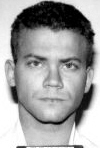
Robert Austin Sullivan
Murderer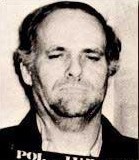 Ervil LeBaron
Murderer · USA · 1972
Ervil Morrell LeBaron (1925 to August 16, 1981) was the leader of a polygamous…
35 victims
Ervil LeBaron
Murderer · USA · 1972
Ervil Morrell LeBaron (1925 to August 16, 1981) was the leader of a polygamous…
35 victims
 Marvin Gray
Murderer · USA · 1975
Marvin Gray was convicted killer who claimed responsibility for 23 slayings and…
23 victims
Marvin Gray
Murderer · USA · 1975
Marvin Gray was convicted killer who claimed responsibility for 23 slayings and…
23 victims
 Yahweh ben Yahweh
Murderer · USA · 1980
Yahweh ben Yahweh was born and legally named Hulon Mitchell Jr. (October 27, 19…
23 victims
Yahweh ben Yahweh
Murderer · USA · 1980
Yahweh ben Yahweh was born and legally named Hulon Mitchell Jr. (October 27, 19…
23 victims
 Charles Manson
Murderer · USA · 1969
Charles Milles Manson (born November 12, 1934) was an American criminal and mus…
9 victims
Charles Manson
Murderer · USA · 1969
Charles Milles Manson (born November 12, 1934) was an American criminal and mus…
9 victims
 George Huguely
Murderer · USA · 2010
George Huguely was sentenced to 23 years in prison on August 30, 2012. · George…
1 victim
George Huguely
Murderer · USA · 2010
George Huguely was sentenced to 23 years in prison on August 30, 2012. · George…
1 victim
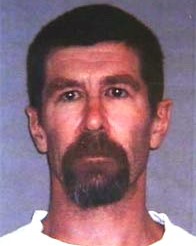 Richard Lee McNair
Murderer · USA · 1987
Richard Lee McNair was born December 9, 1958, in Duncan, Oklahoma. He was servi…
1 victim
Richard Lee McNair
Murderer · USA · 1987
Richard Lee McNair was born December 9, 1958, in Duncan, Oklahoma. He was servi…
1 victim
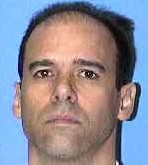 Reinaldo Dennes
Murderer · USA · 1996
Reinaldo Dennes was born in Havanna, Cuba, on 2/9/56. His family came to the US…
1 victim
Reinaldo Dennes
Murderer · USA · 1996
Reinaldo Dennes was born in Havanna, Cuba, on 2/9/56. His family came to the US…
1 victim
 Robert Gattis
Murderer · USA · 1990
Robert Gattis (DOB: 11/18/1961) was a Black male. Gattis was convicted in Octob…
1 victim
Robert Gattis
Murderer · USA · 1990
Robert Gattis (DOB: 11/18/1961) was a Black male. Gattis was convicted in Octob…
1 victim
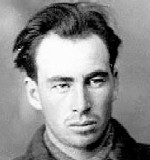 Charles Bannon
Mass murderer · USA · 1930
January 29, 1931 — A mob seized Charles Bannon from the Schafer jail and hanged…
6 victims
Charles Bannon
Mass murderer · USA · 1930
January 29, 1931 — A mob seized Charles Bannon from the Schafer jail and hanged…
6 victims
 Teresa Stone
Murderer · USA · 2010
Teresa Stone conspired with her minister and lover to kill her husband, Randy S…
1 victim
Teresa Stone
Murderer · USA · 2010
Teresa Stone conspired with her minister and lover to kill her husband, Randy S…
1 victim
- Gender
- male
- Country
- USA
- Location
- Miami-Dade County, Florida, USA
- Date of birth
- 1947
- Age at first offence
- 26
- Characteristics
- abduction, robbery, kidnapping, rape?
- Victim profile
- Donald Schmidt ( assistant manager restaurant)
- Method of murder
- Shooting ( double barrel shotgun)
- Date(s) of murder
- April 8, 1973
- Years active
- 1973
- Date of arrest
- —
- Status
-
Executed
Executed by electrocution in Florida on November 30, 1983
Case record: Robert Austin Sullivan
Timeline
- April 8, 1973 — Robert Austin Sullivan and Reid McLaughlin robbed a Howard Johnson’s restaurant in Homestead, Florida, and abducted assistant manager Donald Schmidt.
- April 11, 1973 — The body of Donald Schmidt was found in a swamp near the Howard Johnson restaurant where he was employed as shift manager.
- June, 1972 — Robert Sullivan was dismissed from his position as a manager of the restaurant.
- November 1973 — Sullivan was convicted by a jury in Dade County, Florida; the jury recommended a sentence of death; the trial judge imposed the death penalty.
- 1974 — Sullivan v. State, 303 So.2d 632 (1974). The Florida Supreme Court affirmed.
- 1976 — Sullivan v. Florida, 428 U.S. 911, 96 S.Ct. 3226, 49 L.Ed.2d 1220 (1976) (denial of certiorari).
- 1979 — Sullivan v. State, 372 So.2d 938 (Fla.1979). The Florida Supreme Court affirmed the denial of post-conviction relief and denied a motion for stay of execution.
- June 4, 1981 — The district court entered its Final Order of Dismissal, denying the petition for writ of habeas corpus.
- May 17, 1983 — United States Court of Appeals, Eleventh Circuit; Robert A. Sullivan appeals the district court’s denial of his habeas corpus petition and the denial is affirmed.
- November 28, 1983 — Eleventh Circuit action on a certificate of probable cause to appeal and stay of execution; the certificate and a stay were denied.
- November 29, 1983 — Opinion on Denial of Rehearing and Rehearing En Banc issued by the Eleventh Circuit; the stay previously entered by Chief Judge Godbold was vacated.
- November 30, 1983 — Sullivan was executed by electrocution in Florida.
Background
Robert Austin Sullivan was executed in Florida on November 30, 1983, after being on death row for more than 10 years and longer than anyone in the United States. Sullivan was 36 at the time of execution.
Donald Schmidt was employed as the shift manager at a Howard Johnson restaurant in Homestead. Sullivan had formerly been employed at the same Howard Johnson restaurant and had previously been a manager there; Sullivan was dismissed in June, 1972.
Sullivan was an adopted son of a Harvard-educated doctor. His boyfriend was Reid McLaughlin.
The offence
On the night of April 8, 1973, Sullivan and Reid McLaughlin robbed a Howard Johnson’s restaurant in Homestead, Florida. At the time of the robbery, Sullivan had formerly been employed at the restaurant.
Sullivan and McLaughlin abducted assistant manager Donald Schmidt, taped his wrists behind his back, and drove him to a swampy area.
At the swampy area, Sullivan struck Schmidt twice on the back of the head with a tire iron and then shot him twice on the back of the head, each time with both barrels of a double barrel shotgun.
Discovery of the body
On April 11, 1973, the body of Donald Schmidt was found in a swamp near the Howard Johnson restaurant where Schmidt was employed as the shift manager.
Schmidt was shot twice in the head with a shotgun.
Investigation and arrest
When Sullivan was arrested, police found Schmidt’s credit cards and watch. Police also found a shotgun, a handgun, white adhesive tape and a tire iron in Sullivan’s car.
Sullivan confessed to the murder of Schmidt and implicated McLaughlin.
McLaughlin also confessed.
Charges and trial
Sullivan was convicted by a jury in Dade County, Florida in November 1973. The jury recommended a sentence of death. The state trial judge imposed the death penalty pursuant to Fla.Stat. Sec. 921.141 (1973).
Sullivan’s trial included a penalty phase. The legal issues considered on federal habeas review included whether excusal of prospective jurors for cause violated constitutional rights under Witherspoon v. Illinois and whether testimony referencing a polygraph constituted constitutional error. The appellate proceedings also addressed claims about jury instructions, trial judge findings, and effective assistance of counsel.
Jury recommendations and trial judge findings
The trial judge issued written findings supporting the death sentence. The findings included:
- That sufficient aggravating circumstances existed in the particular case that far outweighed any mitigating circumstances in the record, and that the death of the decedent occurred while the defendant was engaged in the commission of the crime of armed robbery; and that the capital felony was committed for pecuniary gain, including that the decedent had been robbed of his personal possessions and the possession of the company he represented; and that these facts alone could justify the imposition of the death penalty.
- A finding that the capital felony committed was especially heinous, atrocious and cruel, with definitions explained by reference to State v. Dixon, 283 So.2d 1 (Florida Supreme Court, 1973). The findings described the defendant as bound and the victim as mortally wounded with four blasts from a .12 gauge shotgun to the back of the head, and characterized the crime as conscienceless.
- A finding that the court observed the defendant’s demeanor and actions and had not observed “one scintilla of remorseness,” and concluded that “the death penalty is the proper selection of the punishment” to be imposed in that case.
- A statement that the court was not unmindful that the defendant was 26 years of age and that it was his first conviction, while concluding that the aggravating circumstances outweighed beyond and to the exclusion of every reasonable doubt the mitigating circumstances.
The findings concluded that the court imposed the death penalty upon the defendant, Robert Austin Sullivan.
The full text of the trial judge’s findings, as included in the proceedings, stated:
This Court independent of, but in agreement with, the advisory sentence rendered by the jury does hereby impose the death penalty upon the defendant, ROBERT AUSTIN SULLIVAN, and in support thereof as required by 921.141(3), submits this, its written findings upon which the sentence of death is based. These findings are as follows:
1 That sufficient aggravating circumstances exist in this particular case that far outweigh any mitigating circumstances in the Record. The death of this decedent occurred while the defendant was engaged in the commission of the crime of armed robbery. In addition thereto, the capital felony was committed for pecuniary gain, as the decedent had been robbed of his personal possessions as well as the possession of the company he represented. These facts alone in this Court's judgment could justify the imposition of the death penalty, but this particular killing is far more useless and heinous than these
2 The Court finds that the capital felony committed in this case was especially heinous, atrocious and cruel. The Supreme Court of Florida in consideration of the legalities of the recently enacted death sentence in the State of Florida decreed that these terms were to receive their common connotations and decreed that "heinous" meant "extremely wicked or shockingly evil," "atrocious" meant "outrageously wicked and vile" and "cruel" meant "a design to inflict a high degree of pain with utter indifference to or even enjoyment of the suffering of others." See State v. Dixon, 283 So.2d 1, pg. 9, Florida Supreme Court, 1973. This Court cannot conceive of the commission of a crime that is more vividly described by these words as set forth by the Supreme Court than the one at bar. The defendant in this case saw fit to braggadociously state that he wanted to commit a "crime" which in his mind was to be "the perfect crime." The decedent was bound with hands behind his body with adhesive tape, mentally toyed with by the defendant as to operating and management techniques of the establishment where he worked, a place where the defendant himself had previously been employed. After this mental exercise, the decedent was led to a lonely spot in Dade County with hands still behind him and as he stumbled in the darkness, struck from behind with a tire iron, and then again from behind, while on the ground in a total helpless position, was mortally wounded with four blasts from a .12 gauge shotgun to the back of the head. This Court cannot conceive of a more conscienceless crime
3 This Court has observed the demeanor and the action of the defendant throughout this entire trial and has not observed one scintilla of remorseness displayed, indicating fullwell to this Court that the death penalty is the proper selection of the punishment to be imposed in this particular case This Court is not unmindful of the fact that the defendant is but 26 years of age and is further not unmindful of the fact that this is the defendant's first conviction. However, the aggravating circumstances in this case purely outweigh beyond and to the exclusion of every reasonable doubt in the Court's mind the mitigating circumstances. This Court does impose the death penalty upon the defendant ROBERT AUSTIN SULLIVAN. (R. 1694-1697). We refuse to elevate form over substance and hold that because the discussion of remorse is contained in a numbered paragraph it must be an aggravating factor. This is especially true because the burden is on Mr. Sullivan to show actual prejudice under Sykes. 1
Sentencing
Sullivan received the death penalty. The jury recommended a life sentence only in one procedural context? The trial judge imposed death in accordance with Fla.Stat. Sec. 921.141 (1973).
A court-imposed death warrant process preceded execution, and while an appeal was pending, “the Governor of Florida signed a death warrant for Sullivan.” The Florida Supreme Court denied a motion for stay of execution and affirmed the denial of post-conviction relief in 1979.
Appeals and habeas corpus
Sullivan pursued direct appeals and federal habeas relief.
Direct appeal and state post-conviction
Sullivan appealed to the Florida Supreme Court, which affirmed: Sullivan v. State, 303 So.2d 632 (1974).
The United States Supreme Court denied certiorari: Sullivan v. Florida, 428 U.S. 911, 96 S.Ct. 3226, 49 L.Ed.2d 1220 (1976).
Sullivan filed a motion for post-conviction relief under Rule 3.850, Florida Rules of Criminal Procedure. The state court held an evidentiary hearing without Sullivan’s presence on the sole issue of ineffective assistance of counsel. The court thereafter denied the motion.
While that appeal was pending, the Governor of Florida signed a death warrant for Sullivan. The Florida Supreme Court denied Sullivan’s motion for stay of execution and affirmed the denial of post-conviction relief: Sullivan v. State, 372 So.2d 938 (Fla.1979).
Federal habeas corpus
Sullivan then filed a petition for writ of habeas corpus and motion for stay of execution pursuant to 28 U.S.C. Sec. 2254 in the United States District Court for the Southern District of Florida.
The district court granted a stay of execution. A magistrate conducted an evidentiary hearing, where Sullivan testified and was given every opportunity to present evidence. After post-hearing briefs, the magistrate recommended that the petition for writ of habeas corpus be denied on its merits.
The district court entered its Final Order of Dismissal on June 4, 1981, denying the petition.
Eleventh Circuit appeal: 81-5843 (affirmance)
On May 17, 1983, the Eleventh Circuit affirmed the denial of the writ of habeas corpus.
Sullivan raised five issues on appeal:
- whether the death sentence was unconstitutionally imposed based on state trial court findings or instructions to the jury;
- whether Sullivan received ineffective assistance of counsel;
- whether excusal of four prospective jurors for cause violated the constitutional right to a fair trial;
- whether testimony of a state witness regarding a polygraph constituted constitutional error; and
- whether the denial of Sullivan’s leave to amend was improper.
The court affirmed the denial of the writ.
Ineffective assistance of counsel
The Eleventh Circuit described the standard and reviewed counsel performance during the penalty phase and on direct appeal, concluding Sullivan received reasonably effective assistance of counsel during the penalty phase and on direct appeal.
The court addressed claims that counsel did not give an extensive impassioned plea for Sullivan’s life and that counsel did not make appropriate objections or sufficiently rebut the prosecutor’s argument requesting the death penalty. The court declined to adopt a rigid rule requiring a specific approach to counsel’s penalty-phase arguments and objections.
The court also addressed appellate counsel claims that certain issues were not raised on direct appeal, concluding Sullivan’s appellate counsel functioned as an active advocate and that failure to advance points later recognized by judicial development did not render counsel ineffective.
Witherspoon and procedural default
Sullivan argued that four prospective jurors who voiced reservations about imposing the death penalty were excused in violation of Witherspoon v. Illinois.
The court stated it was clear there was no objection at trial on Witherspoon grounds and no direct appeal issue raised on that point. It also stated there was no objection to jury instructions and no direct appeal raising that issue. The court further stated that Florida’s procedural rules provided that jury instructions must be objected to before the jury retired.
The Eleventh Circuit concluded Sullivan had not shown cause and prejudice for the procedural defaults and was therefore barred from consideration of the merits of the claims regarding jury instructions and sentencing findings.
Polygraph claim
Sullivan argued that the prosecutor’s intentional eliciting of testimony from Reid McLaughlin about a polygraph violated Sullivan’s sixth and fourteenth amendment rights. The Eleventh Circuit stated it did not agree and explained that the Florida Supreme Court considered the testimony and found it harmless error. The Eleventh Circuit concluded the claim did not raise an issue of constitutional or federal law and that it lacked jurisdiction to consider it.
Other appellate issue
The only other issue Sullivan raised was denial of his motion to amend the habeas corpus petition. The court found the contention totally devoid of merit.
The Eleventh Circuit’s disposition was: AFFIRMED.
Eleventh Circuit: rehearing and stay denials (83-5763)
Another Eleventh Circuit proceeding addressed Sullivan’s request for a certificate of probable cause to appeal the denial of habeas corpus relief and a stay of execution pending appeal.
The panel characterized the request as a successive petition and denied the certificate of probable cause and denied a stay of execution.
The disposition recited that Sullivan was scheduled to be electrocuted by the State of Florida at 7:00 A.M. on November 29, 1983.
The per curiam disposition stated that:
- it denied the certificate of probable cause and denied a stay of execution;
- the constitutional claims presented and considered included proportionality review by the Florida Supreme Court, alleged racial discrimination in the Florida death penalty system as applied, and four other claims foreclosed by prior federal proceedings.
The per curiam summary noted that on racial discrimination the court found the issue foreclosed and that the petitioner presented nothing more than the statistical impact type case as presented in prior cases, while also noting without deciding that the district court found abuse of the writ on that issue.
It listed the other four foreclosed issues as:
- denial of counsel following arrest and prior to making a full confession;
- denial of fair trial because the jury was “death qualified”;
- denial of effective assistance of counsel for failure to investigate favorable evidence at both the guilt and penalty stage; and
- denial of effective assistance of counsel because his attorney labored under a conflict of interest.
The per curiam stated: “APPLICATION FOR CERTIFICATE OF PROBABLE CAUSE AND STAY OF EXECUTION DENIED.”
In a concurring/dissenting statement, Circuit Judge Anderson, III, argued about the racial discrimination issue and stated that Sullivan was entitled to a stay of execution based on distinctions he believed existed from Spencer v. Zant.
Outcome
Sullivan’s habeas corpus relief was denied, and his death sentence was carried out.
Sullivan was executed by electrocution in Florida on November 30, 1983.
Other details
Trial evidence described during the proceedings
The federal appellate factual account described that Sullivan and McLaughlin abducted Donald Schmidt, taped his wrists behind his back, drove him to a swampy area, and that Sullivan struck Schmidt twice on the back of the head with a tire iron and shot him twice in the back of the head, each time with both barrels of a double barrel shotgun.
Death penalty review and sentencing statute reference
The death penalty was imposed pursuant to Fla.Stat. Sec. 921.141 (1973). The trial judge’s findings were set out in written findings required by 921.141(3).
Direct and collateral procedural steps
Sullivan filed:
- a state post-conviction motion under Rule 3.850;
- a federal habeas corpus petition under 28 U.S.C. Sec. 2254;
- a motion for stay of execution in federal proceedings.
The district court granted a stay of execution during the pendency of federal proceedings and later denied the habeas petition on June 4, 1981.
Statement included regarding effective counsel standard
The record included the following statement of counsel effectiveness standard, quoted within the proceedings:
We interpret the right to counsel as the right to effective counsel. We interpret counsel to mean not errorless counsel, and not counsel judged ineffective by hindsight, but counsel reasonably likely to render and rendering reasonably effective assistance. 280 F.2d at 599.
Mentioned items and procedural references included in the record
The proceedings included references to:
- Witherspoon v. Illinois, 391 U.S. 510 (1968);
- Songer v. State, 365 So.2d 696 (Fla.1978);
- Lockett v. Ohio, 438 U.S. 586 (1978);
- Wainwright v. Sykes, 433 U.S. 72 (1977);
- Engle v. Issac, 456 U.S. 107 (1982);
- Anders v. California, 386 U.S. 738 (1967);
- Cuyler v. Sullivan, 446 U.S. 335 (1980);
- MacKenna v. Ellis, 280 F.2d 592 (5th Cir.1960);
- Mylar v. State, 671 F.2d 1299 (11th Cir.1982);
- Nettles v. Wainwright, 677 F.2d 410 (5th Cir.1982);
- Washington v. Estelle, 648 F.2d 276 (5th Cir.1981);
- Proffitt v. Wainwright, 685 F.2d 1227 (11th Cir.1982).
Supreme Court and Florida Supreme Court citations
The record included:
- Sullivan v. State, 303 So.2d 632 (1974);
- Sullivan v. Florida, 428 U.S. 911 (1976);
- Sullivan v. State, 372 So.2d 938 (Fla.1979);
- Sullivan v. Wainwright, 695 F.2d 1306 (11th Cir.1983).
Spotted an error, or have more information about this case?