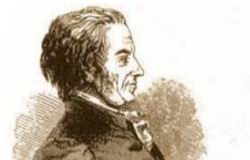
John Tawell
Murderer Frederick Manning
Murderer · United Kingdom · 1849
Frederick Manning was executed by hanging at Horsemonger Lane Gaol on November…
1 victim
Frederick Manning
Murderer · United Kingdom · 1849
Frederick Manning was executed by hanging at Horsemonger Lane Gaol on November…
1 victim
 Catherine Wilson
Murderer · United Kingdom · 1854
Catherine Wilson was a British nurse who poisoned victims after befriending the…
7 victims
Catherine Wilson
Murderer · United Kingdom · 1854
Catherine Wilson was a British nurse who poisoned victims after befriending the…
7 victims
 Albert Burrows
Murderer · United Kingdom · 1920
Albert Burrows (also named Albert Edward Burrows): married farm labourer who to…
4 victims
Albert Burrows
Murderer · United Kingdom · 1920
Albert Burrows (also named Albert Edward Burrows): married farm labourer who to…
4 victims
 Dale Cregan
Murderer · United Kingdom · 2012
Dale Christopher Cregan (born 6 June 1983) was convicted in the United Kingdom…
4 victims
Dale Cregan
Murderer · United Kingdom · 2012
Dale Christopher Cregan (born 6 June 1983) was convicted in the United Kingdom…
4 victims
 Jarvis Jay Masters
Murderer · USA · 1985
Jarvis Jay Masters (born 1962) was an African American man from Long Beach, CA.…
1 victim
Jarvis Jay Masters
Murderer · USA · 1985
Jarvis Jay Masters (born 1962) was an African American man from Long Beach, CA.…
1 victim
 Natasha Cornett
Murderer · USA · 1997
Natasha Wallen Cornett was born on January 26, 1979 in rural eastern Kentucky.…
3 victims
Natasha Cornett
Murderer · USA · 1997
Natasha Wallen Cornett was born on January 26, 1979 in rural eastern Kentucky.…
3 victims
 Eva Dugan
Murderer · USA · 1927
Eva Dugan (1878 – February 21, 1930) was convicted of murdering Andrew J. Mathi…
1 victim
Eva Dugan
Murderer · USA · 1927
Eva Dugan (1878 – February 21, 1930) was convicted of murdering Andrew J. Mathi…
1 victim
 Lam Luong
Mass murderer · USA · 2008
Lam Luong was a Vietnamese refugee who was sentenced to death in Alabama for th…
4 victims
Lam Luong
Mass murderer · USA · 2008
Lam Luong was a Vietnamese refugee who was sentenced to death in Alabama for th…
4 victims
 James Barney Hubbard
Murderer · USA · 1957
James Barney Hubbard was executed by lethal injection in Alabama on August 5, 2…
2 victims
James Barney Hubbard
Murderer · USA · 1957
James Barney Hubbard was executed by lethal injection in Alabama on August 5, 2…
2 victims
- Gender
- male
- Country
- United Kingdom
- Location
- Salt Hill, Berkshire, England, United Kingdom
- Date of birth
- 1784
- Age at first offence
- 61
- Characteristics
- poisoner, drug addict, history of mental illness
- Victim profile
- Sarah Hart (his mistress)
- Method of murder
- Poisoning (prussic acid)
- Date(s) of murder
- January 1, 1845
- Years active
- 1845
- Date of arrest
- Next day
- Status
-
Executed
Executed by hanging at Aylesbury on March 28, 1845
Background
John Tawell was a British murderer.
In 1845, he became the first person to be arrested as the result of telecommunications technology. He was transported to Australia in 1820 for the crime of forgery, obtained a ticket-of-leave, and started as a chemist in Sydney. After fifteen years, he left Australia a rich man and returned to England, where he married a Quaker woman as his second wife.
Tawell confessed to the murder of his mistress, Sarah Hart, by prussic acid. His motive was described as a dread of their relations becoming known.
At the age of 14, John Tawell worked in a shop owned by a Quaker widow who persuaded him to attend the monthly “Friends” meetings held by Quakers. Six years later, he went to work in a drapers shop in Whitechapel owned by another Quaker. At the age of 22, he seduced a servant-girl called Mary, and when she became pregnant the couple married much to the disproval of the Quaker community they were members of.
Tawell got another job with a druggist in Cheapside, where he learned the trade of the chemist.
It was in 1814 that he committed his first known crime when he attempted to forge a £10 note of the Smith’s Bank of Uxbridge. Forgery was described as a capital offence, and at his trial he was sentenced to death. The victims, Smith’s Bank, were described as a Quaker company and they opposed the death penalty, so his sentence was commuted to transportation to the Colonies for 14 years.
For a few years, Tawell worked his sentence on coal ships around the Australian coast, but his skills with medicine were identified and he was given a job in a convict hospital. He later obtained work as a clerk to a Mr Isaac WOOD of the Sydney Academy, who was impressed by his knowledge and faith. He petitioned the Governor for Tawell’s pardon, which was granted in 1820. Now a free man, he set up a small shop selling drugs and chemicals. Although he had no formal pharmaceutical training or qualifications, he was examined by the local medical board and pronounced authorized to dispense medicine.
Tawell’s business boomed, and the shop moved to larger premises. He became financially stable and acquired land and property, sponsored in part by the sale of fancy goods imported from England. He became involved in the export trade and cornered the market in whalebone, which was sent to London for use in combs and toothbrushes.
In 1823, Tawell’s wife and two children joined him in Australia, and the trip was managed as being paid for by the Crown, despite his entry as a convict.
Tawell appeared to be well respected in the community and wore the uniform of the Quakers, including a wide brimmed black hat. In 1837, he donated the first Friends Meeting House in Sydney, bearing a plaque “John Tawell - to the Society of Friends”. He also made a public display of temperance by pouring casks of gin and rum into the sea at Sydney Cove.
Despite his apparent piety, he was described as never fully accepted by the Quakers, possibly because of his criminal past and the fact that, prior to his family arriving from England, he had kept a mistress.
In 1831, Tawell and his family returned to London, and their health suffered badly in the atmosphere of the largest city in the world. The younger son, William, died in 1833, followed by their elder son, John, in 1838, after he had trained to be a doctor.
Following the deaths, Tawell’s wife Mary also became ill, and he employed a young nurse, Sarah LAWRENCE, to care for her. Mary died in 1838 and Tawell began an affair with Sarah, resulting in the birth of two children.
The London Society of Friends continued to bar Tawell from full membership despite continued charitable work. Through this work, he met a Quaker widow, Mrs CUTFORTH, who ran a school in Clerkenwell. Despite reservations of her friends and family, the pair married in 1841.
Tawell moved his former lover Sarah (who had changed her name to HART) into a cottage at Salt Hill near Slough. He made regular visits to her to pay a weekly allowance of £1 for the upkeep of her children.
By 1843, Tawell was described as beginning to experience financial difficulties, mainly due to the failure of his business interests in Australia. One means of relief was described as the disposal of the financial burden that was Sarah HART.
The offence
Sarah Hart was found dead in her home at Salt Hill.
On 1st January 1845, Tawell went to a chemists shop in Bishopsgate Street and purchased two bottles of “Steele’s Acid” from the proprietor Mr HUGHES. The preparation was used for the treatment of varicose veins and contained the poison prussic acid.
He travelled across London to Paddington Station, caught the train to Slough, and went to see Sarah. He found her in good spirits and, after receiving her allowance, went to a local inn to buy a bottle of stout.
A short time later, Sarah’s next door neighbour heard loud groans and moans through the party wall. Mrs ASHLEY saw Tawell (who she recognized as a frequent visitor) leave the house and then raised the alarm when she found Sarah writhing on the floor and frothing from her mouth. Sarah died before a doctor could attend.
Two glasses were described as being on the table: one empty and the other containing porter. Those present realized Sarah had been poisoned.
Investigation
Among the persons to respond to the cry for help was the Rev. E.T. CHAMPNES, vicar of Upton-cum-Chumley. He took a description of Tawell and raced to the station to intercept him, arriving just in time to see the suspect board the departing 7.42pm service, which he was too late to stop.
Slough was described as being equipped with the telegraph. The vicar consulted the station master, Mr HOWELL, who arranged for a message to be sent from the Telegraph Cottage just outside the station.
The historic message to Paddington read: “A murder has just been committed at Salt Hill and the suspected murderer was seen to take a first class ticket to London by the train that left Slough at 7.42pm. He is in the garb of a Kwaker with a brown great coat on which reaches his feet. He is in the last compartment of the second first-class carriage”
The telegraph message was described as containing “Kwaker” because the telegraph did not have the letter “Q” in its alphabet of the five-needle instrument.
At Paddington, a clerk ran the message to the Great Western Railway Police Office, and it was passed to the duty Sergeant, William WILLIAMS. Williams “put a plain coat over his police dress” and met the train in.
A few minutes later, the telegraph house at Slough received a message from the capital that: “The up train has arrived and a person answering in every respect the description given by the telegraph came out of the compartment mentioned. The man got into a New Road omnibus and Sergeant WILLIAMS into the same”
Sergeant WILLIAMS then sat in the conductor’s seat of the bus. Tawell was described as having mistaken Williams for the conductor because, when Tawell alighted at Princes Street alongside the Bank of England, he handed the Sergeant his fare.
Sergeant WILLIAMS followed Tawell along darkened streets of London. Tawell first went to a sweet shop in Cornhill and then to the Jerusalem Coffee House. He later went to a Lodging House in Scott’s Yard. Sergeant WILLIAMS kept him under observation as he left, and then walked along Birchin Lane and thence to the lodgings.
Sergeant WILLIAMS stood outside Tawell’s lodgings for over an hour before returning to Paddington. He visited a colleague, Inspector WIGGINS of the Metropolitan Police at Paddington Green Police Station. The next morning, the two men confirmed details of the crime and went in search of the murderer. Tawell was gone from his lodgings, but they located him back at the Jerusalem Coffee House, where he was arrested.
When arrested, Tawell protested saying, “I wasn’t at Slough yesterday”. Sergeant WILLIAMS replied, “Yes you were Sir, you got out of the train and got onto an omnibus and gave me sixpence”. Tawell then retorted, “My station in society would be sufficient to rebut any suspicion against me”.
Arrest
Tawell was arrested after being shadowed by a detective at Paddington, followed into a New Road omnibus, and later arrested in a coffee tavern.
Trial
Tawell was tried for the murder of the woman, Sarah Hart.
While in custody, he sent for “the best lawyer that money can buy” and engaged the services of Sir Fitzroy KELLY, described as a promoter of the Appeals Court and the Chief Baron of the Exchequer.
On hearing Tawell’s testimony, Sir Fitzroy KELLY pronounced that his client was “innocent of all charges”.
The trial opened at Aylesbury County Court on 12th March 1845, presided over by Judge Baron PARKE. The proceedings were opened by Sergeant BYLES. The jury heard how a post mortem revealed the cause of death for Sarah Hart was “poisoning by prussic acid”.
Other witnesses were called, including Sergeant WILLIAMS, who gave a full account of his actions that led to the arrest of the accused.
Sir Fitzroy KELLY opened his defence with just one word: “apple-pips!”
He explained that prussic acid occurred naturally in apple-pips and said that Sarah HARTS death could be explained by her eating a large amount of fruit over the festive season.
He was not enough to sway the jury. After two days of deliberations, the jury took “just half an hour” to find Tawell guilty.
The judge donned his black cap and Tawell was sentenced to death.
During trial, a dispute was described over whether Sarah Hart’s death was murder or suicide. The issue was described as whether Tawell spiked her drink or whether Sarah committed suicide by drinking poison deliberately, put there by her own hand.
It was also stated that, on the day of the murder, Tawell had called at a chemist of Bishopgate in London and asked for two drachms of prussic acid “for his varicose veins”.
A friend of Sarah’s told the court that a few months before Sarah had been sick after drinking porter after a visit by Tawell, implying he had tried to poison her then.
The judge was described as telling the jury that “on the day Sarah Hart was poisoned Tawell had poison in his possession and on the following day he did not”.
Tawell was described as telling the court nothing, because law in those days forbade accused persons to testify on their own behalf.
Sentencing
After the verdict, Tawell was sentenced to death.
Awaiting execution, Tawell apparently made a full confession to a priest.
Appeals
No appeal information was included in the provided material.
Outcome
Tawell was executed by hanging at Aylesbury on March 28, 1845.
Aftermath
After his conviction, the notoriety of the case brought the telegraph into repute and led to its broader adoption.
It was stated that: “Had it not been for the efficient aid of the electric telegraph, both at Slough and Paddington, the greatest difficulty, as well as delay, would have occurred in the apprehension (of TAWELL)”
The telegraph’s advantages as a rapid means of conveying intelligence and detecting criminals were described as having been signally demonstrated.
The defence lawyer was described as obtaining the nickname “Apple-pip KELLY” because of his unusual defence.
It was also stated that the sale of apples in England dropped considerably, attributed to the nickname.
After English assets were seized, the Crown allowed Tawell’s widow to keep their Birkhampstead home, and following a discussion in “The Times”, Sarah Hart’s children were placed into care.
In Australia, it was discovered that the Hall given to the Quakers by Tawell had not been formally gifted, and it was subsequently purchased by the Jewish Community for use as a Synagogue.
Tawell’s estate was described as being held by the Governor, with considerable argument as to how it should be disposed of, and it took over sixteen years for the matter to be resolved.
Telegraph usage in connection with another murder case was described for 1847: a man under sentence of death at Maidstone Prison was to have his execution stayed after a Home Office message was received at London Bridge Station asking that a message be telegraphed to the gaol to stay the execution. A later railway message authorized the execution to continue after confirmation that the message was correct.
The narrative also referred to William WILLIAMS and stated that he did not arrest Tawell as soon as he stepped from the train because he did not apprehend the man until confirmation from an official source, and because the telegraph had called the man a “suspected” murderer.
It also quoted Sergeant WILLIAMS on why he sought assistance: “Because” said Sergeant WILLIAMS, recalling the arrest “I am no officer off the station”.
A further narrative described Tawell writing down a full confession to the crime of murdering Sarah Hart and trying to kill her the previous September.
A narrative claimed his hanging was “botched” and said he took ten minutes to slowly strangle to death, with the gallows erected outside the court in which he was convicted. It stated that 10,000 people came to watch the execution, and another account described a crowd of over 2,000.
The narrative also described the telegraph being put on show to the public at a shilling a head.
Other details
The provided material mentioned an electric telegraph invention and its demonstrations:
- On 24th July 1837, an electric telegraph was invented by Professor (later Sir) Charles WHEATSTONE and Sir William COOKE, and it was demonstrated along the railway line between Euston and Camden stations by sending a message successfully the 1 ½ miles between the two stations.
- Directors of the Great Western Railway witnessed the demonstration and arranged a further trial between Paddington and Hanwell in April 1839, described as a success.
- The experiment was extended to West Drayton by July the same year.
- Wires insulated in cotton were buried alongside the track, and when the cable became wet the connection failed; WHEATSTONE and COOKE later changed their design and suspended the wires from posts along the line.
It also stated that members of the public could send messages at a shilling a time and that by 1844 the telegraph had been purchased by the Government, with a further line strung along a railway connecting the Admiralty with the Navy base at Gosport near Portsmouth.
It described the telegraph in the news on 6th August of the same year when announcement that Queen Victoria had given birth to her second son was conveyed by telegraph from Windsor to London.
The material also mentioned that the first arrest using technology was not the arrest of Dr CRIPPEN, and instead was described as the arrest of Tawell made by a railway policeman using the telegraph.
The material included the defence lawyer’s letter, quoted verbatim, written to Tawell by his wife just before the murder: “My loved one, the year has opened with a lovely day. I hope it is an omen of the future which awaits us”

Spotted an error, or have more information about this case?