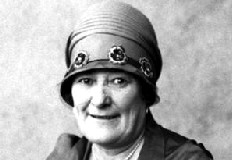
Eva Dugan
Murderer Martha Wise
Murderer · USA · 1924
Martha Wise (born 1885; died June 28, 1971), also known as “the Borgia of Ameri…
3 victims
Martha Wise
Murderer · USA · 1924
Martha Wise (born 1885; died June 28, 1971), also known as “the Borgia of Ameri…
3 victims
 Mary Frances Creighton
Murderer · USA · 1923
Mary Frances Creighton (c. 1898 - July 16, 1936) was a housewife and was execut…
3 victims
Mary Frances Creighton
Murderer · USA · 1923
Mary Frances Creighton (c. 1898 - July 16, 1936) was a housewife and was execut…
3 victims
 Inez Palmer
Murderer · USA · 1926
Inez Palmer — defendant; lived at the Stout farmhouse and pleaded guilty to a f…
2 victims
Inez Palmer
Murderer · USA · 1926
Inez Palmer — defendant; lived at the Stout farmhouse and pleaded guilty to a f…
2 victims
 Winnie Ruth Judd
Murderer · USA · 1931
Winnie Ruth Judd (January 29, 1905 – October 23, 1998) was a Phoenix, Arizona m…
2 victims
Winnie Ruth Judd
Murderer · USA · 1931
Winnie Ruth Judd (January 29, 1905 – October 23, 1998) was a Phoenix, Arizona m…
2 victims
 Larry Davis
Murderer · USA · 1986
Larry Davis (May 28, 1966 - February 20, 2008) changed his name to Adam Abdul-H…
6 victims
Larry Davis
Murderer · USA · 1986
Larry Davis (May 28, 1966 - February 20, 2008) changed his name to Adam Abdul-H…
6 victims
 Lulonda Flett
Mass murderer · Canada · 2011
Lulonda Flett (accused; sentenced to five life sentences) · Evelyn Laforte (mot…
5 victims
Lulonda Flett
Mass murderer · Canada · 2011
Lulonda Flett (accused; sentenced to five life sentences) · Evelyn Laforte (mot…
5 victims
 Scott William Cox
Serial killer? · Several States USA / Canada · 1980
Name: Scott William Cox Tia Hicks vanished in 1990 after Scott William Cox was…
20 victims
Scott William Cox
Serial killer? · Several States USA / Canada · 1980
Name: Scott William Cox Tia Hicks vanished in 1990 after Scott William Cox was…
20 victims
 Harry Thaw
Murderer · USA · 1906
Harry Kendall Thaw (February 12, 1871 - February 22, 1947) was the son of Pitts…
1 victim
Harry Thaw
Murderer · USA · 1906
Harry Kendall Thaw (February 12, 1871 - February 22, 1947) was the son of Pitts…
1 victim
- Gender
- female
- Country
- USA
- Location
- Pima County, Arizona, USA
- Date of birth
- 1878
- Age at first offence
- 49
- Characteristics
- —
- Victim profile
- Andrew J. Mathis, 65 (chicken rancher)
- Method of murder
- Beating with an axe
- Date(s) of murder
- January 1927
- Years active
- 1927
- Date of arrest
- March 4, 1927
- Status
-
Executed
Executed by hanging at Florence on February 21, 1930
Case details
Eva Dugan (1878 – February 21, 1930) was convicted of murdering Andrew J. Mathis, an elderly chicken rancher from Tucson.
Background
Eva Dugan was born in 1878. She later went to Juneau, Alaska, after trekking north during the Klondike Gold Rush, and became a cabaret singer. She subsequently moved to Pima County, Arizona, where she worked as a housekeeper for an elderly chicken rancher, Andrew J. Mathis.
Dugan was married five times, and all her husbands had disappeared. The police discovered that she had a father in California and a daughter in White Plains, New York. Neighbors reported that Dugan had tried to sell some of Mathis’s possessions before she disappeared.
The offence
Andrew J. Mathis disappeared shortly after Dugan’s employment by him was terminated. Some accounts described Mathis as a hard-of-hearing rancher; a charred ear trumpet was found on the ranch.
Dugan was charged with murder. The prosecution presented evidence that Dugan had murdered Mathis with an axe. During the case, a teenage boy known only as “Jack” was alleged to have been aided in the murder, and “Jack” was never found.
Dugan denied responsibility and said that she and Mathis had quarreled.
Investigation
Pima County Sheriff Jim McDonald investigated the disappearance. McDonald began tracing Dugan by sending missing persons notices describing Dugan and Mathis to police agencies throughout the country. It was reported that McDonald found out Dugan had a connection to posting a postcard.
Dugan was traced after postal authorities intercepted a postcard to her from her father in California. She was also described as having sold a Dodge coupe for $600 in Kansas City, Missouri; some accounts said Amarillo, Texas in connection with attempts to sell the car.
One report described Dugan as passing herself off as Mrs. Andrew Mathis when selling the car and as telling the salesman she needed the money for her husband’s surgery.
Arrest and extradition
Dugan was arrested in White Plains. She was extradited back to Arizona to face auto theft charges. Dugan was convicted of auto theft and imprisoned.
Trial
Nine months after Mathis disappeared, a camper camping overnight at the Mathis ranch uncovered a shallow grave while setting a tent post. The decomposed body found there was identified as Andrew J. Mathis.
Dugan was tried for murder in a brief trial that was described as based mostly on circumstantial evidence. It was reported that there were no fingerprints and no witnesses, and that the only admission by Dugan was that she and Mathis had quarreled. Despite this, the jury found her guilty of murder in the first degree.
Dugan was also said to have accused “Jack” during the proceedings, alleging that she and “Jack” had tried unsuccessfully to revive Mathis. The case material included that letters signed by “Jack” were later said to have been sent from Mexico, confessing to the crime; the material said no explanation was forthcoming regarding how Dugan arranged for those missives.
Sentencing
After her conviction, Dugan was sentenced to hang.
Dugan’s appeal for clemency on the grounds of mental illness was denied. Another account described that two doctors testified about her mental state being compromised due to “inroads made by a disease she contracted more than 30 years ago,” and that she was syphilitic; despite medical testimony, a jury determined she was sane and plans for execution continued.
After her conviction, for two years her supporters worked to have her sentence commuted by the governor. Dugan gave interviews to the press for $1.00 each. She sold embroidered handkerchiefs she knitted while imprisoned to pay for her own coffin.
Appeals
Her appeal for clemency was denied. The material indicated that her avenues of appeal had been exhausted before her execution.
Execution and last statements
Eva Dugan was hanged at 5:11 a.m. on February 21, 1930. Another account described the hanging as occurring at 5:02 a.m.
The day before the hanging, rumors circulated that Dugan planned to kill herself before being hanged. Her cell was searched and a bottle of raw ammonia and three razor blades hidden in a dress were confiscated.
Events on the morning of execution
Dugan was taken to the gallows at 5 a.m. and was described as the first woman executed by the state of Arizona. She was also described as being the first execution in Arizona history in which women were permitted as witnesses. Aside from Dugan, there were five women in the death chamber in one account, and another account described seventy-five persons watching, including seven women.
Dugan was led from the death house at Arizona State Prison in Florence, Arizona by a veteran guard known as “Daddy Allen.” She was flanked by two guards and followed by the prison chaplain.
The warden Lo Wright asked if Dugan had any final words. Dugan shut her eyes and shook her head negative in response.
The following quotations were recorded:
- Dugan told the guards: "Don't hold my arms so tight, the people will think I'm afraid."
- Dugan told a reporter: " I am going to my Maker with a clear Conscience."
- In another quotation associated with a reporter, Dugan said: "I am going to my Maker with a clear conscience. I am innocent of any murder and God knows I am."
- Dugan said: "God bless you, Eva"
- Dugan replied: "Good-by, Daddy Wright,"
- In a final statement to the jurors, Dugan told them: “Wal, I’ll die with my boots on, an’ in full health. An’ that’s more’n most of you old coots’ll be able to boast on.”
- Dugan recited doggerel: “We came into this world all naked and bare; Where we are going, the lord only knows where; If we are good fellows here; We’ll be good fellows there.”
- Dugan said when surrendering a safety razor blade and a small phial presumed to contain poison: “Well, what do you thing it? Would your wait for the rope?”
Decapitation and execution outcome
The trap was sprung; multiple accounts described the rope’s effect causing decapitation. One account stated that the snap of the rope decapitated her, sending Dugan’s head rolling to stop at the feet of the spectators. Another account described her head snapping from her body and rolling into a corner of the platform, while her torso was left in the pit. The material also reported that five witnesses fainted in response to the scene.
A subsequent change was described: with the replacement of the gallows by the gas chamber in Arizona in 1934, Dugan was described as being the only woman and the last person to be executed by hanging in the Grand Canyon State.
Burial and prison life details
Dugan made a silk, beaded “jazz dress” for her hanging in one account, but later relented and worried that her silk wrapper “might get mussed,” and wore a cheap dress instead.
Dugan raised money for a more elaborate casket through the sale of bead work and by collecting 50 cents a piece from each of her visitors in the condemned cell. She paid for her own coffin by selling embroidered handkerchiefs she embroidered in her cell.
Dugan was described as being provided orangeade and as lighting a cigarette during the death march and joking with guards. It was reported that she ate a dozen fried oysters and two boiled eggs the night before execution, and her order of three T-bone steaks and two lamb chops for breakfast remained untouched.
Dugan left instructions to send her trunk and personal belongings to a cousin at Westin, Mo.
Communications and visitors
Among telegrams and letters received in the condemned cell was a telegram from her daughter, Mrs. cecil lovelace, New York musician, dated South Bend, Ind, stating: “My dear Mother: Be brave. God is with you. ALl my love. I will pray for you.”
It was also reported that Dugan received a telegram signed by Ada Hostapple from Seattle, Washington, stating: “you have my admiration and sympathy for your grit and courage in this, your hour of greatest trouble.”
A telegram from her daughter and other telegrams and letters were mentioned as part of her communications during imprisonment.
A visitor described as Mother Benton from the Union Rescue Mission in Los Angeles was reported to have prayed with Dugan.
Aftermath
William McDaniels, 82-year-old father of Eva Dugan, received news that she had been hanged for murder in Arizona. He stated: “She was innocent of that crime. They have hanged an innocent woman. I don’t think she was quite right in her mind, but I know that she did not commit murder.” Neighbors tried to comfort him, but he sent them away.
The case was also described as influencing Arizona to replace hanging with the lethal gas chamber as a method of execution, and as being a notable incident associated with the end of scaffold use in Arizona.


Spotted an error, or have more information about this case?