William Sheward
Murderer Frederick Manning
Murderer · United Kingdom · 1849
Frederick Manning was executed by hanging at Horsemonger Lane Gaol on November…
1 victim
Frederick Manning
Murderer · United Kingdom · 1849
Frederick Manning was executed by hanging at Horsemonger Lane Gaol on November…
1 victim
 John Tawell
Murderer · United Kingdom · 1845
John Tawell was a British murderer. In 1845, he became the first person to be a…
1 victim
John Tawell
Murderer · United Kingdom · 1845
John Tawell was a British murderer. In 1845, he became the first person to be a…
1 victim
 Catherine Wilson
Murderer · United Kingdom · 1854
Catherine Wilson was a British nurse who poisoned victims after befriending the…
7 victims
Catherine Wilson
Murderer · United Kingdom · 1854
Catherine Wilson was a British nurse who poisoned victims after befriending the…
7 victims
 Albert Burrows
Murderer · United Kingdom · 1920
Albert Burrows (also named Albert Edward Burrows): married farm labourer who to…
4 victims
Albert Burrows
Murderer · United Kingdom · 1920
Albert Burrows (also named Albert Edward Burrows): married farm labourer who to…
4 victims
 Dale Cregan
Murderer · United Kingdom · 2012
Dale Christopher Cregan (born 6 June 1983) was convicted in the United Kingdom…
4 victims
Dale Cregan
Murderer · United Kingdom · 2012
Dale Christopher Cregan (born 6 June 1983) was convicted in the United Kingdom…
4 victims
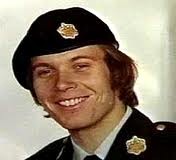 Flemming Nielsen
Murderer · Denmark · 1994
Flemming Nielsen had been a student at the university since 1986. On Tuesday, 5…
2 victims
Flemming Nielsen
Murderer · Denmark · 1994
Flemming Nielsen had been a student at the university since 1986. On Tuesday, 5…
2 victims
 Zheng Yongshan
Murderer · Japan · 2006
Zheng Yongshan (鄭 永善, born 1972) also went by the name of Mie Taniguchi (谷口 充恵)…
2 victims
Zheng Yongshan
Murderer · Japan · 2006
Zheng Yongshan (鄭 永善, born 1972) also went by the name of Mie Taniguchi (谷口 充恵)…
2 victims
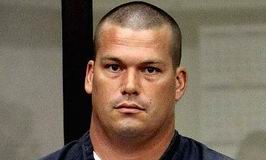 John Albert Gardner
Murderer · USA · 2009
On May 14, 2010, John Albert Gardner was sentenced to two terms of life impriso…
2 victims
John Albert Gardner
Murderer · USA · 2009
On May 14, 2010, John Albert Gardner was sentenced to two terms of life impriso…
2 victims
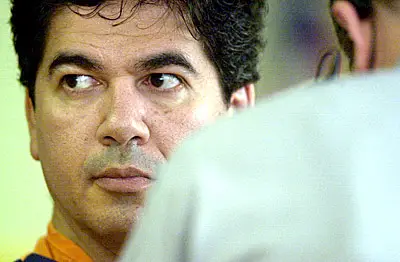 Reinaldo Rivera
Serial killer · USA · 1999
Reinaldo Rivera was arrested in a motel room where he tried to kill himself by…
4 victims
Reinaldo Rivera
Serial killer · USA · 1999
Reinaldo Rivera was arrested in a motel room where he tried to kill himself by…
4 victims
 Andrew Paul Witt
Murderer · USA · 2004
Andrew Paul Witt (born 1982) was a former Senior Airman in the United States Ai…
2 victims
Andrew Paul Witt
Murderer · USA · 2004
Andrew Paul Witt (born 1982) was a former Senior Airman in the United States Ai…
2 victims
 Attina Cannaday
Homicide · USA · 1982
Attina Marie Cannaday was convicted in Harrison County Circuit Court of the kid…
1 victim
Attina Cannaday
Homicide · USA · 1982
Attina Marie Cannaday was convicted in Harrison County Circuit Court of the kid…
1 victim
- Gender
- male
- Country
- United Kingdom
- Location
- Norwich, Norfolk, England, United Kingdom
- Date of birth
- 1794
- Age at first offence
- 57
- Characteristics
- parricide, dismemberment
- Victim profile
- His wife, Martha Sheward, 56
- Method of murder
- St abbing with a pair of scissors
- Date(s) of murder
- June 15, 1851
- Years active
- 1851
- Date of arrest
- January 1, 1869 (surrenders 17 years later)
- Status
-
Executed
Executed by hanging at Norwich City Gaol on April 20, 1869
Background
William Sheward was a fifty seven year old tailor who murdered his fifty six year old wife, Martha Sheward, on 15 June 1851 by stabbing her to death with a pair of scissors. They had had a quarrel over money and he committed the crime in a rage. After killing his wife, he dismembered the body and successfully disposed of it.
He remarried in 1862. By 1868 he was running a public house in Norwich.
During a trip to London, Sheward got drunk. In a fit of remorse, he walked into a police station and confessed to the murder. When he sobered up, he tried to retract his statement. During the confession, he was able to say where his wife's remains were, and a search produced body parts belonging to an elderly woman.
Sheward had worked as the landlord of the Key and Castle Public house at no. 105, Oak Street, Norwich.
The offence
On 15 June 1851, Sheward killed his wife, Martha Sheward, by stabbing her to death with a pair of scissors. The quarrel had been over money, and he committed the crime in a rage.
After his wife lay at his feet, he proceeded to dispose of the corpse by hacking her body up into small manageable chunks. He began with her hands and feet and then continued.
He then placed the pieces in boiling water and heated them up on the kitchen stove. He began with her hands, then her head, and then the feet. Next he placed some of the now slightly cooked flesh into a pail.
Over the next few nights starting at Tabernacle Street, William Sheward roamed the Norwich streets with his pail and its contents, tossing out pieces such as a finger and a toe. Martha’s entrails were reportedly poked down one of the drains.
Some of Mrs. Sheward’s parts were scavenged by dogs, rats and the like. Other parts were found.
Investigation
Martha’s remains turned up all over the streets of the city of Norwich, stuffed into gullies and blocking drains. At the time, nobody associated these portions of female anatomy with Martha Sheward of Norwich. Instead the finger was pointed at some Norwich medical students who were known for their macabre sense of humour, and it was put down as a medical prank in very bad taste.
Two reasons were given for the police not linking the body parts with Mrs. Sheward: first, the head was never recovered; and second, they had no idea that Mrs. Sheward had been murdered.
In 1869, Sheward walked into a police station in South London and confessed to an astonished desk clerk that he had murdered his wife. Sheward was the landlord of the Key and Castle Public house at no. 105, Oak Street, Norwich, and the husband of the victim.
Arrest
Sheward confessed to the murder during a trip to London in 1869, walking into a police station in South London and speaking to an astonished desk clerk.
Trial
After the trial and a guilty verdict, Sheward broke down and confessed all the gruesome details relating to the demise of his first wife, the late Mrs. Sheward.
Sentencing
William Sheward was convicted and hanged by William Calcraft.
Appeals
No appeals were described.
Outcome
On 20th April 1869, William Sheward was hanged at Norwich City Gaol. His executioner was William Calcraft, one of the longest serving executioners of that era, known for his “short drops” which used to result in the majority of his clients strangling to death rather than having their necks broken.
Aftermath
It was said that Martha Sheward’s head was never found and remained unknown, because her husband would not say what became of it.
The case became known as the Tabernacle Murder.
It was also stated that a row took place in their small terraced house in Tabernacle Street (which was now the west end of Bishopsgate) over money. It was said to be the common cause of friction between the Shewards.
Despite the murder, Sheward kept an appointment for a job interview in Great Yarmouth after changing his blood splattered clothes first.
After the return to his house, it was stated that Martha’s body had not been discovered so he decided to dispose of the corpse. Neighbours accepted Sheward’s report that his wife had left him and returned to her family.
With the death of his wife, Sheward’s fortunes took a turn for the better, and he married again and took over the Key and Castle Public house at no. 105, Oak Street, Norwich.
The confession occurred “eighteen years” after the murder was described as having been committed, and it was stated that on January 1st 1869 William decided to confess while on a trip to London.

Spotted an error, or have more information about this case?