John Taylor
Murderer Rahan Arshad
Murderer · United Kingdom · 2006
Rahan Arshad (born 1970) was a taxi driver. He lived at Turves Road, Cheadle Hu…
4 victims
Rahan Arshad
Murderer · United Kingdom · 2006
Rahan Arshad (born 1970) was a taxi driver. He lived at Turves Road, Cheadle Hu…
4 victims
 Anthony Smith
Murderer · United Kingdom · 2001
Anthony Smith was a former sergeant in the Coldstream Guards. He had left the C…
3 victims
Anthony Smith
Murderer · United Kingdom · 2001
Anthony Smith was a former sergeant in the Coldstream Guards. He had left the C…
3 victims
 David John Copeland
Murderer · United Kingdom · 1999
David John Copeland was born in Isleworth, in the London Borough of Hounslow, a…
3 victims
David John Copeland
Murderer · United Kingdom · 1999
David John Copeland was born in Isleworth, in the London Borough of Hounslow, a…
3 victims
 Karl Bluestone
Murderer · United Kingdom · 2001
Karl Bluestone was a Gravesend police officer. · 28 August 2001 — Karl Blueston…
3 victims
Karl Bluestone
Murderer · United Kingdom · 2001
Karl Bluestone was a Gravesend police officer. · 28 August 2001 — Karl Blueston…
3 victims
 Levi Bellfield
Murderer · United Kingdom · 2003
Levi Bellfield (born 17 May 1968) was a British murderer. He was described by p…
3 victims
Levi Bellfield
Murderer · United Kingdom · 2003
Levi Bellfield (born 17 May 1968) was a British murderer. He was described by p…
3 victims
 Edson Isidoro Guimaraes
Serial killer · Brazil · 1999
Edson Isidoro Guimarães was a Brazilian nursing assistant and nurse’s aide at S…
131 victims
Edson Isidoro Guimaraes
Serial killer · Brazil · 1999
Edson Isidoro Guimarães was a Brazilian nursing assistant and nurse’s aide at S…
131 victims
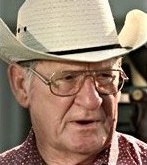 Bobby Frank Cherry
Mass murderer · USA · 1963
Bobby Frank Cherry was convicted in 2002 for the 16th Street Baptist Church bom…
4 victims
Bobby Frank Cherry
Mass murderer · USA · 1963
Bobby Frank Cherry was convicted in 2002 for the 16th Street Baptist Church bom…
4 victims
 Virginia Sims
Murderer · USA · 2011
Virginia Sims was a 47-year-old South Georgia woman who pleaded guilty in conne…
1 victim
Virginia Sims
Murderer · USA · 2011
Virginia Sims was a 47-year-old South Georgia woman who pleaded guilty in conne…
1 victim
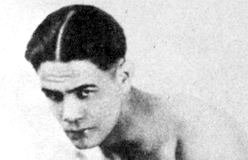 Del Fontaine
Murderer · United Kingdom · 1935
Del Fontaine (also known as Raymond Henry Bousquet) was a Canadian boxer execut…
1 victim
Del Fontaine
Murderer · United Kingdom · 1935
Del Fontaine (also known as Raymond Henry Bousquet) was a Canadian boxer execut…
1 victim
 Floyd Ernest Hill
Murderer · USA · 1982
Floyd Ernest Hill was sentenced to death in July 1982. His death sentence was o…
1 victim
Floyd Ernest Hill
Murderer · USA · 1982
Floyd Ernest Hill was sentenced to death in July 1982. His death sentence was o…
1 victim
- Gender
- male
- Country
- United Kingdom
- Location
- Bramley, Leeds, West Yorkshire, England, United Kingdom
- Date of birth
- 1958
- Age at first offence
- 42
- Characteristics
- rape, kidnapping, child molester
- Victim profile
- Leanne Tiernan, a 16-year-old schoolgirl
- Method of murder
- Strangulation
- Date(s) of murder
- November 26, 2000
- Years active
- 2000
- Date of arrest
- October 16, 2001
- Status
-
Life imprisonment
Sentenced to two life sentences on July 8, 2002
Case identification
John Taylor
Background
Leeds teenager Leanne Tiernan, 16, disappeared at around 5pm on Sunday 26 November 2000 while walking alone through an isolated and unlit path known as Houghley Gill, less than a mile from where she lived in Bramley, Leeds. She had taken a public footpath as a short cut home after going Christmas shopping with a friend. The two friends said their goodbyes and Leanne was never seen again.
Leanne’s body was found later in Lindley Woods in North Yorkshire by a local walker.
Taylor was known locally as “the pet-man”. He was a Parcel Force employee and lived within a mile of where Leanne was abducted. He was divorced with children. Police found that Taylor had kept various animals at home such as dogs and ferrets and that he was a keen poacher.
Taylor was also described as having outwardly been viewed as “an ordinary bloke” by neighbours.
The offence
On the evening of 26 November 2000, Leanne Tiernan was walking home along an unlit wooded path (known locally as Houghley Gill) in Leeds. The defendant, who was described as a stranger to her, was lying in wait. There was no eye-witness to what followed but a girl’s scream was heard but stifled. He seized her and by force compelled her to walk to his home, having tied her hands behind her back and blind-folded her. During a sexual assault upon her, he strangled her with a scarf and a plastic ligature.
Leanne’s head was covered by a black plastic bag (described as a black bin-liner in other parts of the case record) held in place by a dog collar. A scarf and plastic cable tie had been tied around her neck and cable ties bound together her wrists. Her body was wrapped in a duvet cover and green dustbin liners (green plastic bin-liners), tied with twine.
The judge later described the killing as a planned and sadistic murder of a child, aggravated by the element of abduction and sexual assault. He concluded the defendant kept the body for some time in his deep freeze and then buried it in the woods.
Additional sexual offences and later convictions
After police obtained Taylor’s DNA profile, they embarked upon a review of unsolved sexual attacks by strangers upon women in the locality. Taylor’s guilt was proved of two other rapes committed in 1988 and 1989.
- A was aged 32. She was attacked and raped by the defendant on 18 October 1988 while she walked across waste ground near Houghley Gill. He was masked and armed with a knife. He forced her to take his penis in her mouth. He raped her vaginally and threatened her with anal rape.
- B was aged 21. She was accosted by a masked man armed with a knife who intruded into her own home at lunchtime on 1 March 1989. Her baby was in another room at the time. He forced her to go to her bedroom, where he undressed her, blindfolded her and gagged her. He forced her to perform an act of oral sex upon him, ejaculating into her mouth. He raped her vaginally and tried to rape her anally.
Taylor pleaded guilty to the kidnap and murder of Leanne Tiernan and later pleaded guilty to the two rapes.
Investigation
The search for Leanne became the largest West Yorkshire had ever seen. More than 1,000 properties were searched, and a 3-mile stretch of canal was drained. Rubbish collections were halted while police looked for any sign of her. Leanne’s family made public appeals and police released an e-fit of a man who’d been seen walking a small dog in the area. The man was not a regular dog walker in the area but had been seen several times near where Leanne went missing before her disappearance, but not after.
Eight months later Leanne’s body was found in Lindley Woods in North Yorkshire by a local walker. A man out walking his dog in Lindley Woods near the Warren Point car park stumbled across her body. The body was wrapped in a floral duvet cover and buried in a shallow grave. Police discovered additional details including that the body was bound and covered in ways consistent with the descriptions of cable ties, scarf, black plastic bag and dog collar.
The post mortem examination concluded that the degree of decomposition of the body was inconsistent with burial in the ground for the full nine months since Leanne’s disappearance. Investigators were therefore hopeful that enough forensic evidence would be present to lead them to the killer. Police officers, forensic and scientific experts conducted a fingertip search of dense woodland and expanded this to cover an area of 20,000 square metres.
Dog DNA information was also part of the investigation. Forensic investigators found dog hairs on Leanne’s body and sent a dog hair DNA sample to a university in Texas that had developed a DNA profiling technique for pedigreed pets. The university produced a partial profile for a dog, and police were unable to link this to Taylor because the dog he owned at the time of Tiernan’s murder had subsequently died. The knitted scarf found around Leanne’s neck contained human hair in the knot. Initial conventional DNA tests of the hair roots failed, so forensic experts used mitochondrial DNA testing. Using mitochondrial DNA, they created a DNA profile from minute amounts of DNA inside the hair shaft and it matched Taylor.
Police also sought to trace people in Bramley who had bought a dog collar matching the one found on Leanne’s body. They contacted more than 100 pet shops and suppliers before contacting a company who kept computerised records of all customers, including mail order customers. One of those customers was identified as John Taylor, and the same name appeared from two separate lines of enquiry, making him the prime suspect.
Police began searching Taylor’s house. They found cable ties and a dog collar identical to those found with Leanne’s body inside Taylor’s house. Forensic scientists proved Leanne had been at Taylor’s house by finding a strand of pink carpet fibre on the jumper she was wearing when she was found; pink carpet fibres were also found attached to a nail in Taylor’s house, described as indistinguishable from those found on Leanne’s jumper. The record states Taylor had destroyed the pink carpet but that a few fibres remained.
Forensic scientists also found Leanne’s blood under Taylor’s floor boards. After excavating his garden, police found the remains of a small dog with a shattered skull.
The case record also states that it was possible Taylor could have killed his dog when police made an appeal on the news saying that a man with a dog had been seen near the place and time where Leanne had gone missing.
Other forensic and evidential details described included:
- The tan leather dog collar on Leanne’s body had been made by a company in Nottingham and sold to wholesalers including a mail order company in Liverpool, one customer of which was Taylor.
- The twine used to tie the green bin-liners around Leanne’s body was traced to a manufacturer in Devon and described as having been made originally for the Ministry of Defence and later sold for rabbit netting. Police found an exact match of the twine and a piece of green plastic identical to the bin-liners.
- The yellow cable ties used to bind and gag Leanne were manufactured by an Italian company who sold 99% of them to the Royal Mail. Taylor worked for Parcelforce, a division of Royal Mail.
- Red nylon fibres were discovered on Leanne’s jumper and matched distinctive dye patterns. The fibres were matched to those clinging to nails in Taylor’s house.
- The record states Taylor had previously ripped out a red carpet and burned it to destroy evidence of Leanne’s presence in his home.
- Police questioned Taylor’s ex-girlfriends, who revealed stories of Taylor’s “love of tying up women”, unusual fantasies and enjoying sado-masochistic sex, including one woman claiming Taylor had told her of his desire to have sex with her 15-year-old daughter.
Police were certain that Leanne was not Taylor’s first victim and focused on four major crimes over the previous 20 years:
- The 1992 murder of Yvonne Fitt, a prostitute from Bradford, whose body was found in a shallow grave in the same woodland where Leanne was buried.
- Lindsey Jo Rimer, who disappeared in 1994.
- Deborah Wood, whose body was found in 1996.
- Rebecca Hall, found in an alley in Bradford in 2001.
Arrest
John Taylor was arrested on 16 October 2001 and taken to a police station in Leeds for questioning. Police sealed off his house in Cockshott Drive, with seven-foot high wooden screens, and began their search. Investigators dug up the garden and discovered the bodies of 28 ferrets and the skeletons of four dogs, one with a crushed skull.
Taylor was said to have been arrested and charged with Leanne Tiernan’s abduction and murder ten months after Leanne disappeared.
A quote attributed to Detective Superintendent Chris Gregg described Taylor as appearing ordinary but “not” and stated:
“Taylor appears to have been an ordinary man but he is not. He has a dangerous, extremely dangerous nature. This is displayed in the way in which he treated animals throughout his life.”
Trial
Taylor’s 2002 trial was held at Leeds Crown Court and presided over by the Honourable Mr Justice Astill. Taylor was represented by defence lawyer Graham Stowe Bateson.
Despite the extensive evidence against him, Taylor admitted to abducting Leanne and not to killing her. His version of events was that she had fallen off his bed and banged her head. He claimed that believing she was dead, he lifted her using the scarf around her neck when she died, panicked, and buried her body in Lindley Woods.
The post mortem examination findings were described as inconsistent with the defendant’s account about burial timing. The judge concluded that the defendant had kept the body for some time between three weeks and nine months in his deep freeze, perhaps as a trophy or to avoid detection, before burying it in the woods.
The judge stated:
“You are a dangerous sexual sadist. Your purpose in kidnapping this young girl was so that you could satisfy your perverted cravings. This was a planned, premeditated encounter. …It was a cold and calculating act and the suffering you caused was immeasurable.”
The prosecutor Robert Smith QC claimed that the state of Leanne’s body when she was found meant that it was not possible to establish for certain whether or not she had been sexually abused. Smith also claimed that Taylor’s motive for killing her was clearly for the purpose of sexual gratification.
Guilty plea and sentencing for the kidnap and murder
On 8 July 2002, showing no emotion, 46-year-old John Taylor pleaded guilty to the kidnap and murder of Leanne Tiernan on 26 November 2000. He pleaded guilty “to murder before Mr Justice Astill” at the Crown Court at Leeds.
He was sentenced to two counts of life imprisonment on 8 July 2002. Judge Astill recommended that Taylor serve 25 years before being considered for parole. The record also states that Lord Woolf CJ later reduced this to 20 years, saying this was more in line with current practice.
The record states that Taylor was sent to the maximum-security Wakefield prison.
After sentencing, Leanne’s mother Sharon Hawkhead said:
“Although John Taylor has been locked up, our agony continues. We feel nothing for him. We are pleased that he has been locked up so he can’t do this to anyone else, but life should mean life.”
A further sentencing detail attributed to Judge Astill recommended serving 25 years and then, following Lord Woolf CJ reduction, the record states Taylor was “currently serving two counts of life imprisonment.”
Appeals
A High Court hearing concerned the setting of minimum term under a new sentencing regime.
The case record includes:
- Case No: 2004/324/MTS
- In the High Court of Justice, Queen’s Bench Division (Royal Courts of Justice, Strand, London, WC2A 2LL)
- Date: 19/12/2006
- Before: The Honourable Mr Justice Openshaw
Mr Justice Openshaw stated that no official shorthand note would be taken pursuant to CPR PD 39A para 6.1, and that copies of the handed-down version may be treated as authentic.
The judgment states:
- On 8 July 2002, following his plea of guilty to murder before Mr Justice Astill at Crown Court at Leeds, John Taylor was sentenced to the mandatory term of life imprisonment. The judge recommended 25 years before being considered for release by the Parole Board. Lord Woolf CJ reduced the recommendation to 20 years.
- Before the Secretary of State set the minimum term, the process became subject to section 269 of the Criminal Justice Act 2003, and Taylor was an “existing prisoner” under Schedule 22.
- The Secretary of State referred the matter to the High Court under paragraph 6 of Schedule 22, pursuant to section 28(5) of the Crime (Sentences) Act 1997.
- The summary of facts was taken from the written recommendation made at the time by the sentencing judge.
Mr Justice Openshaw considered Newton hearing circumstances and stated that credit for plea was limited due to Taylor’s persistence in denying some elements of the offence and his withdrawal of the basis of plea on the day of the hearing.
The judgment also addressed whether the rapes, disclosed after sentencing for murder, could be taken into account in setting the minimum term. Mr Justice Openshaw proposed to take the rapes into account.
Mr Justice Openshaw set the minimum term at 30 years and ordered reduction by the period of 8 months and 26 days spent in custody before sentencing.
Mr Justice Openshaw emphasised:
- The sentence remained a sentence of imprisonment for life.
- The defendant may not even be considered for release for the murder offence until at least 30 years had been served.
- He would be detained unless and until the Parole Board was satisfied he no longer presented a risk to the public.
- The whole life term imposed for the rapes remained in force.
Mr Justice Openshaw stated:
“I am just anxious that no one thinks that I am suggesting that he be released in 30 years for I most certainly am not.”
Sentencing
Life sentences for the kidnap and murder
On 8 July 2002, John Taylor was sentenced to two counts of life imprisonment for the kidnap and murder of Leanne Tiernan.
Judge Astill recommended 25 years before consideration for release by the Parole Board. The recommendation was later reduced by Lord Woolf CJ to 20 years. The later High Court judgment resulted in a minimum term decision under the new regime, setting the minimum term at 30 years, reduced by 8 months and 26 days.
Life sentence terms for rapes
In February 2003, Taylor was convicted of two rapes of women in 1988 and 1989 in Bramley, and he pleaded guilty to these attacks and received two further life sentences.
A Recorder of Leeds, His Hon. Judge Norman Jones QC, sentenced Taylor to life imprisonment and expressly dis-applied the early release provisions, described as amounting to a whole life sentence.
On 3 April 2003, Taylor pleaded guilty to the two rapes before His Hon. Judge Norman Jones QC, the Recorder of Leeds. He was sentenced to life imprisonment without the possibility of parole for a minimum of 30 years. The record states the sentence was to be reduced by eight months 26 days, which Taylor had already spent in prison.
Timeline
- 26 November 2000 — Leanne Tiernan disappeared from Houghley Gill at around 5pm.
- 1 December 2000 — Leanne’s mother made her first public appeal on the news about Leanne’s disappearance.
- 21 December 2000 — Police made an appeal on National and local news saying a man with a dog was seen nearby to the time and place where Leanne disappeared.
- 16 October 2001 — John Taylor was arrested for the abduction and murder of Leanne Tiernan.
- 8 July 2002 — John Taylor pleaded guilty to abducting and murdering Leanne; he was sentenced to two life sentences.
- February 2003 — Taylor was convicted of two rapes of women in 1988 and 1989 in Bramley; he pleaded guilty and received two further life sentences.
- 3 April 2003 — Taylor pleaded guilty to the two rapes before His Hon. Judge Norman Jones QC, who sentenced him to life imprisonment without the possibility of parole for a minimum of 30 years.
- 19/12/2006 — High Court of Justice (Queen’s Bench Division) hearing before Mr Justice Openshaw concerning the minimum term; Mr Justice Openshaw set the minimum term at 30 years reduced by 8 months and 26 days.
Other details
Leanne’s funeral
Leanne’s funeral was held on Friday 28 September 2001, a day after what would have been her 17th birthday. The service was held less than a mile from where she disappeared and close to her home, at Sandford Methodist Church in Bramley. About a hundred people packed into the small church, while other mourners stood outside and heard a relayed version of the service led by Sister Janet Durbin. Deaconess Durbin said:
“Leanne was a normal, happy, fun-loving teenager, half child and half young lady.”
The private burial took place at the nearby Hill Top Cemetery.
Documentary
The record states True North Productions made a television documentary about John Taylor, “Killer in the Woods” (2003), produced and directed by Jess Fowle.
Additional background details
The record states Taylor enjoyed hunting from an early age and derived pleasure from inflicting pain on small animals. It describes that he would catch and torture rabbits, had been seen stabbing a fox repeatedly while out poaching, and enjoyed clubbing pheasants to death. It also states he had problems with personal relationships, had been married, and had a son born in 1981 and a daughter born in 1983. It states he advertised for female companions and often traveled across the country to have sex.
Taylor was described as having “kept the bodies” first in a freezer and then hiding them in the woods.
Trial specifics referenced in the High Court judgment
Mr Justice Openshaw noted that there was no eye-witness to what followed, that a scream was heard but stifled, and that there were circumstances including a Newton hearing which was ordered but in which the defendant withdrew his basis of plea on the day of the hearing.
Mr Justice Openshaw also recorded that:
- The family intended to submit Victim Personal Statements but had not done so.
- There was no mitigation in the facts of the offence or in his personal circumstances.
- He had made “some progress in prison” but “set against the magnitude of his offending” it “frankly - counts for nothing.”
Spotted an error, or have more information about this case?