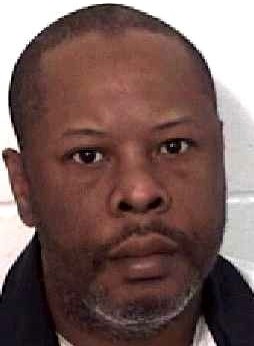
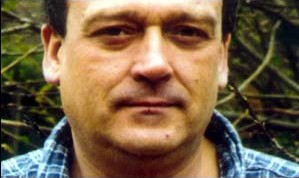
Keith Bryan Taylor
Murderer Brian Kevin Rosenfeld
Murderer · USA · 1985
Brian Kevin Rosenfeld Brian Kevin Rosenfeld was sentenced to three concurrent l…
23 victims
Brian Kevin Rosenfeld
Murderer · USA · 1985
Brian Kevin Rosenfeld Brian Kevin Rosenfeld was sentenced to three concurrent l…
23 victims
 Yahweh ben Yahweh
Murderer · USA · 1980
Yahweh ben Yahweh was born and legally named Hulon Mitchell Jr. (October 27, 19…
23 victims
Yahweh ben Yahweh
Murderer · USA · 1980
Yahweh ben Yahweh was born and legally named Hulon Mitchell Jr. (October 27, 19…
23 victims
 Russell Ellwood
Murderer · USA · 1991
Russell Ellwood was a former taxi driver. Authorities suspected him of killing…
20 victims
Russell Ellwood
Murderer · USA · 1991
Russell Ellwood was a former taxi driver. Authorities suspected him of killing…
20 victims
 Robert Martines Perez
Murderer · USA · 1994
Name: Robert Martines Perez · Other name used in proceedings: Robert Martinez P…
15 victims
Robert Martines Perez
Murderer · USA · 1994
Name: Robert Martines Perez · Other name used in proceedings: Robert Martinez P…
15 victims
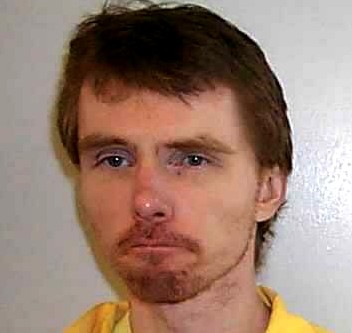 Timothy Alan Dunlap
Murderer · USA · 1991
Timothy Alan Dunlap was 35 and lived in Sellersburg, Indiana. He pleaded guilty…
2 victims
Timothy Alan Dunlap
Murderer · USA · 1991
Timothy Alan Dunlap was 35 and lived in Sellersburg, Indiana. He pleaded guilty…
2 victims
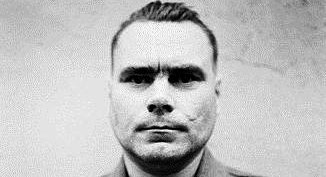 Josef Kramer
Homicide · Germany · 1944
Josef Kramer (November 10, 1906 – December 13, 1945) was the Commandant of the…
Josef Kramer
Homicide · Germany · 1944
Josef Kramer (November 10, 1906 – December 13, 1945) was the Commandant of the…
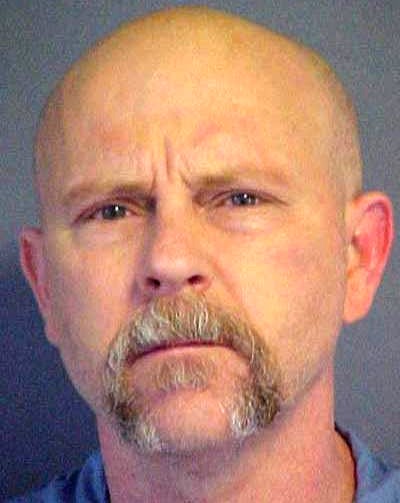 David Jay Brown
Murderer · USA · 1988
Defendant: David Jay Brown · Victim: Eldon McGuire (also referred to as Eldon L…
1 victim
David Jay Brown
Murderer · USA · 1988
Defendant: David Jay Brown · Victim: Eldon McGuire (also referred to as Eldon L…
1 victim
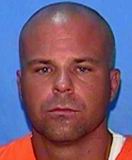 Anthony Wainwright
Murderer · USA · 1994
Anthony Wainwright (DOB: 10/22/70) was tried in the Third Judicial Circuit, Ham…
1 victim
Anthony Wainwright
Murderer · USA · 1994
Anthony Wainwright (DOB: 10/22/70) was tried in the Third Judicial Circuit, Ham…
1 victim
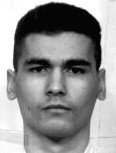 Andrew Perez Flores
Murderer · USA · 1993
October 7, 1990 — Flores was arrested on a felony charge of unauthorized use of…
1 victim
Andrew Perez Flores
Murderer · USA · 1993
October 7, 1990 — Flores was arrested on a felony charge of unauthorized use of…
1 victim
- Gender
- male
- Country
- USA
- Location
- Pierce County, Georgia, USA
- Date of birth
- 1954
- Age at first offence
- 35
- Characteristics
- revenge, history of mental illness, torture
- Victim profile
- Lorrie Taylor, 29 (his estranged wife)
- Method of murder
- St abbing with knife
- Date(s) of murder
- January 12, 1989
- Years active
- 1989
- Date of arrest
- Same day
- Status
-
Sentenced to death
Sentenced to death on October 11, 1990; commuted to life in prison; conviction and death sentence were vacated in habeas corpus but later affirmed on warden’s appeal (Hines v. Taylor)
Case overview
Keith Bryan Taylor was convicted by a jury and was sentenced to die for the murder of his wife, Lori Taylor. Taylor’s death sentence was later commuted to life in prison.
Timeline
- January 12, 1989 — Officer found Taylor at the apartment with blood on his jacket and hands dripping with blood; Lori Taylor was still alive when emergency medical technicians arrived but died afterward.
- August 1, 1990 — The trial court explained the juror “death-qualification” duty at a pre-trial hearing (Transcript, Hearing of August 1, 1990 at p. 57).
- September 24, 1990 — The competency trial began.
- September 28, 1990 — The jury reached its verdict as to sentence.
- October 1, 1990 — The court issued its written sentence in accordance with the jury’s verdict.
- October 11, 1990 — Taylor was sentenced to death on October 11, 1990.
- May 14, 1990 — Taylor was re-indicted after an original indictment was quashed.
- February 11, 1991 — The case was argued orally.
- May 10, 1991 — Decided (Taylor v. The State).
- June 7, 1991 — Reconsideration denied (Head v. Taylor).
- December 20, 1995 — Taylor filed a petition for a writ of habeas corpus.
- November 21, 1997 — Taylor amended the habeas petition.
- October 30, 2000 — Decided (Head v. Taylor).
The offence
Taylor killed his wife, Lori Taylor, on January 12, 1989. The jury rejected an insanity defense.
Taylor and Lori Taylor had moved into an apartment in Blackshear in July of 1986. Two years later, in August of 1988, Lori Taylor removed Taylor’s name from the lease and changed the locks. After that time, the apartment manager said Taylor “wasn’t supposed to be living there.” Taylor apparently moved back into the apartment sometime before January 12, 1989.
Events leading to the killing
On January 12, 1989, Lori Taylor’s cousin drove Lori and Keith Taylor and their two children first to a pawn shop and then to the Pierce County Courthouse. Lori Taylor reported that her husband had threatened her and obtained a “good-behavior warrant.” It was agreed that Keith Taylor would collect his personal effects from the apartment and move out. Lori Taylor rode back to the apartment with her cousin, while Keith Taylor walked the two blocks or so to the apartment with the two children.
Less than ten minutes later, a police officer drove to the apartments to check on the situation following issuance of the good-behavior warrant. When the officer arrived, the children were locked out of the apartment.
The victim’s cousin had heard the victim saying, “Keith, don’t do it.”
The officer knocked on the door. Taylor answered. There was blood on Taylor’s jacket and his hands were “dripping” with blood. Taylor told the officer to take him to jail. Lori Taylor was still alive when emergency medical technicians arrived but died after their arrival.
Medical findings and physical evidence
An autopsist testified that Lori Taylor suffered painful but non-fatal wounds to her head, chest and back. In addition, she suffered a potentially fatal stab wound deep enough to penetrate her pleural cavity which was two-thirds filled with blood when the autopsy was conducted. Her death was caused by a number of slash wounds which cut her neck practically from ear to ear, completely severed her trachea, and reached “completely back to the front part of the cervical spine, or spinal column.”
The autopsist stated he could not say “exactly how many cuts were involved in making these wounds” because some cuts overlapped others and some likely “obliterated” others. He could count “at least the beginning of six individual trails of incised wounds” in one of the two large gaping wounds “one above the other” in the neck.
All the wounds appeared to have been inflicted before death. A bloody knife was found in the front hall closet of the apartment. Taylor’s son identified the knife as one the defendant owned. The evidence supported the jury’s finding that Taylor killed his wife.
Investigation and arrest
After the good-behavior warrant was issued, a police officer went to the apartments to check on the situation. When the officer arrived, Taylor answered the door with blood on his jacket and hands “dripping.” Taylor told the officer to take him to jail, and he was placed in a patrol car.
A note in the case describes that the crime occurred on January 12, 1989, and that the defendant was arrested the same day.
Trial
Charges and verdict
Taylor was convicted by a jury and sentenced to die for the murder of his wife Lori Taylor. The criminal trial included a competency trial.
The jury convicted Taylor of malice murder and recommended the death penalty.
Court proceedings and jury issues
The trial court handled “death-qualification” questions during pre-trial proceedings. At a pre-trial hearing, the court explained:
“[T]he two obligations of a juror . . . [are] to render a verdict in accordance with the evidence and the law. If the juror's disapproval of capital punishment is so strong that it would prevent him or her from being able to perform those two obligations as a juror, then I'm going to let that juror be excused for cause. But the other side of the coin is, if the juror's views are so strongly in favor of capital punishment that he can't perform those two functions, I'm going to excuse him for cause, too. It's a two-edged sword. Both sides are entitled to a jury whose minds are not closed on the question of what punishment should be [imposed] for murder. [The jury] should be able to listen to the evidence and the law and form a verdict based upon that and not some already fixed views on capital punishment. [Transcript, Hearing of August 1, 1990 at p. 57.]”
The appellate discussion also addressed qualification of two prospective jurors who gave conflicting answers on death-qualification questions, but the final distillation supported qualification.
Mental condition and insanity defense
Taylor’s primary defense was his mental condition. Although not conceding he was the person who committed the crime, he contended he was insane at the time of the crime or at least was mentally ill at the time.
Taylor testified at trial. He had been in the army for nine years. He had psychological and substance abuse problems while in the army and was discharged in 1984 after he refused to obey a direct order by a superior officer. After discharge, he had difficulty obtaining and keeping a job. He worked for three months with the City of Blackshear in 1986 but was terminated when he was injured on the job.
Taylor testified that upon his return from the Pierce County Courthouse, he looked for his wife because he did not understand what she was doing. He found no one in the apartment except possibly his son. Then he heard someone knocking at the front door. When he opened the door, he saw the policeman. He knew something was wrong because he had blood on his hands.
April 1987 evaluation and counseling
Taylor had been evaluated in April of 1987 by a psychologist in connection with Taylor’s application for social security disability benefits. The psychologist’s diagnostic impressions were “borderline intellectual functioning, schizophrenia, paranoid, chronic.” The psychologist described Taylor as “manipulative, self-serving and capricious,” as capable of sudden mood changes, and as an individual who had “little in the way of incentive or ambition” and showed “no evidence of hallucinations, illusions, notions of grandiosity, ideas of reference or influence, thought broadcasting, flights of ideas, thought blocking, mania/hypomania, depersonalization, derealization, a poverty of emotion or bizarre ideation.”
Taylor was counseled in 1987 and 1988 at the Satilla Community Mental Health Clinic. Two counselors, neither of whom were psychologists, both with master’s degrees in theology, testified at trial that based on Taylor’s self-reported auditory hallucinations they initially diagnosed him as being paranoid schizophrenic. They counseled Taylor about his drug, alcohol and gambling problems, and inability to obtain work. One counselor testified that Taylor was a “spoiled brat” determined to “get his way.”
A psychiatrist connected with the clinic testified that she saw Taylor in February 1989 and diagnosed “cocaine abuse, alcohol abuse, borderline intellectual functioning, schizoid personality and paranoid personality.” She did not diagnose paranoid schizophrenia, noting that cocaine abuse could “mimic” that disorder.
She acknowledged that before Taylor’s arrest she signed an “adjudication letter” containing a diagnosis of “malingering and substance abuse” and a report that Taylor attempted to use “mental illness to keep from facing responsibility when he gets into trouble.”
Post-arrest forensic evaluation and State’s expert
A clinical forensic psychologist was retained with court-provided funds to evaluate Taylor after his arrest. The psychologist interviewed Taylor at jail and reviewed medical history. The psychologist concluded Taylor “suffers from a paranoid schizophrenic disorder.” The psychologist said Taylor was not malingering, but the psychologist was unable to administer a battery of written psychological tests because Taylor refused to take them.
The psychologist testified that Taylor ordinarily was capable of differentiating right from wrong, but in connection with his wife he “would have severe limits in his ability to differentiate right and wrong.”
The senior forensic psychologist for the Georgia Regional Hospital in Savannah evaluated Taylor and testified for the state. He testified that in his opinion Taylor did not suffer from any serious mental disorder.
In addition, the physician assigned to the jail testified that he treated Taylor for physical ailments on several occasions at the jail and did not observe Taylor behaving in an unusual manner.
Expert testimony objections and related legal issues
Taylor objected to the testimony of the state’s psychologist, arguing qualification and licensing issues. The appellate discussion included that formal education is not a prerequisite for expert status and cited:
“To qualify as an expert . . . generally all that is required is that a person must have been educated in a particular skill or profession: his special knowledge may be derived from experience as well as study. [Cits.] Formal education in the subject at hand is not a prerequisite for expert status.”
The court held the trial court did not err in allowing the witness to testify as an expert.
Taylor also argued a violation of OCGA 17-7-130.1 regarding court-appointed medical experts for an insanity defense. The appellate discussion addressed these claims.
Taylor argued the evidence demanded a finding of not guilty by reason of insanity or at least guilty but mentally ill, but the appellate discussion concluded the evidence supported the jury’s conclusion that Taylor was neither insane nor mentally ill.
Competency trial and other procedural claims
The appellate discussion addressed Taylor’s motion for sequestered voir dire at the competency trial and trial of the case-in-chief and concluded there was no abuse of discretion. It also addressed control of competency-trial voir dire examination and denied error.
The discussion also addressed denial of an evidentiary hearing on a motion for change of venue, qualification of jurors in favor of capital punishment, and several evidentiary rulings involving photographs and the magistrate’s testimony regarding good-behavior warrants.
Sentencing
Aggravating circumstance and jury finding
The jury found as a statutory aggravating circumstance that the offense of murder was “outrageously vile, horrible, inhuman in that it involved torture and aggravated battery to the victim.” The applicable statute cited was OCGA 17-10-30 (b) (7).
Taylor contended the evidence did not support the finding and raised multiple constitutional and proportionality arguments. The appellate discussion concluded the evidence supported the b (7) finding beyond a reasonable doubt and did not find the death sentence excessive or disproportionate.
The appellate discussion compared other cases and addressed intentional torture and aggravated battery. It concluded this case involved deliberate, offensive and prolonged pain prior to death and deliberate and needlessly mutilated the victim. It stated the jury was authorized to conclude the offense involved torture and aggravated battery.
Instructions during sentencing phase
The appellate discussion addressed instructions about the death sentence recommendation. It stated it was not error to tell the jury that a death sentence would not be imposed unless the jury recommended the death sentence in its verdict, and that the instructions informed the jury its recommendation would be binding.
The discussion also addressed an alleged “slip of the tongue” in a sentencing instruction using “justifies” instead of “authorizes.” The judge immediately corrected it and restated the sentence using “authorizes.” The appellate discussion concluded there was no reversible error.
Arbitrary factors
The appellate discussion concluded it did not find the death sentence was imposed as the result of impermissible passion or prejudice or any other arbitrary factor under OCGA 17-10-35 (c) (1).
Appeals
Direct appeal
Taylor’s conviction and death sentence were affirmed.
The appellate decision included extensive rulings on issues raised at trial, including:
- objections regarding autopsist photographs and disclosure,
- qualification of prospective jurors for death-penalty issues,
- magistrate testimony about the “purpose” of a good behavior warrant,
- evidentiary issues about prior testimony and closing argument issues,
- jury instructions and the statutory aggravating circumstance analysis.
United States Supreme Court
The case reached the United States Supreme Court; certiorari was denied.
Habeas corpus and related proceedings
Taylor filed a petition for a writ of habeas corpus on December 20, 1995, and amended the petition on November 21, 1997.
After an evidentiary hearing, the habeas court granted the writ and vacated Taylor’s conviction and sentence due to ineffective assistance of counsel. The warden appealed the habeas decision.
The appellate decision affirmed the habeas court’s findings.
Ineffective assistance of counsel
The appellate discussion focused on two deficiencies:
- trial counsel’s failure to ensure Taylor was properly medicated before his trials so he could assist in his defense;
- trial counsel’s failure to obtain the Pierce County Jail records that would have refuted testimony of State witnesses and supported Taylor’s mental illness.
Failure to ensure medication
Trial counsel had knowledge of Taylor’s long history of mental illness and that he had been repeatedly treated with anti-psychotic drugs. The habeas court found trial counsel deficient for failure to ensure medication so Taylor could assist in defense. The appellate discussion agreed that no reasonable lawyer would have knowingly proceeded without taking necessary action to prevent the strategy from being impaired by Taylor’s non-cooperation.
Failure to obtain Pierce County Jail records
The appellate discussion described that the key point of contention at trial was whether Taylor was mentally ill or malingering. It described that State witnesses presented testimony that Taylor behaved normally in jail, including playing chess and basketball.
The appellate discussion stated that counsel did not obtain jail records. It described that the jail records later obtained by habeas counsel showed repeated complaints by Taylor of headaches, stomachaches, uncontrollable crying and shaking, suicidal ideation, difficulty sleeping, bad dreams, “abnormal feelings,” and “emotional stress disorder,” and that Dr. Martin noted Taylor was depressed and prescribed anti-depressant drugs.
The appellate discussion concluded failure to obtain readily available jail records was not reasonable and affirmed deficient performance.
Actual prejudice
The appellate discussion concluded there was a reasonable probability of a different outcome had counsel acted competently and obtained medication and jail records. It affirmed the habeas court’s vacation of Taylor’s conviction and death sentence.
Other details
Background information about Taylor
A habeas proceeding described Taylor’s background: he was born in 1954 and raised in Miami as one of ten children. He had one brother who was schizophrenic and a sister who was mentally retarded. He obtained a high school diploma and attended some college classes.
Taylor was married three times, but none of the marriages lasted. In 1975, he enlisted in the Army and was trained as a computer operator. In 1977, he married Lori Taylor and they had two children. He reached the rank of staff sergeant.
In 1980 his military career deteriorated and the records revealed a nervous breakdown resulting in extended treatment in a mental hospital. The diagnosis from that hospitalization was adjustment disorder. Records also noted paranoia and substance abuse. He was twice treated at mental hospitals while stationed in Germany in 1983 and 1984. He was discharged from the Army in 1984.
The habeas narrative described that much of his paranoia centered on his wife and that he was upset about her conversion to the Jehovah’s Witness faith.
Specific mental health claims and events described during habeas
The habeas discussion described that Taylor wrote a letter to Futch in March 1989 in which he said it had been three weeks since he had been to the Satilla Mental Health Clinic, he believed he needed more mental health treatment, and that his medication had run out. He claimed the jailers were reluctant to take him for more treatment and claimed that Lori’s father was making payoffs to jail personnel to “get to me” and that “they want me to commit suicide.”
He asked Futch for help in getting more treatment. The case proceeded to a competency evaluation by Dr. D’Alessandro in July 1989, which found Taylor competent and “free from any major psychiatric disorder of either mood or thought.” Dr. D’Alessandro found drug and alcohol abuse were major problems and noted possible malingering reported in previous evaluations.
An investigator met with Taylor before trial; Taylor acted bizarre and said the furniture in his apartment had been moved “to confuse him.” Trial counsel hired a psychologist, Dr. Fisher, who attempted evaluation on July 16, 1990; Taylor refused testing due to conspiracy beliefs and refused to participate. Dr. Fisher wrote that Taylor “is a paranoid schizophrenic whose condition is getting worse” and said Taylor believed “evil spirits” were working to do him in. Dr. Fisher warned of ramifications of refusal to cooperate with testing, and that his inability to test would be difficult to overcome.
Detailed habeas-related account of jail events and medications
The habeas record described that Dr. Martin increased Taylor’s dosage of Mellaril, and that Taylor was treated with Haldol shortly after arrest. It stated that in jail Taylor repeatedly requested mental health treatment and Dr. Martin made several notations about contacting a mental health facility regarding Taylor, but Dr. Martin did not mention these requests at Taylor’s criminal trial and denied ever being asked to evaluate Taylor for a psychological problem.
It stated Dr. Martin testified on habeas corpus that the sheriff decided whether an inmate was transported for mental health treatment, while at the competency trial the sheriff did not mention Taylor’s numerous requests and testified Taylor made no unusual complaints.
It also stated the jail records showed Taylor cut his wrist in an apparent suicide attempt in April 1989. Dr. Martin treated the wound and advised the jailer “to keep [a] close check on [patient].” On one request for medical care form, Taylor wrote to Dr. Martin:
“I know I'm going to suffer. I'm experiencing fears that trouble me often. . . . I only know I must stay in pain.”
Quoted statements during trial and procedure
- The victim’s cousin heard the victim saying, “Keith, don't do it.”
- Taylor’s hands were described as “dripping” with blood.
- The autopsist stated “exactly how many cuts were involved in making these wounds” could not be said, because some cuts overlapped others and some likely “obliterated” others.
- The autopsist could count “at least the beginning of six individual trails of incised wounds” and described the large gaping wound as “one above the other” in the neck.
- The autopsist described reaching “completely back to the front part of the cervical spine, or spinal column.”
- One counselor testified Taylor was a “spoiled brat” determined to “get his way.”
Counsel and parties named in the appellate record
The appellate discussion listed the following:
- Harry D. Dixon, Jr., District Attorney; George E. Barnhill, Deborah M. Perlis, Assistant District Attorneys; Michael J. Bowers, Attorney General; and C. A. Benjamin Woolf, for appellee.
- Troutman Sanders, Robert P. Edwards, Jr., for appellee in habeas.
- Thurbert E. Baker, Attorney General; Susan V. Boleyn, Senior Assistant Attorney General; Patricia B. Burton, Assistant Attorney General, for appellant.
Case citations and procedural references included in the record
The text included case citations and identifiers:
- TAYLOR v. THE STATE. S91P0294. (261 Ga. 287) (404 SE2d 255) (1991) and related references.
- HEAD v. TAYLOR. S00A0908. (273 Ga. 69) (538 SE2d 416) (2000).
- Taylor v. State, 261 Ga. 287 (404 SE2d 255) (1991).
- Taylor v. Georgia, 505 U. S. 947 (112 SC 393, 116 LE2d 343) (1991).
Spotted an error, or have more information about this case?