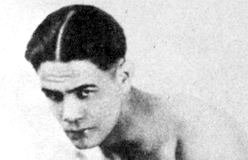
Del Fontaine
Murderer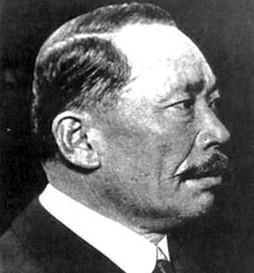 Lock Ah Tam
Murderer · United Kingdom · 1925
Lock Ah Tam was 54 when he killed his wife and two daughters. He had been a suc…
3 victims
Lock Ah Tam
Murderer · United Kingdom · 1925
Lock Ah Tam was 54 when he killed his wife and two daughters. He had been a suc…
3 victims
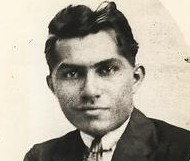 Buck Ruxton
Murderer · United Kingdom · 1935
Buck Ruxton (21 March 1899, Bombay – 12 May 1936, Manchester) was also known as…
2 victims
Buck Ruxton
Murderer · United Kingdom · 1935
Buck Ruxton (21 March 1899, Bombay – 12 May 1936, Manchester) was also known as…
2 victims
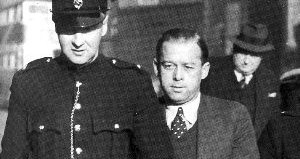 Walter Graham Rowland
Murderer · United Kingdom · 1934
Defendant: Walter Graham Rowland Age: 39 (labourer) Residence/Origin: from Mell…
2 victims
Walter Graham Rowland
Murderer · United Kingdom · 1934
Defendant: Walter Graham Rowland Age: 39 (labourer) Residence/Origin: from Mell…
2 victims
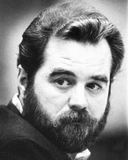 Dennis Duane Webb
Murderer · USA · 1973
Defendant: Dennis Duane Webb · Victims: John Rainwater and Lori Rainwater · Cou…
7 victims
Dennis Duane Webb
Murderer · USA · 1973
Defendant: Dennis Duane Webb · Victims: John Rainwater and Lori Rainwater · Cou…
7 victims
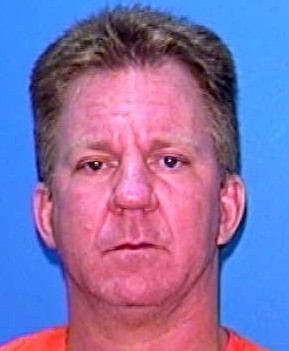 Donald Lee Bradley
Murderer · 1995
Donald Lee Bradley was convicted of first-degree murder and sentenced to death…
1 victim
Donald Lee Bradley
Murderer · 1995
Donald Lee Bradley was convicted of first-degree murder and sentenced to death…
1 victim
 Bai Ningyang
Mass murderer · China · 2006
Bai Ningyang carried out an attack at a kindergarten in Shiguan village in Gong…
12 victims
Bai Ningyang
Mass murderer · China · 2006
Bai Ningyang carried out an attack at a kindergarten in Shiguan village in Gong…
12 victims
 George Putt
Spree killer · USA · 1969
George Putt was born in New Orleans, Louisiana in the mid-1940s. His parents we…
5 victims
George Putt
Spree killer · USA · 1969
George Putt was born in New Orleans, Louisiana in the mid-1940s. His parents we…
5 victims
 Wayne Lo
Murderer · USA · 1992
Wayne Lo (born November 14, 1974) was a Taiwanese-American who perpetrated a sc…
2 victims
Wayne Lo
Murderer · USA · 1992
Wayne Lo (born November 14, 1974) was a Taiwanese-American who perpetrated a sc…
2 victims
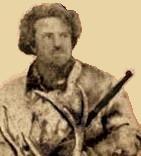 Walter Earl Durand
Spree killer · USA · 1939
Walter Earl Durand (1913-1939) was an only son of Walter W. and Effie Durand. H…
5 victims
Walter Earl Durand
Spree killer · USA · 1939
Walter Earl Durand (1913-1939) was an only son of Walter W. and Effie Durand. H…
5 victims
- Gender
- male
- Country
- United Kingdom
- Location
- London, England, United Kingdom
- Date of birth
- February 22, 1904
- Age at first offence
- 31
- Characteristics
- jealous rage
- Victim profile
- Hilda Meeks, 21 (his lover)
- Method of murder
- Shooting
- Date(s) of murder
- July 10, 1935
- Years active
- 1935
- Date of arrest
- Same day
- Status
-
Executed
Executed by hanging at Wandsworth Prison in London on October 29, 1935
Case identity
Del Fontaine (also known as Raymond Henry Bousquet) was a Canadian boxer executed by hanging.
Background
Del Fontaine was a Canadian pugilist most notable within boxing for winning the Canadian middleweight boxing championship in 1926 and again in 1931. He was described as having an aggressive, crowd-pleasing boxing style with a poor regard for defence.
Del Fontaine was known to have a wife and children back in Canada. He began a two-year relationship in Britain with 21-year-old Hilda Meeks (also reported as Hilda Weeks), a Bristol-born one-time West End waitress whose friends described her as “flighty.” Fontaine left his wife and children behind when he crossed the Atlantic.
During his boxing career, Fontaine fought between 1925 and 1935. His boxing career included a record of 23 wins, 4 losses and 3 draws in Britain, followed by a run of results from November 1933 described as 4 wins, 16 losses and 2 draws. Fontaine’s defence later used this string of poor results during his murder trial, with his defence counsel stating he was “punch drunk” and therefore of diminished responsibility.
Other details
Fontaine’s real name was Raymond Henry Bousquet (22 February 1904 - 29 October 1935). He was a resident of Winnipeg, Manitoba, at one time and made his first recorded boxing match against Sammy Hudson, a fellow Canadian from Moose Jaw; Fontaine won by knockout in the fifth. Fontaine was unbeaten in his next six matches, including a draw with Jack Reddick, who was at the time Canadian light heavyweight champion.
On 14 August 1925, Fontaine faced Harry Dillon at Regina, Saskatchewan for the vacant Canadian middleweight title; the fight went the distance of ten rounds, and Dillon won on a points decision. After Fontaine’s first professional defeat, he returned with four contests undefeated.
On 8 May 1926, Fontaine fought in Ottawa against Henry Henning for the vacant Canadian middleweight belt and won the match and the title in the second round with a technical knockout.
He travelled outside Canada and fought in Philadelphia against Bobby Marriott, and his biggest fight to date was on 16 August 1926 against Welsh fighter Frank Moody, where the contest went the distance with Moody victorious. Fontaine finished 1926 with two bouts in the United States: a win over Joe Anderson and a points loss to Rocky Smith.
In the following year, Fontaine travelled around the United States and Canada with mixed results. His most notable fight that year was against Vincent Forgione, facing him twice in two months. After losing to Forgione by points, Fontaine was knocked out for the first time in his professional career when he faced Forgione again in July 1927.
Fontaine continued fighting in North America over the next four years. At the end of 1931, he faced Ted Moore, regaining the Canadian middleweight title.
In early 1931, Fontaine travelled from Canada to the United Kingdom by cattle boat to continue his boxing career, and over the next three years faced multiple British middleweight boxers including Billy Bird, Jack Casey, Gipsy Daniels, Tommy Farr, Jack Hyams and Harry Mason.
Fontaine was described as a “French Canadian boxer.” His boxing style was described as all-action and he had little or no defence.
The offence
Hilda Meeks (also reported as Hilda Weeks), who was 21, was killed on 10 July 1935. The circumstances described were that, on 10 July 1935, she was caught by Fontaine making a date with another man on the telephone. Fontaine confronted her, taking the phone from her and challenging the man she was speaking to.
Meeks’ mother came into the room to protect her daughter and Fontaine pulled a revolver. As Meeks ran into the street, Fontaine fatally shot her, then fired a second shot into her mother. Her mother was shot and seriously wounded and survived.
The narrative further records that Fontaine stated: “I've done for her and done for the old woman”, showing that he believed he had killed both women.
Timeline
- 10 July 1935 — Hilda Meeks was fatally shot; her mother was shot and seriously wounded at the Meeks’ home in South London.
- October 1935 (month before execution) — Fontaine was convicted at Old Bailey for the girl’s murder and attempted murder of the mother.
- 29 October 1935 — Fontaine was executed by hanging at Wandsworth Prison in London.
Investigation and arrest
Fontaine was arrested and convicted for the murder of Miss Meeks and attempted murder of the mother. The incident occurred at the Meeks’ home in South London.
Trial
Fontaine was tried at Old Bailey and convicted for the murder of Hilda Meeks and attempted murder of her mother.
At the trial, Fontaine’s defence contended that Fontaine was suffering from acute depression and was probably “punch drunk.” The defence called Ted Lewis, a former welterweight champion, who stated:
“Del shouldn't have been in the ring at all for his last fight. He wasn't in a fit state. ... As a boxer, he has received more punishment than anyone I have ever seen.”
Sam Meeks, Hilda’s father, responded to claims about Fontaine’s state of mental health and expressed scepticism about the meaning of knock-outs. The narrative records:
“Do you realise that he was knocked out seven times recently ?”
“I don't know about knock-outs. The last one seemed to me more like a lie-down.”
Fontaine was found guilty and sentenced to death by hanging.
Sentencing
Fontaine was sentenced to death by hanging.
Appeals
No appeal information was included beyond the existence of public protests and petitions pleading for a reprieve.
Execution
By the time the execution date had been decided, protests had started pleading for a reprieve. A long petition was delivered, but it was not stated to have succeeded.
On the morning of 29 October 1935, a crowd gathered outside Wandsworth Prison, hymns were sung and politicians made anti-capital punishment speeches. Fontaine was executed that morning at Wandsworth Prison in London.
Fontaine left a note:
“Hilda Meek broke my heart I spent my last cent on her. She turned me against my own wife.”
A warden at the prison is quoted as saying:
“He was the bravest fellow we ever saw go to the scaffold.”
Aftermath
After Fontaine’s execution, public commentary included references to the relationship and the effect of his depression and alleged “punch drunk” condition on his responsibility. People including other boxers protested outside Wandsworth Prison on the morning he was executed.
Spotted an error, or have more information about this case?