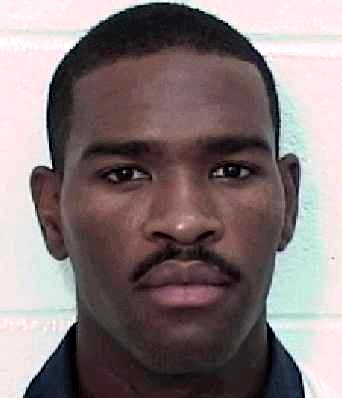
Brian Keith Terrell
Murderer Brian Kevin Rosenfeld
Murderer · USA · 1985
Brian Kevin Rosenfeld Brian Kevin Rosenfeld was sentenced to three concurrent l…
23 victims
Brian Kevin Rosenfeld
Murderer · USA · 1985
Brian Kevin Rosenfeld Brian Kevin Rosenfeld was sentenced to three concurrent l…
23 victims
 Russell Ellwood
Murderer · USA · 1991
Russell Ellwood was a former taxi driver. Authorities suspected him of killing…
20 victims
Russell Ellwood
Murderer · USA · 1991
Russell Ellwood was a former taxi driver. Authorities suspected him of killing…
20 victims
 Robert Martines Perez
Murderer · USA · 1994
Name: Robert Martines Perez · Other name used in proceedings: Robert Martinez P…
15 victims
Robert Martines Perez
Murderer · USA · 1994
Name: Robert Martines Perez · Other name used in proceedings: Robert Martinez P…
15 victims
 Billy Frank Vickers
Murderer · USA · 1993
Billy Frank Vickers Vickers was executed by lethal injection in Texas on Januar…
14 victims
Billy Frank Vickers
Murderer · USA · 1993
Billy Frank Vickers Vickers was executed by lethal injection in Texas on Januar…
14 victims
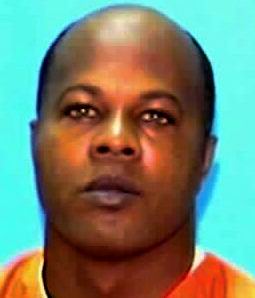 Anthony Neal Washington
Murderer · USA · 1989
Name: Anthony Neal Washington · Date of birth: 09/27/56 · Court (opinion): Supr…
1 victim
Anthony Neal Washington
Murderer · USA · 1989
Name: Anthony Neal Washington · Date of birth: 09/27/56 · Court (opinion): Supr…
1 victim
 Kelli Murphy
Murderer · USA · 2011
Kelli Lynn Murphy was a Castle Rock, Colorado mother. She filed for divorce aga…
2 victims
Kelli Murphy
Murderer · USA · 2011
Kelli Lynn Murphy was a Castle Rock, Colorado mother. She filed for divorce aga…
2 victims
 James Styers
Murderer · USA · 1989
James Styers filed a missing child report on December 2, 1989, advising police…
1 victim
James Styers
Murderer · USA · 1989
James Styers filed a missing child report on December 2, 1989, advising police…
1 victim
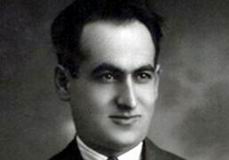 Soghomon Tehlirian
Murderer · Germany · 1921
Soghomon Tehlirian (Armenian: Սողոմոն Թեհլերյան) was born on April 2, 1897, in…
1 victim
Soghomon Tehlirian
Murderer · Germany · 1921
Soghomon Tehlirian (Armenian: Սողոմոն Թեհլերյան) was born on April 2, 1897, in…
1 victim
- Gender
- male
- Country
- USA
- Location
- Newton County, Georgia, USA
- Date of birth
- 1968
- Age at first offence
- 24
- Characteristics
- armed robbery, robbery
- Victim profile
- John Henry Watson, 70
- Method of murder
- Shooting
- Date(s) of murder
- June 22, 1992
- Years active
- 1992
- Date of arrest
- Same day
- Status
-
Sentenced to death
Sentenced to death on February 7, 1995
Case record: Brian Keith Terrell
Background
Brian Keith Terrell, 29, was sentenced to death in January 1995 in Newton County for the robbery and murder of 70-year-old John Henry Watson. Terrell had been released on parole about two months before Watson's June 22, 1992, murder.
Barbara Terrell, the defendant's mother, had been assisting the victim, seventy-year-old John Watson, with meals and errands since 1989. Watson had a number of health problems and required dialysis three times a week. Barbara Terrell received no compensation for her services, but Watson had promised to include her in his will, and they had discussed marriage.
Terrell met Watson through his mother and was inside his home on several occasions.
The offence
On June 22, 1992, John Watson's body was found on his property at approximately noon. He had been shot four times and severely beaten in the face and head. The medical examiner testified that either the gunshots or the beating would have been fatal, and that the victim was still alive when receiving all these injuries.
Shell casings found on Watson's driveway indicated that the firearm used in the murder was a .38 or .357 caliber revolver. Watson had apparently been shot in his driveway as he was getting into his car to drive to his morning dialysis appointment and then dragged into the brush and beaten.
Terrell had forged about $8,000 in checks on Watson's bank account before the killing. Watson called the sheriff's office and reported receiving ten canceled checks, totaling about $8,700, which had been stolen and forged. Some of the checks were made payable to Terrell and the others had been made payable to a former school friend of Terrell, who police later determined was not involved in the forgeries.
Due to his feelings for Terrell's mother, Watson asked the sheriff to wait a few days before taking an arrest warrant for Terrell. Watson told Ms. Terrell to tell her son he would not take a warrant if he returned most of the money by Monday, June 22. Watson relayed this information to her son who promised to repay the money. However, the next day, June 21, Terrell, who had recently bought a car and new clothes despite not having a job, told his mother that he could not repay the money.
Investigation
Arrest
Terrell's arrest was not illegal. The trial court correctly found that he was arrested pursuant to an outstanding warrant for terroristic threats or acts. OCGA 17-4-20.
Trial
Guilt-innocence phase
A jury found Brian Keith Terrell guilty of malice murder and ten counts of first-degree forgery. For the murder, the jury recommended a death sentence, finding the following statutory aggravating circumstances: the offense of murder was committed while the defendant was engaged in the commission of an aggravated battery; and the offense of murder was outrageously or wantonly vile, horrible or inhuman in that it involved depravity of mind and an aggravated battery to the victim before death. OCGA 17-10-30 (b) (2), (7).
Terrell's motion for new trial was denied and he appeals.
Jury selection
During voir dire, prospective juror Smith stated that he was a full-time military policeman with the Georgia National Guard, with arrest power. Terrell moved to excuse juror Smith for cause, but the trial court denied the motion stating, “I think he can distinguish the difference between civil and military law.”
The court concluded that full-time police officers with arrest powers must be excused if challenged for cause, because it “is inherent in the nature of police duties and the closeness with which such officers are identified with criminal procedures that questions regarding possible bias, fairness, prejudice or impermissible influence upon jury deliberations inevitably arise.” Hutcheson v. State, 246 Ga. 13 (1) (268 SE2d 643) (1980).
The court held that the record clearly showed that juror Smith was a full-time military policeman with arrest power and that he did not meet any of the exceptions to this automatic disqualification rule. The court held that the trial court's erroneous refusal to excuse this juror for cause required reversal of the convictions.
Because the reversal required a new trial, the court examined those enumerations raising issues likely to recur on retrial.
Evidence presented
The evidence authorized the jury to find the following.
Terrell was released from prison on parole on May 1, 1992. Watson met Terrell through his mother and Terrell was inside his home on several occasions.
On Saturday, June 20, 1992, Watson reported receiving ten canceled checks, totaling about $8,700, stolen and forged.
Watson asked the sheriff to wait a few days before taking an arrest warrant and told Ms. Terrell promised to repay the money but told his mother on June 21 that he could not repay the money.
Jermaine Johnson, Terrell's cousin, confessed to his role in the crime and testified at trial in exchange for a five-year sentence for robbery.
Johnson testified that he and Terrell checked into a motel near Watson's house at midnight on June 21. Terrell locked the keys in his blue Cadillac and, despite the assistance of a sheriff's deputy, they were unsuccessful at unlocking the car door. Johnson and Terrell went to bed and awoke at 6:30 a.m. on June 22. They broke a window to get into the Cadillac.
Johnson testified that Terrell had a .357 or .38 caliber revolver and asked to be dropped off at Watson's house. Johnson said that Terrell told him to return for him at 9:00 a.m. Johnson went back to the motel, slept until 8:30 a.m., and then drove back to pick up Terrell.
Before 9:00 a.m., Johnson had a conversation with the motel manager in the parking lot as he was leaving. The manager noticed that the broken glass in the parking lot was on the side of the car opposite the broken window, indicating that the Cadillac had been moved since the window was broken. The manager testified that the man he saw matched Johnson's description and that she testified he was alone.
Johnson drove back and forth on the road in front of Watson's house, stopping at a Wal-mart and a convenience store to wait. Witnesses saw Johnson driving Terrell's blue Cadillac at this time.
Johnson testified that before 9:00 a.m. he had a conversation with the motel manager and then drove back and forth in front of Watson's house, stopping at a Wal-mart and a convenience store to wait.
A neighbor of Watson testified that at approximately 9:30 a.m., she saw a man wearing a white shirt standing next to a large blue car parked on the side of the road. Terrell was wearing a white shirt on June 22. Terrell told Johnson that he had shot a man. Terrell bought new clothes at a department store and took a bath at his grandmother's house while Johnson washed the car. Later, Terrell took his son to the zoo.
When questioned by the police, Terrell admitted committing the forgeries, but denied the murder. He said that he and Johnson had checked into the motel with a woman, who was never identified, and stayed there all night after he had locked his keys in the car. Terrell said they did not leave until 10:00 or 10:30 a.m., when they broke the window to get into the Cadillac.
Later in the interview, a police officer asked him how the woman got home and Terrell stated that Johnson drove her home early that morning, which would have been impossible if the keys were locked in the car at that time. When Terrell realized that he had contradicted himself, he refused to answer any more questions.
Accomplice corroboration
The court held that the evidence corroborating Jermaine Johnson's testimony was sufficient to support Terrell's murder conviction. The court stated that corroborating evidence need not be sufficient by itself to convict Terrell, and that accomplice testimony need not be corroborated in every detail.
The court held that the corroborating evidence was sufficient, including evidence that Terrell had a motive to kill the victim in order to prevent the taking of an arrest warrant which would violate his parole conditions, that Terrell checked into a motel near the victim's house the night before the murder, that Terrell was wearing a white shirt on June 22 and a man in a white shirt was seen near the victim's house at the time of the murder, that two witnesses saw Johnson driving Terrell's car near the victim's house around the time of the murder, and that Terrell lied to the police about when the car window had been broken.
The court held that the corroborating evidence was legally sufficient for the jury to convict.
The court also held that Terrell's complaint about the jury charge on corroboration of accomplice testimony was without merit. It held that the charge given was virtually identical to the charge on accomplice testimony corroboration contained in the pattern jury instructions.
Closing argument limitation
During a colloquy, Terrell's counsel announced that he intended to argue in closing that the State had something to hide. When asked what he meant by the State having something to hide, defense counsel responded that the State did not do its job in this case. The trial court replied that the defense could argue that the State did not do its job, but that there was no evidence to support an argument of deliberate misconduct by the prosecution.
Terrell was permitted to and did argue that the State did not do an adequate investigation in the case, that others had motives to kill the victim, and that State witnesses were not truthful and may have committed perjury.
Terrell asserted that the trial court improperly limited his closing argument, but the court held there was no evidence that the State was hiding something and that the trial court did not abuse its discretion.
Destruction of interview notes
GBI agent Troy Pierce interviewed Terrell on June 22 and on June 24, 1992. Agent Pierce took handwritten notes during each interview, dictated the notes onto an audiotape, and had his secretary transcribe the notes. As standard practice, Agent Pierce checked the transcription against the original handwritten notes for accuracy, then discarded the original notes.
Terrell claimed that destruction of the original notes amounted to destruction of evidence in violation of due process rights and Brady v. Maryland, 373 U. S. 83 (83 SC 1194, 10 LE2d 215) (1963). The court held there was no error, and that even assuming the original notes were evidence, the record did not show they were material or that Agent Pierce acted in bad faith.
Evidence of character in guilt-innocence phase
Terrell complained that the State improperly introduced evidence of his character in the guilt-innocence phase. The court held motive for the murder was relevant and permitted evidence that Terrell was on parole at the time of the murder and that taking of an arrest warrant for the forgeries would have resulted in his immediate incarceration for violating parole conditions.
The court found no error and held that evidence relevant to prove motive was not rendered inadmissible simply because it incidentally put the defendant's character in issue.
Jury deliberation support for aggravating circumstances
The court held the evidence was sufficient to enable a rational trier of fact to find proof of Terrell's guilt of malice murder and ten counts of first-degree forgery beyond a reasonable doubt. The court also held that the evidence authorized the jury to find beyond a reasonable doubt the statutory aggravating circumstances that supported his death sentence for the murder.
Sentencing phase
The jury recommended a death sentence and the trial court's sentencing phase issues were addressed on appeal.
Terrell argued that the trial court erred by refusing to admit relevant mitigating evidence in the sentencing phase. Terrell attempted to introduce evidence that he offered to plead guilty to the forgeries in exchange for consecutive sentences totaling 100 years, but that he refused to plead guilty to murder.
The court held the trial court correctly refused to admit this evidence, citing policy reasons and Mobley v. State, 265 Ga. 292 (18) (455 SE2d 61) (1995).
The court held it was not error for the trial court to fail to instruct the jury that a unanimous finding on mitigating circumstances was not required, while charging the jury that its sentencing verdict had to be unanimous. The court held that since the court charged the jury that it was not necessary for the jury to find any mitigating circumstances to impose a life sentence, the argument failed.
The court also held it was not error to refuse to instruct the jury on residual doubt, noting the trial court was not required to identify specific mitigating circumstances in its charge.
Evidence that Terrell set a fire in his jail cell while awaiting trial was properly admitted as a non-statutory aggravating circumstance. The court held the State provided sufficient pretrial notice of its intention to present evidence about the incident under OCGA 17-10-2.
The court stated it did not need to address the remaining enumerations of error because they were not likely to recur on retrial, and that since the evidence supported the jury's findings of statutory aggravating circumstances, on retrial the State may again seek the death penalty.
Outcome of appellate review
The court reversed the convictions, requiring a new trial.
The decision included a dissent by HUNSTEIN, Justice.
Appeals
Dissenting opinion
HUNSTEIN, Justice, dissented. The dissent stated that the majority held the trial court erred in refusing to strike juror Smith on principal cause based on the conclusion that juror Smith was a “full-time military policeman with arrest power [who] did not meet any of the exceptions to th[e] automatic disqualification rule.”
The dissent argued that such a conclusion was not supported by the record and unjustifiably expanded the holding in Hutcheson v. State, 246 Ga. 13 (1) (268 SE2d 643) (1980). The dissent stated that full-time police officers must be excused if challenged for principal cause, but argued that the rule should not be extended to less-connected law enforcement than full-time police officers and should not manufacture a presumption of bias.
The dissent stated that the sparse record evidence indicated juror Smith's military law enforcement duties were limited and substantially less frequent than the jurors not automatically disqualified in Denison v. State, Denison v. State, 258 Ga. 690 (4) (373 SE2d 503) (1988), Cargill v. State, 255 Ga. 616 (6) (340 SE2d 891) (1986), and Wilson v. State, 250 Ga. 630 (4) (a) (300 SE2d 640) (1983).
The dissent argued juror disqualification or bias must be affirmatively shown by the party seeking to strike the juror for cause and stated there was no evidence of actual bias. The dissent stated it would affirm the trial court's ruling denying the motion to strike juror Smith and would thus dissent to the majority's reversal.
Other details
Notes on indictment, mistrial, and trial sequence
The decision included notes describing proceedings and timeline.
The notes stated that the victim was murdered on June 22, 1992, and on July 13, 1992, the Newton County Grand Jury indicted Terrell for malice murder, felony murder, and armed robbery. Terrell was also indicted for ten counts of first degree forgery on June 10, 1993.
The State dropped the felony murder and armed robbery counts after Terrell's first trial ended in a mistrial. Terrell's second trial began on January 9, 1995, and Terrell was convicted of all remaining counts. The jury recommended a death sentence for the murder on January 20, 1995.
In addition to the death sentence, the trial court sentenced Terrell to ten consecutive ten-year sentences for the forgeries. Terrell filed an extraordinary motion for new trial on January 27, 1995, and a motion for new trial on February 8, 1995. The motions were denied on September 4, 1997, and pursuant to an extension of time granted by the trial court, Terrell filed his notice of appeal on October 31, 1997.
The case was docketed in this Court on January 15, 1999, and was orally argued on April 13, 1999.
Voir dire details about juror Smith
The notes stated that during a less than thorough voir dire, juror Smith was asked about his service with the National Guard. He responded that he had been in the Guard for fourteen years and had been called to active duty for flood control and similar projects on six occasions over the last seven years.
In the only other question pertaining to his service in the National Guard he was asked, “Have you ever worked in your capacity with the Military Police in a military jail setting?” He responded, “See when we do an arrest, we're combating things, military law and order, we do imprisonment and a lot of times works with the jail, and also we do air security and station patrol.”
The notes stated that at no time was juror Smith asked about his full-time duties as a readiness officer, whether he himself had arrest powers, or whether he thought he could be fair and impartial in deciding the case.
Counsel
The decision listed counsel for appellee and counsel for appellant: Alan A. Cook, District Attorney; Thurbert E. Baker, Attorney General; Susan V. Boleyn, Senior Assistant Attorney General; Paige R. Whitaker, Assistant Attorney General, for appellee. Strauss & Walker; John T. Strauss; Tanya Greene, for appellant.
Timeline
- May 1, 1992 — Terrell was released from prison on parole.
- June 20, 1992 — Watson reported receiving ten canceled checks totaling about $8,700 stolen and forged.
- June 21, 1992 — Terrell told his mother he could not repay the money.
- June 22, 1992 — Watson was murdered; his body was found at approximately noon; GBI agent Troy Pierce interviewed Terrell.
- June 24, 1992 — GBI agent Troy Pierce interviewed Terrell.
- January 9, 1995 — Terrell's second trial began.
- January 20, 1995 — The jury recommended a death sentence for the murder.
- January 27, 1995 — Terrell filed an extraordinary motion for new trial.
- February 7, 1995 — Terrell was sentenced to death.
- February 8, 1995 — Terrell filed a motion for new trial.
- September 4, 1997 — The motions were denied.
- October 31, 1997 — Terrell filed his notice of appeal.
- January 15, 1999 — The case was docketed in this Court.
- April 13, 1999 — The case was orally argued.
- November 1, 1999 — The decision was decided.
- December 17, 1999 — Reconsideration was denied.
Spotted an error, or have more information about this case?