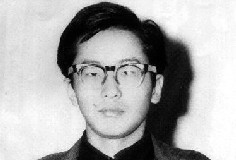
Otoya Yamaguchi
Murderer Akiyoshi Umekawa
Murderer · Japan · 1963
Akiyoshi Umekawa ( 梅川 昭美 , Umekawa Akiyoshi , March 1, 1948 - January 28, 1979)…
5 victims
Akiyoshi Umekawa
Murderer · Japan · 1963
Akiyoshi Umekawa ( 梅川 昭美 , Umekawa Akiyoshi , March 1, 1948 - January 28, 1979)…
5 victims
 Shoko Asahara
Murderer · Japan · 1995
Shoko Asahara was the founder of Japan's controversial Buddhist religious group…
12 victims
Shoko Asahara
Murderer · Japan · 1995
Shoko Asahara was the founder of Japan's controversial Buddhist religious group…
12 victims
 Marie Dean Arrington
Murderer · USA · 1964
Marie Dean Arrington (born August 8, 1933) was an American criminal. She was al…
2 victims
Marie Dean Arrington
Murderer · USA · 1964
Marie Dean Arrington (born August 8, 1933) was an American criminal. She was al…
2 victims
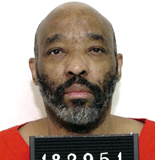 Sherman Noble
Murderer · USA · 1985
Sherman Noble was a death row inmate in Kentucky. He died in prison on October…
4 victims
Sherman Noble
Murderer · USA · 1985
Sherman Noble was a death row inmate in Kentucky. He died in prison on October…
4 victims
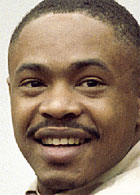 Cleophus Prince
Serial killer · USA · 1990
Cleophus Prince Jr. (also known as "The Clairemont" Killer) was an American ser…
6 victims
Cleophus Prince
Serial killer · USA · 1990
Cleophus Prince Jr. (also known as "The Clairemont" Killer) was an American ser…
6 victims
- Gender
- male
- Country
- Japan
- Location
- Tokyo, Japan
- Date of birth
- February 22, 1943
- Age at first offence
- 17
- Characteristics
- anarchist
- Victim profile
- Inejiro Asanuma (a politician and head of the Japan Socialist Party)
- Method of murder
- St abbing with knife
- Date(s) of murder
- October 12, 1960
- Years active
- 1960
- Date of arrest
- Same day
- Status
-
Died in custody
Committed suicide by hanging in prison on November 2, 1960
Case information
Otoya Yamaguchi (山口 二矢, Yamaguchi Otoya, February 22, 1943 - November 2, 1960) was a Japanese ultranationalist and a member of a right-wing Uyoku dantai group.
The offence
Otoya Yamaguchi assassinated Inejiro Asanuma by wakizashi on 12 October 1960 at Tokyo's Hibiya Hall during a political debate in advance of parliamentary elections.
Inejiro Asanuma (浅沼稲次郎 Asanuma Inejirō, December 27, 1898 - October 12, 1960) was a Japanese politician and head of the Japan Socialist Party.
Investigation
After Yamaguchi's hanged body was found, Saburo Eda, acting chairman of the Socialists, shifted his ground and growled:
"The fact that an important criminal was able to commit suicide exposes the utter irresponsibility of the authorities in charge."
Arrest
Yamaguchi was held in a juvenile detention facility.
Trial
No trial outcome was provided.
Sentencing
No sentencing was provided.
Appeals
No appeals were provided.
Outcome
Less than three weeks later, while being held in a juvenile detention facility, Yamaguchi mixed a small amount of tooth paste with water and wrote on his cell wall, " Seven lives for my country. Ten thousand years for His Imperial Majesty, the Emperor! "
Yamaguchi then knotted strips of his bedsheet into a makeshift rope and used it to hang himself from a light fixture.
Yamaguchi’s suicide was described as an act of owabi—apology to those inconvenienced by his murder of Asanuma.
A photograph taken by Yasushi Nagao immediately after Otoya withdrew his sword from Asanuma later won the Pulitzer Prize and the 1960 World Press Photo award. Footage of the incident was also captured.
Nobel Prize-winning author Kenzaburō Ōe based his 1961 novella "Seventeen" on Yamaguchi.
Aftermath
The Socialists tried to make Yamaguchi a top issue in the Japanese election campaign.
They called him a "cat's paw of monopolistic capitalist forces" (by which they meant Premier Hayato Ikeda's ruling Liberal Democrats) and paraded Asanuma's widow in hopes of a sympathy vote.
Asanuma was assassinated at a televised rally for the upcoming Lower-house election.
A group of right-wing supporters went to the jail, presented Yamaguchi's parents with a burial coat, kimono and belt, and then escorted the body of their hero home.
The nation was shocked by Asanuma’s assassination, and national demonstrations and protests followed.
With Asanuma’s death, the Japanese Socialist Party further divided between politicians on the left and right.
Dead or alive, Yamaguchi was not good for many votes; as a martyr, he might inspire fresh violence from a small but dangerous band of Japanese who shared his fanatical right-wing views and upheld the prewar tradition of political assassination.
Other details
Yamaguchi was 17 when he hanged himself.
Private life and public perception of Inejiro Asanuma:
- Asanuma's mother died during his birth, and he was raised by his father, who later died at the age of 42 of cancer.
- He was known for his gentle heart and frugal lifestyle, living in a small apartment with his family.
- He was given nicknames meaning "speech-making farmer" and "human locomotive" because of his huge body, loud voice and energetic manner of speaking.
- His genuine and natural personality won him great popularity among workers and grassroots.
Time references included:
- "Assassin's Apologies Time.com Monday, Nov. 14, 1960"
Quotations included:
- Saburo Eda:
- Yamaguchi’s cell message:
"Seven lives for my country. Ten thousand years for His Imperial Majesty, the Emperor!"

Spotted an error, or have more information about this case?