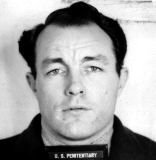
Miran Edgar Thompson
Murderer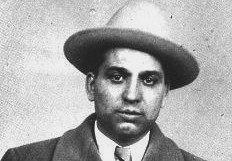 Harry Maione
Murderer · USA · 1937
Harry “Happy” Maione (1908 – February 19, 1942) was a New York mobster who serv…
12 victims
Harry Maione
Murderer · USA · 1937
Harry “Happy” Maione (1908 – February 19, 1942) was a New York mobster who serv…
12 victims
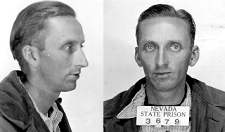 Luther Jones
Murderer · USA · 1936
Luther Jones Luther Jones was executed by asphyxiation-gas in Nevada on January…
4 victims
Luther Jones
Murderer · USA · 1936
Luther Jones Luther Jones was executed by asphyxiation-gas in Nevada on January…
4 victims
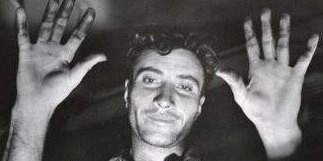 Albert Dyer
Murderer · USA · 1937
Albert Dyer was a 32-year-old WPA crossing guard and traffic guard at Centinela…
3 victims
Albert Dyer
Murderer · USA · 1937
Albert Dyer was a 32-year-old WPA crossing guard and traffic guard at Centinela…
3 victims
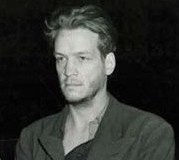 George Sitts
Murderer · USA · 1945
George Sitts was executed by the State of South Dakota on April 8, 1947 for the…
3 victims
George Sitts
Murderer · USA · 1945
George Sitts was executed by the State of South Dakota on April 8, 1947 for the…
3 victims
 Joseph Medley
Murderer · USA · 1940
Joseph Medley was a male White person identified as being associated with robbe…
3 victims
Joseph Medley
Murderer · USA · 1940
Joseph Medley was a male White person identified as being associated with robbe…
3 victims
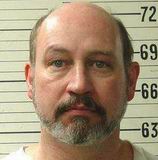 Michael Dale Rimmer
Murderer · USA · 1997
Michael Dale Rimmer was convicted of one count of premeditated murder, one coun…
1 victim
Michael Dale Rimmer
Murderer · USA · 1997
Michael Dale Rimmer was convicted of one count of premeditated murder, one coun…
1 victim
 Raynella Dossett Leath
Murderer · USA · 2003
October 25, 1948 — Raynella Large was born in Oak Ridge, Tennessee. · 1966 — Ra…
2 victims
Raynella Dossett Leath
Murderer · USA · 2003
October 25, 1948 — Raynella Large was born in Oak Ridge, Tennessee. · 1966 — Ra…
2 victims
 Dionne Baugh
Murderer · USA · 1996
Dionne Baugh was a Jamaican native who lived in Atlanta, Georgia. After her div…
1 victim
Dionne Baugh
Murderer · USA · 1996
Dionne Baugh was a Jamaican native who lived in Atlanta, Georgia. After her div…
1 victim
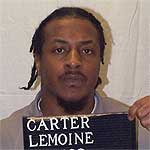 Lemoine Carter
Murderer · USA · 1994
Name: Lemoine Carter · Court / proceeding: United States Court of Appeals for t…
2 victims
Lemoine Carter
Murderer · USA · 1994
Name: Lemoine Carter · Court / proceeding: United States Court of Appeals for t…
2 victims
 Ricardo Samaniego Ortiz
Murderer · USA · 1997
Ricardo Samaniego Ortiz was convicted of capital murder and sentenced to death…
1 victim
Ricardo Samaniego Ortiz
Murderer · USA · 1997
Ricardo Samaniego Ortiz was convicted of capital murder and sentenced to death…
1 victim
 Michael Joe Boyd
Murderer · USA · 1983
Michael Joe Boyd was convicted of felony murder stemming from the shooting deat…
2 victims
Michael Joe Boyd
Murderer · USA · 1983
Michael Joe Boyd was convicted of felony murder stemming from the shooting deat…
2 victims
- Gender
- male
- Country
- USA
- Location
- Texas/California, USA
- Date of birth
- December 16, 1917
- Age at first offence
- 28
- Characteristics
- to avoid arrest, fugitive
- Victim profile
- Lemuel Dodd Savage ( police officer Detective) / Harold Stites and William Miller (Correctional Officers)
- Method of murder
- Shooting
- Date(s) of murder
- March 1945 / May 1946
- Years active
- 1945–1946
- Date of arrest
- —
- Status
-
Executed
Executed by asphyxiation-gas in California on December 3, 1948
Background
Miran Edgar Thompson (December 16, 1917 – December 3, 1948) was an inmate of Alcatraz.
The offence
At the time of the Battle of Alcatraz, Thompson was serving life plus 99 years for kidnapping and for the murder of Amarillo, Texas police officer Detective Lemuel Dodd Savage.
Thompson participated in an attempted escape at Alcatraz Island Federal Penitentiary by seizing the prison's gun gallery and then the prison launch to San Francisco. The attempt was unsuccessful and developed into a bloody struggle that lasted almost two days before prison authorities regained control.
Investigation
Detective Savage arrested Thompson and Elber Day when he found them burglarizing a store. Savage searched the two suspects before transporting them to jail, but missed a handgun hidden in Thompson's pants. During the transport, Thompson produced the gun and shot Savage.
As Thompson fled after shooting Savage, he kidnapped three other people before being apprehended.
Arrest
Thompson was apprehended after kidnapping three other people during his flight following the shooting of Detective Savage.
Trial
Thompson was convicted of federal kidnapping charges and sent to Alcatraz Prison.
While in Alcatraz, Thompson was part of an escape attempt that ultimately left Correctional Officer Harold Stites and Correctional Officer William Miller, of the Federal Bureau of Prisons, dead from gunshot wounds.
Thompson was tried for his part in the violence during the Battle of Alcatraz. He was specifically accused of inciting Joe Cretzer to open fire on nine hostage guards in an effort to eliminate witnesses.
Thompson was found guilty along with inmate Sam Shockley.
Sentencing
Thompson was executed in the gas chamber of San Quentin on December 3, 1948. Sam Shockley was also executed in the gas chamber of San Quentin on December 3, 1948 for their roles in the Battle of Alcatraz.
Appeals
No appeal proceedings were stated.
Outcome
Miran Thompson and Sam Shockley were executed in the gas chamber at San Quentin on December 3, 1948 for their role in the Battle of Alcatraz.
Carnes was given an (additional) life sentence but was eventually released from prison in 1973.
The increased security measures ensured that there were no more escape attempts until 1956.
Timeline
- October 1945 — Thompson was transferred to Alcatraz after a record of eight escapes from custody.
- December 3, 1948 — Thompson was executed in the gas chamber of San Quentin.
- May 2, 1946 — Thompson participated in the unsuccessful attempted escape at Alcatraz.
- May 3, 1946 — Johnston spoke with the convicts by telephone to try to discuss a deal; Johnston would only accept their surrender.
- May 4, 1946 — Prison authorities entered the corridor and found the bodies of Cretzer, Coy, and Hubbard; the escape attempt ended.
Other details
Thompson survived the fighting during the Battle of Alcatraz. The violence left two corrections officers dead and thirteen wounded, and three convicts dead.
The Battle of Alcatraz lasted from May 2–4, 1946. Two guards—William A. Miller and Harold Stites—were killed along with three of the inmates. Eleven guards and one convict were also injured. Two of the surviving convicts were later executed for their roles.
The Takeover
On May 2, 1946, while most convicts and guards were in outside workshops, Bernard Coy, a bank robber serving a 25-year sentence at Alcatraz, was in the C Block cell-house sweeping the floor when kitchen orderly Marvin Hubbard called on guard William Miller to let him in as he had just finished cleaning the kitchen.
As Miller was frisking Hubbard for any stolen articles, Coy assaulted him from behind and the two men overpowered the officer. They then released Joseph Cretzer and Clarence Carnes from their cells. The cell block had an elevated gun gallery which was regularly patrolled by an armed guard, Bert Burch, who had a set routine.
Coy assaulted Burch when he returned and bound him. Coy kept a Springfield rifle in the gallery and lowered an M1911 pistol, keys, a number of clubs and gas grenades to his accomplices below.
Coy entered D Block, which was separated from the main cell-house by a concrete wall and used for prisoners kept in isolation. He used the rifle to force guard Cecil Corwin to open the door to C Block and let the others in.
The convicts released about a dozen convicts including Sam Shockley and Miran Thompson. Shockley and Thompson joined Coy, Carnes, Hubbard and Cretzer in C Block. The other prisoners returned to their cells. Miller and Corwin were placed in a cell in C Block.
The escapers needed to secure the key to the yard door of the prison from which they expected to make their way to the island's dock to seize the prison's launch. The plan was to use the hostage guards as cover to make their way to the dock, then San Francisco and freedom. The boat docked daily between 2:00 P.M. and 2:30 P.M.
Escape failure
Miller had held on to the yard door key, contrary to the prison's regulations, so he could let out kitchen staff without having to disturb the gallery guard at lunch. Although the prisoners eventually found the key by searching the captive guards and the cell in which the prisoners had placed them, the door would not open because the lock had jammed as the prisoners had tried several other keys while searching for the correct one.
As a result, the escape attempt was inadvertently foiled at the outset because the prisoners were trapped in the cell house. Other guards who entered the cell block as part of their routine were seized along with others sent to investigate when they failed to report in.
The prisoners held nine guards in two separate cells. Despair set in among the would-be escapers. At 14:30, Coy took the rifle and fired at the guards in neighboring watchtowers, wounding one.
Associate warden Ed Miller went to the cell block to investigate armed with a gas billy club and came across Coy, who shot at him. Miller retreated. By then the alarm had been raised.
Shockley and Thompson urged Cretzer, who had one of the guns, to kill the hostages in case they testified against them. Cretzer opened fire on the guards wounding five, including three seriously, among them Bill Miller who later died of his wounds.
Carnes, Shockley and Thompson then returned to their cells, but Coy, Hubbard and Cretzer decided they were not going to surrender. One of the hostages discreetly wrote down the names of the convicts involved.
Battle of Alcatraz (ongoing)
At about 18:00, a squad of armed guards entered the gun cage but were fired upon. One officer, Harold Stites, was killed and four other guards were wounded.
Prison officials cut the electricity and put all further attempts on hold until darkness. Warden James A. Johnston called upon two platoons of Marines under the direction of General "Vinegar Joe" Stilwell to guard the general population of convicts and to take the cell house from the outside.
After night fell, two squads of guards entered the prison to locate and rescue the captive officers. A long-standing rule at Alcatraz prohibited guns in the cell-house. The prison officials did not want further guards injured or killed. The convicts' position on the top of a cell block provided a nearly impregnable firing position as it was out of range of the guards in the gun cages.
At 21:00, unarmed guards undertook the rescue attempt and were provided with cover by guards in the two gun galleries overhead. The guards found their colleagues and sealed off D Block by locking the open door, but one guard was wounded by a gunshot from the roof of one of the cell blocks during the rescue.
After the last officer reached safety, a massive gun barrage opened on the prison with D Block subjected to heavy fire from machine-guns, mortars and grenades as authorities erroneously believed one of the armed convicts was stationed there.
Eventually it was established the mutineers were confined to the main cellhouse. A lull in the battle occurred while tactics were worked out. Security forces adopted a plan to drive the armed convicts into a corner with tactics perfected against entrenched Japanese resistance during the Pacific War. The plan involved drilling holes in the prison roof and dropping grenades into areas where they believed the convicts were in an attempt to force them into a utility corridor.
On May 3, at about 12:00 noon, the convicts phoned Johnston to try to discuss a deal. Johnston would only accept their surrender. Later that day, a shot was fired at a guard checking out C Block's utility corridor. That night, a constant fusillade was fired at the cell block until about 21:00.
On the morning of May 4, squads of armed guards periodically rushed into the cell house firing repeatedly into the narrow corridor. At 09:40 A.M. on May 4, they finally entered the corridor and found the bodies of Cretzer, Coy, and Hubbard.
Aftermath
Prior to the escape attempt, Hubbard had petitioned for a writ of habeas corpus on the grounds that his confession had been beaten out of him and had produced hospital records to back up his claims. A federal hearing into the matter had been scheduled for the Monday that followed Hubbard's death.
The case was dismissed on a motion filed by prosecutor Joseph Karesh, who said that had the matter gone through Hubbard would have had "a fair chance" of being released.
Thompson was executed in the gas chamber at San Quentin on December 3, 1948 for his role in the Battle of Alcatraz.
Prison life and Alcatraz context (general background)
The material included general background about Alcatraz, including its origin of the name "Alcatraces" and the military and prison uses of the island.
The material stated that USP Alcatraz was transferred to the U.S. Department of Justice in 1933 and that the Federal Bureau of Prisons opened a maximum-security, minimum-privilege penitentiary to deal with the most incorrigible inmates in Federal prisons.
The material described general aspects of prison life, including that a prisoner had four rights: food, clothing, shelter, and medical care, with other privileges being earned.
The material also described other escape attempts at Alcatraz, including dated incidents before and after the Battle of Alcatraz, and stated that officially no one ever succeeded in escaping from Alcatraz, while noting prisoners listed as "missing and presumed drowned." It also stated that Alcatraz closed on March 21, 1963 after 29 years of operation, and that the institution was too expensive to continue operating.
Spotted an error, or have more information about this case?