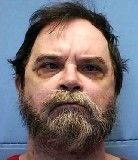
Roger Thorson
Murderer Brian Kevin Rosenfeld
Murderer · USA · 1985
Brian Kevin Rosenfeld Brian Kevin Rosenfeld was sentenced to three concurrent l…
23 victims
Brian Kevin Rosenfeld
Murderer · USA · 1985
Brian Kevin Rosenfeld Brian Kevin Rosenfeld was sentenced to three concurrent l…
23 victims
 Yahweh ben Yahweh
Murderer · USA · 1980
Yahweh ben Yahweh was born and legally named Hulon Mitchell Jr. (October 27, 19…
23 victims
Yahweh ben Yahweh
Murderer · USA · 1980
Yahweh ben Yahweh was born and legally named Hulon Mitchell Jr. (October 27, 19…
23 victims
 Russell Ellwood
Murderer · USA · 1991
Russell Ellwood was a former taxi driver. Authorities suspected him of killing…
20 victims
Russell Ellwood
Murderer · USA · 1991
Russell Ellwood was a former taxi driver. Authorities suspected him of killing…
20 victims
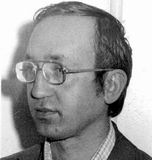 Vasiliy Kulik
Serial killer · Russia · 1984
Vasiliy Kulik was a Russian serial killer. He was responsible for the murders o…
13 victims
Vasiliy Kulik
Serial killer · Russia · 1984
Vasiliy Kulik was a Russian serial killer. He was responsible for the murders o…
13 victims
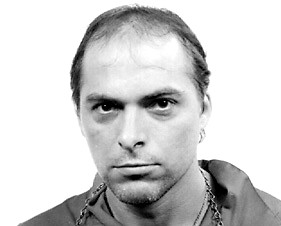 John Matthew Stephenson
Murderer · USA · 1996
John Matthew Stephenson was sentenced to death on June 17, 1997. He was on deat…
3 victims
John Matthew Stephenson
Murderer · USA · 1996
John Matthew Stephenson was sentenced to death on June 17, 1997. He was on deat…
3 victims
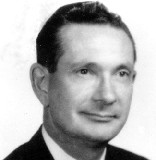 Byron de la Beckwith
Murderer · USA · 1963
Byron De La Beckwith (November 9, 1920 – January 21, 2001) was an American whit…
1 victim
Byron de la Beckwith
Murderer · USA · 1963
Byron De La Beckwith (November 9, 1920 – January 21, 2001) was an American whit…
1 victim
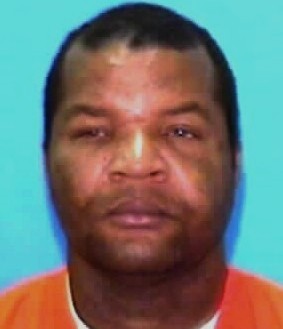 Harry Butler
Murderer · 1997
03/13/97 — Date of offense: Harry Butler was convicted and sentenced to death f…
1 victim
Harry Butler
Murderer · 1997
03/13/97 — Date of offense: Harry Butler was convicted and sentenced to death f…
1 victim
 Thomas Miller-El
Murderer · USA · 1985
Defendant: Thomas Joe Miller-El, convicted of capital murder in Texas state cou…
1 victim
Thomas Miller-El
Murderer · USA · 1985
Defendant: Thomas Joe Miller-El, convicted of capital murder in Texas state cou…
1 victim
- Gender
- male
- Country
- USA
- Location
- Harrison County, Mississippi, USA
- Date of birth
- March 5, 1958
- Age at first offence
- 29
- Characteristics
- kidnapping, rape
- Victim profile
- H is ex-girlfriend, Gloria McKinney
- Method of murder
- Shooting ( .22 revolver)
- Date(s) of murder
- March 4, 1987
- Years active
- 1987
- Date of arrest
- 4 days after
- Status
-
Sentenced to death
Death sentence (lethal injection) imposed in 1988; post-conviction relief petition was denied in part and granted in part, and the case was remanded to the Circuit Court of the Second Judicial District of Harrison County for an evidentiary hearing pursuant to Atkins, Chase and Lynch
Background
Roger Eric Thorson was sentenced to death in 1988 in Harrison County for the murder of his girlfriend, Gloria McKinney, during the commission of kidnapping on March 4, 1987.
Thorson’s post-conviction petition proceeded before the Mississippi Supreme Court under Mississippi Supreme Court No. 2002-DP-01420-SCT, Mississippi Supreme Court No. 2004-DR-02248-SCT, and Mississippi Supreme Court No. 2010-CA-01010-SCT. The Mississippi Department of Corrections Offender Data Sheet included Thorson’s name as “Roger Thorson.”
The offence
On March 4, 1987, Roger Eric Thorson visited Edgewater Mall in Biloxi in order to talk to his former fiancee, Gloria McKinney. He was worried that his neighbor and girlfriend Patricia Cook might have said some things to McKinney, so he wanted to apologize to her in person.
After Thorson learned from his friend, Reggie Brazeal, that McKinney would not get off work from Morrison’s until 4:00 p.m., Thorson remained at the mall until McKinney left at 4:45 p.m. When McKinney exited the mall, Thorson approached her car, told her that he had come to apologize, and asked her for a ride to the Cedar Lake exit.
When they arrived at the exit, Thorson asked McKinney to keep driving towards his house because he still needed to talk to her. Thorson then pulled a knife on McKinney and directed her to a dirt road. Thorson ordered McKinney to remove all of her clothes and turn with her back facing him. He placed a .22 revolver pistol on the dashboard, which he had recently purchased from his neighbor, Paul Quinn.
After McKinney removed her clothes, Thorson removed a piece of rope from his jacket pocket and tied her hands behind her back. He placed her brassiere in her mouth and tied it around her neck. Thorson then raped Gloria McKinney.
After he raped her, Thorson took a towel that he had found in McKinney’s car and wiped down everything that he thought he might have touched because he did not want any of his fingerprints in her car. Thorson asked McKinney if she would tell anyone what had just happened, and she shook her head indicating that she would not. Thorson told her that he did not believe her. He then took the knife and slit her throat.
Thorson got out of her car and removed a blue jacket which he had given to Gloria, a plastic power steering fluid bottle, and Gloria’s wallet. He removed Gloria’s driver’s license from the wallet because he wanted a picture of her. He threw the bottle and wallet into the woods so it would appear that someone else had hurt Gloria. Gloria was sitting in the car, bleeding from the wound to her neck. She was able to get out of her car and work the brassiere from her mouth.
When she screamed for help, Thorson walked back to the car and shot her in the head with the .22 revolver. He then ran home and hung Gloria’s coat in his closet.
Thorson walked to Patricia Cook’s trailer, which was directly behind his, and cleaned his hands and the knife with bleach to remove any traces of blood or gunpowder residue. He then went back to his trailer and wrapped the knife, gun, shells and Gloria’s watch in Gloria’s jacket and buried it in a vacant lot near his trailer.
Thorson was arrested for the murder of Gloria McKinney on March 8, 1987.
Investigation
The body of Gloria McKinney was subsequently found on March 7, 1987.
After the body was discovered, investigators visited Thorson’s home again. Thorson voluntarily offered to come to the Central Intelligence Division (CID); he was not under arrest at this time.
Reginald Brazeal testified that when he left work on March 4, 1987, at approximately 3:30 or 4:00 p.m., Thorson was waiting in the parking lot and asked what time McKinney would be getting off of work, stating that there were “some things he wanted to get straight with her.”
Rick Gaston, employed by the Harrison County Sheriff’s Department, testified he first came in contact with Thorson when Gaston was investigating McKinney’s disappearance. Thorson told Gaston he had not seen McKinney for several months, but Gaston informed Thorson that he had been seen talking to her at the mall. Thorson explained he had been there to see the Clydesdale horses and had seen her briefly in the parking lot when she got off work. Thorson informed Gaston he would be willing to help with the investigation in any way. Gaston then drove Thorson to the CID and introduced Thorson to Investigator Jerry Tootle. At the CID, Thorson changed his story and told investigators McKinney had given him a ride from the mall the previous day. Thorson spent several hours at the CID talking to investigators on the evening of March 5, 1987, before he was returned home.
Robert Burriss, employed by the Biloxi Police Department, testified that as a crime scene technician, he was called to the scene where McKinney’s body and automobile were discovered. Burriss identified several pictures taken at the scene depicting blood found in the victim’s car, the victim with her throat cut, and the victim lying in her car. Burriss also identified photographs depicting the victim’s hands bound and the victim’s mouth gagged with her brassiere. Burriss testified that when he processed the victim’s automobile for fingerprints, he was only able to develop streaks, leading him to believe the car had been wiped clean.
Richard Giraud, employed by the Harrison County Sheriff’s Department, testified that he was present during the interview of Thorson at the CID on the evening of March 5, 1987. Giraud testified Thorson continuously changed his story regarding talking to and seeing McKinney the previous day. During the next interview on March 7, 1987, Thorson told investigators he and McKinney had driven past the Cedar Lake exit to a dirt road and had engaged in sexual intercourse, and that McKinney then dropped him off at home. Giraud testified Thorson remained at CID until he was arrested at approximately 1:30 a.m. March 8, 1987, and that he was arrested due to inconsistencies in his statements.
On the morning of March 8, 1987, Giraud received information from Patricia Cook that evidence was buried near Thorson’s residence. Investigators found a gun, a blue jacket, a picture from the victim’s driver’s license, and a knife. After finding these items, Giraud returned to CID and Thorson was brought from the County Jail to Jerry Tootle’s office for further questioning. When Thorson was shown the knife, he stated, “Well, I guess you know the rest of the story.” Thorson was then mirandized and made a video taped confession admitting to the murder of Gloria McKinney.
Arrest
Giraud testified that Thorson was arrested at approximately 1:30 a.m. March 8, 1987, due to inconsistencies in his statements.
Trial
Indictment and plea
Roger Eric Thorson was indicted on June 3, 1987, and charged with capital murder of his ex-girlfriend, Gloria McKinney, during the commission of kidnapping on March 4, 1987. Thorson entered a plea of not guilty.
1988 trial and first mistrial
Trial in the Second Judicial District of Harrison County began on May 16, 1988. Two days into the trial, a break-in occurred in a motel room occupied by two of the sequestered jurors. Thorson moved for a mistrial, which was granted.
Venue for the new trial was transferred to Walthall County. Trial began on September 18, 1988, in Tylertown. The jury found Thorson guilty as charged and returned a sentence of death.
Appeals affecting conviction and remand
On appeal, the Mississippi Supreme Court remanded for a Batson hearing to determine if the prosecution violated Batson v. Kentucky, 476 U.S. 79, 85-86, 106 S.Ct. 1712, 1716-17, 90 L.Ed.2d 69, 80 (1986) in exercising its peremptory strikes. Thorson v. State, 653 So.2d 876 (Miss.1994). The circuit court found no Batson violation, and Thorson appealed the circuit court’s ruling.
Upon his second appeal, the Mississippi Supreme Court reversed Thorson’s conviction, finding that a juror had been improperly challenged solely for her religious affiliation, and ordered a new trial. Thorson v. State, 721 So.2d 590 (Miss.1998).
Third trial (2002)
Thorson’s third trial began June 3, 2002, in the Circuit Court of the Second Judicial District of Harrison County, where he was again found guilty of capital murder and sentenced to death by lethal injection. Thorson v. State, 895 So.2d 85, 94 (Miss.2004).
Thorson raised thirty-three (33) assignments of error on direct appeal, which the Mississippi Supreme Court found to be without merit. The Mississippi Supreme Court affirmed Thorson’s conviction and sentence on November 4, 2004. Thorson’s motion for rehearing was denied on February 3, 2005. Thorson’s petition for writ of certiorari to the United States Supreme Court was denied on October 3, 2005. Thorson v. Mississippi, 546 U.S. 831, 126 S.Ct. 53, 163 L.Ed.2d 83 (2005).
Evidence presented at trial
During the trial, the State called several witnesses during its case-in-chief.
Reginald Brazeal testified as to his role at Morrison’s located in Edgewater Mall and as to Thorson waiting in the parking lot and asking what time McKinney would be getting off work.
Rick Gaston described Thorson’s interactions with investigators and changing stories after being brought to CID.
Giraud testified about Thorson’s interviews, his shifting account, and the arrest following inconsistencies. Giraud also testified to the receipt of information from Patricia Cook leading to the recovery of evidence.
Burriss testified about photographs from the scene showing blood in the victim’s car, the throat cut, the body lying in the car, and the victim’s hands bound and mouth gagged with her brassiere. Burriss also testified fingerprint processing developed streaks only and suggested the car had been wiped clean.
Dr. Paul McGarry, a forensic pathologist, performed an autopsy on March 8, 1987. He stated: “she had a slash wound across the front of her neck that opened up her voice box, opened a hole in her larynx. She had a bullet wound to the head that went in the right temple, and had sprinkled around it gunpowder on the skin and hair, indicating it was close range.” Dr. McGarry also testified: “The cause of McKinney’s death was a ‘gunshot wound to the head at close range.’” He further testified that the wound to the victim’s neck would not have been fatal with proper management.
A sexual assault kit was performed on McKinney due to the extensive injuries to her genitals.
Michael Stroud, an employee of the Harrison County Sheriff’s Department, executed a waiver to allow the Department to draw a sample of Thorson’s blood. Stroud also testified that a rape kit was performed on the victim.
Christopher Larson, employed by ReliaGene Technologies in New Orleans, Louisiana, performed DNA analysis on semen taken from the rape kit and blood taken from Thorson. Larson determined “the vaginal swab from Gloria McKinney was consistent with the genetic profile from the blood of Roger Thorson.”
After the State rested, Thorson moved for a directed verdict, and the trial court denied the motion.
Patricia Cook testified for the defense about a statement she gave to Giraud on March 9, 1987. Cook testified she told investigators Thorson had buried evidence on property near his home. Cook also testified that when Thorson arrived at her home on the night of March 4, 1987, he washed his hands with bleach.
Dr. George Tate, a clinical psychologist, testified after spending ten and one-half hours with Thorson, reviewing police records and mental health reports, and conducting several psychological exams, that Thorson was “not so impaired by mental disease or defect to make him incompetent to give a confession.”
Richard Isham testified he spoke with Thorson on March 7, 1987, at the Harrison County Jail while wearing a wire and tape recorder. Isham testified he did not inform Thorson that their conversation was being recorded. Isham testified that when he asked Thorson about the crime, Thorson responded that “there is no circumstantial evidence and he was sticking to his story.”
Thorson testified during his case-in-chief. He stated he went to Edgewater Mall to talk to McKinney and that he had only her drive him to his house in Woolmarket. Thorson testified that during his interview he was threatened and physically abused. He stated he only made the confession because he feared for the lives of McKinney’s two young daughters. The defense rested after presenting evidence.
The State rested after offering no rebuttal testimony.
Guilt verdict and sentencing aggravators (2002)
On June 7, 2002, the jury returned a verdict of guilty.
A sentencing hearing was held. On June 8, 2002, the jury returned the verdict of death finding three aggravators:
- That the capital offense was committed while engaged in the commission of a kidnapping;
- The offense was heinous, cruel and torturous; and
- The offense was committed with the purpose of covering up and hiding evidence.
Sentencing
Thorson was sentenced to death in 1988 in Harrison County.
At his third trial in 2002, Thorson was again found guilty of capital murder and sentenced to death by lethal injection.
The jury’s death verdict at the June 8, 2002 sentencing hearing found three aggravators: kidnapping; heinous, cruel and torturous; and purpose of covering up and hiding evidence.
Appeals
Direct appeal
The Mississippi Supreme Court denied Thorson’s motion for rehearing on February 3, 2005.
The United States Supreme Court denied certiorari on October 3, 2005. Thorson v. Mississippi, 546 U.S. 831, 126 S.Ct. 53, 163 L.Ed.2d 83 (2005).
Post-conviction relief proceedings
Thorson presented a petition for post-conviction relief and a supplemental petition.
The Mississippi Supreme Court determined the matter should be remanded for the sole purpose of conducting a hearing pursuant to Atkins v. Virginia, Lynch v. State, and Chase v. State, because Thorson met the requirements articulated by the court in Chase and had not been afforded an Atkins hearing.
The Mississippi Supreme Court concluded: “PETITION FOR POST-CONVICTION RELIEF IS DENIED IN PART AND GRANTED IN PART.” It further ordered: “THIS CASE IS REMANDED TO THE CIRCUIT COURT OF THE SECOND JUDICIAL DISTRICT OF HARRISON COUNTY FOR AN EVIDENTIARY HEARING CONSISTENT WITH ATKINS, CHASE AND LYNCH.”
Outcome
The Mississippi Supreme Court denied in part and granted in part Thorson’s petition for post-conviction relief and remanded the case to the Circuit Court of the Second Judicial District of Harrison County for an evidentiary hearing consistent with Atkins, Chase and Lynch.
Other details
In the post-conviction decision, the court addressed and rejected multiple issues:
- The court determined that Thorson met requirements for an Atkins hearing and remanded for a hearing pursuant to Atkins, Lynch and Chase.
- The court rejected claims of ineffective assistance of counsel, including claims involving mental retardation mitigation development and expert preparation, as well as claims involving DNA and investigation of physical evidence to identify inconsistencies with Thorson’s confession.
- The court held Thorson’s cruel-and-unusual-punishment claim based on execution by lethal injection was procedurally barred and, notwithstanding the procedural bar, found it without merit based on Thorson’s failure to submit sworn proof challenging the lethal injection protocol.
- The court rejected Brady claims after applying the four-part Brady test adopted in King v. State, including claims regarding DNA information from ReliaGene, rap sheets and NCIC information on Patricia Cook, and other asserted nondisclosures that were not specified to meet any part of the Brady test.
- The court found no cumulative error deprived Thorson of a fundamentally fair and impartial trial.
The decision was authored with Carl son, Justice, for the Court. Smith, C.J., Waller and Diaz, P.JJ., Easley, Dickinson, Randolph and Lamar, JJ., concur. Graves, J., concurred in result only.
Spotted an error, or have more information about this case?